Chopstick Rules: 4 Mistakes That Make Locals Wince

Four chopstick habits that look normal abroad but read as funeral-level rude in Japan. Skip them and you're 90% safe at any ramen shop or home table.

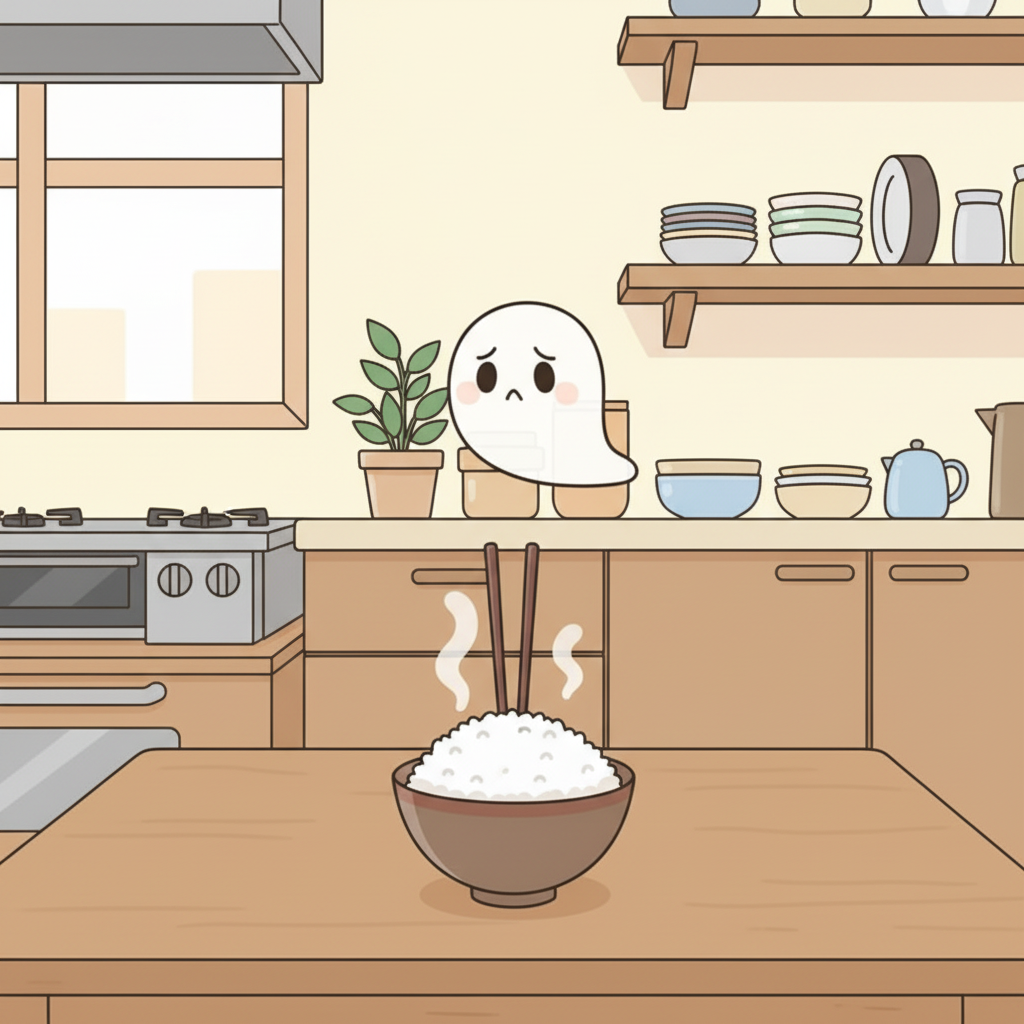
立箸 — Tatebashi (chopsticks standing upright in rice)

Two chopsticks standing vertically in a bowl of rice, with a small worried ghost floating above
NG

Sticking chopsticks vertically into a bowl of rice

Two vertical chopsticks in rice is exactly how rice is offered to the dead at Japanese funerals. Doing it at dinner lands somewhere between "whoa" and "please stop." The single most important mistake to avoid.

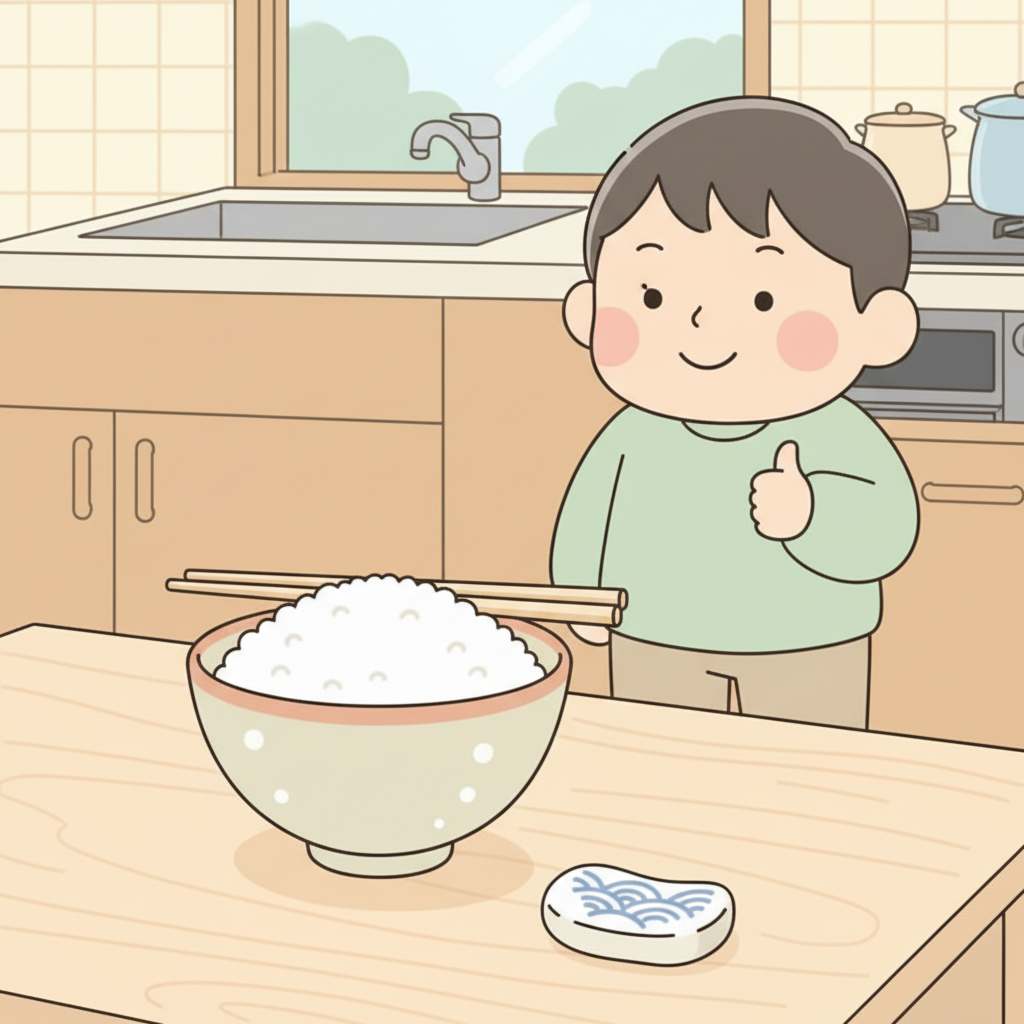
Chopsticks resting horizontally across the rim of a rice bowl, with a hashi-oki chopstick rest nearby
OK

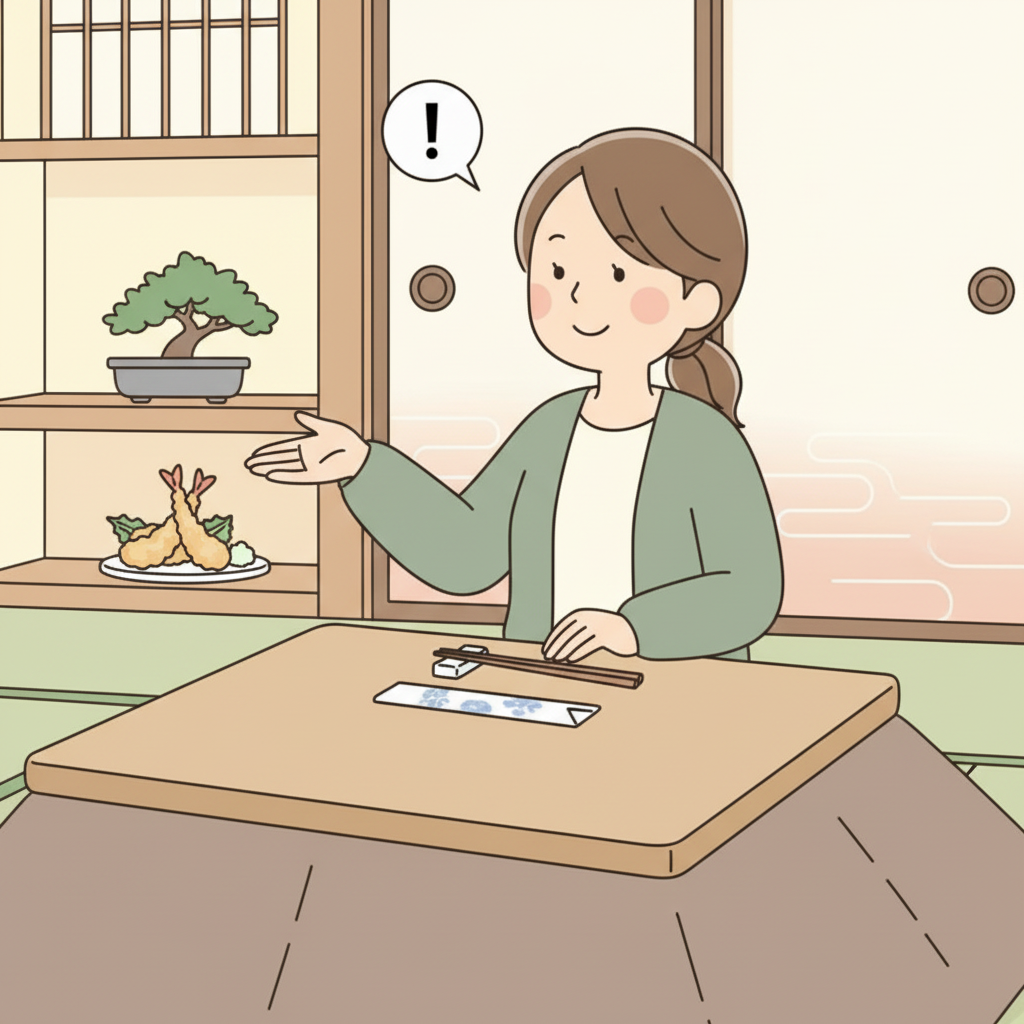
Use the hashi-oki, or fold the paper wrapper into one

Every table has a tiny ceramic chopstick rest (hashi-oki). Use it. No ceramic rest? Fold the paper chopstick sleeve into a small knot and use that as a DIY rest—never bridge them across the bowl rim (that's watashi-bashi, which signals "I'm done" and has funeral undertones), and never vertical.

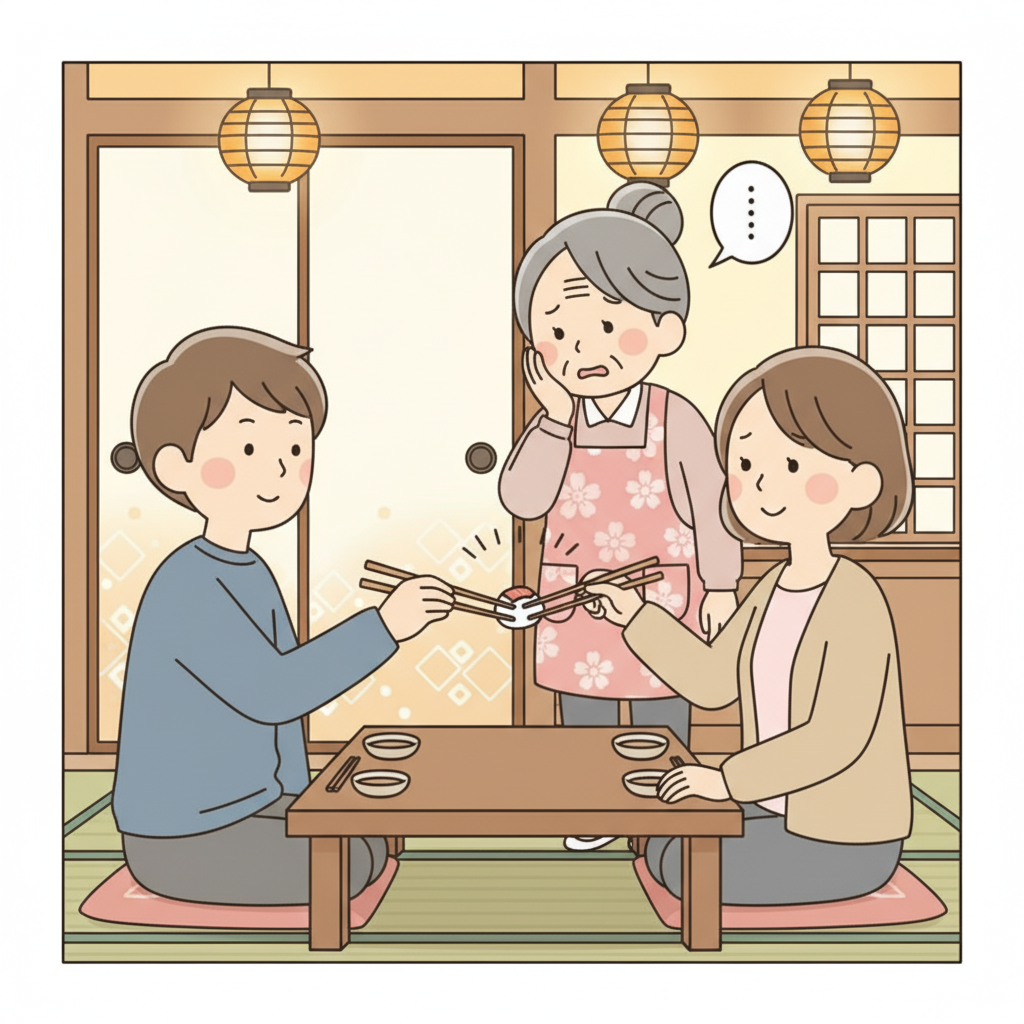
合わせ箸 — Hashi-watashi (passing food chopstick to chopstick)

Two people passing food chopstick-to-chopstick across a Japanese dining table while a grandmother in the background looks distressed
NG

Passing food directly between your chopsticks and someone else's

This is the second "funeral thing"—it's exactly how cremated bones are passed between family members at a Japanese funeral. In a restaurant it reads as extremely unlucky, not friendly sharing.

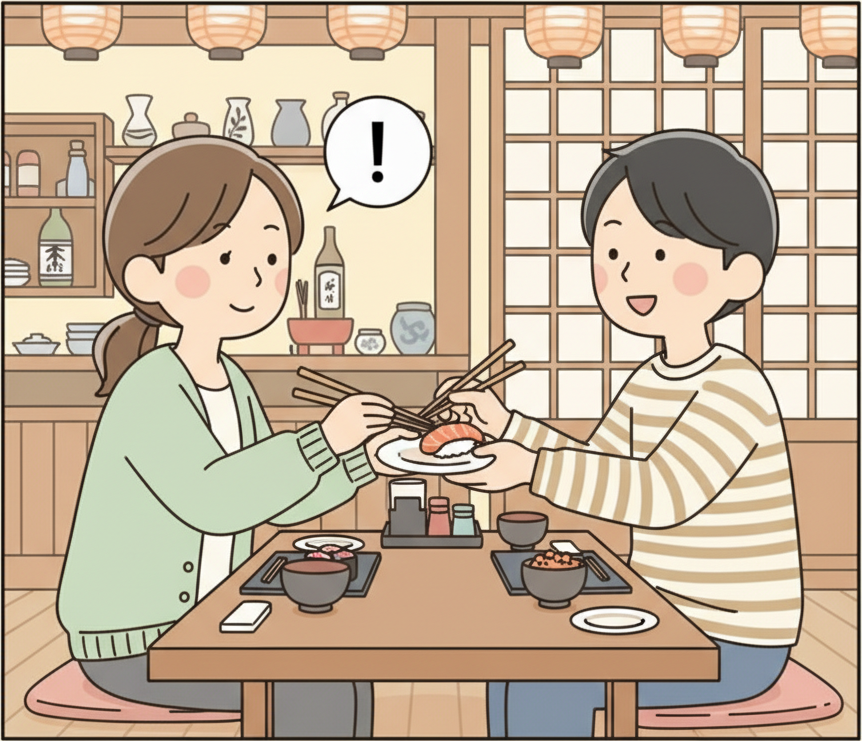
One person placing food on a small plate and handing it politely to another person with both hands
OK

Use a plate to transfer food

Put the food on a small plate and hand the plate over, or ask for an extra dish. Most shared dishes come with serving chopsticks (tori-bashi) for exactly this reason.

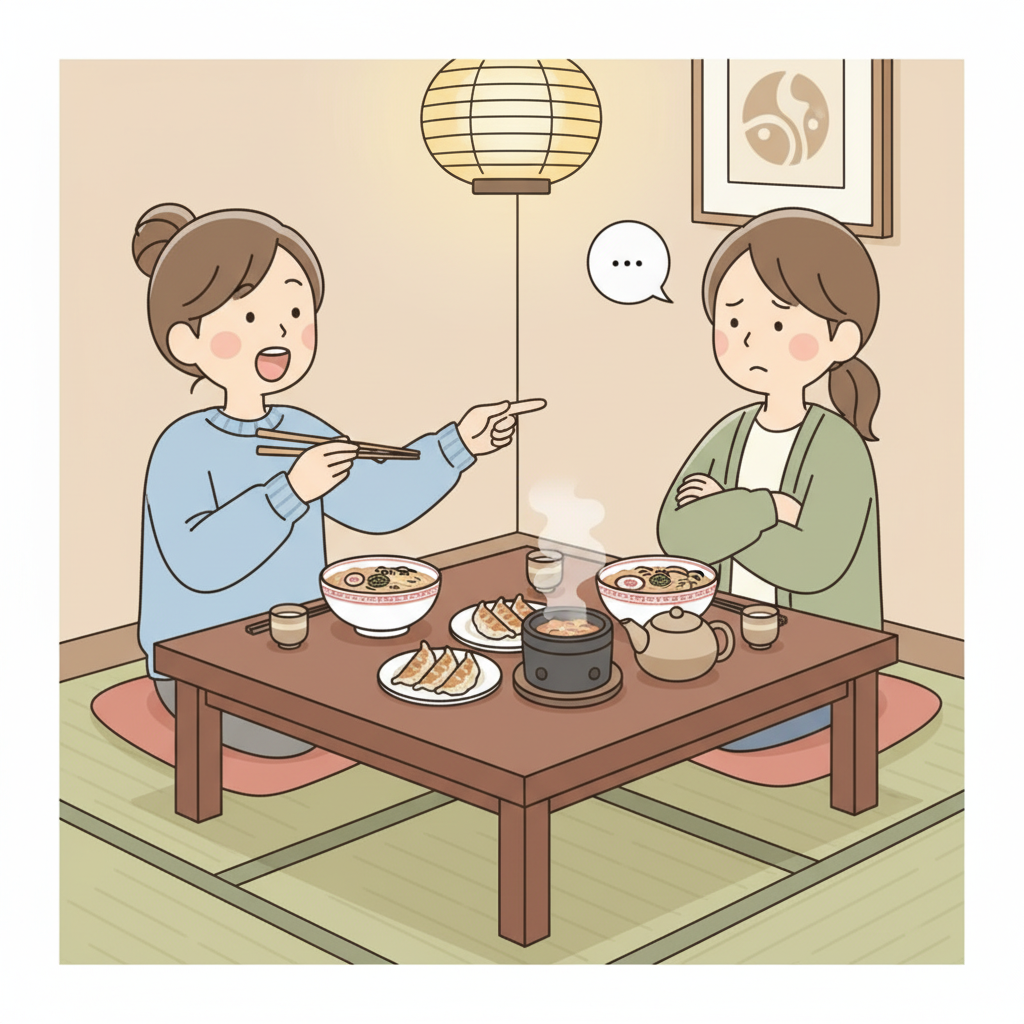
指し箸 — Sashi-bashi (pointing with chopsticks)

A person at a dining table pointing forward with chopsticks while talking, with another diner looking uncomfortable
NG

Gesturing at people, things, or the menu while holding chopsticks

Pointing at anything with your chopsticks—people especially—is loud and rude. It's the equivalent of waving a fork at the waiter while you talk.

The same person with chopsticks resting on a hashi-oki, gesturing politely with an open free hand
OK

Put them down before you point

Rest the chopsticks on the hashi-oki first, then gesture with your free hand. A small tip of the head also works to indicate a dish without pointing at all.

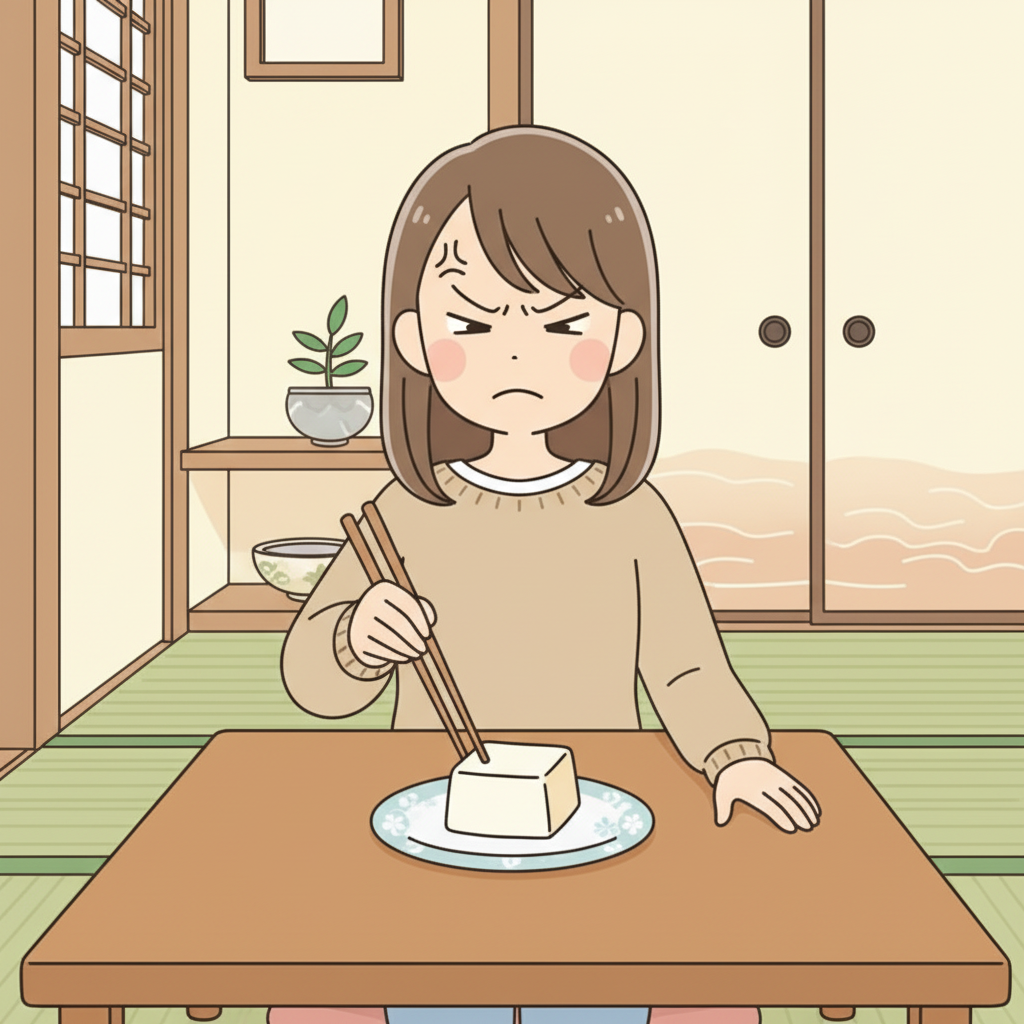
刺し箸 — Sashibashi (stabbing food)

A frustrated person stabbing chopsticks down into a cube of tofu on a plate
NG

Spearing food with your chopsticks because it's slippery

Spearing a chunk of daikon or a slice of fish because you can't grip it silently says "I never learned to use these." Not taboo like the funeral stuff, but it marks you instantly as a beginner.

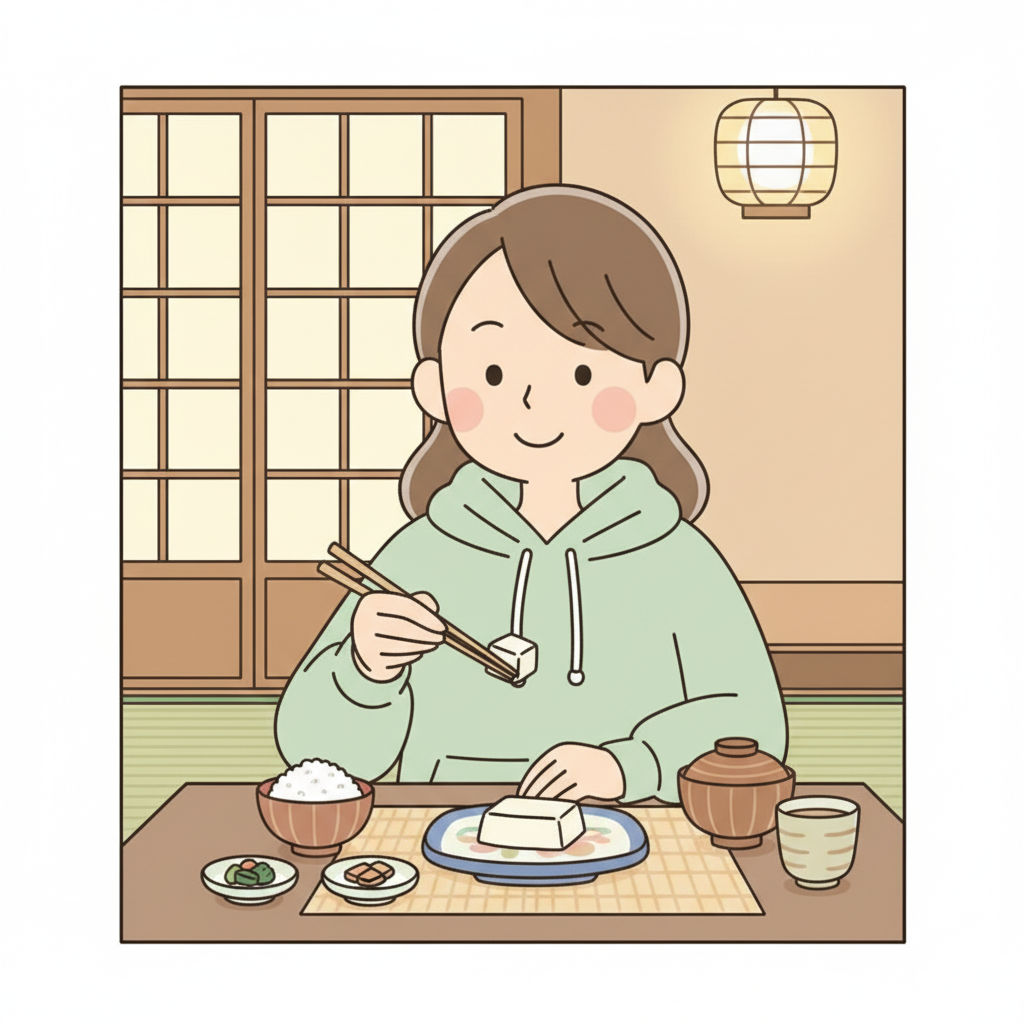
The same person calmly lifting a piece of tofu with a proper chopstick pinch grip
OK

Pinch harder, or ask for a fork

Practice the pinch—thumb anchors the lower stick, index and middle finger work the upper one. If it's truly impossible (hello, silken tofu), no shame in politely asking for a fork.

Why chopstick etiquette matters more than you’d think

In Japan, chopsticks aren’t just a utensil—they’re tied to family life, religion, and a very specific set of funeral rituals. Most of the “don’ts” exist because someone, somewhere, saw the same gesture in a context where it meant death. That’s why a habit like resting your chopsticks vertically in rice hits differently than, say, using the wrong fork at a formal Western dinner. It isn’t about manners as table polish—it’s about not accidentally saying something unspeakable.

Here’s the good news: the list of “really don’t do this” mistakes is short. Skip the four above and you’ll skate through 99% of Japanese meals without anyone thinking twice. The rest are finesse moves—nice to learn, but nobody’s going to cringe if you miss them.

A few “nice to know” extras

  • Hashi-oki (chopstick rest) — Most sit-down restaurants have one. Use it whenever you’re not actively eating. At casual places, fold your chopstick wrapper into a tiny knot—instant DIY rest.
  • Tori-bashi (serving chopsticks) — Shared dishes often come with a second pair for serving. Use those to move food onto your own plate, then eat with your personal pair.
  • Disposable chopsticks (waribashi) — Don’t rub them together to get rid of splinters. It silently tells the chef their chopsticks are cheap. Just use them as is.

Quick check

Try the mini-quiz below to lock in the biggest don’ts. Three questions, about 20 seconds.

Quick check

Can you spot the right move?

  1. Q1 Is it okay to stick your chopsticks upright in rice if you're just taking a quick break?

  2. Q2 If a friend offers you a bite and holds it out with their chopsticks, should you accept it chopstick-to-chopstick?

  3. Q3 Is asking for a fork at a Japanese restaurant considered rude?