No Photography Inside Japanese Temples — The Real Rules

Temple exteriors, gardens, and pagodas: fine. Inside the main halls where the Buddha sits: almost always forbidden. Here's where the line falls.

Taking photos inside the main hall

NG

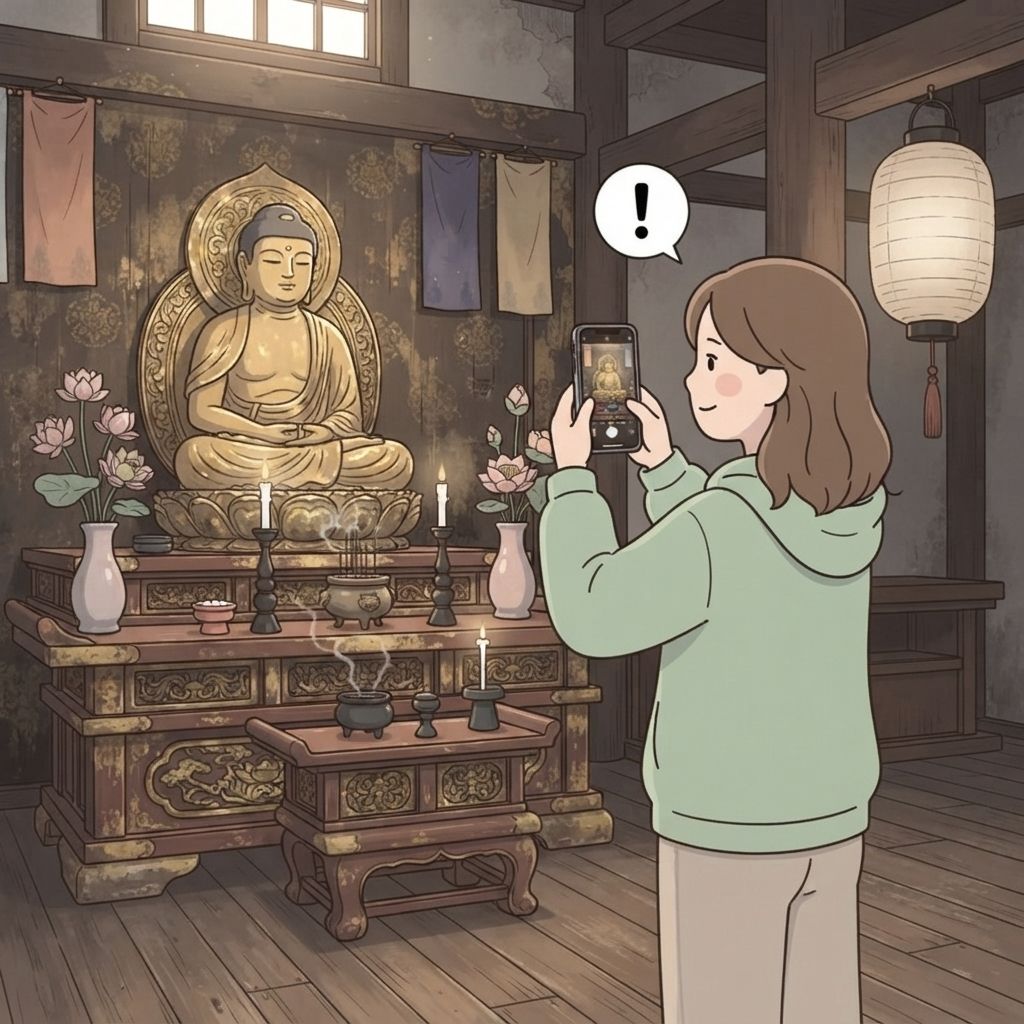
Lifting your phone to photograph the Buddha statue or altar inside the temple hall

The interior of a Buddhist temple hall contains the main sacred objects of the temple—the principal Buddha image, the altar, ritual implements, and often centuries-old art. These are usually considered too sacred or too fragile (flash damages old wood and paint) for casual photography. Signs at the entrance explicitly say 撮影禁止 (satsuei kinshi, 'photography prohibited'). Ignoring them and taking photos inside will get you a firm correction from a monk or staff member.

OK

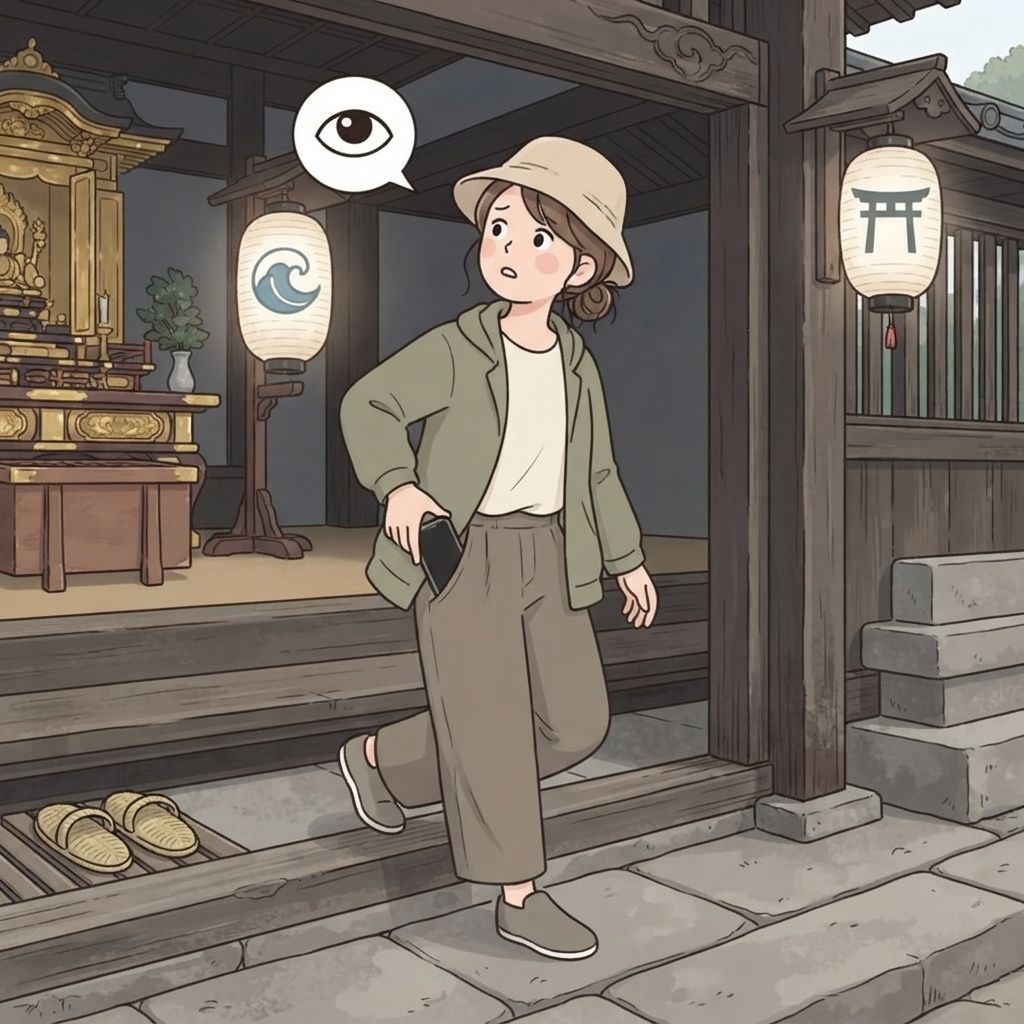
Put the phone away before stepping inside, photograph exteriors only

When you step over the threshold into the main hall, the phone goes in the pocket. Look at the interior with your eyes and remember it instead of capturing it. You can photograph the exterior of the hall, the garden, the pagoda, the stone lanterns, the bell tower, the entrance gate—all generally fine. The interior space is the one consistent no-photo zone.

Using flash on outdoor photography near fragile surfaces

NG

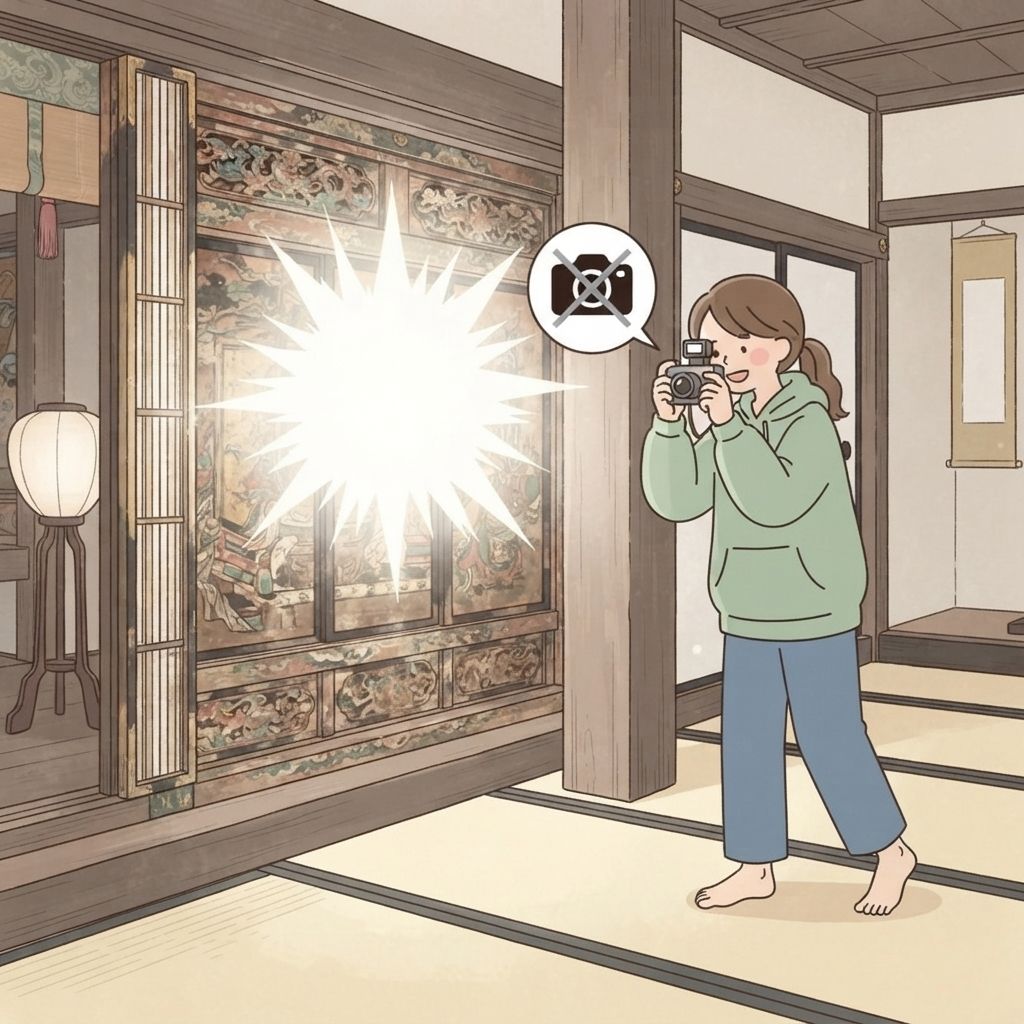
Flash photography near centuries-old wooden carvings or painted screens on temple buildings

Even in places where photography is allowed, flash photography is specifically prohibited near fragile surfaces—old wood, painted screens, gold leaf, or textile decorations. Flash produces UV and high-intensity light that damages these surfaces over time, and the cumulative effect of thousands of tourists' flashes has visibly degraded some temple artworks. Some temples ban photography entirely for this reason.

OK

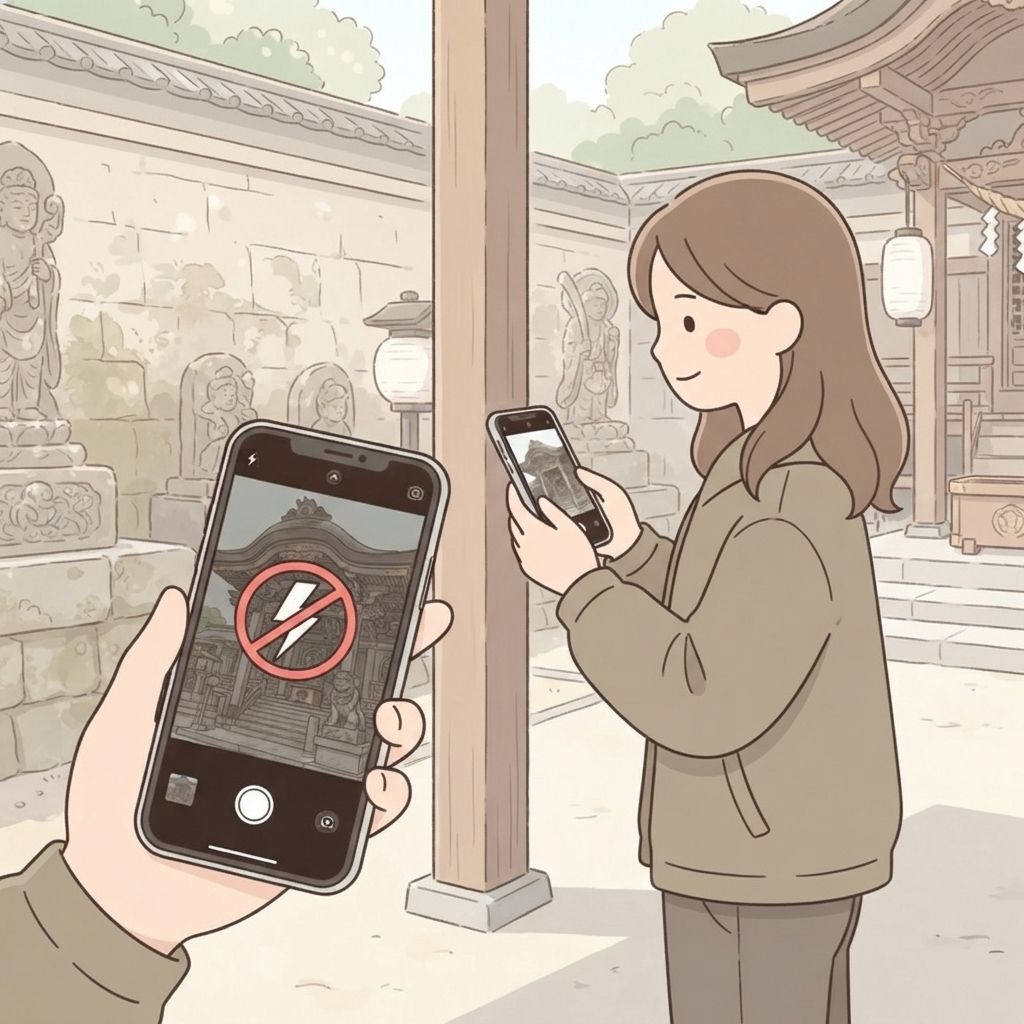
Turn off the flash, use ambient light, accept slightly darker photos

Set your camera or phone to 'no flash' mode before entering temple grounds. If the light is low, use a higher ISO or accept that the photo will be dimmer. The vast majority of modern phones take good photos in low light without flash. The flash ban is one of the most strictly enforced no-photography rules at temples with old art.

Photographing monks during ceremonies

NG

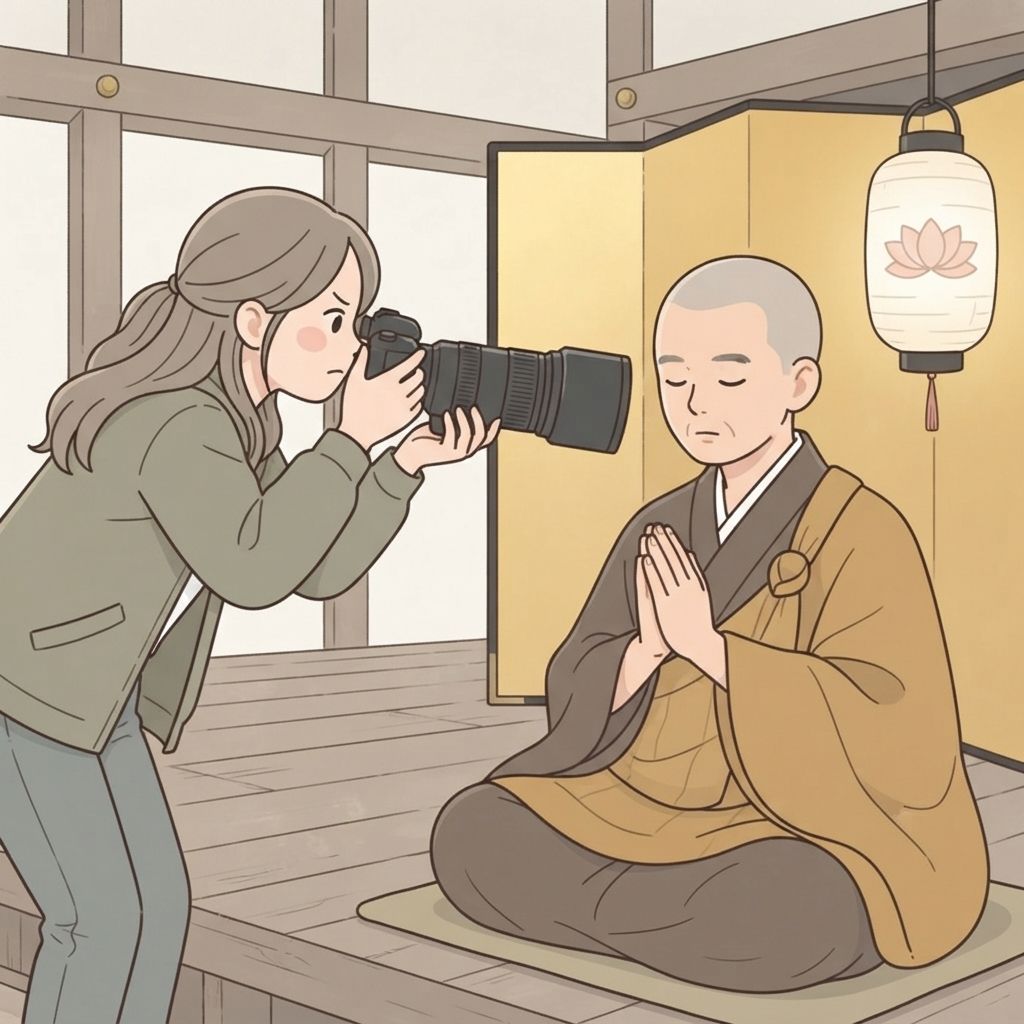
Zooming in on a monk during a prayer ceremony or chanting session

Buddhist ceremonies—morning chanting, funeral rituals, prayer sessions, festival events—are religious observances, not performances. Tourists sometimes point cameras directly at monks during these events as if they're performers on stage. This is considered invasive and disrespectful. At the very least, it's photographing a person in a moment of religious practice without their consent.

OK

Observe quietly, don't point a camera at individual people mid-ritual

During a ceremony, lower your phone and watch respectfully. If photography is permitted at the temple, take wide shots of the general space rather than close-ups of specific monks. If you want a photo of monks or the ceremony, ask at the temple office beforehand—some temples welcome photography of daily services with permission, and some have designated photo-friendly ceremonies.

Ignoring the photo rules at famous tourist temples

NG

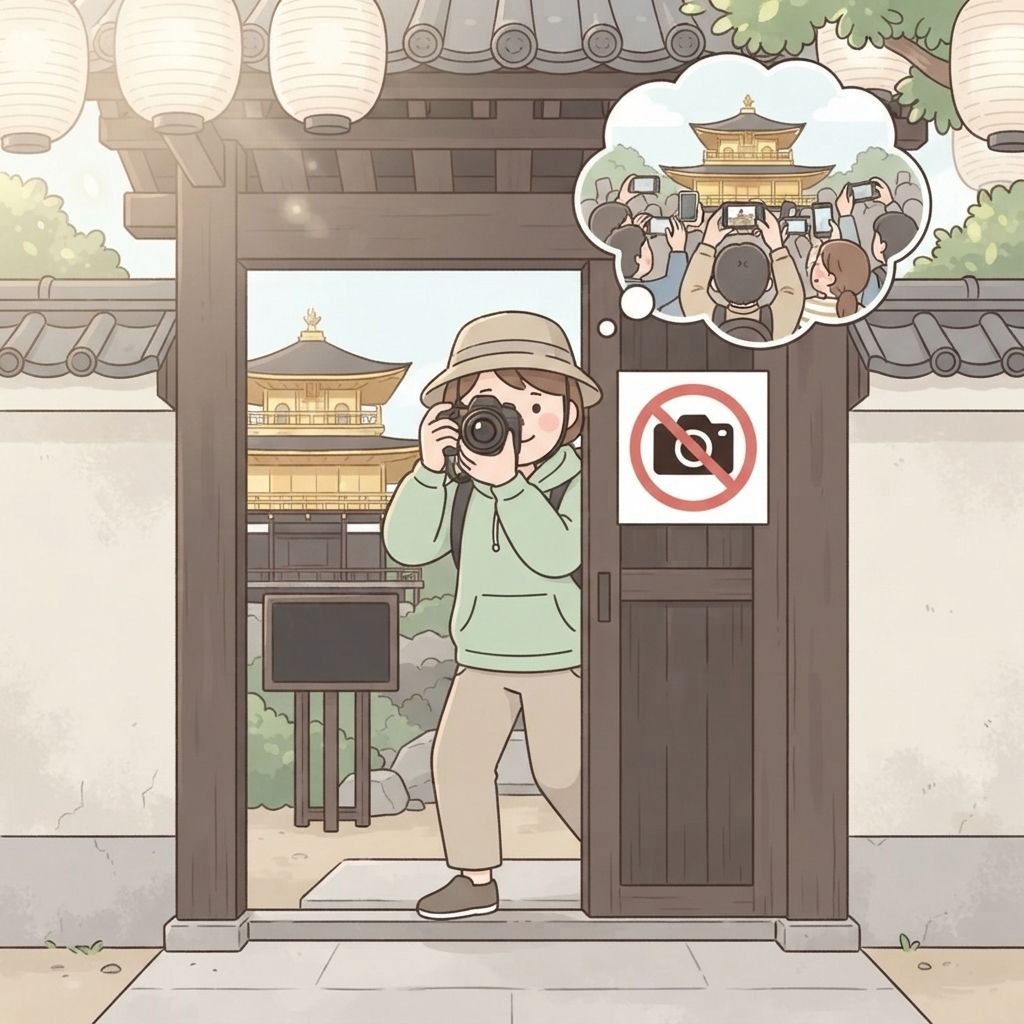
Thinking 'everyone photographs Kinkaku-ji, the rules don't apply'

Some famous temples (Kinkaku-ji in Kyoto, Todai-ji in Nara, Senso-ji in Tokyo) are so visited that the photography rules seem negotiable because everyone is taking photos. But there's usually a specific line: exteriors are fine, interiors are not, and certain designated zones are off-limits. Just because thousands of tourists are photographing the Golden Pavilion doesn't mean you can photograph the interior of Senso-ji's main hall. Always check the signs at the specific building you're entering.

OK

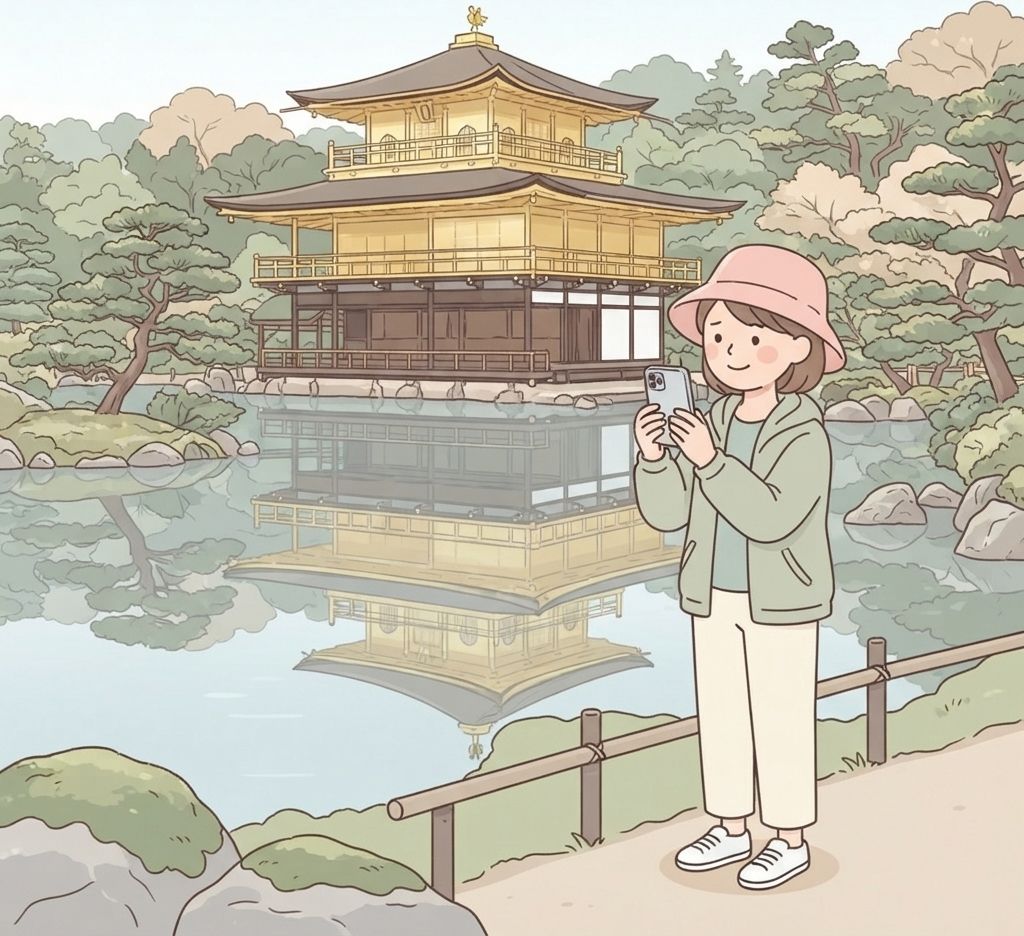
Photograph the iconic exteriors, respect the interior no-photo signs

The classic iconic photos of famous temples are almost always of exteriors: the Golden Pavilion reflecting in the pond at Kinkaku-ji, the Great Buddha at Todai-ji, the main gate at Senso-ji. These are fine to photograph and are the shots you'll actually want anyway. The interior spaces and the specific buildings marked with no-photo signs are the ones to respect.

Why the inside of the building is off-limits

Temple halls serve three jobs at once: active religious site, art vault, and tourist attraction. The no-photo rule handles all three. Prayer and ritual need quiet focus, not the click-and-glow of phone screens. The centuries-old wooden carvings, painted screens, and gold-leafed statues inside are genuinely fragile—flash damage is cumulative and real. And from a crowd-management standpoint, “no photos inside” is infinitely easier to enforce than “sometimes photos, depending on the room.”

The line is clean and nearly universal: exteriors, gardens, pagodas, grounds—shoot away. The moment you step over the threshold into a building with a Buddha image or altar, the phone goes in your pocket. Apply this as a default everywhere and you’ll be right about 95% of the time.

Outside the building: camera welcome. Inside: eyes only.

A few “nice to know” extras

  • Shrines are more relaxed — Shinto shrines generally allow more photography than Buddhist temples. The main altar is often still off-limits, but the offering area and surrounding grounds are usually fair game.
  • Photo-OK zones exist — Some temples mark specific interior areas as photo-friendly with signs reading 写真OK or a camera-with-checkmark pictogram. These spots usually contain replicas rather than originals.
  • Zen gardens are fine — Rock and gravel gardens like Ryoan-ji’s are outdoor spaces even when viewed from inside a building. Temples almost always allow photos of the garden itself—just not of the building interior you’re sitting in.
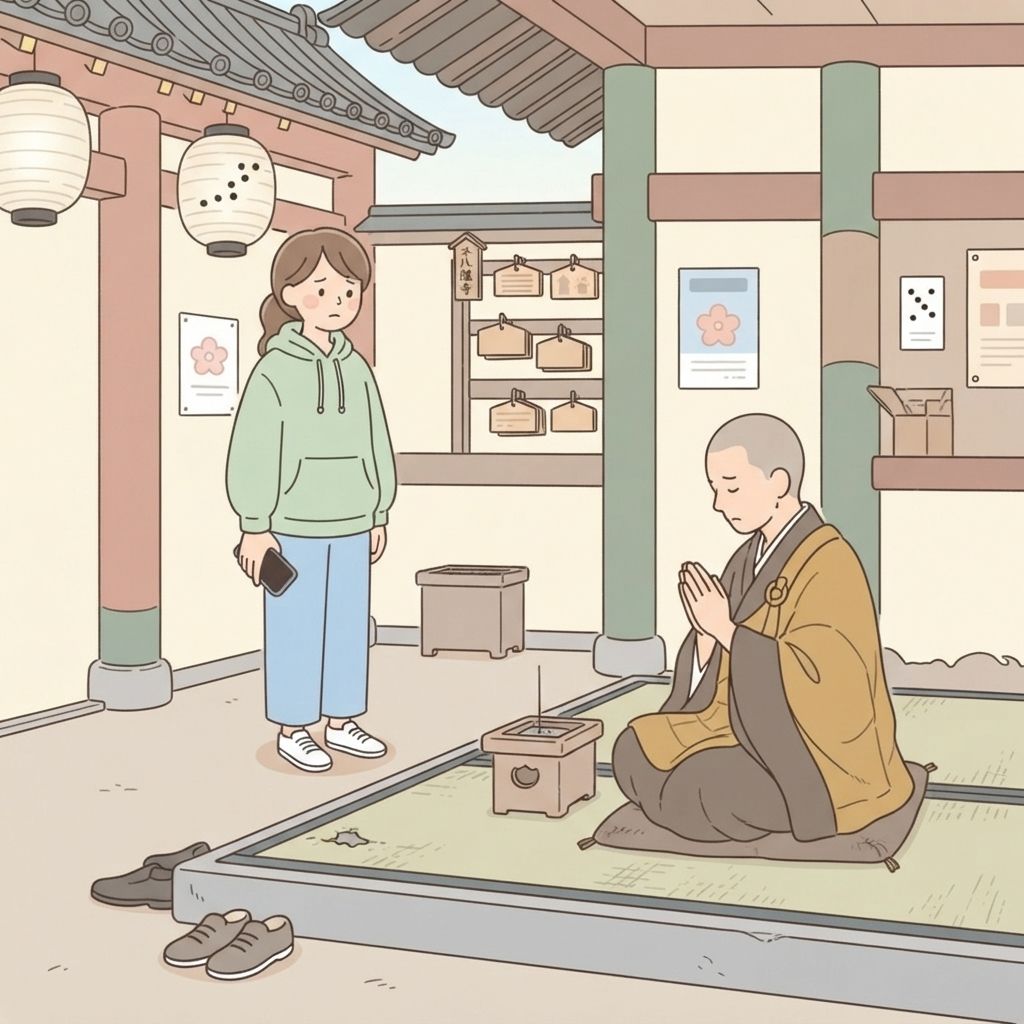
  • Active worshippers — If someone near you is praying or lighting incense, give them space and keep them out of your frame. Less a rule, more basic respect for a private devotional moment.

Quick check

Three questions to lock in the temple photography rules. About 20 seconds.

Quick check

Can you spot the right move?

  1. Q1 Can you take photos inside the main hall of a Japanese Buddhist temple?

  2. Q2 Is flash photography allowed at temples where normal photography is permitted?

  3. Q3 Is it okay to photograph monks up close during a prayer ceremony?