Japan Escalators: Stand Left in Tokyo, Right in Osaka

Japanese escalators are strictly one-side-standing, one-side-walking. The twist: it flips in Osaka. Get it wrong and you're the traffic jam.

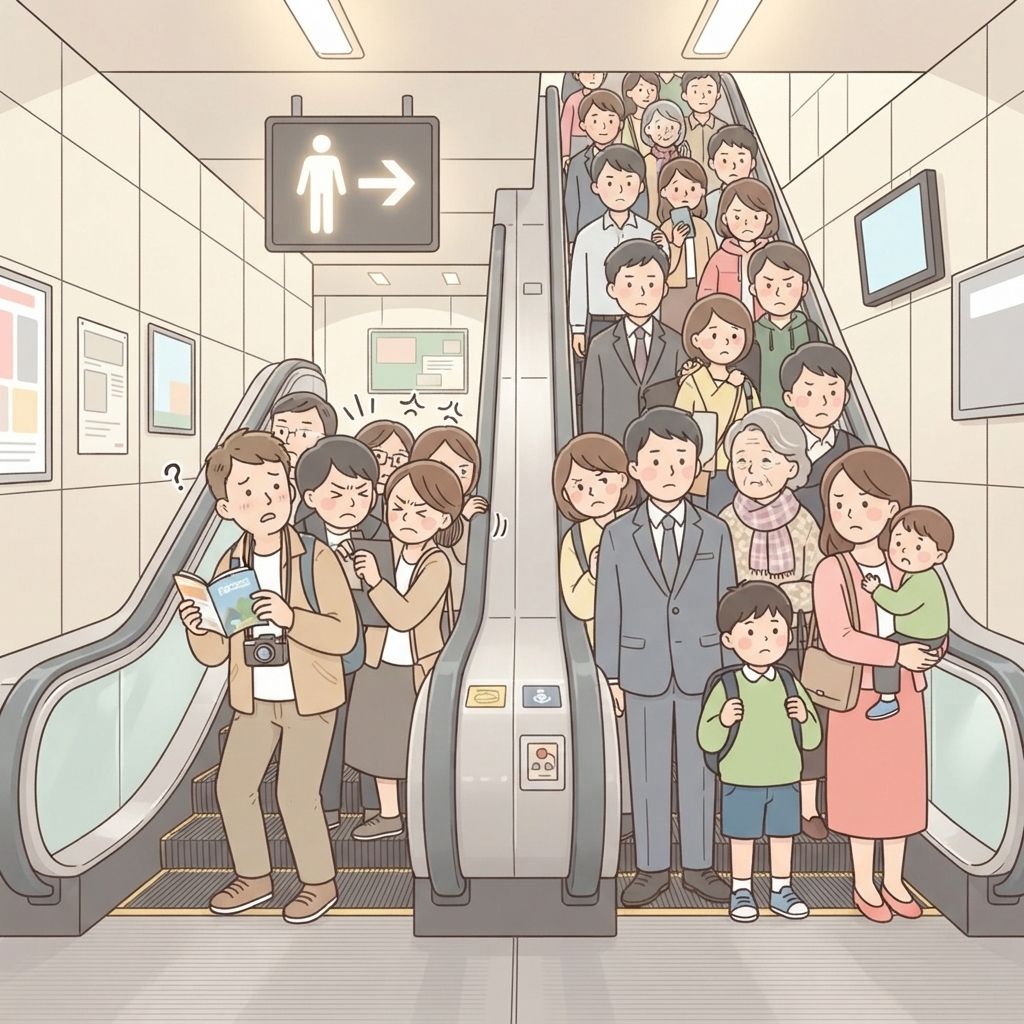
Standing on the wrong side for the city you're in

NG

Standing on the left in Osaka, or the right in Tokyo

Tokyo stands left. Osaka stands right. Get it flipped and the walking lane is now blocked by you. Nobody will say anything—nobody ever says anything on a Japanese escalator—but you'll feel the thirty people behind you being very, very patient. It's one of the cleanest 'oh god that's a tourist' moments in the whole commute.

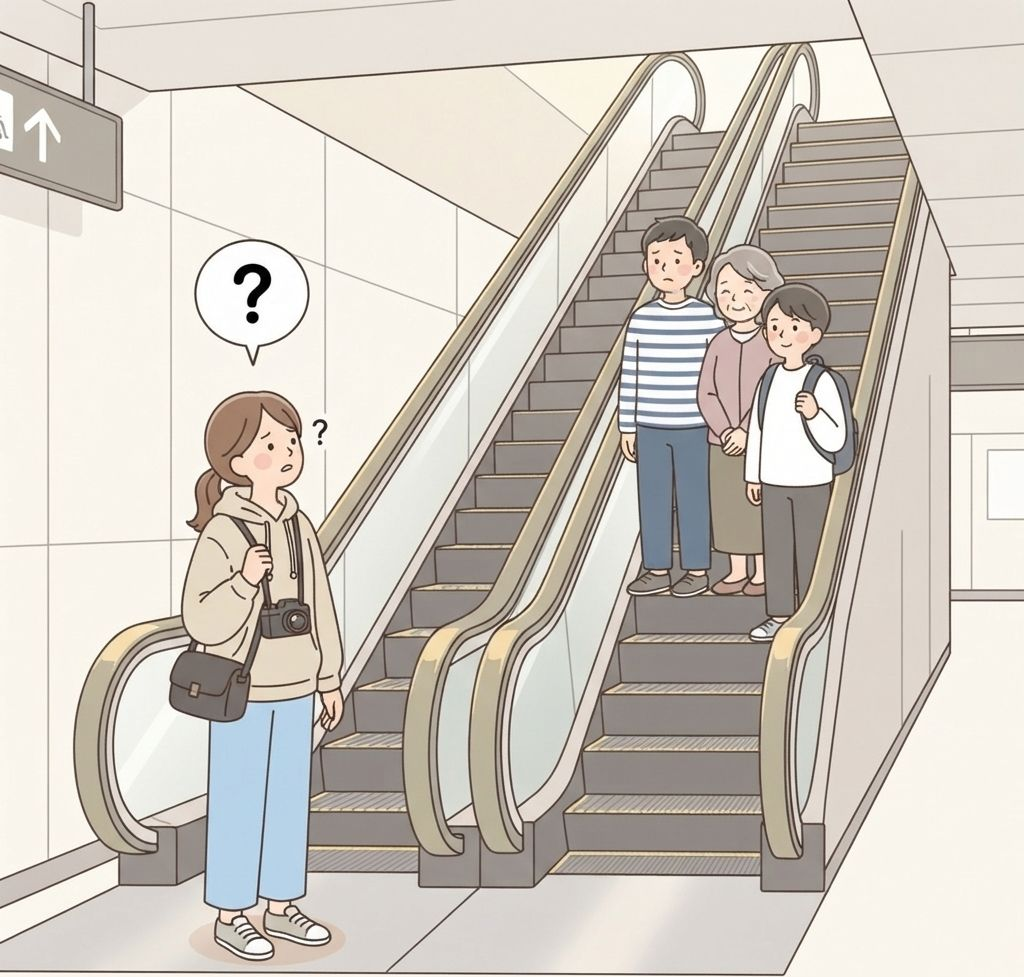
OK

Watch the locals for two seconds before you step on

Everyone ahead of you is clustered on one side. Join them. That's the whole test. If the escalator is empty and you have no one to copy, default to left—the Tokyo convention holds across almost the entire country. Osaka is the one exception.

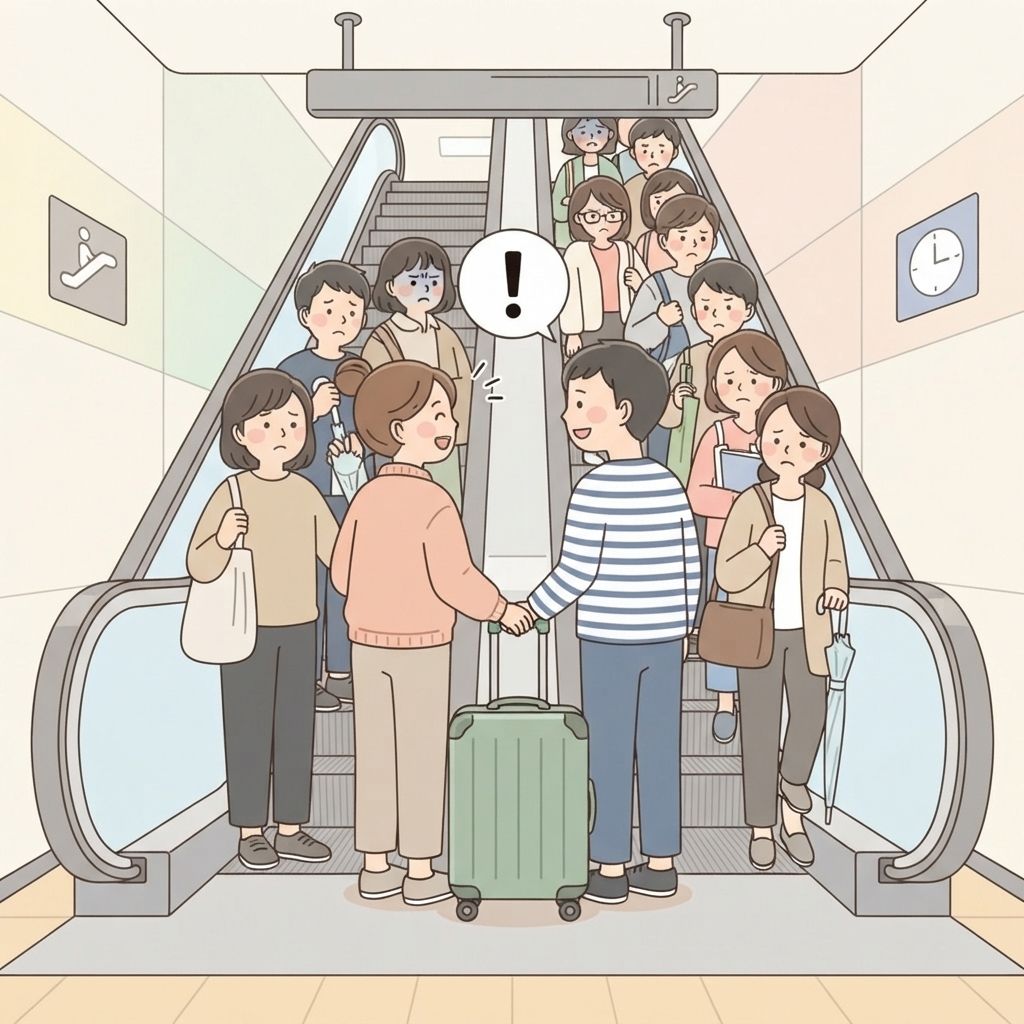
Standing two-abreast with your travel companion

NG

You, your friend, and the whole escalator

Both of you step on side by side, chatting, luggage between you, the entire stairway now fully blocked. The person behind you had things to do today. One of them was not waiting behind two tourists for thirty seconds on the Shinjuku platform escalator.

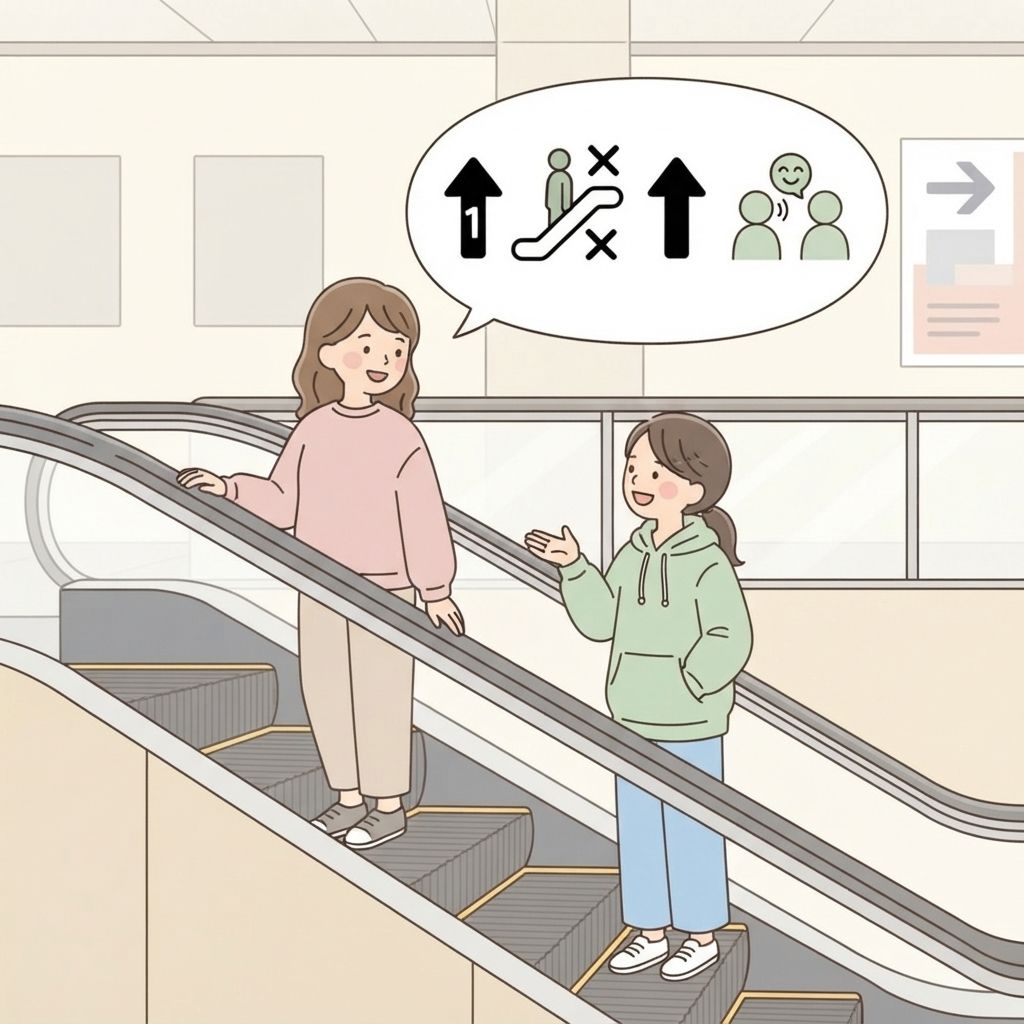
OK

Single file, pick the conversation back up at the top

Step on one at a time, stand on the correct side, resume the chat when you're off. Thirty seconds of interrupted conversation, zero impatient people behind you. Groups, families, couples—same deal. The escalator is not a social occasion.

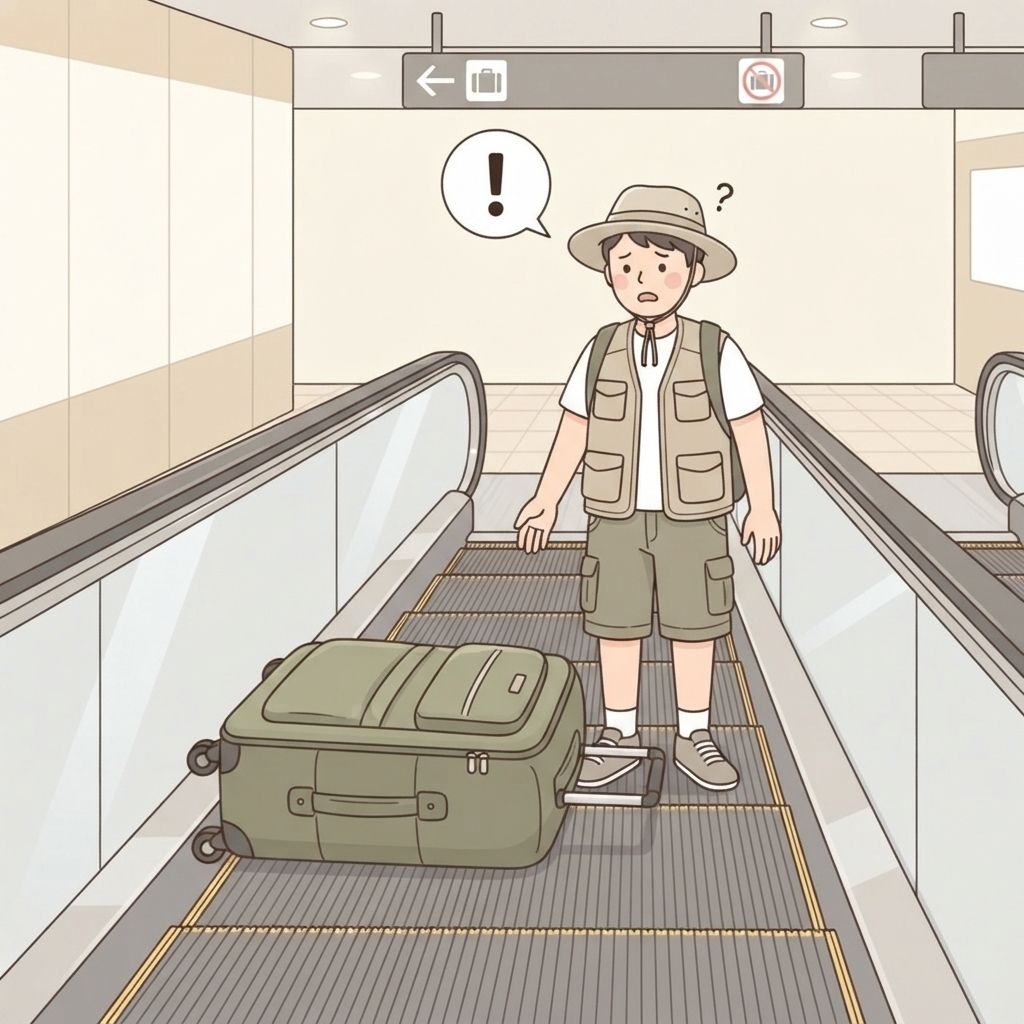
Blocking the walking lane with luggage

NG

A big rolling suitcase parked in the walking lane

The suitcase takes up a lane the same way a person does. At Shinjuku, Osaka Umeda, Tokyo Station, or any Shinkansen hub, the walking lane is full-on rush hour. A parked suitcase sitting in it is the escalator equivalent of stopping dead in the middle of a highway.

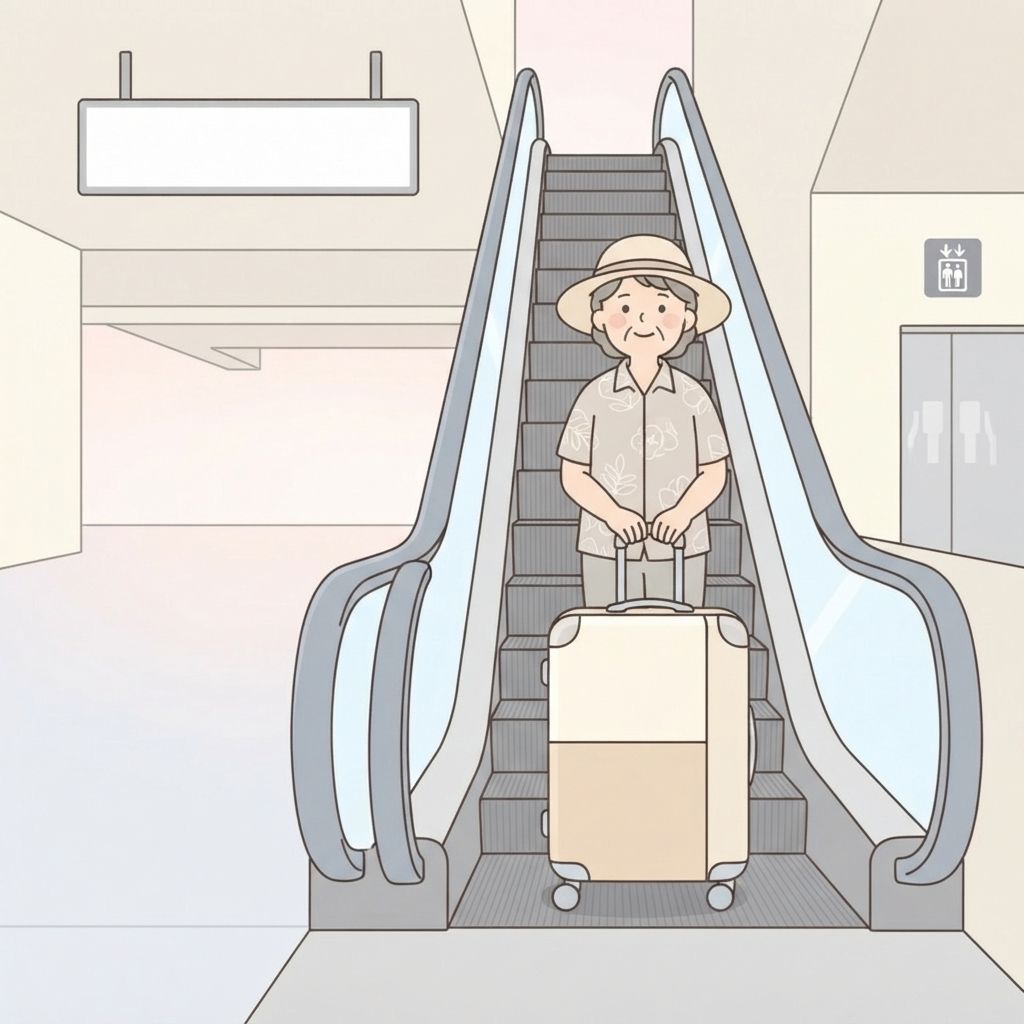
OK

Keep it in front of you in the standing lane, or take the elevator

Wheel the suitcase in front of you, on the standing side, both of you in the same lane. Or—and this is what locals with heavy bags actually do—skip the escalator entirely and find the elevator. At big stations there's always one nearby, and it's genuinely faster than fighting the stairs.

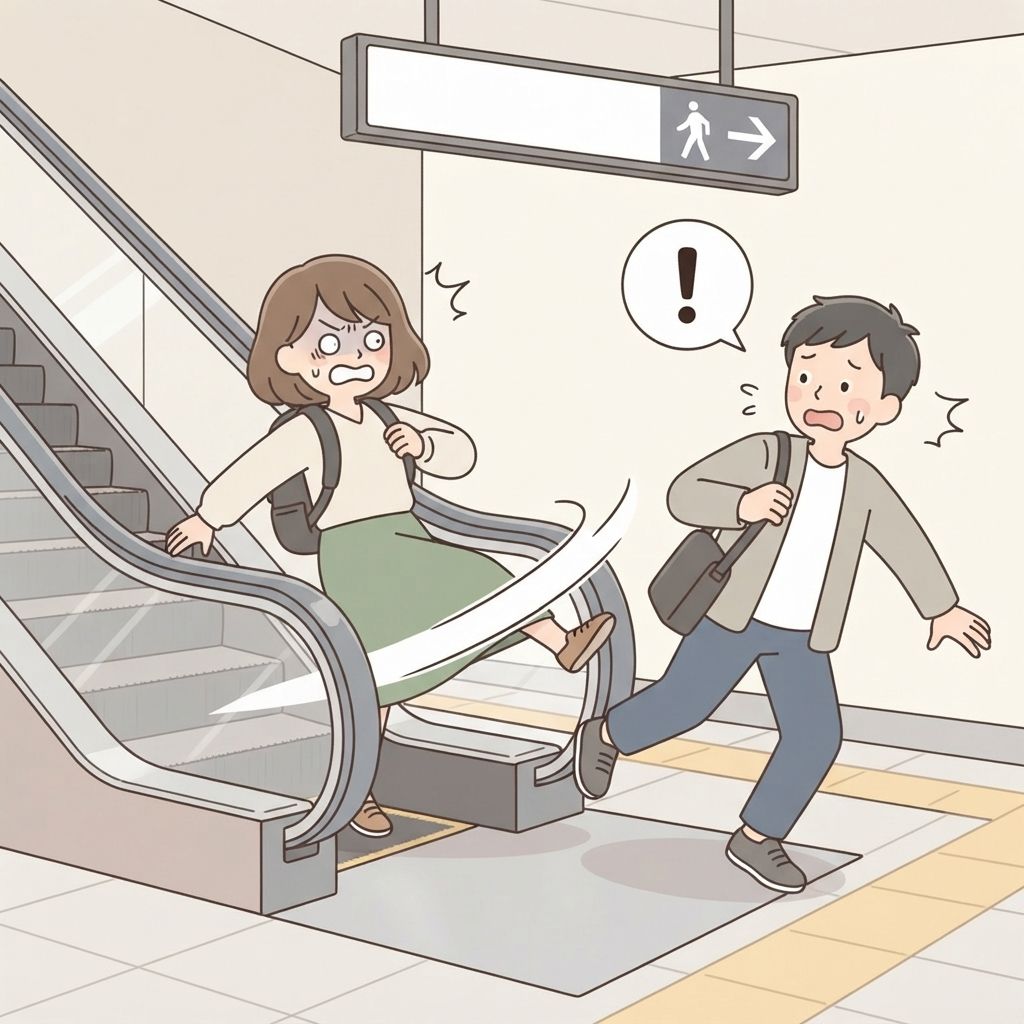
Walking up fast and then cutting across at the exit

NG

Bolting up the walking lane and slashing sideways at the top

Walking up is what the walking lane is for. That part is fine. But sprinting up and then cutting across the standing lane at the exit, to beat the people who are stepping off normally, is the aggressive version of being in a hurry. The standing lane exits first. Cutting in front of it defeats the whole system.

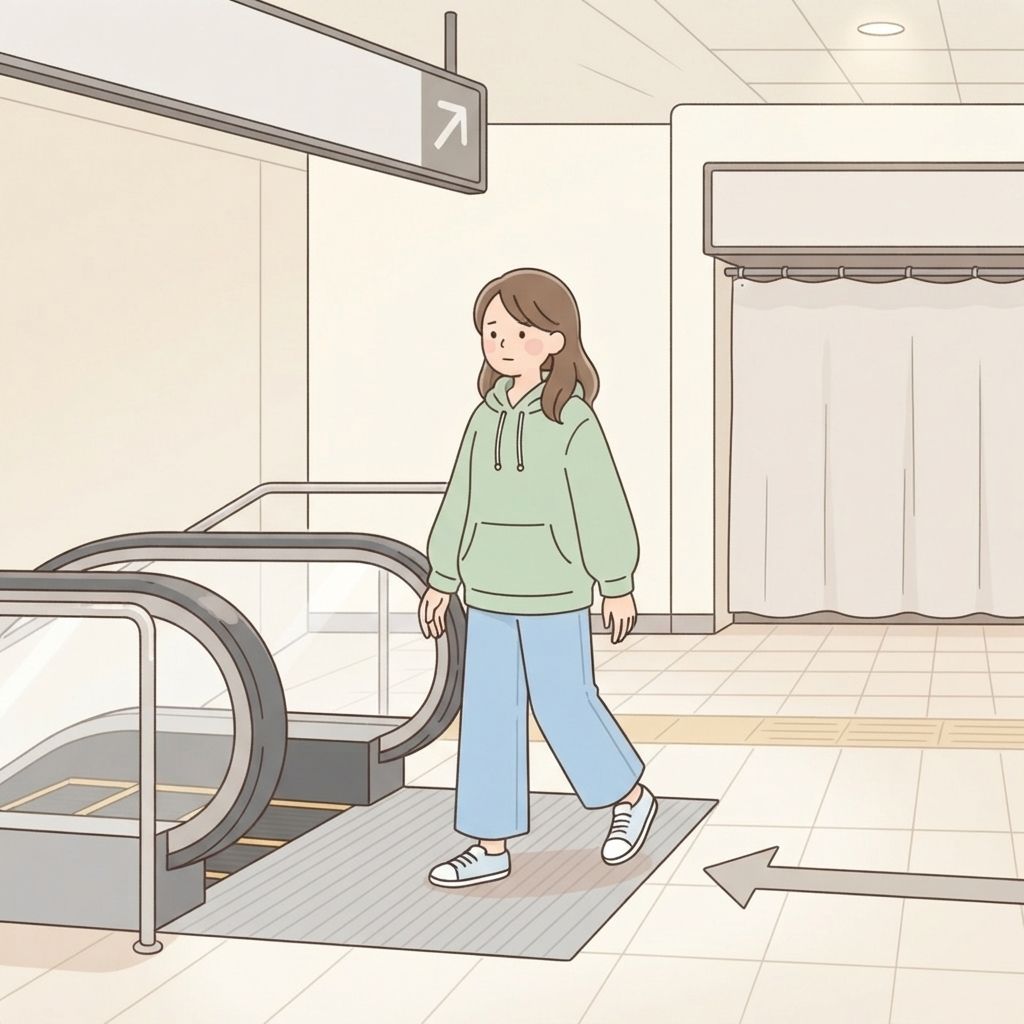
OK

Walk up, exit straight ahead, step aside once you're clear

Steady pace up the walking lane. Off the lip. Two steps forward. Then move to the side. The standing-lane people come off right behind you. Don't wedge yourself across their path—just keep going in the direction you were already going.

Why one city flips the whole convention

Japanese escalators move tens of millions of people a day through corridors that weren’t built for the volume. The one-side-standing, one-side-walking split isn’t politeness — it’s crowd flow engineering running on pure social consensus instead of painted barriers.

The part that catches visitors: that consensus flips in Osaka. Tokyo, Nagoya, Fukuoka, Sapporo, Kyoto, Hiroshima — all stand-left. Osaka — stand-right. No sign tells you. You’re expected to glance at the people ahead of you and match. Locals clock the mismatch the instant you step on the wrong side.

Tokyo = stand left (same as London). Osaka = stand right (basically nowhere else). When in doubt, watch two seconds and copy.

A few “nice to know” extras

  • The “please stand on both sides” campaigns — Railway operators periodically push safety campaigns asking everyone to stand still on both sides. Posters go up, announcements loop. In practice, nothing changes. Don’t read the signs as evidence the rule has shifted.
  • Midosuji and Hankyu Umeda — The two lines where Osaka’s stand-right is most ingrained. If you’re transferring at Umeda, you’ll hit both. Stand right, walk left, don’t overthink it.
  • Airport escalators are chaos — Narita, Haneda, Kansai International — the convention breaks down because half the riders just cleared immigration. This isn’t evidence the rule is dying. It’s the beginner tutorial happening in the same building as arrivals.
  • Moving walkways follow the same logic — Flat walkways in airport terminals and underground malls use the same one-side-standing split, same Osaka flip.

Quick check

Three questions to lock in the Tokyo-vs-Osaka muscle memory.

Quick check

Can you spot the right move?

  1. Q1 In Tokyo, do you stand on the left side of the escalator?

  2. Q2 Is it okay to stand side by side with a friend on a wide escalator?

  3. Q3 Has Osaka officially adopted the Tokyo stand-left convention?