Izakaya Survival Guide: Otoshi, Kampai & Pouring Rules

Izakaya is Japan's pub — small plates, loud friends, long nights. Tourists trip on 4 things: kampai timing, the otoshi charge, pouring, and ordering.

Drinking before the kampai

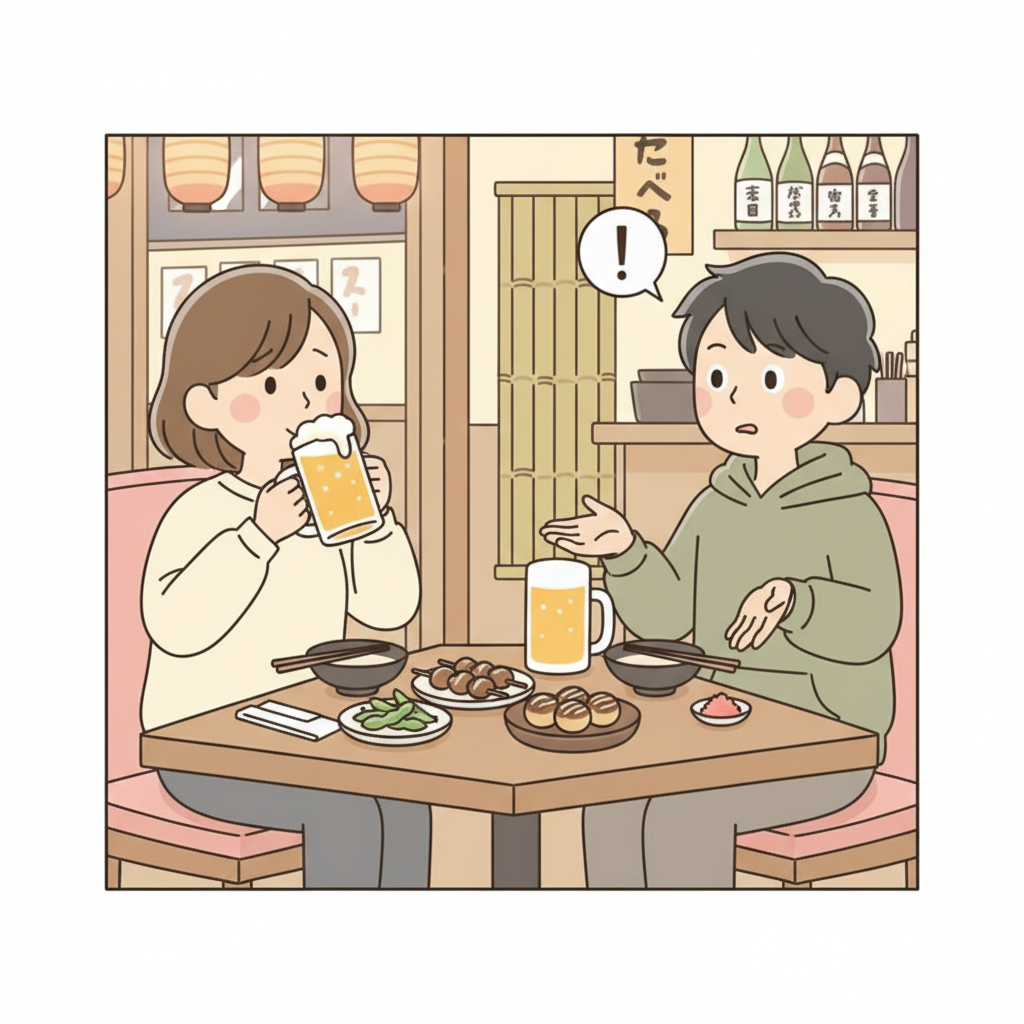
Two people at an izakaya table, one already sipping from their beer glass while the other watches with their own full glass still untouched
NG

Taking a sip the second your beer arrives

The first drink of the night at an izakaya is almost always a group toast—kampai. Everyone waits for all the drinks to arrive at the table, then raises glasses together and says 'kampai!' Sipping the moment yours arrives, before the group toast, is a bit jarring—it's the Japanese equivalent of starting to eat before everyone has their food.

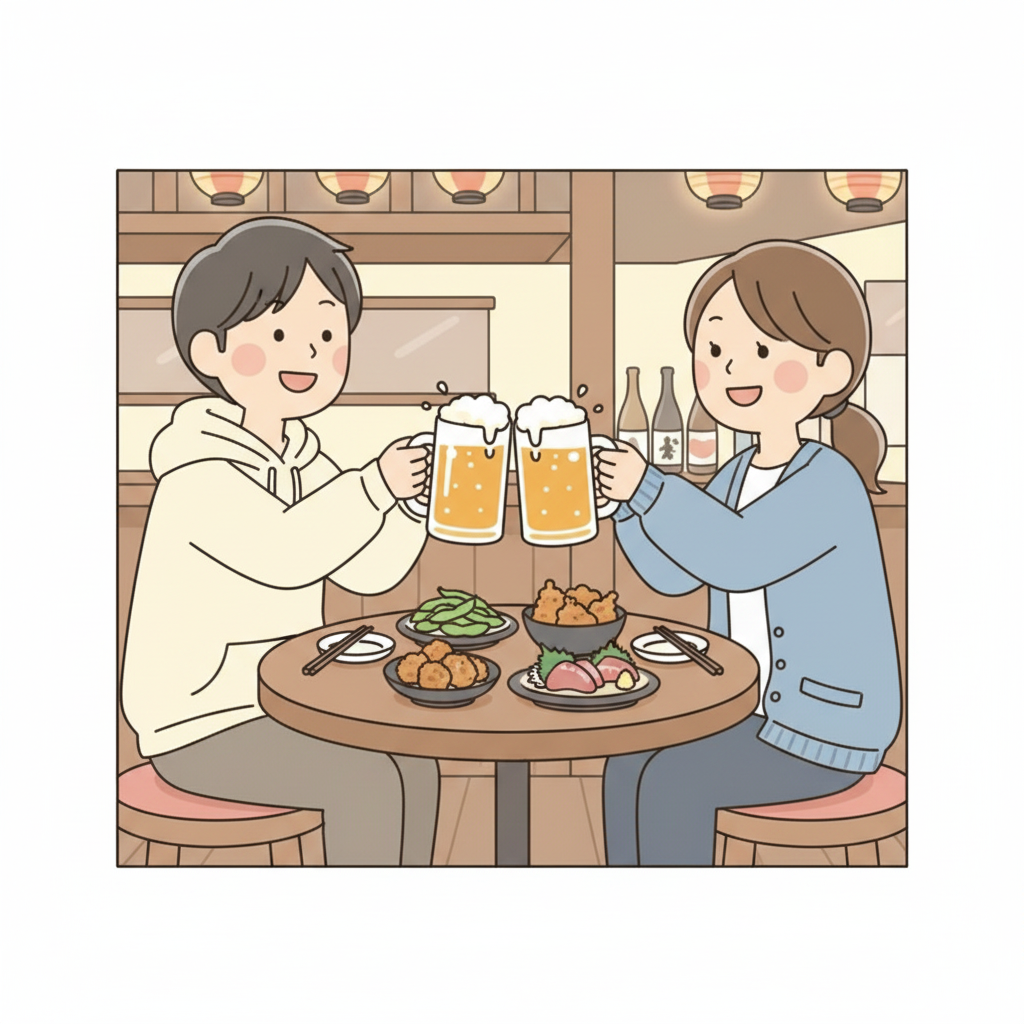
Two people at an izakaya table raising their beer glasses together in a kampai toast with big smiles
OK

Wait until every glass is at the table, then toast together

Hold off, look around, make sure everyone has their drink. Someone (often the most senior person or the host) will say 'kampai!' and everyone raises glasses and takes the first sip together. If you're in a group of foreigners and nobody initiates, you can do it yourself—raise your glass, say 'kampai,' everyone joins in.

Getting surprised by the otoshi charge on the bill

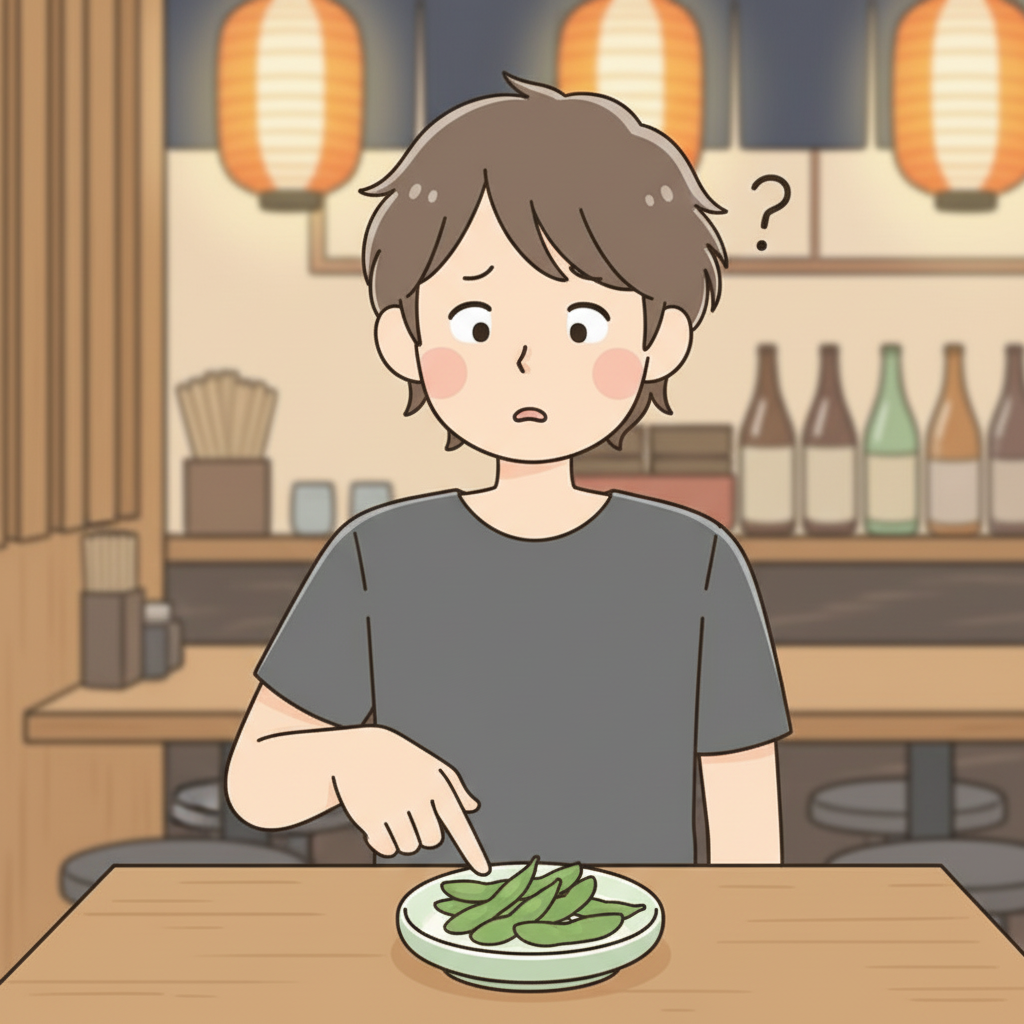
A puzzled person at an izakaya table pointing at a small dish of edamame they didn't order
NG

Seeing a small dish you didn't order appear and then getting charged for it

Nearly every izakaya serves each customer a small appetizer (otoshi) the moment you sit down. It could be marinated cabbage, a tiny pickled thing, steamed edamame, anything. You didn't order it, and at the end of the night there's a ¥300–600 per-person line item on the bill. Tourists sometimes read this as a scam—it is not. It's the izakaya's cover charge, baked into the meal as a welcome dish.

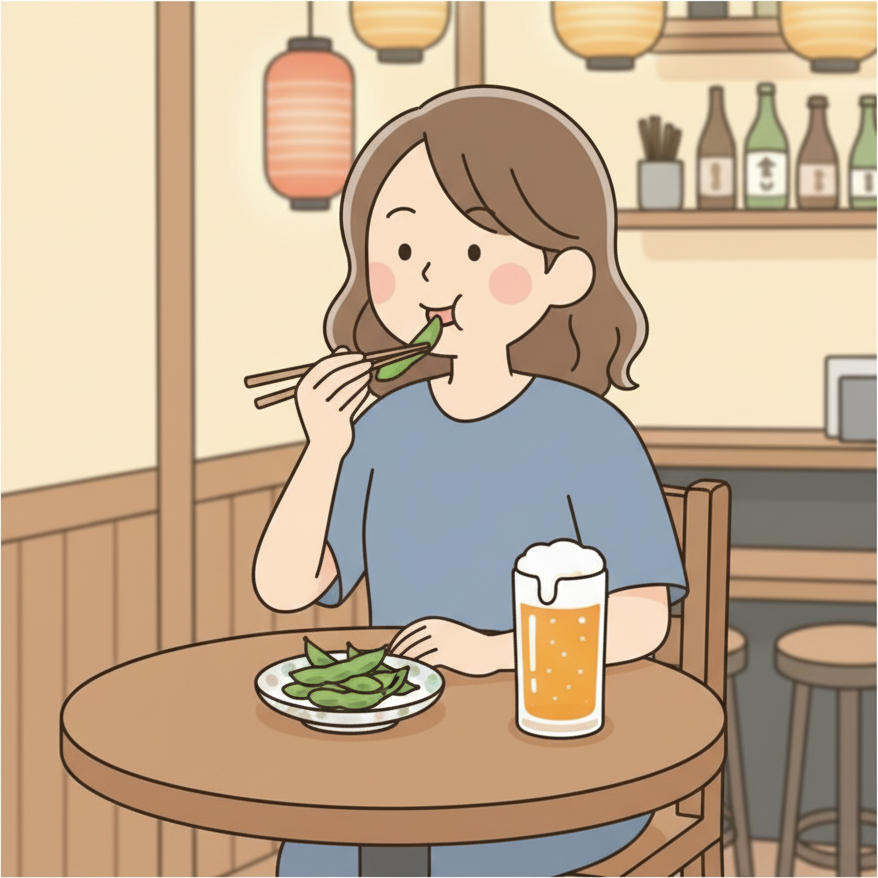
A person happily eating edamame from the otoshi welcome dish with chopsticks at an izakaya table
OK

Accept the otoshi, eat it, factor ¥300–600 per person into your mental cost

The otoshi is basically the table charge you pay for being served at an izakaya. The dish itself is usually decent and sometimes surprisingly good. Treat it as the first course of the meal, not as a mystery item, and the bill at the end will make sense. Some modern chain izakayas have dropped the otoshi—most traditional ones still do it.

Pouring your own drink (when in a group)

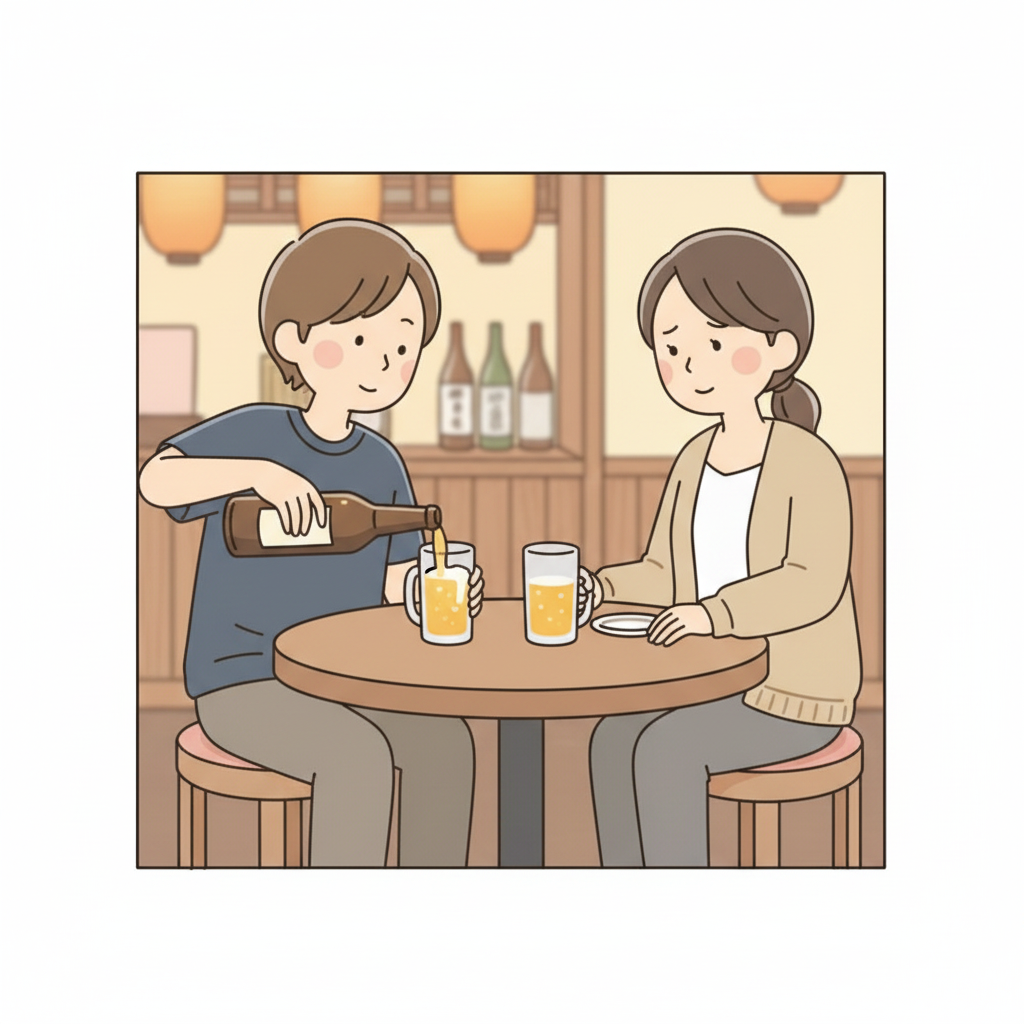
Two people at an izakaya table, one pouring beer into their own glass while the other watches with a slightly awkward expression
NG

Topping up your own beer glass while sitting with friends

In a group setting at an izakaya, the social convention is that you pour for others, and others pour for you. Pouring your own glass while friends are around is a tiny signal that you're not being taken care of—awkward for everyone at the table. It's a small gesture, but regulars notice.

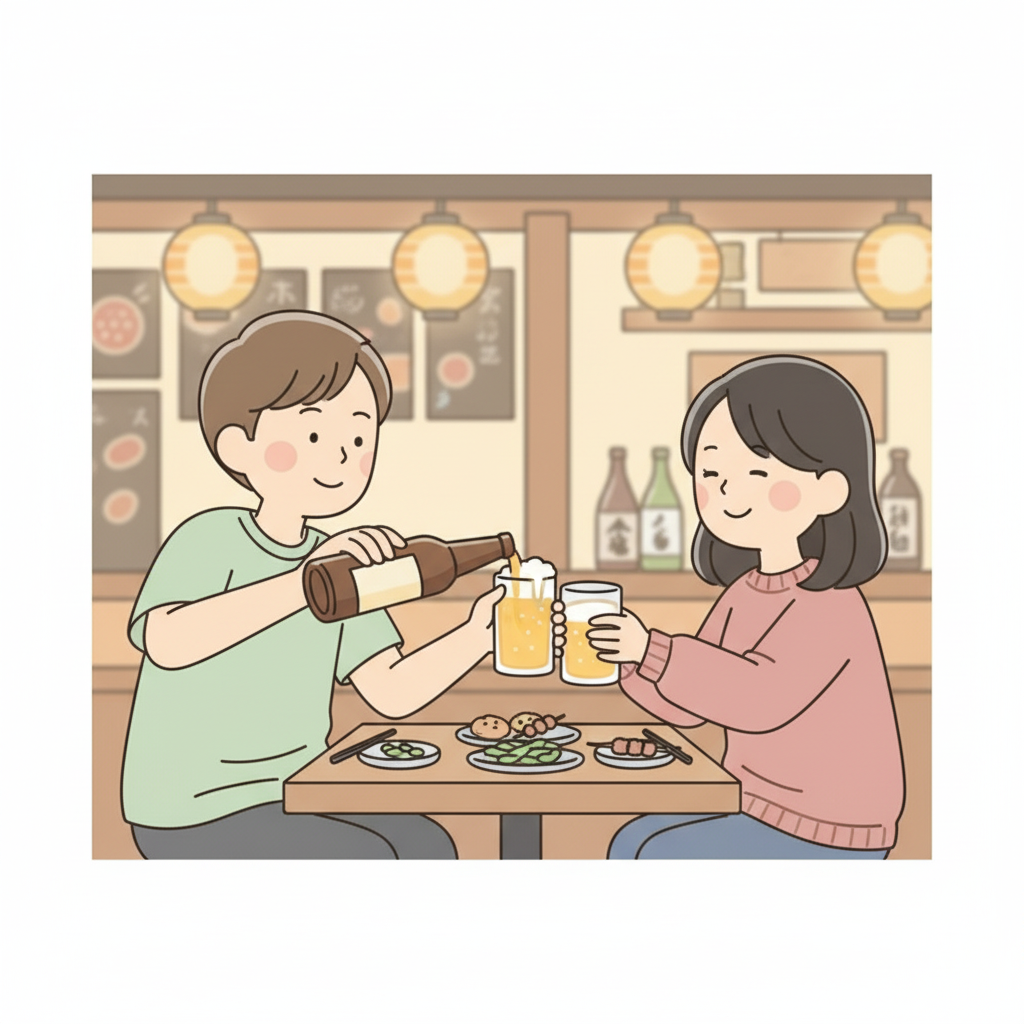
One person at an izakaya table pouring beer into a friend's glass while the friend holds the glass up with both hands
OK

Pour for the people around you. Accept pours with both hands on your glass

When you see a friend's glass getting empty, grab the beer bottle and pour for them. They'll do the same for you. When someone is pouring into your glass, lift the glass slightly off the table with both hands—one hand underneath, one on the side—as a gesture of acceptance. Solo at a counter is different: pouring for yourself is totally fine.

Not knowing how to order more

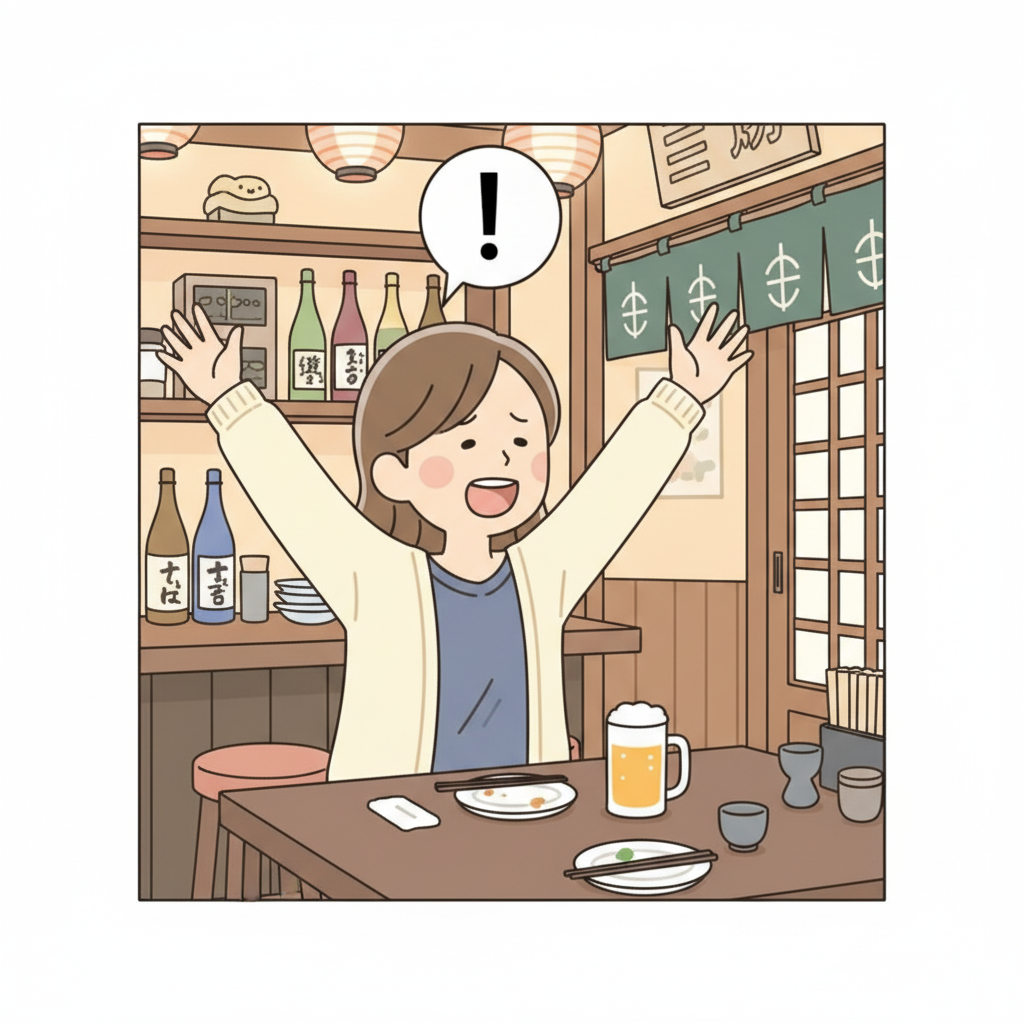
A person at an izakaya table waving both arms wildly above their head trying to flag down staff from across the room
NG

Flagging down a waiter from across the room, or waiting silently for them to come to you

At Western restaurants, the waiter circulates and asks if you need anything. At a Japanese izakaya, the staff generally doesn't come back unless you call them. Sitting and waiting for them to check on you results in very slow service. Waving frantically from across the room is the opposite problem—unnecessary and a bit rude.

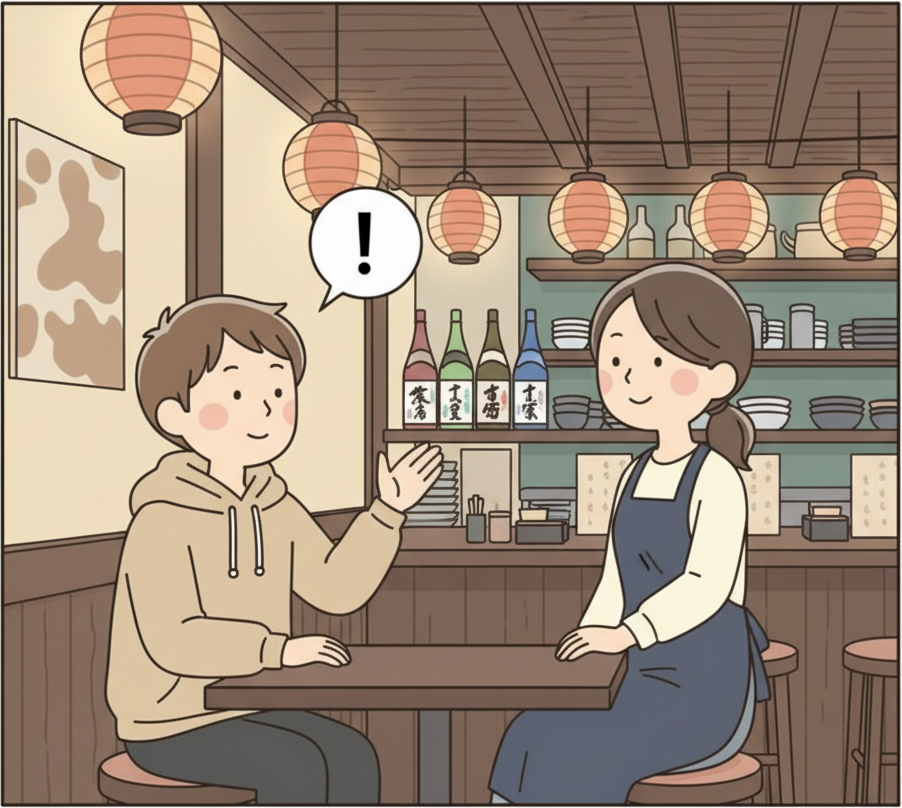
A person at an izakaya table calmly raising one hand to summon staff with a small exclamation speech bubble
OK

Say 'sumimasen!' clearly, at normal volume, when you want something

'Sumimasen' (excuse me) is the universal izakaya summon. Say it clearly—not a whisper, not a shout—and the nearest staff member will turn and come over. Many izakayas also have a small button on the table that rings a bell when you press it. Push it once; someone comes. No guilt, no shyness—this is exactly how the system is designed to work.

Why the izakaya runs on mutual care

An izakaya is Japan’s answer to the pub—but the rhythm is completely different. You don’t order a main course and wait. You order a few small plates, share them, talk, order more, drink, talk more, repeat for three or four hours. The whole evening is paced for lingering, not turnover.

That’s why the customs feel so group-oriented. Pouring for each other, toasting together, calling the staff yourself—it’s all built around the idea that the table looks after itself. The staff supports; they don’t drive. Once you internalize that, the rest is obvious.

Four moves and you’re golden: wait for the kampai, accept the otoshi, pour for your neighbor, say “sumimasen” when you need something.

How the money works

  • Otoshi (the mystery dish) — That small plate you didn’t order is the cover charge, ¥300–600 per head. It’s not a scam. Eat it, factor it into the bill, move on.
  • Nomihodai (all-you-can-drink) — 90 or 120 minutes, usually ¥1,500–2,500 per person. Order it at the start; you can’t add it halfway through the evening.
  • Warikan (split the bill) — Groups almost always split evenly regardless of who ate what. Fighting over individual totals is the awkward move. If you’re the youngest person at the table, the seniors may insist on paying more—let them.

A few “nice to know” extras

  • Shared plates are the default — Most dishes are portioned for the table. Order a spread and everyone picks. At more polite settings, use the tori-bashi (serving chopsticks) if provided.
  • Don’t stack plates — At a Western restaurant, stacking empties is helpful. At an izakaya, staff clear in their own rhythm and stacking gets in the way. Leave them.
  • The call button — Many izakayas have a small button on the table that rings a bell. Push it once, someone comes. No guilt required—the system is designed for it.
  • Last order is real — When the staff announces “last order,” that’s your final chance to order food and drinks. They mean it. Get your final round in or you’re done.

Quick check

Three questions to lock in the izakaya instinct.

Quick check

Can you spot the right move?

  1. Q1 Is the small unrequested appetizer that appears at an izakaya a scam?

  2. Q2 Is it okay to pour your own beer at an izakaya with friends?

  3. Q3 Should you wait until everyone has their drink before taking the first sip?