The Cash Tray: Always Use It at Japanese Registers

Every Japanese register has a small tray for cash. You put money in the tray, not the clerk's hand. Skip it and you disrupt the rhythm.

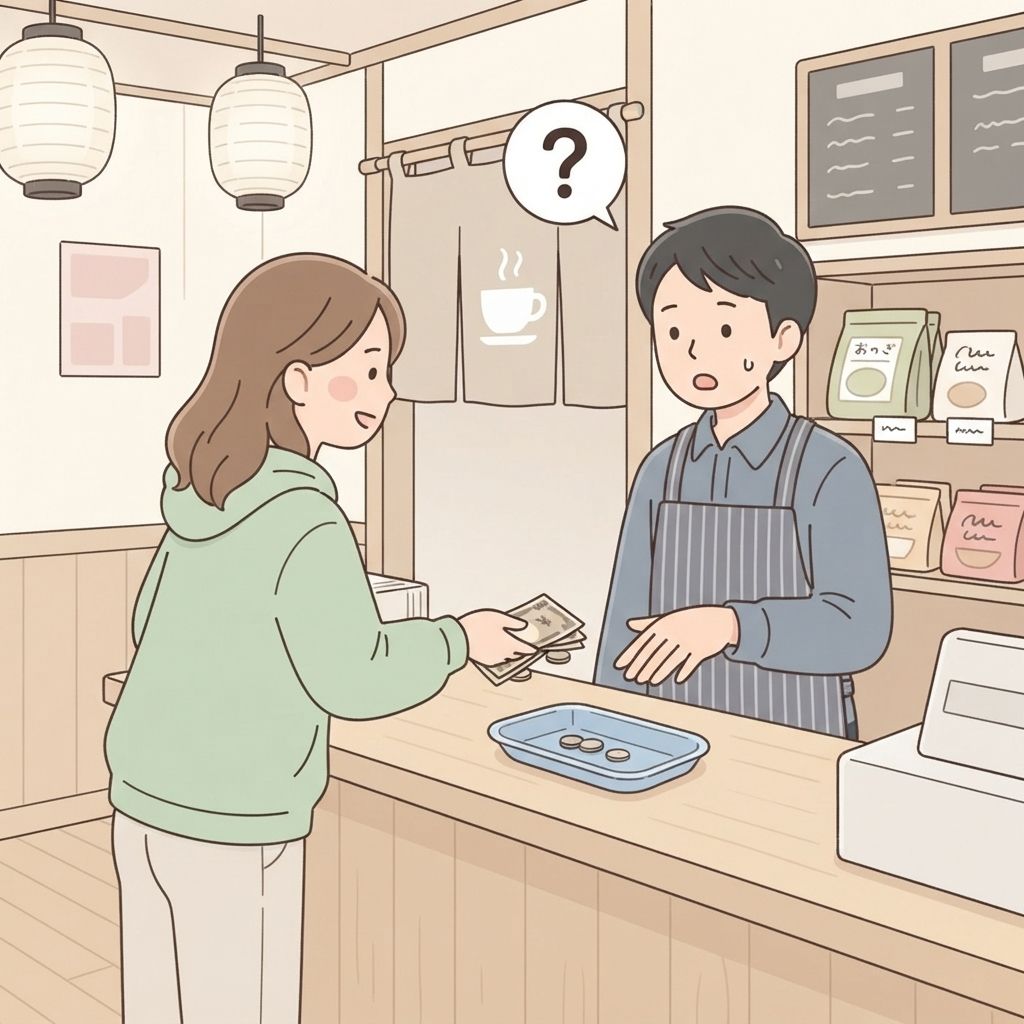
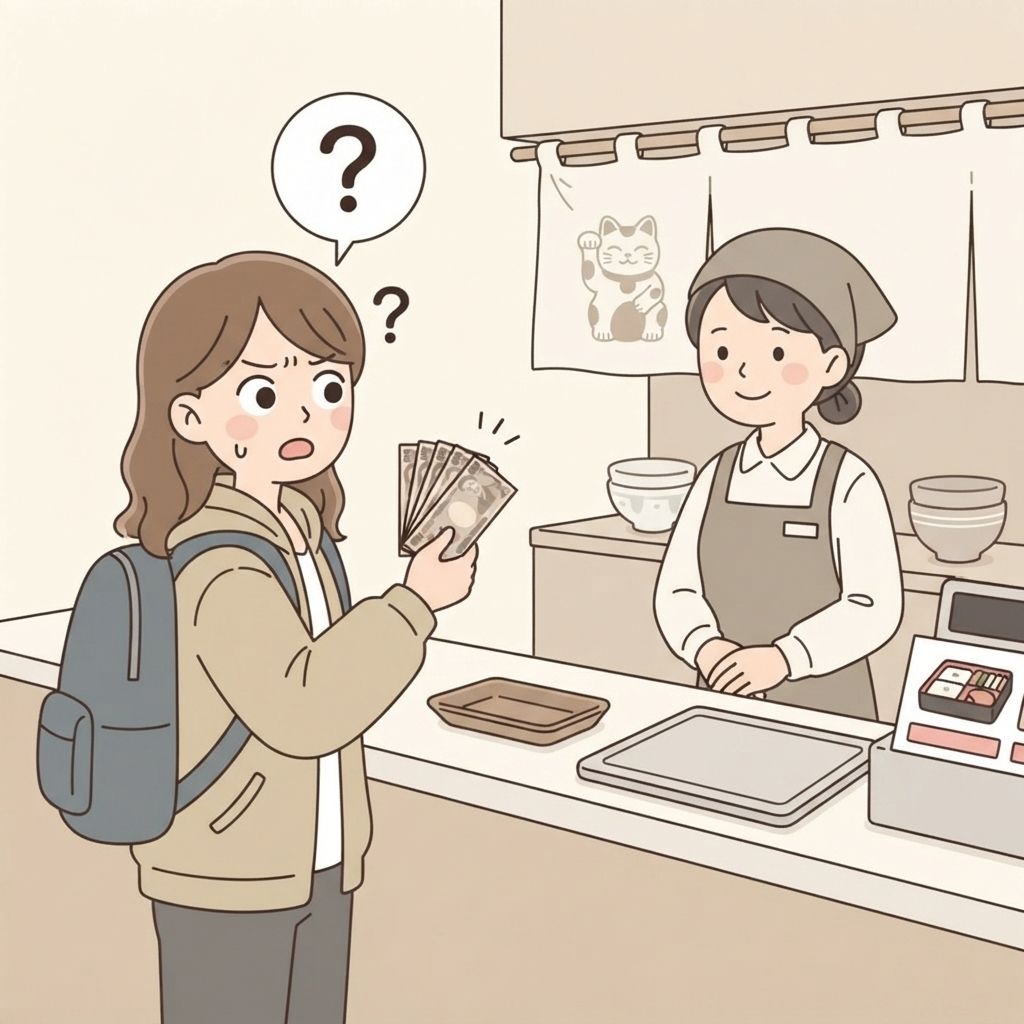
Handing cash directly to the clerk's hand

NG

Extending your bills and coins directly across the counter, hand to hand

When you try to hand cash directly to a Japanese clerk, you create a small moment of confusion. They usually don't want to take it from your hand—they want you to put it in the tray. They'll often gesture at the tray silently, or accept the cash and then place it in the tray themselves. Either way, you've introduced a small hitch into a transaction that was supposed to be frictionless.

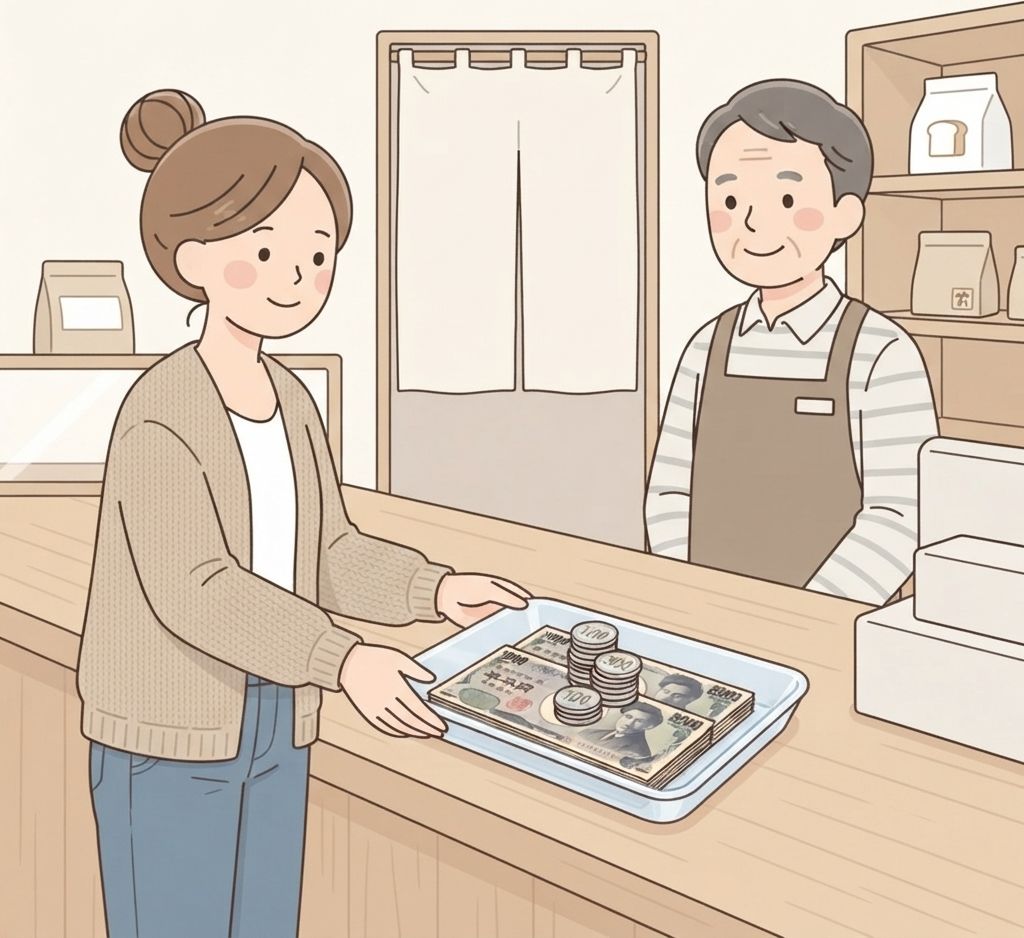
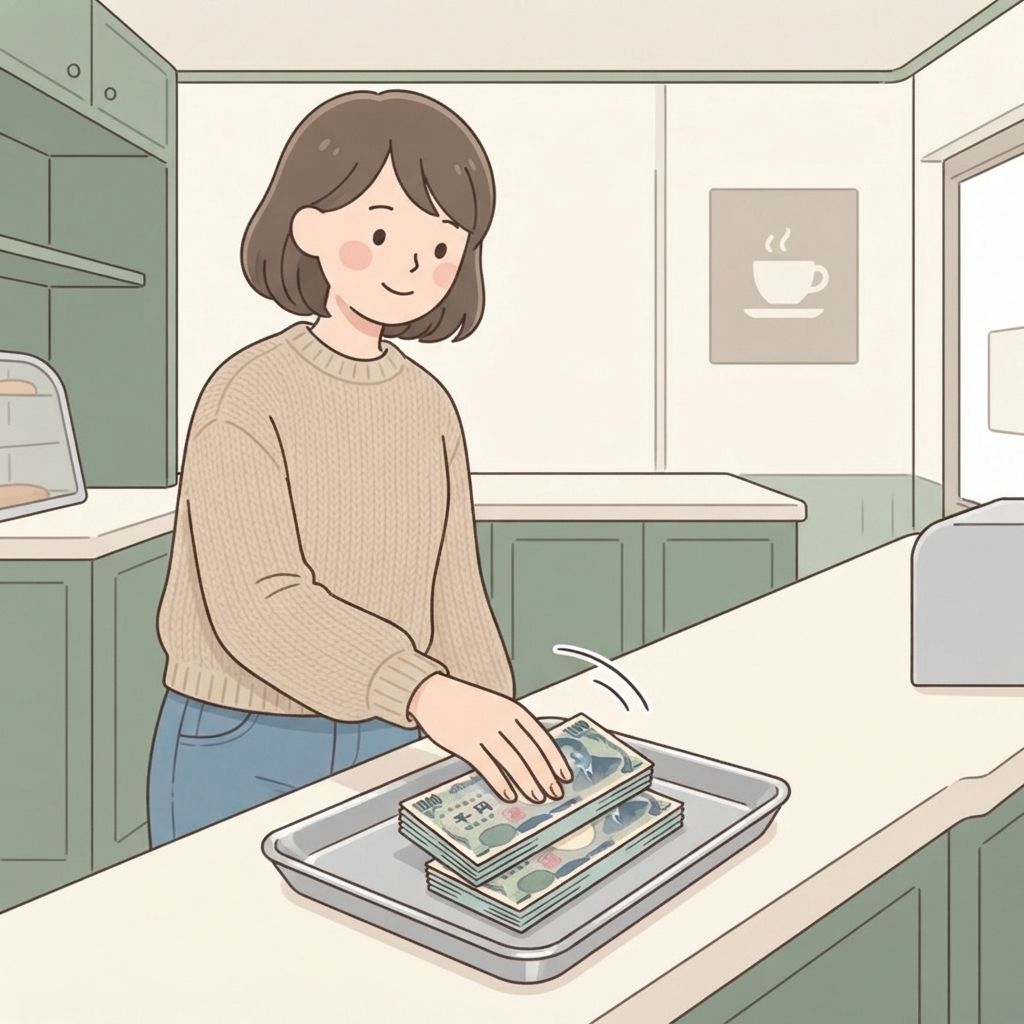
OK

Place the cash neatly in the tray, bills flat, coins on top

Look for the small plastic tray on the counter—it's almost always right where you're standing. Place your bills flat in the tray (folded bills go flat, not creased), coins on top of the bills or in a small pile, and slide the tray slightly toward the clerk. They take the tray, count the money, and put the change and receipt back in the tray for you to retrieve.

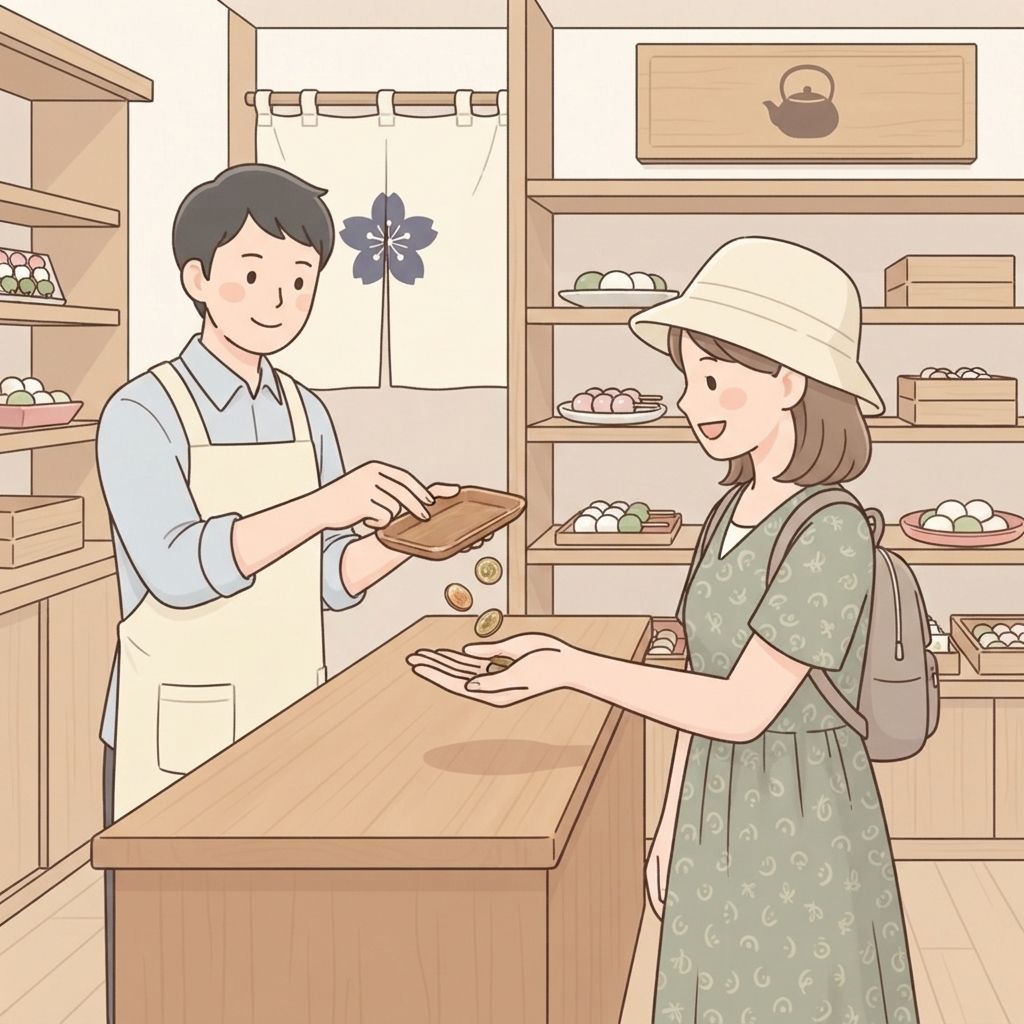
Grabbing coins and bills out of the clerk's hand for change

NG

Holding your palm out and waiting for the clerk to drop coins into it

Same problem in reverse. When the clerk gives you change, they place it in the tray, not in your hand. Holding your palm out expecting them to drop coins into it creates the same confusion: they're aiming for the tray, you're aiming for a hand-off, and the coins end up in a weird half-exchange.

OK

Wait for the change to land in the tray, then pick it up

The clerk will set your change, receipt, and any small items (like a handful of loyalty points coupons) in the tray. Wait for them to finish, then pick everything up from the tray yourself. If they also hand you a shopping bag, that comes directly—but the money part of the exchange uses the tray, every time.

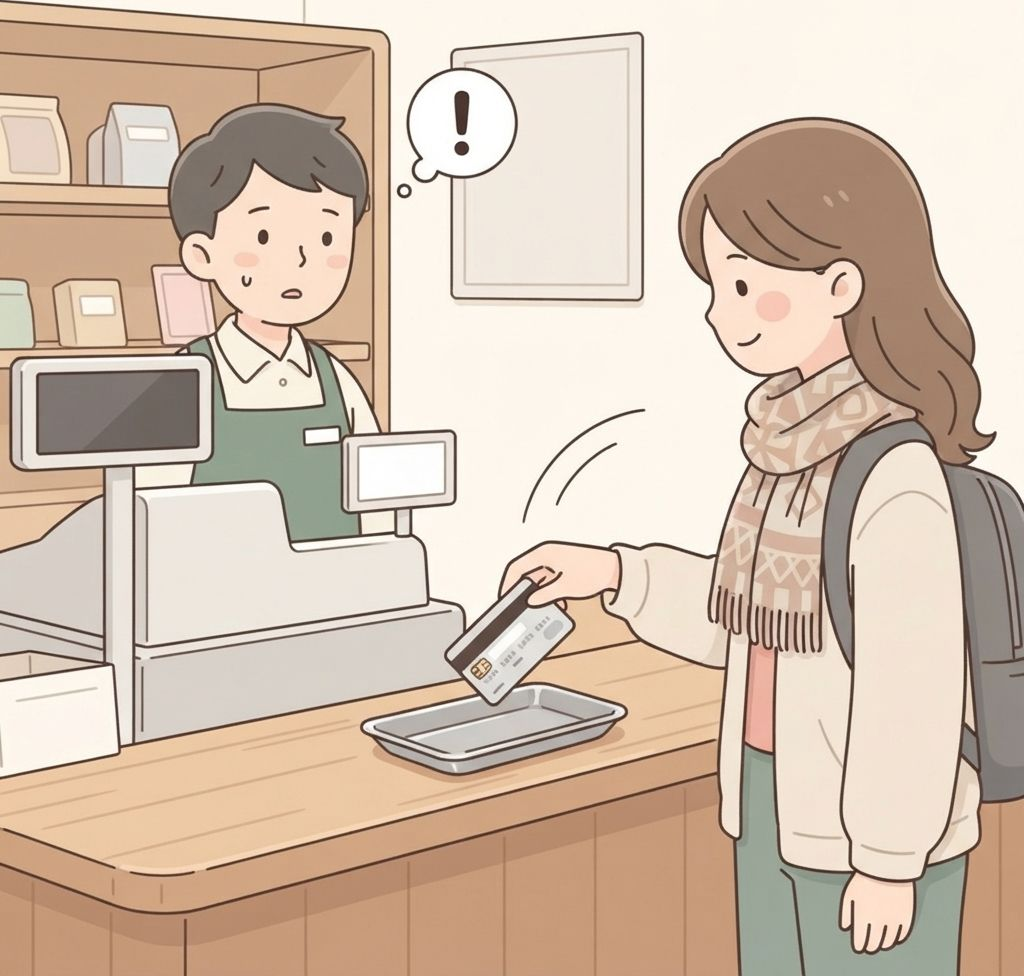
Ignoring the tray when using a credit card

NG

Throwing the credit card in the tray as if cash

The tray is specifically for cash. Credit cards are handed directly to the clerk, or slotted into a terminal on the counter that you operate yourself. Throwing a card in the tray is a small category error—the tray exists because counting cash is fiddly and having a dedicated surface for it makes the job cleaner. Cards don't have that problem.

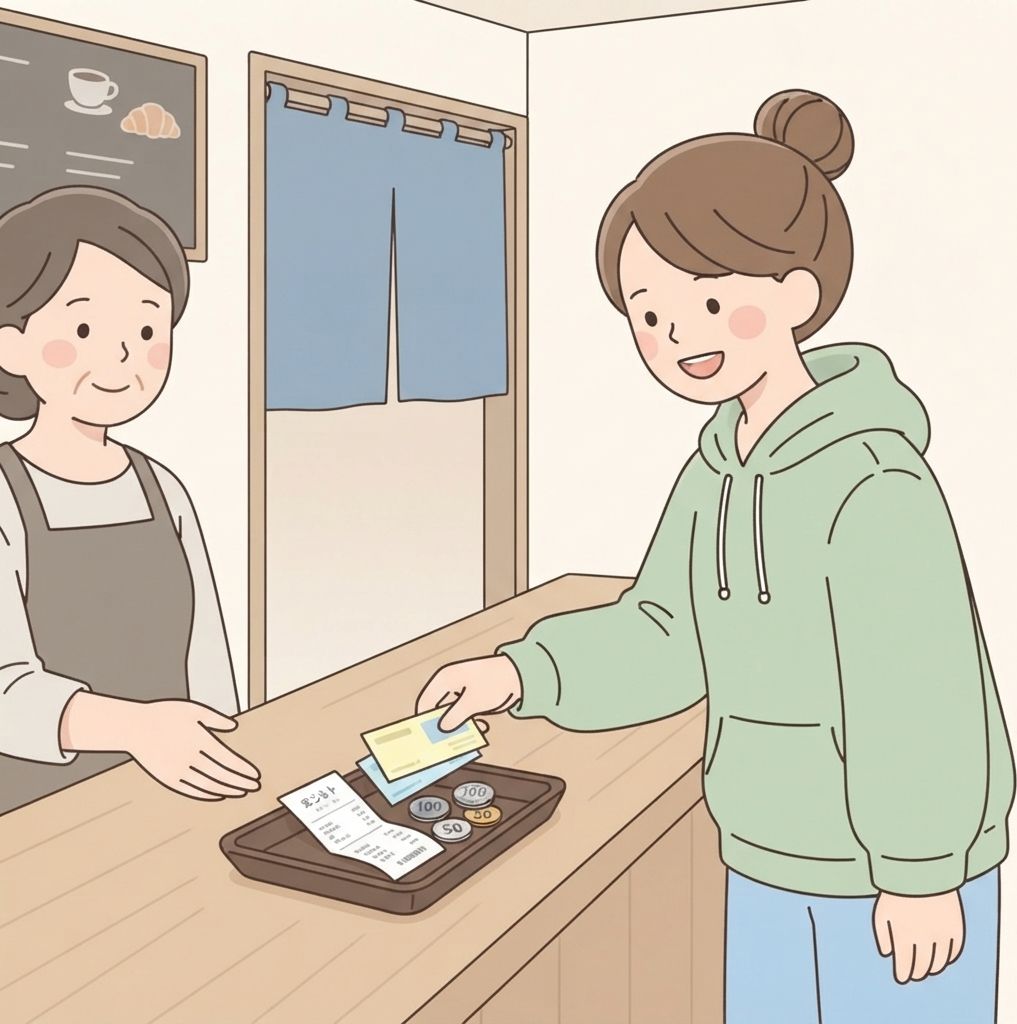
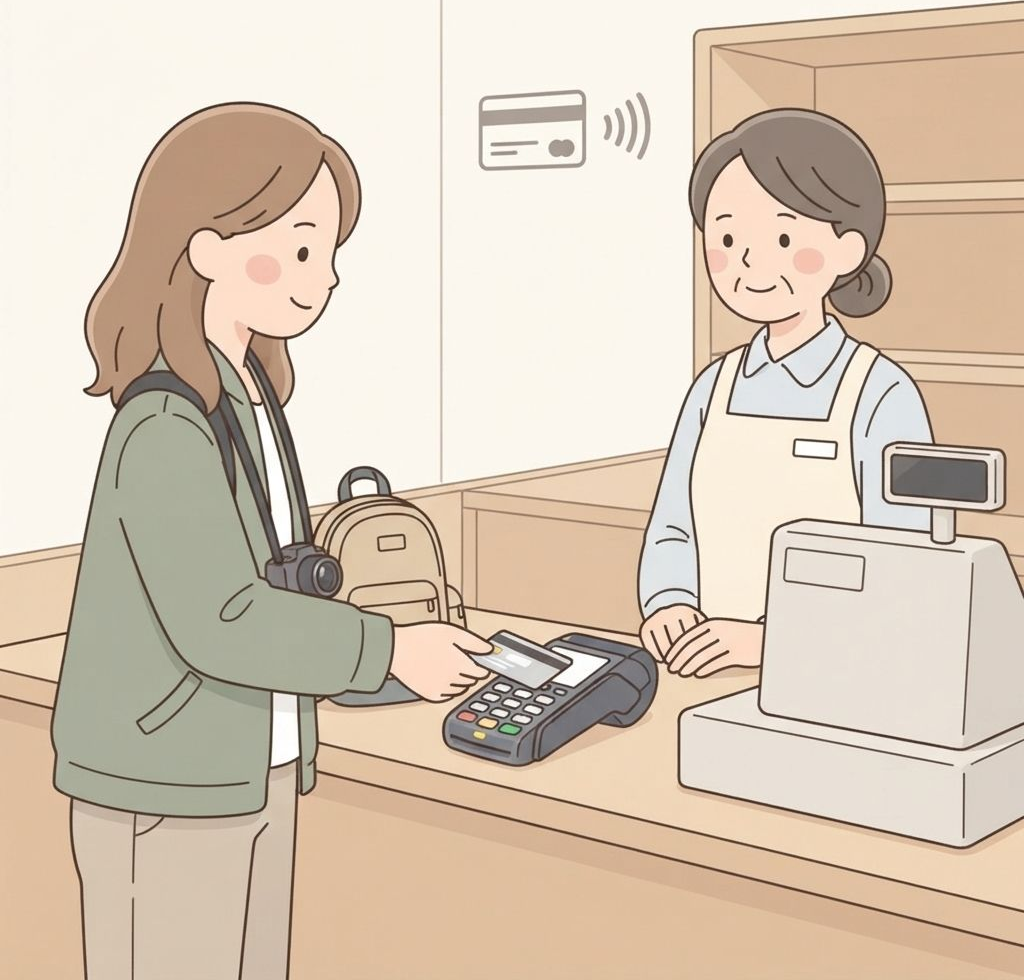
OK

Hand the card directly, or insert it into the terminal yourself

If the clerk asks for your card, hand it to them directly. If there's a terminal facing you on the counter, you're usually expected to insert the card, tap, or swipe it yourself and then enter the PIN. Japanese card terminals often have an English-language option—press the button that shows English to switch. The tray sits empty during the card transaction.

Overthinking the tray and causing friction

NG

Hesitating, asking 'tray?' and looking confused while the clerk waits

Sometimes tourists who've read about the tray rule overthink it at the register. They freeze, look around, try to ask if they should use the tray, and make a bigger deal of it than necessary. The tray is obvious when you see it—small, usually black or clear plastic, right in front of you. The clerk is used to both 'tray users' and 'direct handers' and will silently route whatever you do into the correct next step.

OK

Just put the cash in the tray with zero ceremony. No words needed

This isn't a test. Put the money in the tray, wait for the change, take the receipt, say 'arigatou gozaimasu,' leave. The whole interaction is mechanical. The tray rule is a small lubricant for the machine, not a formal ritual you have to perform correctly.

Why a little plastic tray runs every transaction

The money tray—called karuton (カルトン, borrowed from French) or otsuri-zara—sits on virtually every Japanese register for two reasons: hygiene and coin control. Hundreds of hand-to-hand cash exchanges per day means hundreds of germ transfers. The tray kills that. And with six denominations of coins rattling around, a flat surface with raised edges keeps everything from rolling onto the floor.

The system predates the pandemic by decades. COVID just made everyone nod and say “see, told you.”

Cash in the tray, card in the hand. That’s the whole rule.

A few “nice to know” extras

  • Self-pay machines skip the tray — Some konbini and fast-food registers now have a slot where you feed bills and coins directly into a machine. It counts, dispenses change, no tray needed. Just follow the on-screen prompts.
  • IC cards and QR payments bypass everything — Tap your Suica or scan PayPay and the tray sits there empty, a relic of analog commerce. In urban Japan you can go days without touching cash at all.
  • Coin counting takes a beat — If you dump a fistful of 1-yen and 5-yen coins into the tray, the clerk will count them carefully. Don’t hover. Let the count finish, then the transaction moves on.
  • The tray doubles as an object handoff — Order numbers, loyalty-stamp receipts, room keys at small hotels—clerks sometimes set these in the tray alongside your change. Scoop it all up together.

Quick check

Three questions to lock in the tray reflex. Takes about 20 seconds.

Quick check

Can you spot the right move?

  1. Q1 Should you hand cash directly to the clerk's hand at a Japanese register?

  2. Q2 Is the money tray also for credit cards?

  3. Q3 If you put your cash in the tray, does the clerk put your change back in the tray?