Why two kinds of trains, two opposite rules
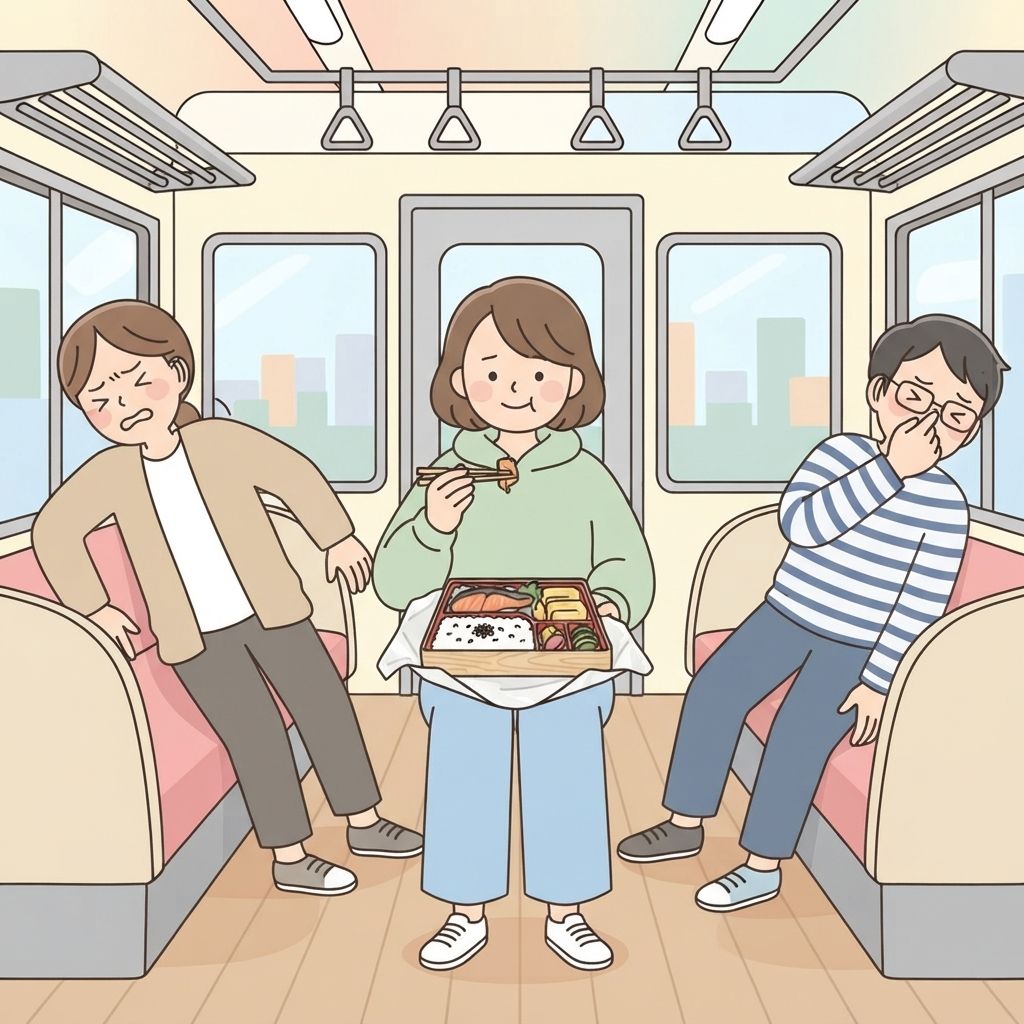
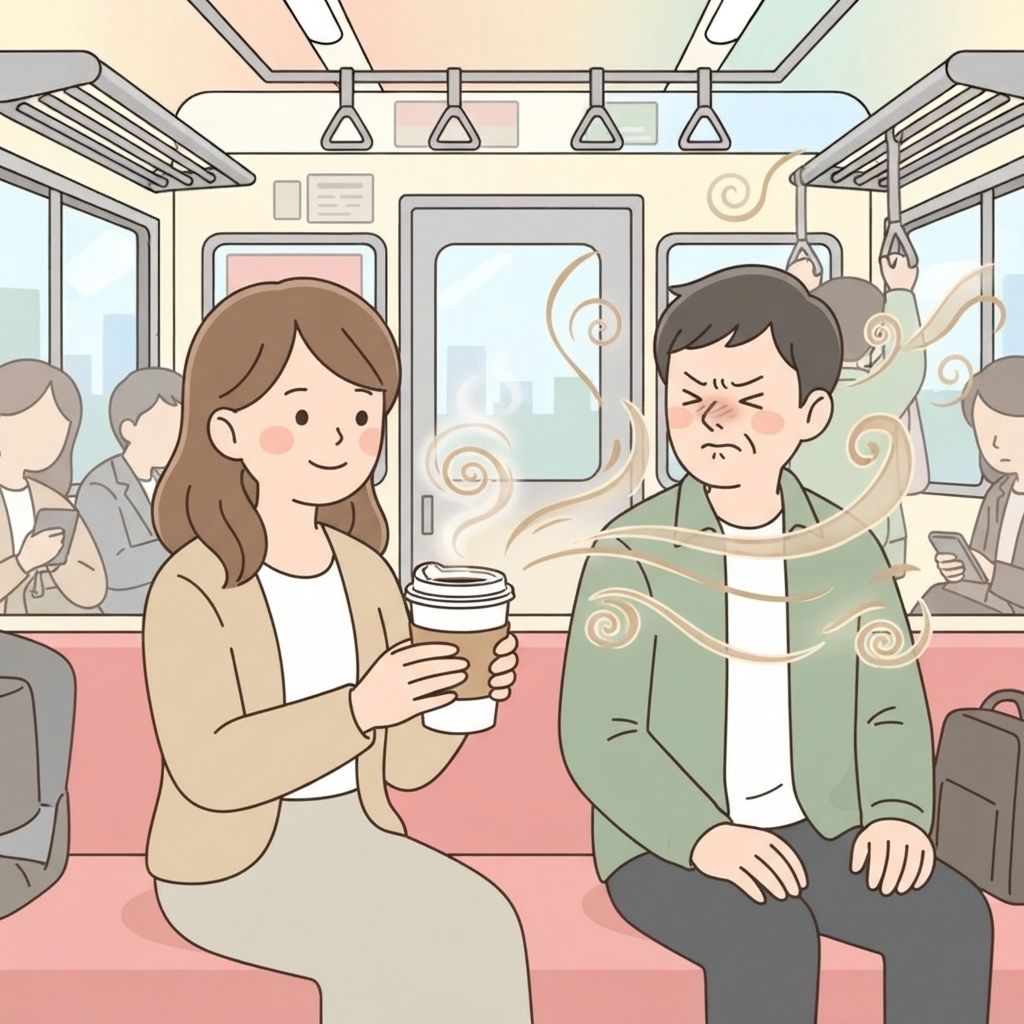
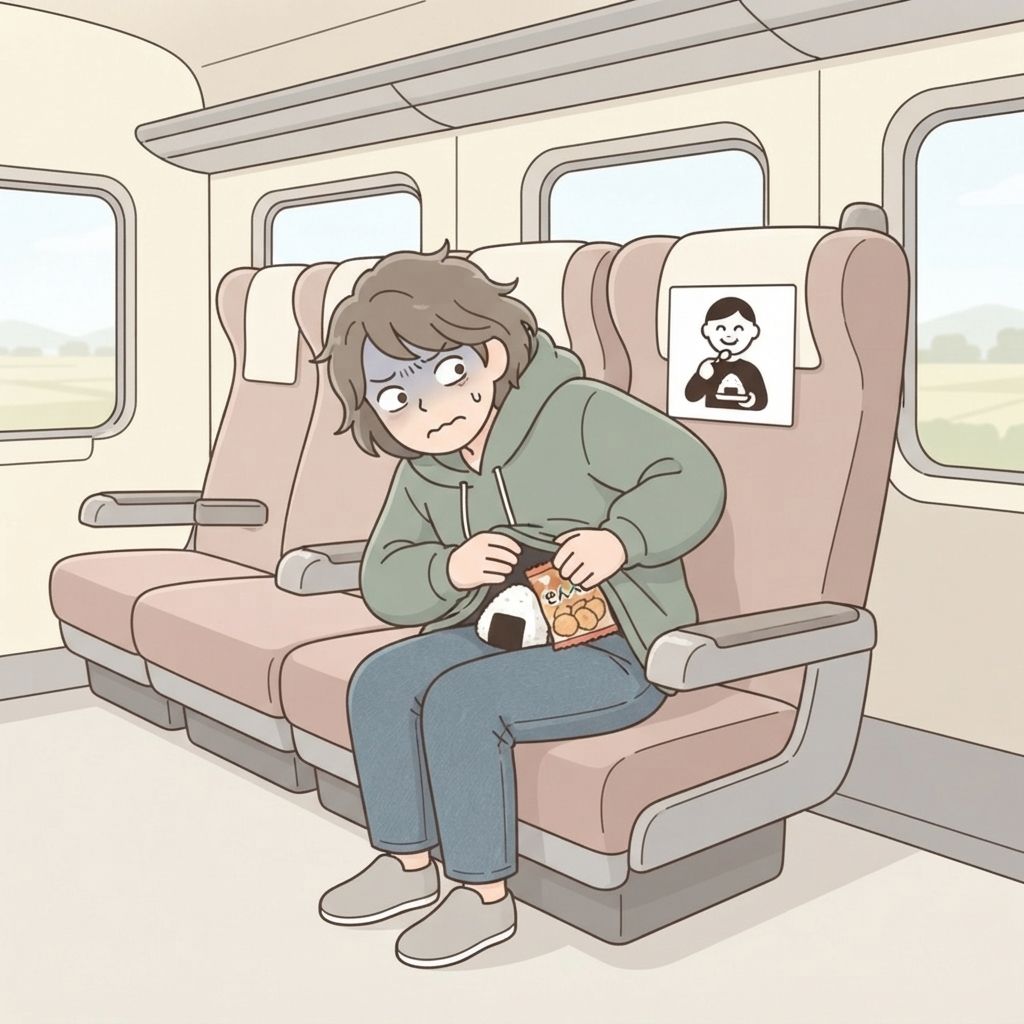
A Tokyo commuter train is a sealed tube of strangers pretending the hundreds of other people don’t exist. The quiet, the no-phone-calls, the no-eating — all of it helps preserve the fiction of personal space when there physically isn’t any. Open a rice ball and the people around you will smell nori and soy sauce quickly — smells move fast in a packed Yamanote Line car at 8am.
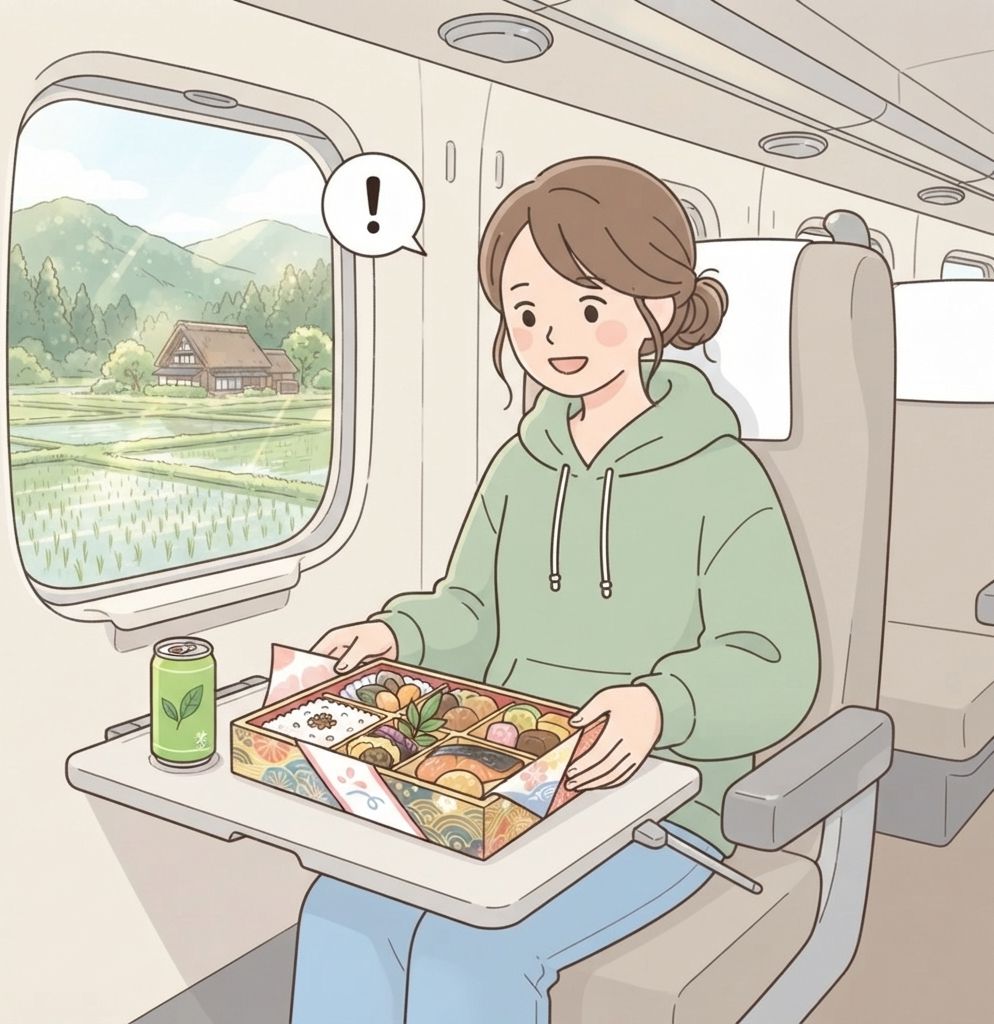
The Shinkansen is a different animal entirely. Reserved seat, fold-down tray, longer ride, scenic window. Eating a bento here isn’t just allowed — it’s a big part of the fun. The etiquette flips because the context flips.
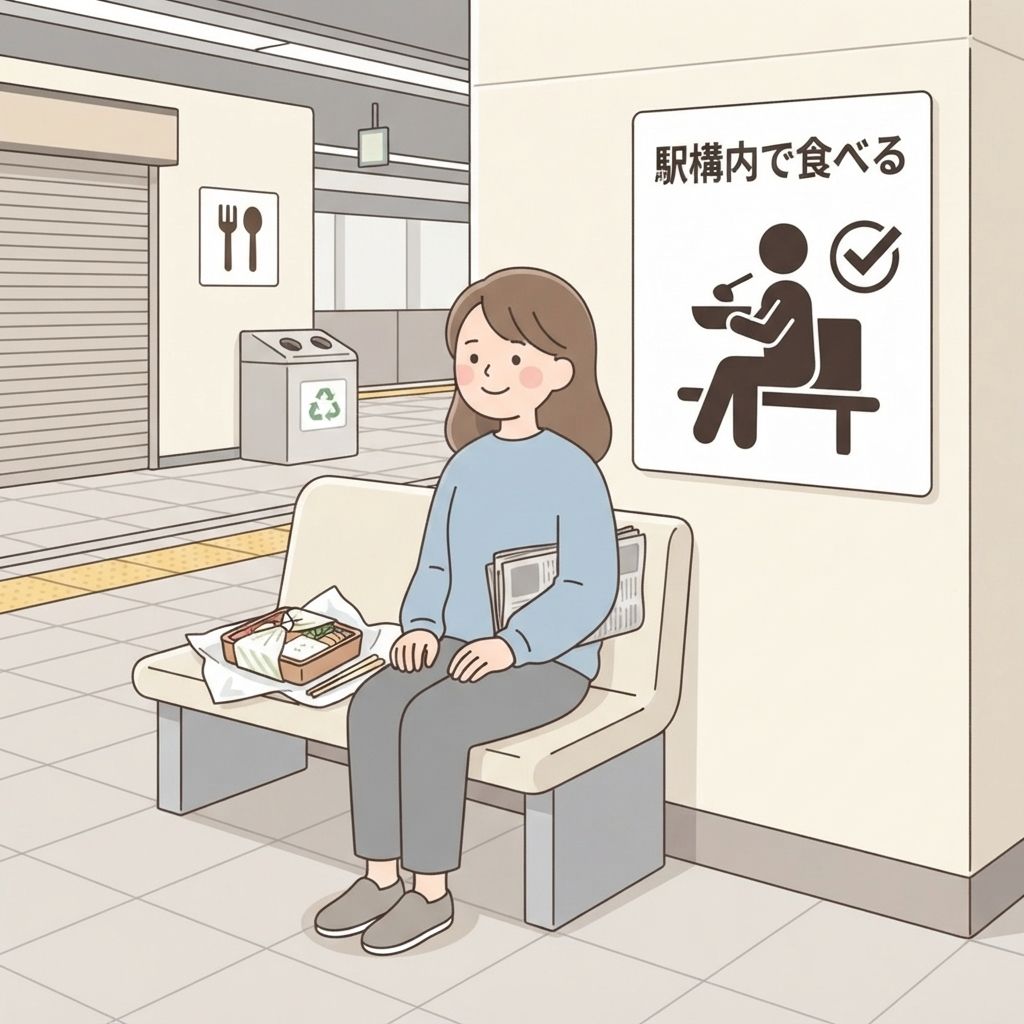
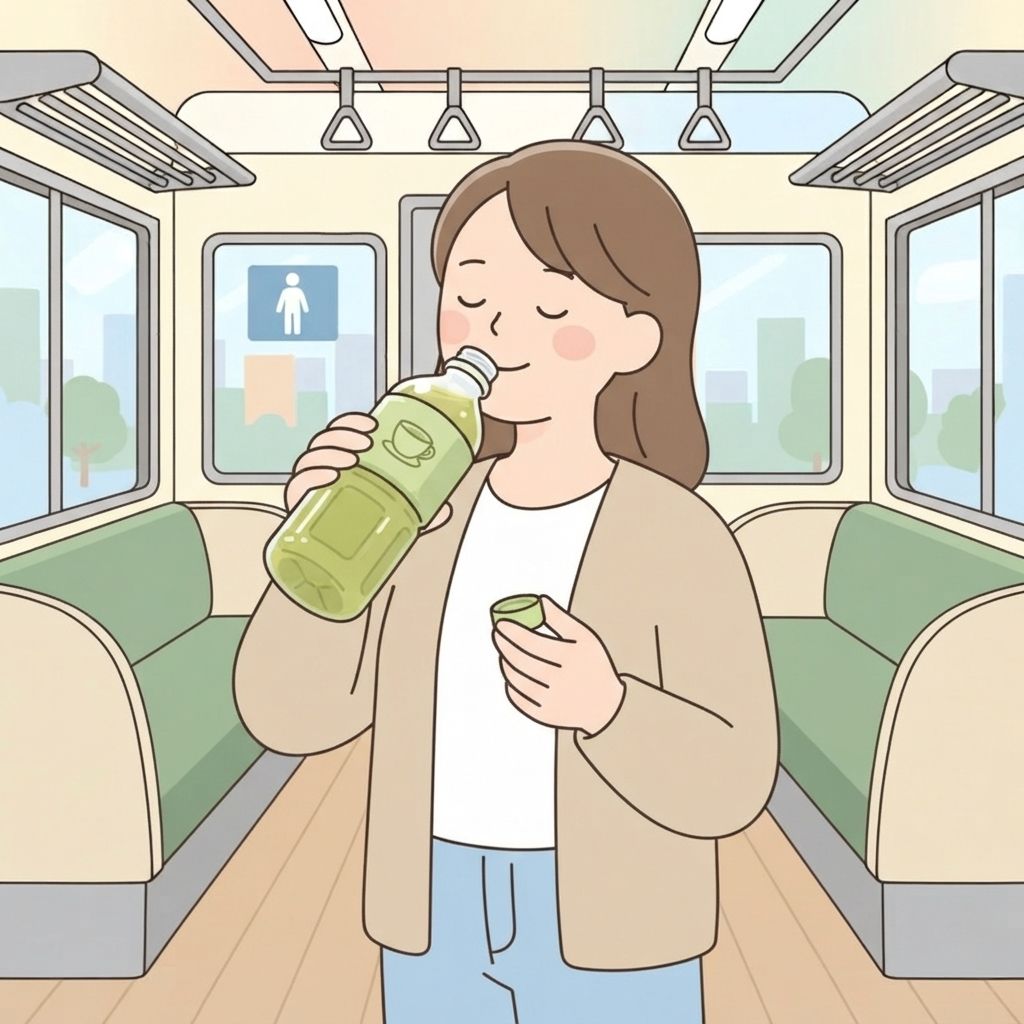
Commuter train = no food. Shinkansen = bento is the whole tradition. If your seat has a tray table, that’s a good sign.
A few “nice to know” extras
- Ekiben are a food category unto themselves — Ekiben (駅弁) are regional bento boxes sold at train stations — Hiroshima does oyster, Sendai does beef tongue, Tokyo does everything. Collecting and comparing ekiben is a genuine hobby for some Japanese travelers.
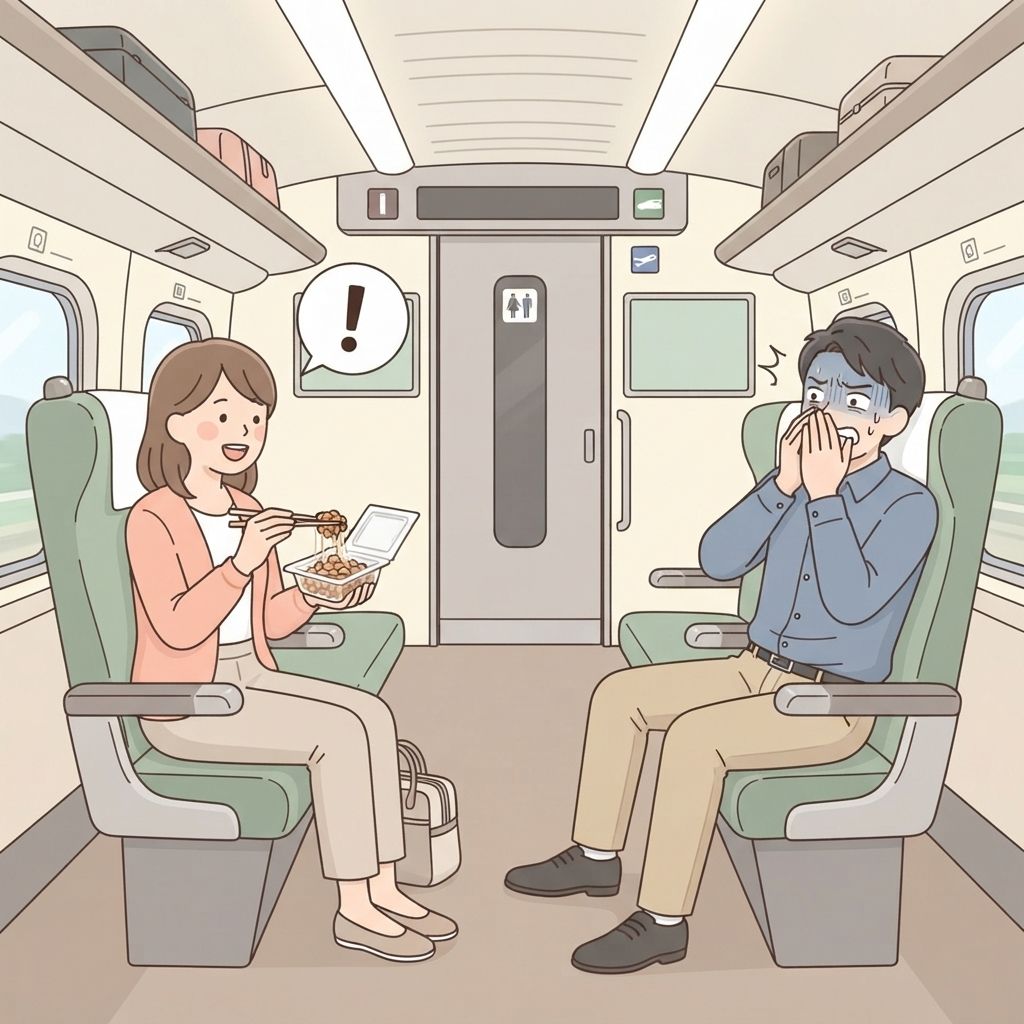
- Limited express trains sit in the middle — The Narita Express, the Azusa to Matsumoto, the Haruka to Kansai Airport — these aren’t Shinkansen but they’re not commuter trains either. Generally eating is fine on reserved-seat cars. If it feels like a journey, eat. If it feels like a commute, hold off.
- Don’t count on an onboard cart — Onboard sales have been cut back sharply. The Tokaido Shinkansen (Tokyo–Nagoya–Osaka) ended its trolley service in October 2023 (Green Car passengers can still order from their seat by smartphone), and on JR East lines only some trains, such as the Hayabusa, still sell onboard. Buy your food and drinks at the station before you board. The famously rock-solid Shinkansen ice cream cup now comes from vending machines on Tokaido Shinkansen platforms — let it sit on the tray for a few minutes before attempting it.
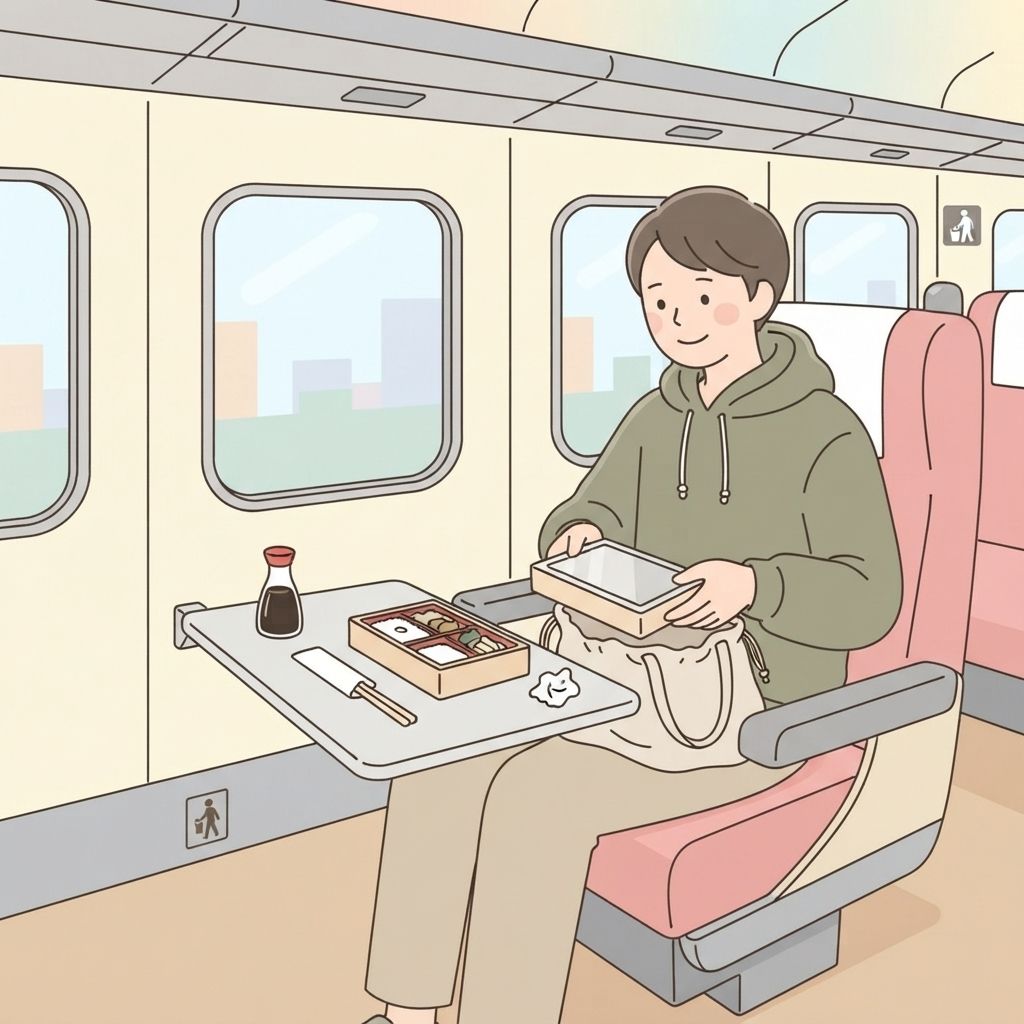
- Carry your trash off — Shinkansen deck areas have trash bins, but if you miss them, take everything with you. Leaving bento boxes and chopstick wrappers at your seat for the cleaning crew is seen as rude by many people.
Quick check
Three questions to lock in the commuter-vs-Shinkansen instinct.