No Swimsuits in Onsens — You Go In Naked (It's Fine)

Traditional Japanese onsens are fully naked — no swimsuit, no trunks, no towel in the water. It's the biggest mental hurdle, over in three minutes.

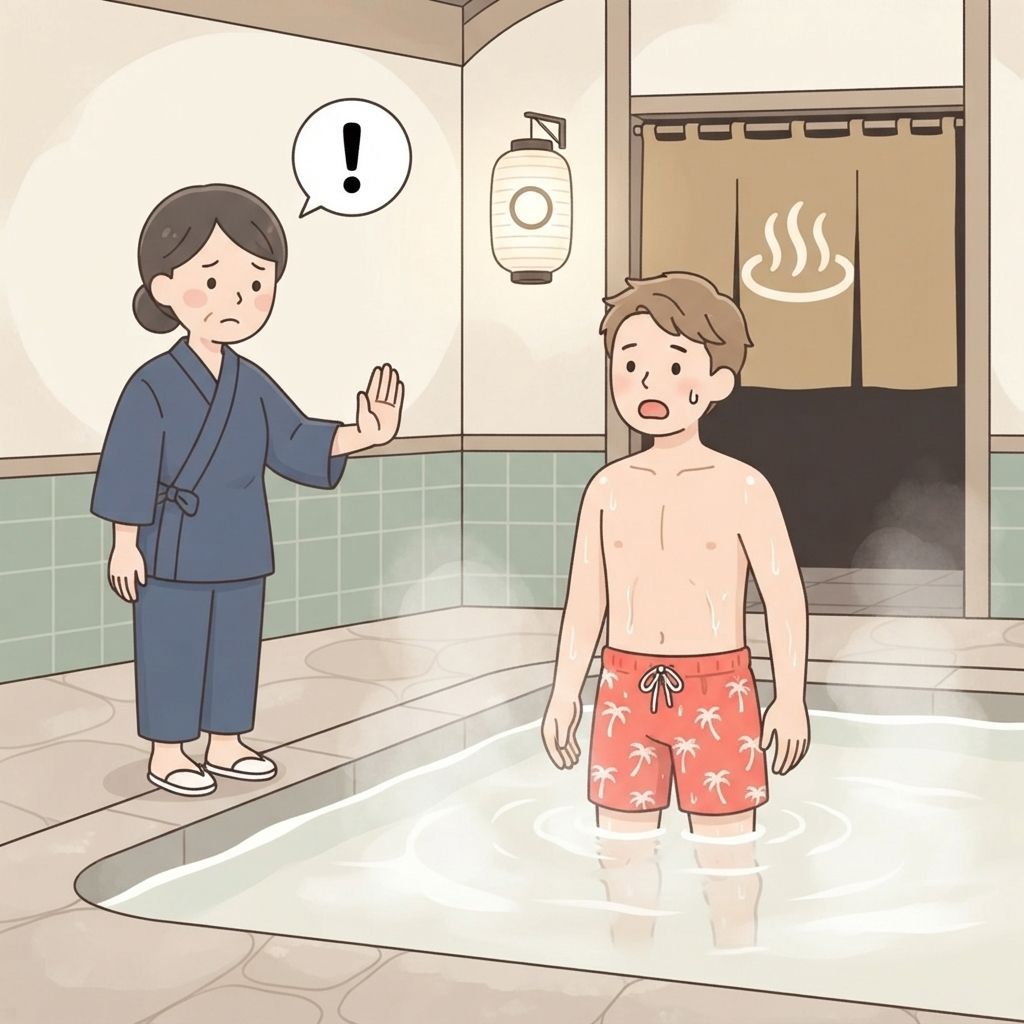
Wearing a swimsuit into the onsen bath

NG

Putting on swim trunks or a bathing suit before entering the onsen

Swimsuits are not just discouraged—they're forbidden in most traditional onsens and sento (public baths). The reason is both hygiene (swimsuits carry pool chlorine, laundry detergent, street dirt, and bacteria that the bath water then has to deal with) and cultural (onsen bathing is specifically a naked communal tradition). Walking into the bath area in a swimsuit will get you stopped and told to remove it.

OK

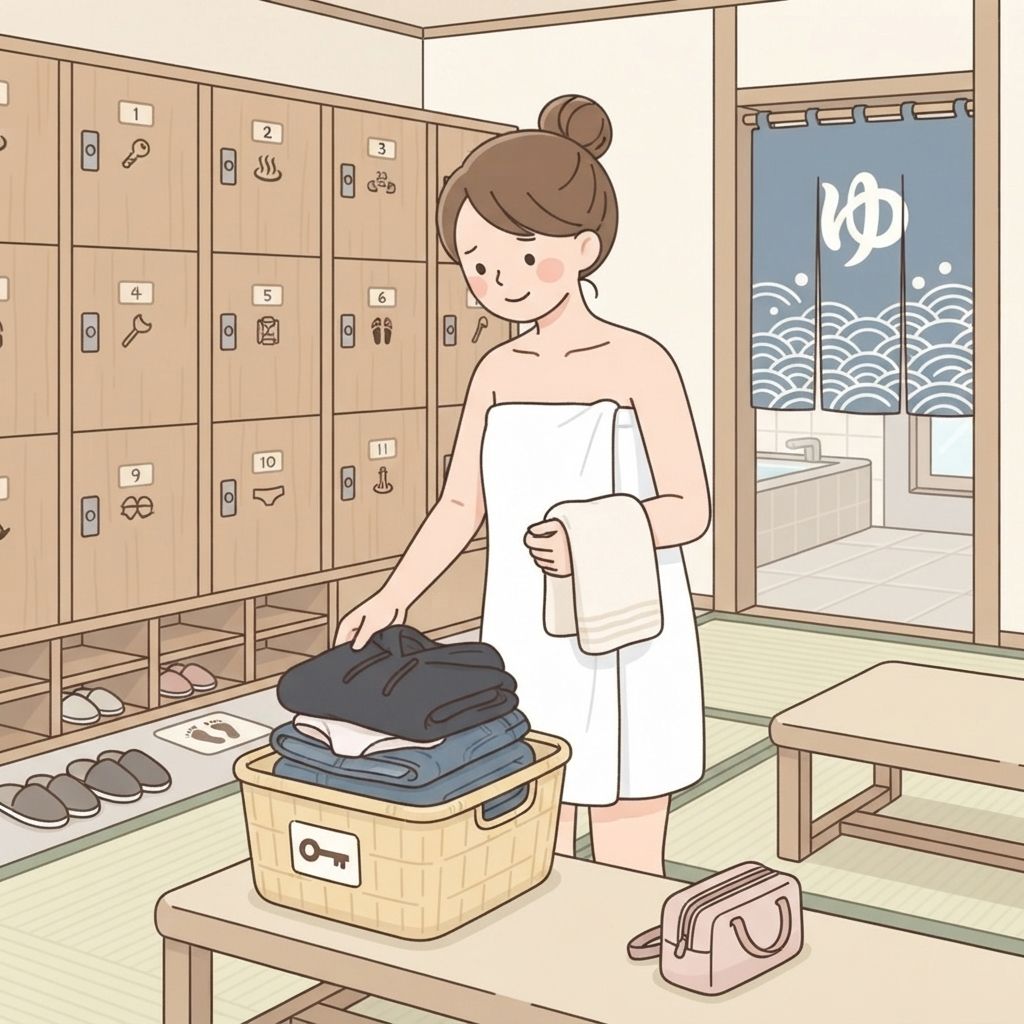
Leave everything in the changing room locker. Naked into the bath

In the changing room (脱衣所, datsuijo), you undress completely, put all clothes and belongings into a locker or basket, take your small towel and toiletries, and walk naked into the bath area. The small hand towel is the only thing you bring with you—and it doesn't go in the water (see next card). The first time feels awkward; the second time feels normal.

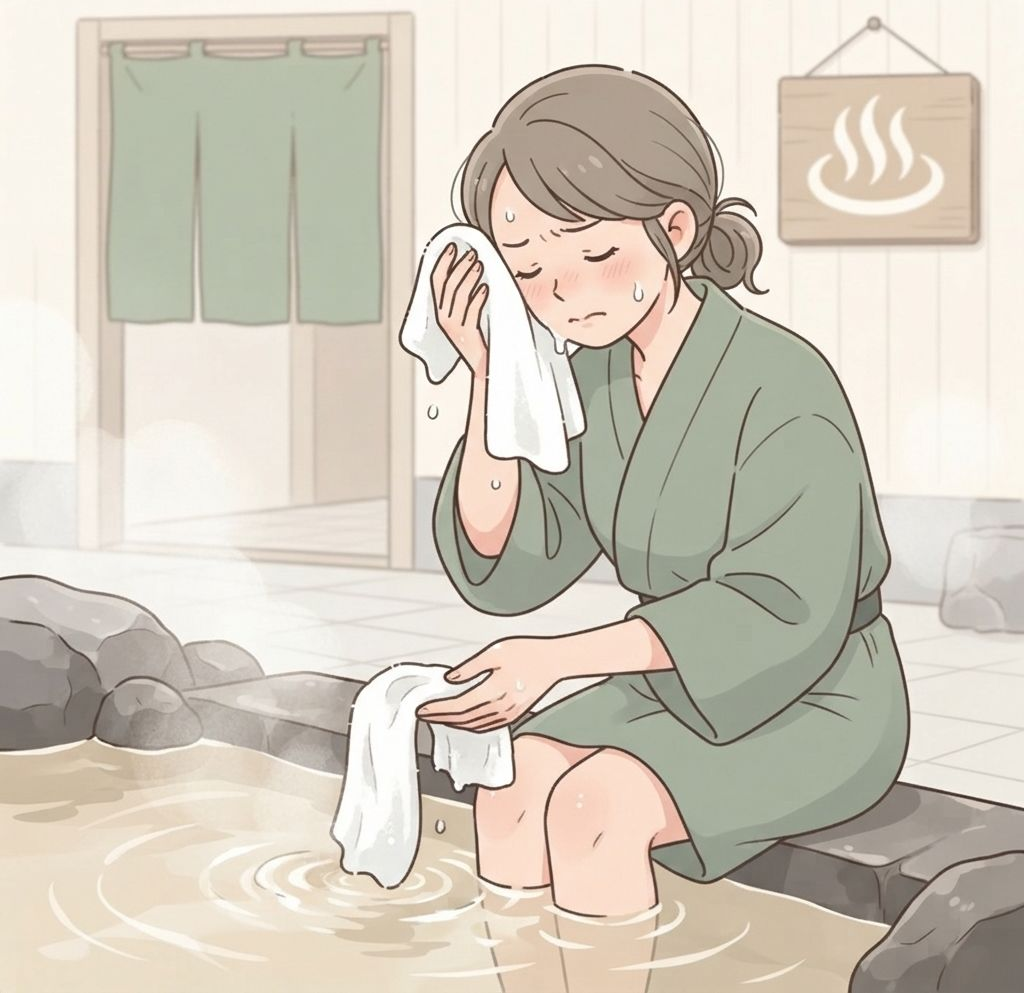
Bringing the small towel into the bath water

NG

Dipping your hand towel in the onsen water to wipe your face

The small white hand towel you get with your onsen entry is for wiping sweat off your face while you're sitting on the side, and for drying off quickly before you walk back to the changing room. It is not supposed to go in the bath water itself. Dipping it in introduces lint, detergent residue, and skin oils into the shared bath, which is exactly what everyone is trying to avoid.

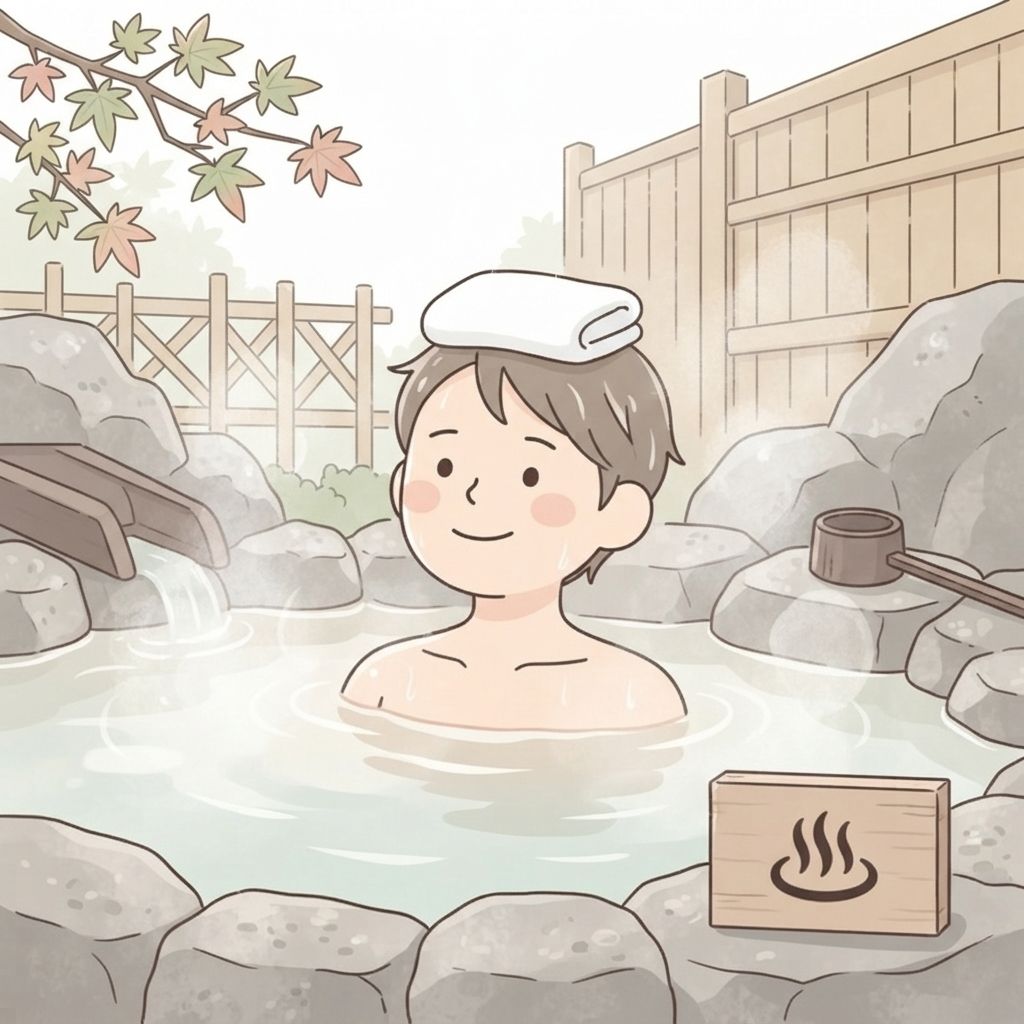
OK

Keep the towel on your head, on the side of the bath, or fold it up on a rock

The classic onsen pose: fold the small towel into a neat rectangle and balance it on top of your head while you soak. This keeps it out of the water, gives you something to wipe your face with if you sweat, and is genuinely useful for keeping your hair off your face. Alternatively, leave it folded on the stone edge of the bath or on a nearby rock.

Trying to hide your body awkwardly with the towel

NG

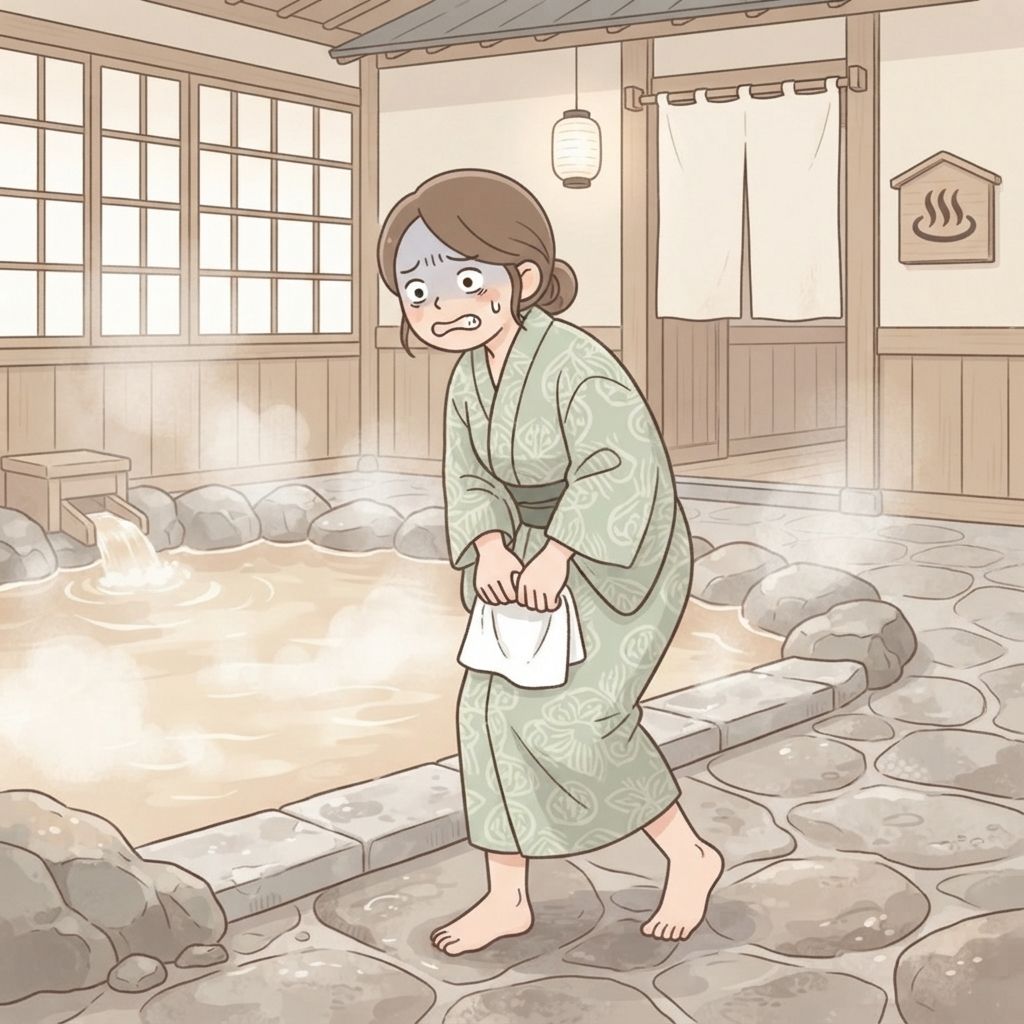
Walking around the bath area holding the small towel in front of you to cover yourself

The small towel is genuinely small—it's not going to cover anything meaningful, and holding it in front of you makes you look more self-conscious than just walking normally. Locals in the onsen have seen nudity a thousand times and won't look. The awkwardness is entirely in your head, and it resolves as soon as you stop trying to manage it.

OK

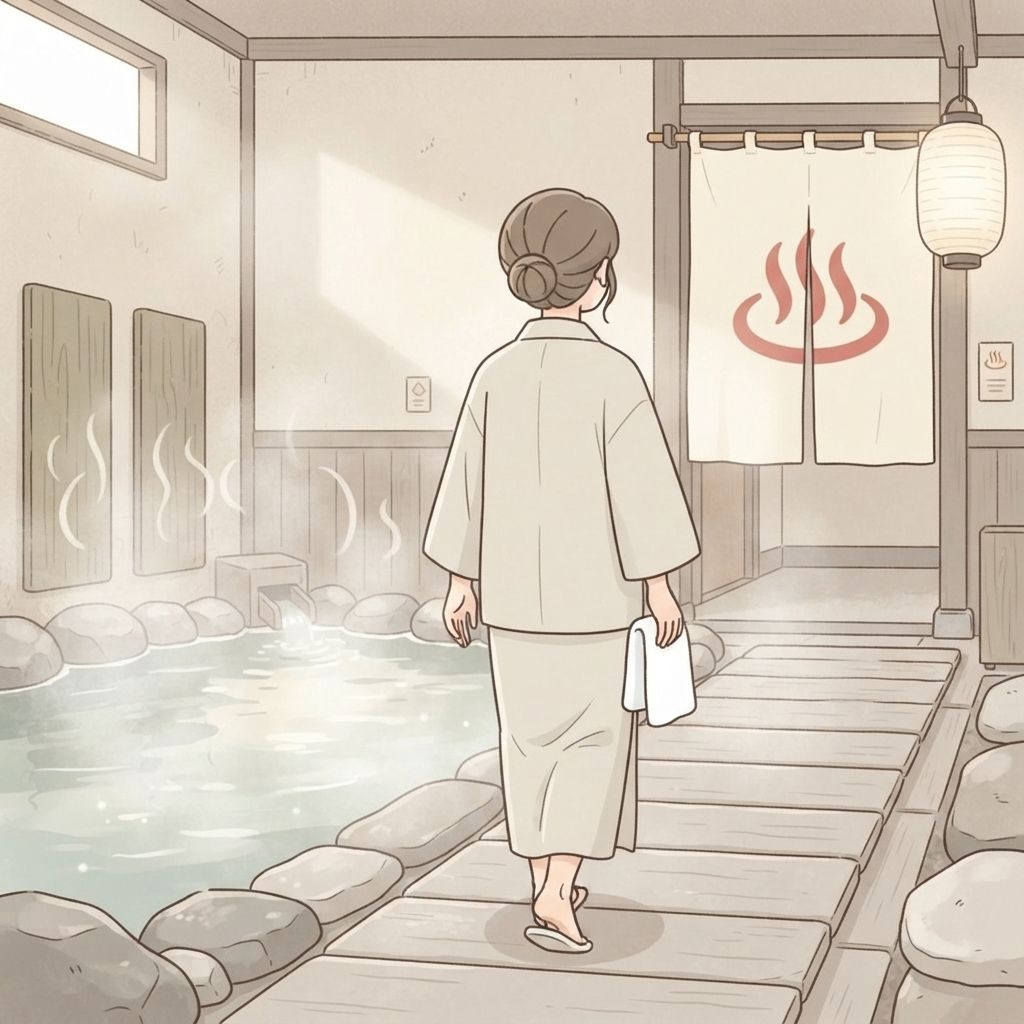
Walk calmly, towel in hand, head up. Nobody is looking

The onsen has very specific etiquette about not staring at other bathers. Everyone keeps their eyes on the middle distance, on the water, on the scenery. You are not the center of attention, you are just another person in the bath. Walk calmly from the wash area to the tub, get in, and relax. The first time is the hardest; every subsequent time is completely fine.

Taking photos or using your phone near the bath

NG

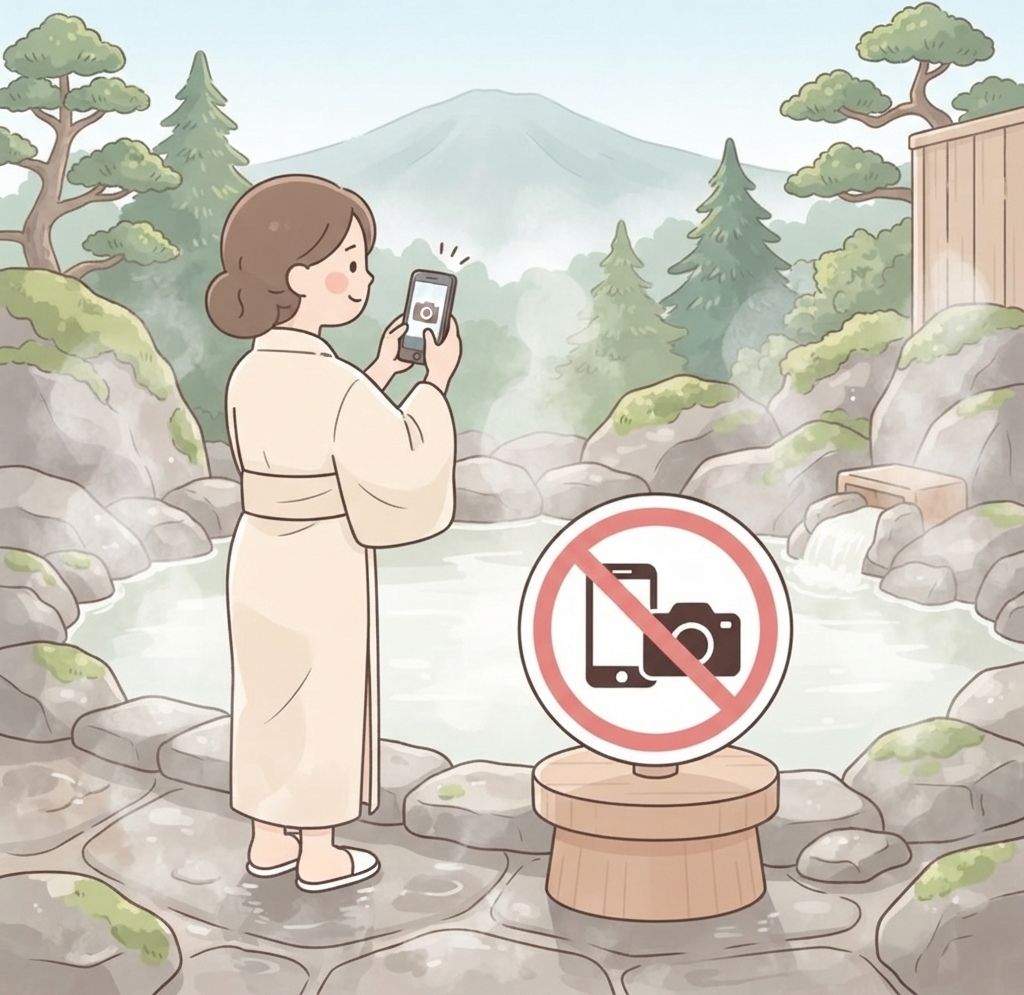
Bringing your phone into the bath area to take a picture of the outdoor onsen view

Phones and cameras are strictly prohibited in the bath area of any onsen or public bath. The reason is obvious: privacy in a space where everyone is naked. Even pulling out a phone to check the time or a message is considered wildly inappropriate. Onsen signage is very clear about this and staff will intervene immediately if they see a phone.

OK

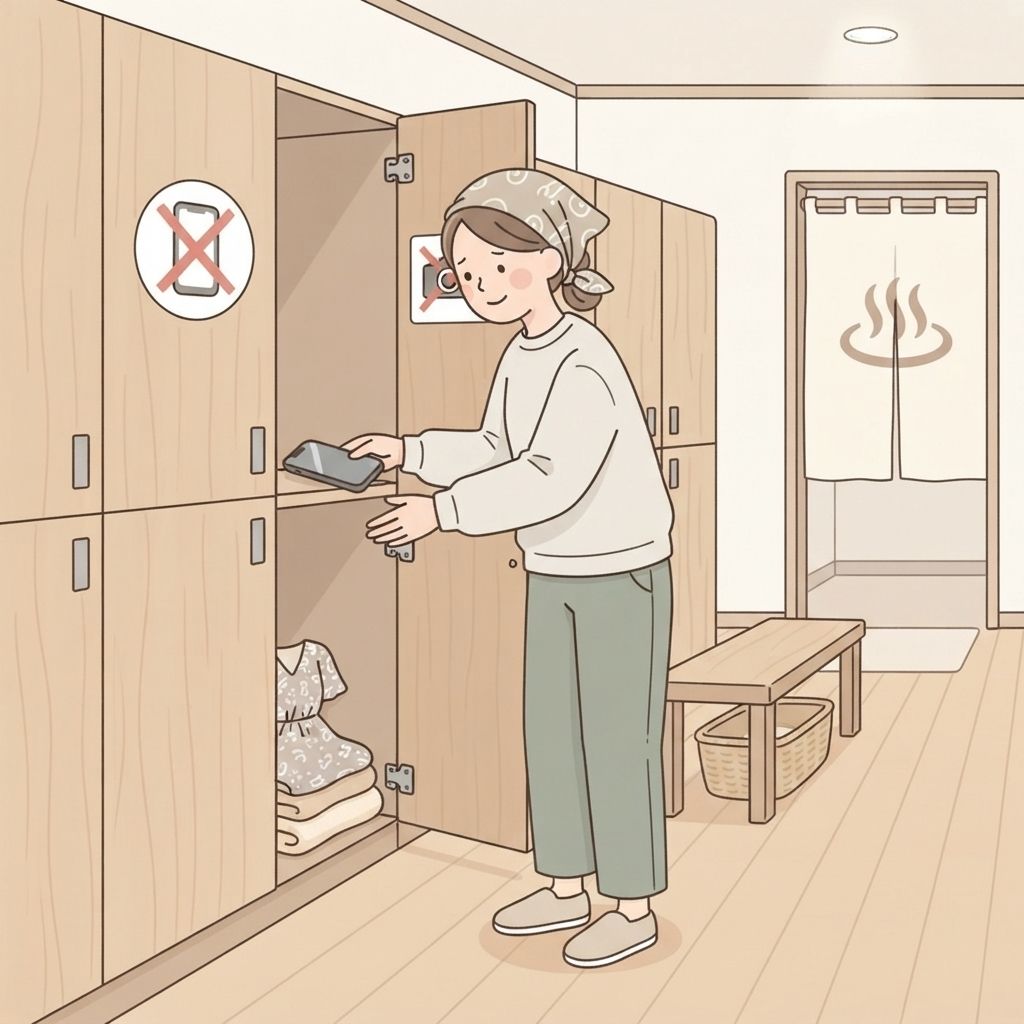
Leave the phone in the locker with your clothes

Your phone, camera, and any device with a lens stays in the locker. Some onsens have dedicated photo spots outside the bath area where you can take a picture of the architecture or landscape—use those. If you absolutely need to document your onsen trip, buy a postcard at the front desk. The bath itself is a no-photo zone, always.

Why naked is the whole point

The onsen tradition predates swimsuits by centuries, and the nudity isn’t incidental — it is the format. The bath is meant to be a place where status disappears. A CEO, a farmer, a tourist — everyone looks the same in the water. That leveling effect is the cultural core of why onsens became gathering spaces in the first place.

Swimsuits reintroduce identity. Board shorts, a designer bikini, a branded one-piece — all of it signals something the naked body doesn’t. The tradition specifically strips that layer away. On the practical side, swimsuits also carry chlorine, detergent, and dirt into water that onsens work hard to keep clean.

Nothing in the water except you. Towel on head, phone in locker, swimsuit in your luggage.

The small towel — what it’s actually for

That little white towel you get at the entrance is not for wearing in the bath. It’s for wiping sweat while you soak, and for a quick dry-off before walking back to the changing room. Classic move: fold it into a rectangle and balance it on top of your head. Alternatively, leave it on the edge of the tub. Just don’t dip it in the water — same hygiene logic as the swimsuit rule.

Japanese bathers sometimes hold the towel briefly in front of the body while walking to the tub. It’s a quick transitional gesture, not a full cover, and it’s totally accepted if you want a moment of modesty.

A few “nice to know” extras

  • Gender-separated is the default — Men (marked with blue noren curtain) and women (pink noren) bathe separately in almost every onsen. Mixed bathing (konyoku) is extremely rare. The signage is clear enough that you won’t accidentally walk into the wrong side.
  • Hair up — Long hair gets tied up and out of the water. Floating hair introduces oils and product residue into the shared bath — same category of problem as the towel.
  • Wash first, always — You scrub thoroughly at the wash station before entering the bath. Non-negotiable. This rule is important enough to have its own article.
  • Nobody is looking at you — Onsen etiquette includes not staring at other bathers. Everyone keeps their eyes on the water, the scenery, the middle distance. The awkwardness you’re imagining is entirely in your head, and it dissolves about three minutes in.

Quick check

Three questions to lock in the naked-bathing basics.

Quick check

Can you spot the right move?

  1. Q1 Can you wear swim trunks in a traditional Japanese onsen?

  2. Q2 Should you bring your small hand towel into the bath water?

  3. Q3 Is it okay to take photos in the bath area of an onsen?