
No Trash Cans in Japan — What to Do With Your Garbage

Japanese streets are spotless yet have almost no public bins. Carry your trash with you, or know where the hidden ones actually live.

Leaving trash on a bench, windowsill, or low wall

NG

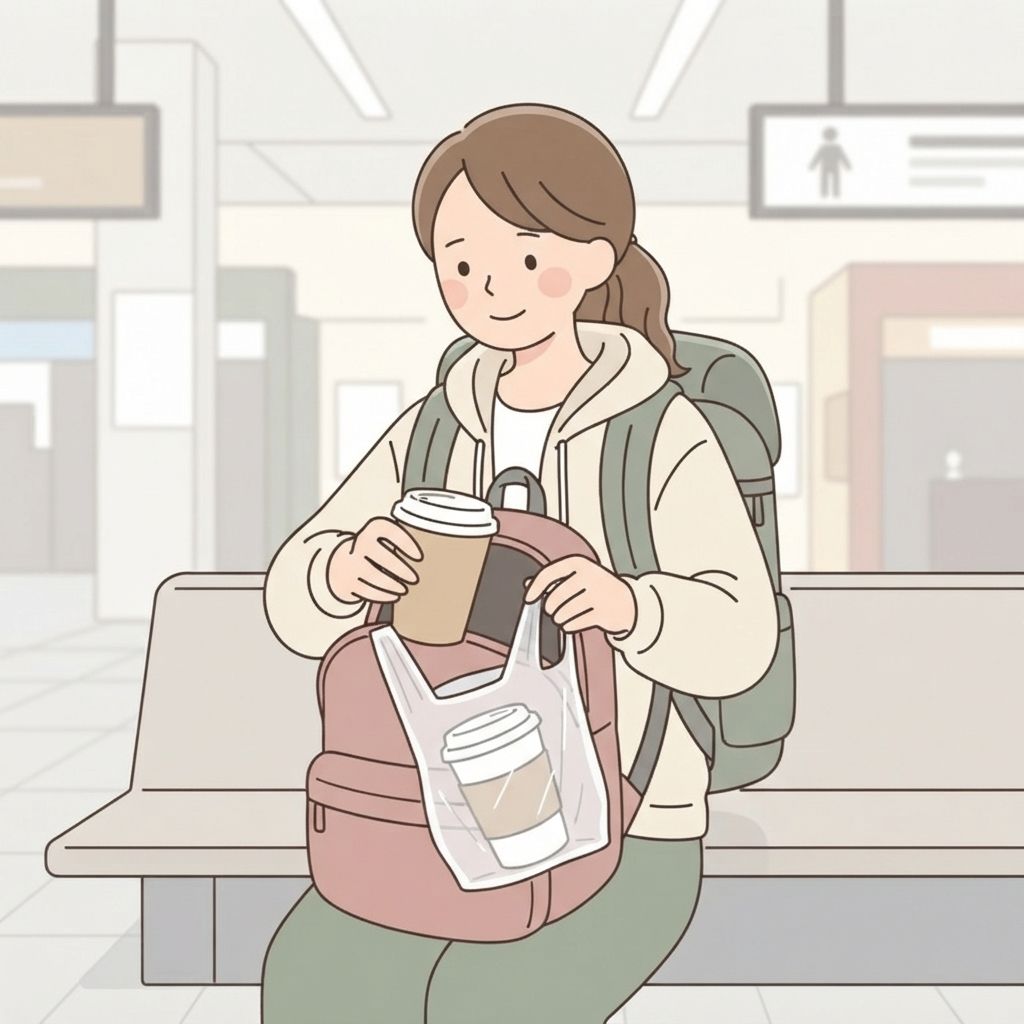
Setting your empty coffee cup or snack wrapper down on a bench and walking away

When tourists can't find a trash can, a common move is to 'neatly' leave trash on a bench or windowsill, assuming someone will pick it up. Nobody will. Or rather, a shopkeeper or passerby will pick it up with a sigh, and the abandoned trash is now their problem. Leaving trash anywhere that isn't a bin is considered littering, full stop.

OK

Put it in a bag, carry it with you, dispose of it at the first real bin you find

Japanese locals carry their trash with them as a matter of course. Most people have a small plastic bag tucked into a pocket or backpack specifically for this. When you buy something that comes with a wrapper, your mental note is 'I'm carrying this until I find a bin.' The bin might not appear for an hour. That's fine—the trash is small and dry, your pocket handles it.

Trying to fit everything into one bin

NG

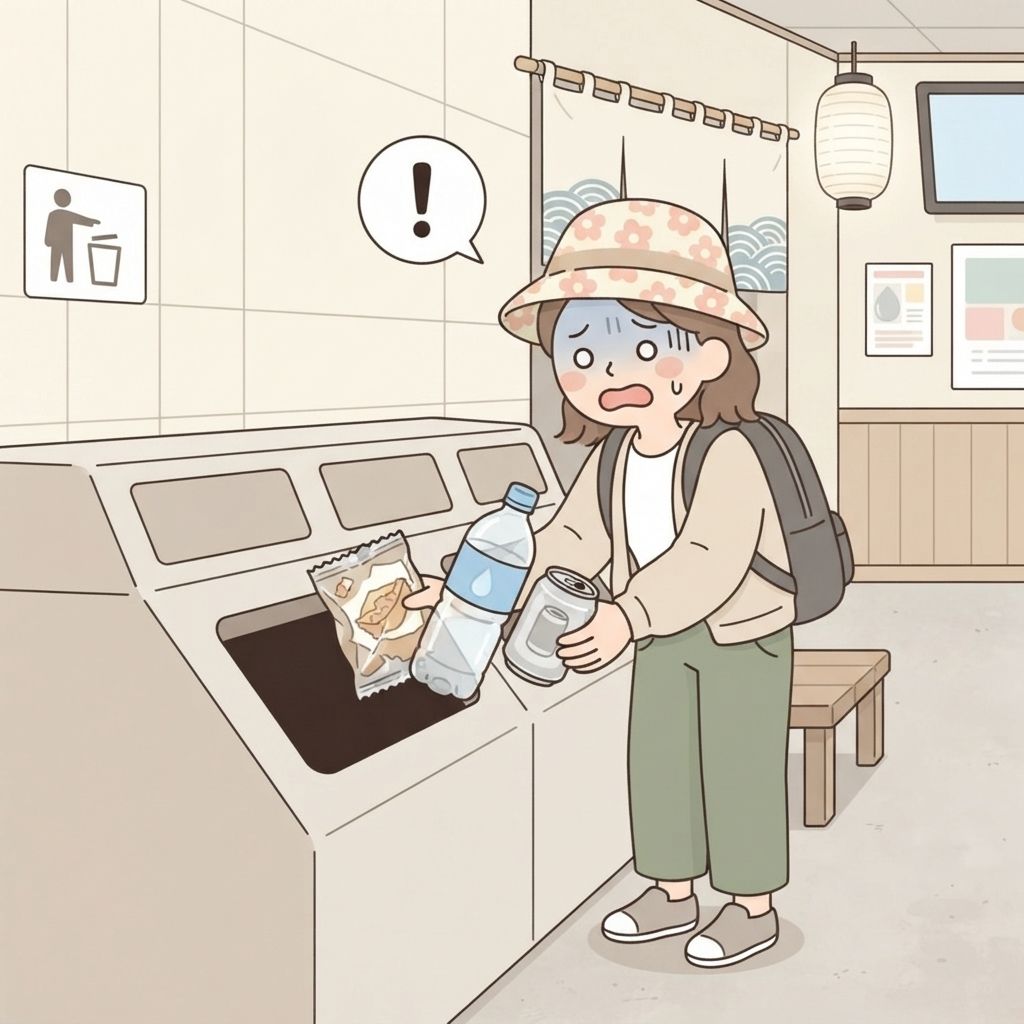
Throwing a burnable snack wrapper and a PET bottle and a can all into the same bin

Japanese trash cans are almost always sorted into categories: burnable (燃えるゴミ), plastic bottles (ペットボトル), cans (缶), glass (ビン), non-burnable (燃えないゴミ). Jamming everything into whichever slot has space—or into the single 'trash' category if you guess wrong—means your trash ends up in the wrong stream and has to be re-sorted by someone later. It's considered inconsiderate.

OK

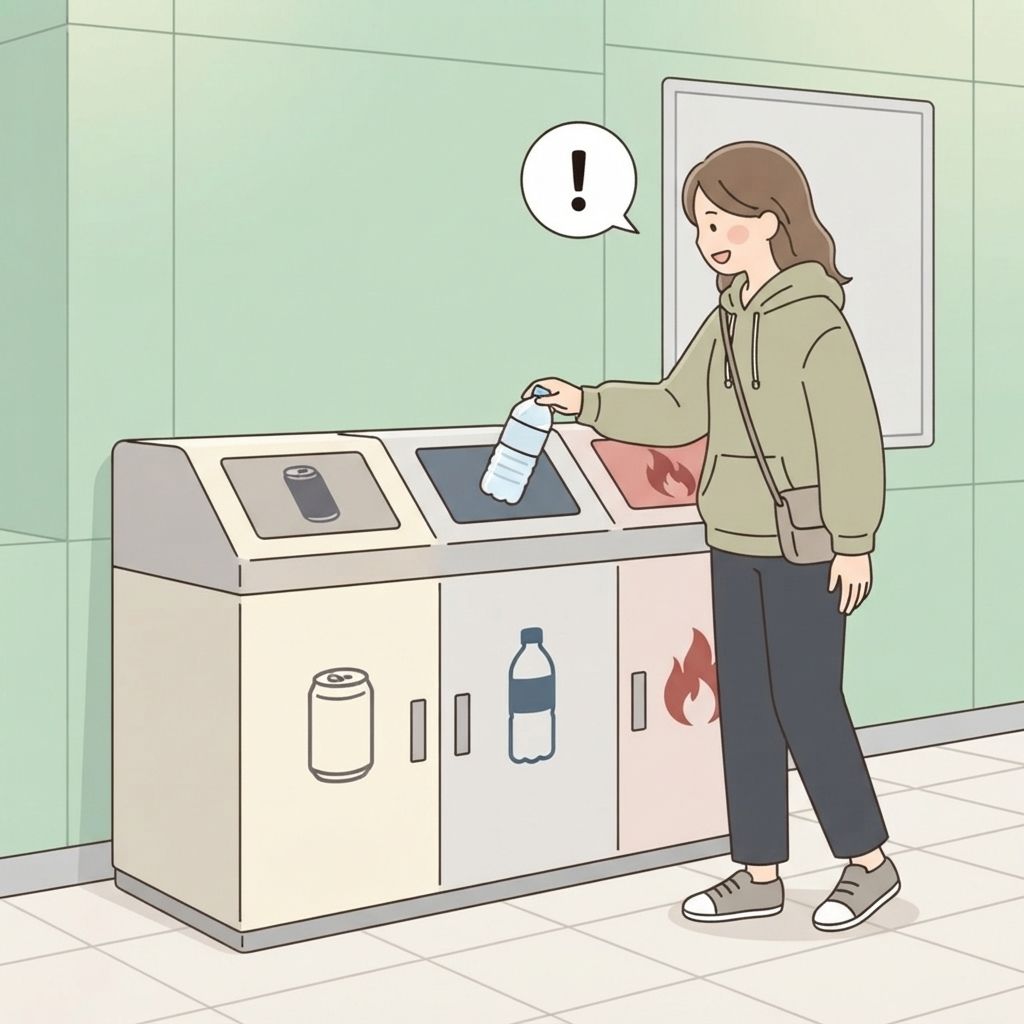
Sort by the pictograms. Put each item in the correct slot

Read the bin's labels. Most have small pictograms (bottle, can, burnable items) and words in both Japanese and English. PET bottles (plastic water and soda bottles) go in their own slot—and you're expected to drink or dump the remaining liquid first, peel off the label if it's separate, and drop the bottle and cap in their respective slots if they're further sorted. This feels fussy but it's how the system works.

Missing the bins that exist

NG

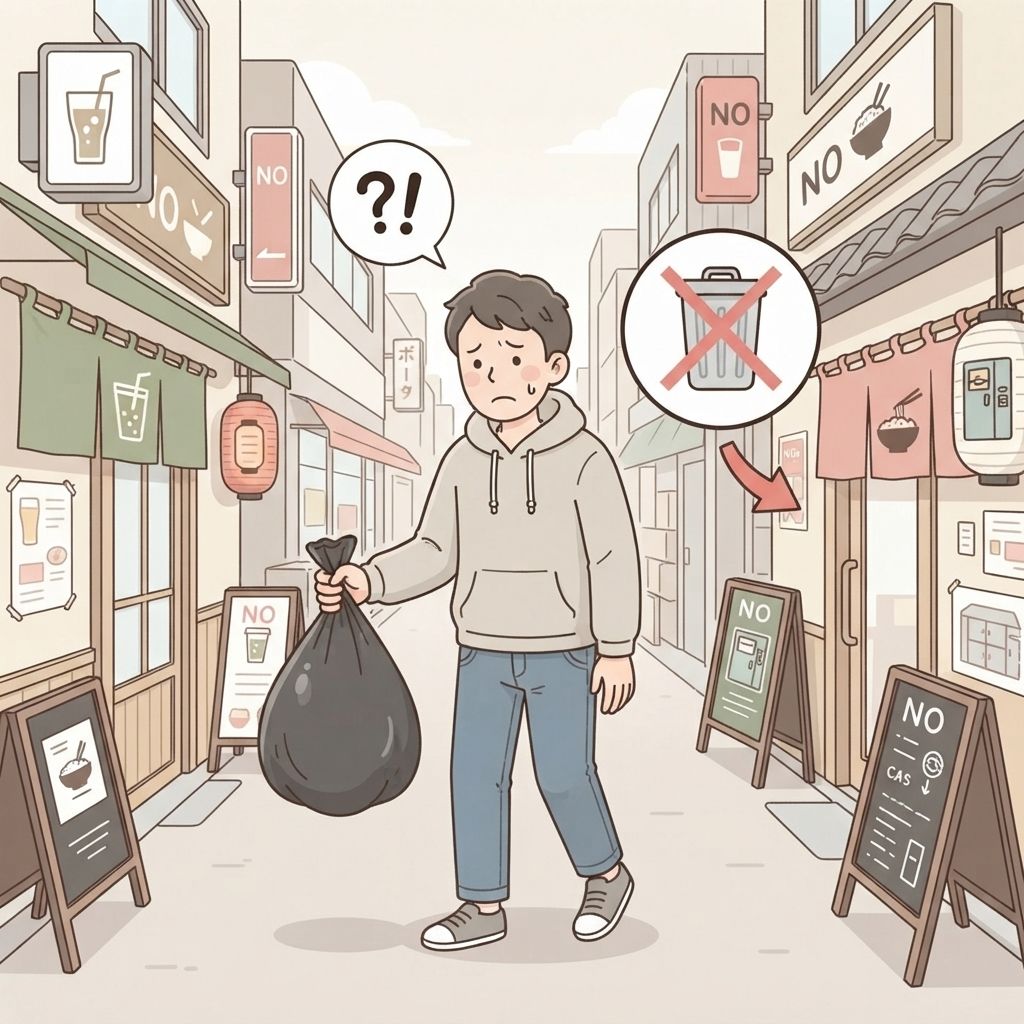
Thinking 'Japan has no public trash cans' and giving up

There are actually plenty of public trash cans in Japan—they're just hidden in specific spots, not lining the streets. Tourists who don't know where to look end up carrying trash for hours. The bins aren't missing, they're in particular places.

OK

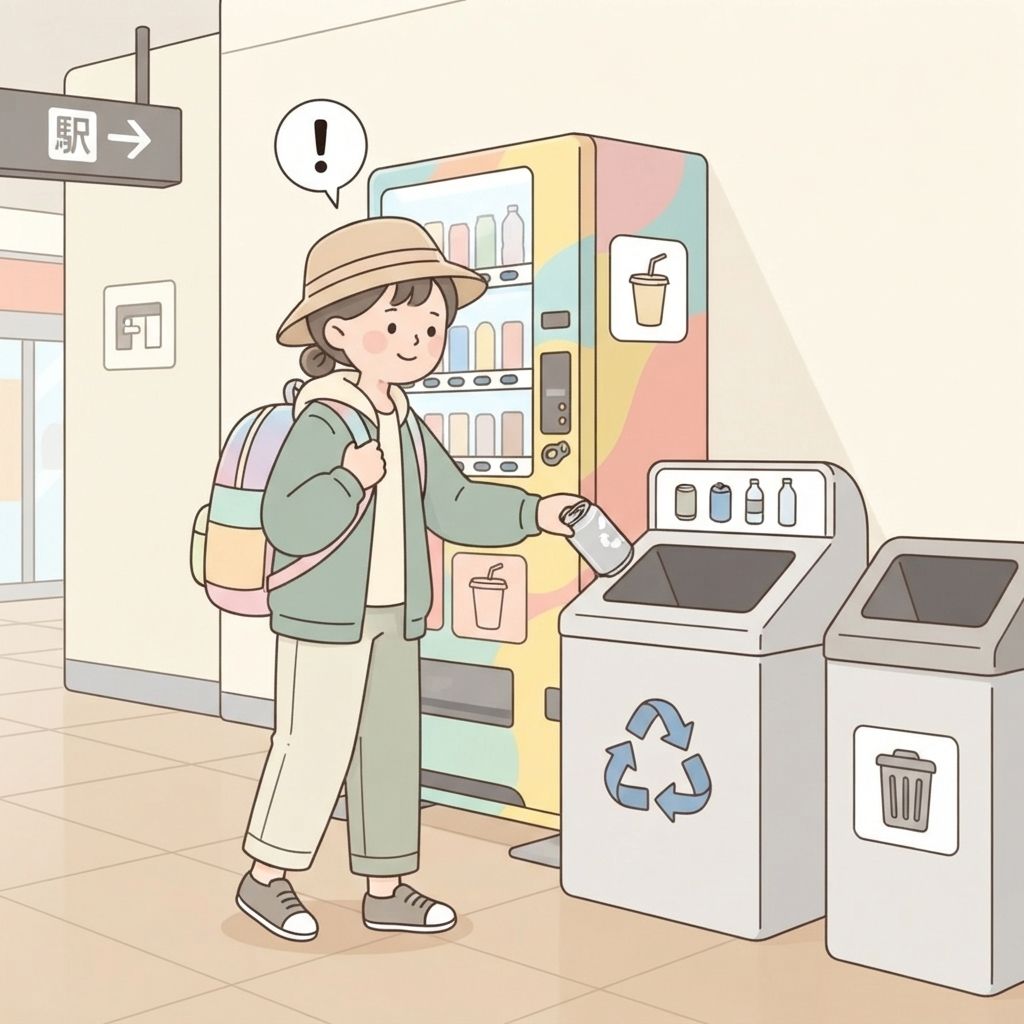
Convenience stores, train stations, vending machines, and station gates all have bins

Inside convenience stores (often near the door), at train station gates, next to most vending machines (for drink containers only—cans, bottles, tetra paks), inside station restrooms, and in large public parks near the toilets. These are your primary disposal points. Plan your route past one of these when you've accumulated trash.

Overloading convenience store bins with outside trash

NG

Dumping a bag of shopping waste from somewhere else into a 7-Eleven's bin

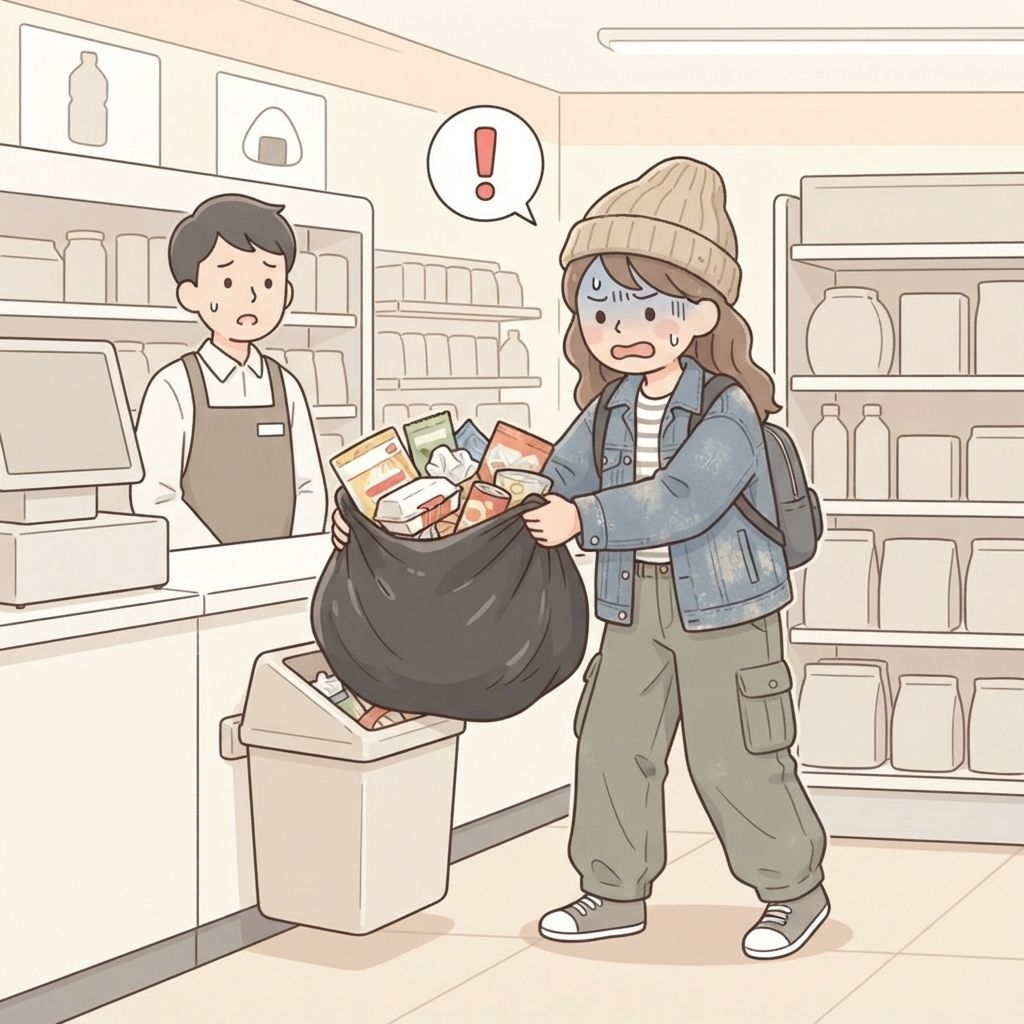
Convenience store trash cans are officially for trash generated by things you bought at that store. Bringing in a big bag of trash from elsewhere—especially lunch packaging from a different restaurant—is technically against the rules, and some stores have signs specifically asking you not to. They're also the easiest place to offload trash, and small amounts are usually tolerated.

OK

Use the store's bins for the stuff you bought there, at most a small extra item

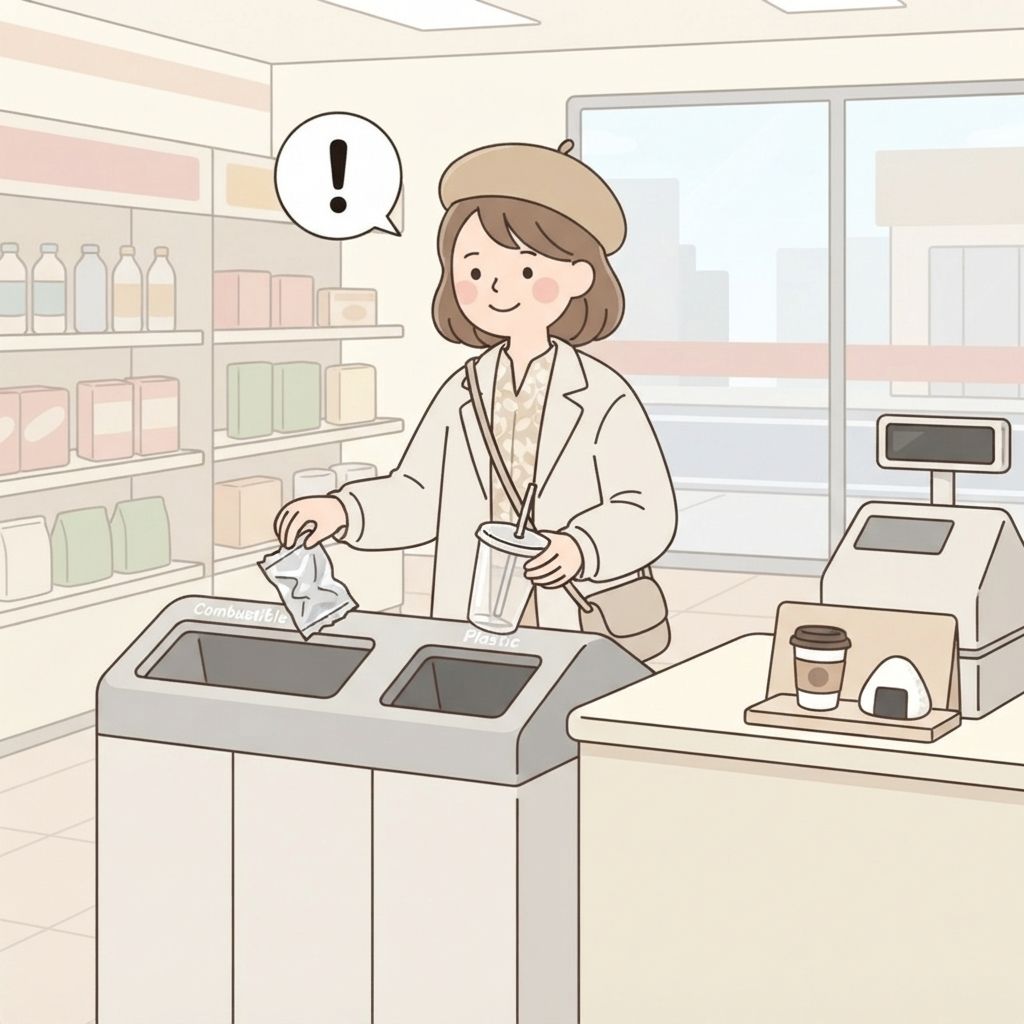
If you bought a coffee and a rice ball at the konbini, drink and eat them in or near the store and use their bin for the wrappers and cup. That's exactly what the bin is for. If you have a larger load of trash from elsewhere, use a train station trash area or a park bin instead. Don't dump a full day's garbage into a single konbini bin.

Why the cleanest country has no bins

People often blame the 1995 sarin gas attack—after which authorities pulled public trash cans as a security measure. That’s part of it, but the deeper truth is older. Japan has always run on a “carry your own trash” norm. Removing the bins just reinforced a behavior that already existed.

The logic is collective responsibility. If everyone handles their own garbage, streets stay clean without a massive municipal cleanup operation. It’s a high-trust, low-infrastructure system—and it works because everyone participates. A tourist leaving an empty cup on a bench is a small crack in that contract.

Pocket trash bag. Every local carries one. You should too.

A few “nice to know” extras

  • Vending machine bins are drinks only — That small bin bolted to the side of every vending machine? Strictly for cans, bottles, and tetra paks from that machine. Food wrappers and tissues don’t go there.
  • Train stations are your trash hub — Sorted bins near ticket gates, inside restroom areas. Plan your walking route through a station when your pockets are full.
  • Peel the label, empty the bottle — Proper PET bottle disposal means dumping any remaining liquid, peeling off the plastic label (goes in burnable), and dropping the bare bottle and cap into their respective slots. Fussy? Yes. Expected? Also yes.
  • Festival trash stations — Big matsuri events set up temporary sorting stations with volunteers. Use them, sort correctly, and don’t be the person who leaves yakisoba trays on the ground.

Quick check

Three questions to test the trash-disposal instincts. Takes about 20 seconds.

Quick check

Can you spot the right move?

  1. Q1 Is leaving trash 'neatly' on a bench acceptable in Japan?

  2. Q2 Are there really no public trash cans in Japan?

  3. Q3 Should you sort your trash into the correct categories when using a public bin?