Photos Inside Onsens: Banned Everywhere, and Can Be a Crime With Bathers in Frame

Onsen baths and changing rooms are no-camera zones in Japan. Secretly photographing other bathers is a crime, and even shooting the empty bath breaks the facility's rules. Leave the camera and phone in the locker.

Updated

Photographing inside the onsen bathing area

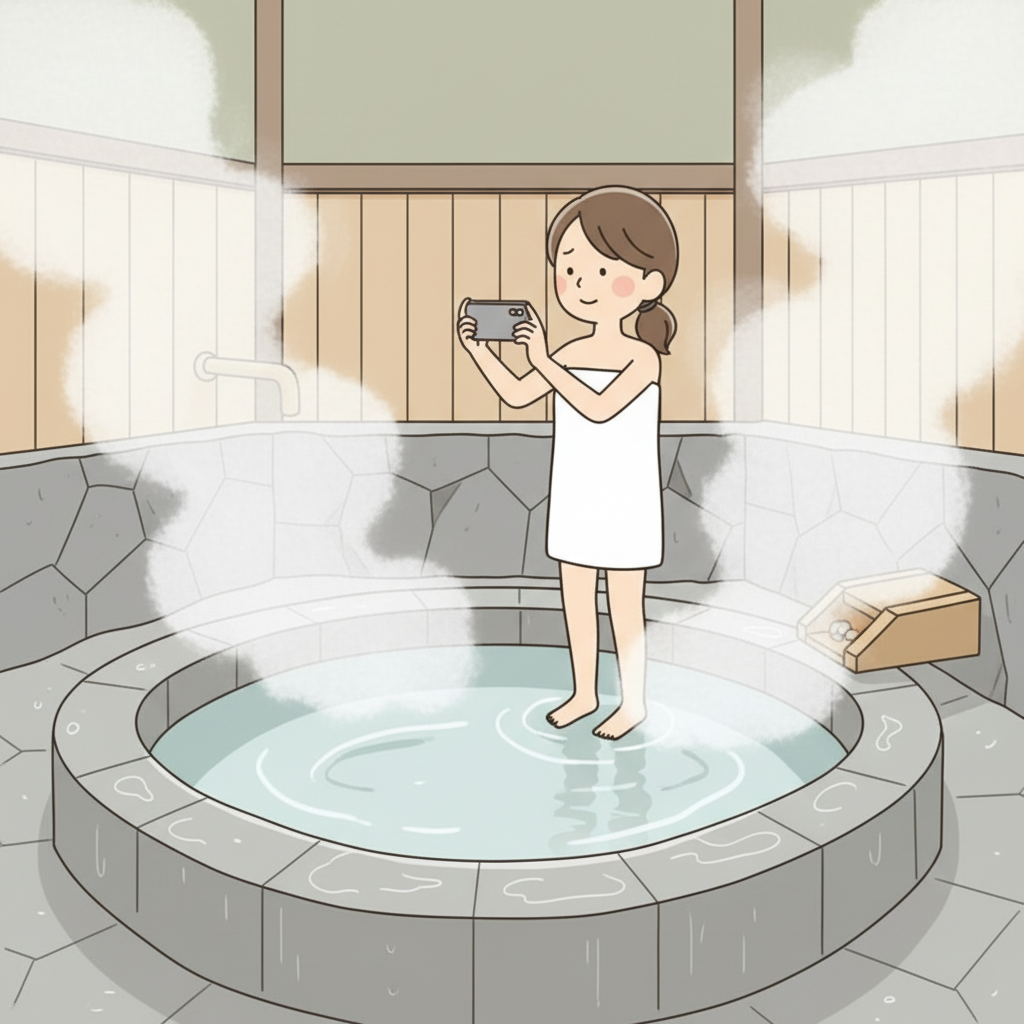
A tourist inside a steamy stone onsen bathing area holding up a smartphone to photograph the empty stone bath, water reflections visible, with no other bathers in frame
NG

Taking out your phone or camera inside the onsen bathing area — even to photograph the scenery or the empty space

The no-photography rule inside an onsen covers every subject — other bathers, the space itself, the view from a rotenburo, even an empty room. Facilities ban cameras and phones in the bathing area outright unless they have given you permission, so 'but there was no one in the shot' won't help you with the staff, and another bather can walk into the frame at any moment. Once someone undressed is in your photo, it can become a crime: secretly photographing people's bodies is punishable under Japan's 2023 photography law (撮影罪) and prefectural nuisance ordinances (迷惑防止条例).

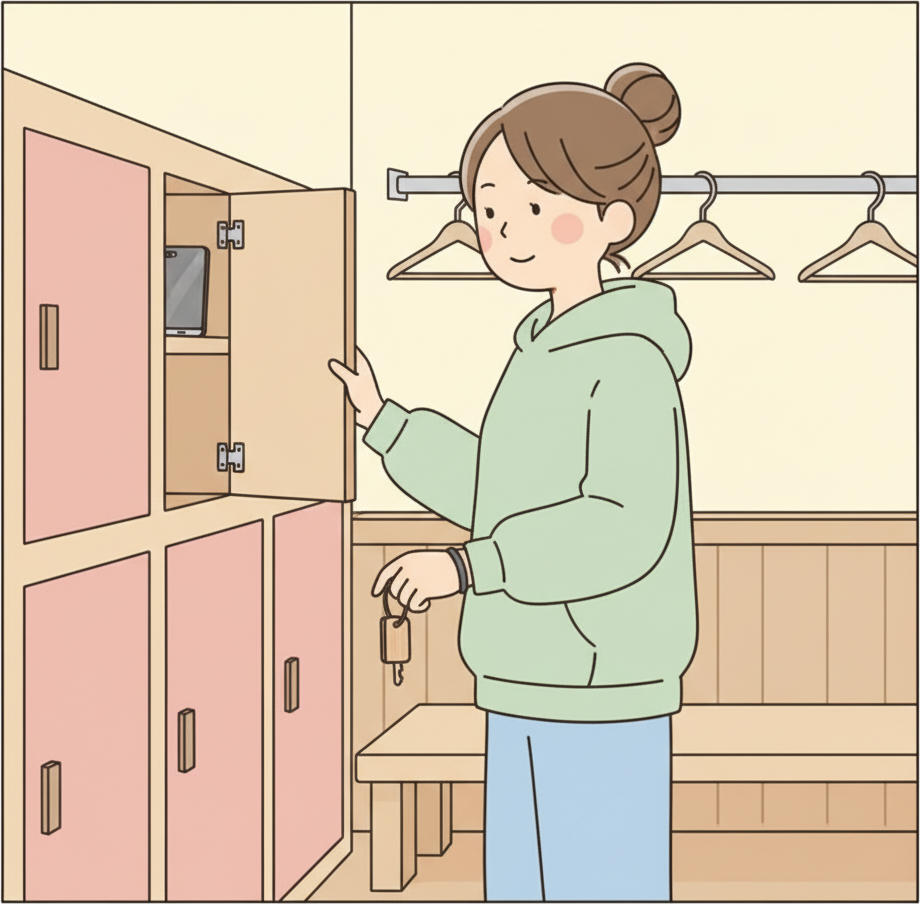
A tourist closing a small wooden onsen locker with a smartphone clearly visible placed inside, key in hand, calm focused expression
OK

Leave your phone and camera in the changing room locker — no exceptions

Most onsen facilities provide lockers or a place to store belongings in the changing room. Put your phone there before you enter the bathing area, lock it, and leave it. There is no photo opportunity inside an onsen that is worth the risk. The scenery from a rotenburo can be enjoyed with your eyes; your Instagram followers can find the photos elsewhere. The rule is simple.

Photographing in the changing room (脱衣所)

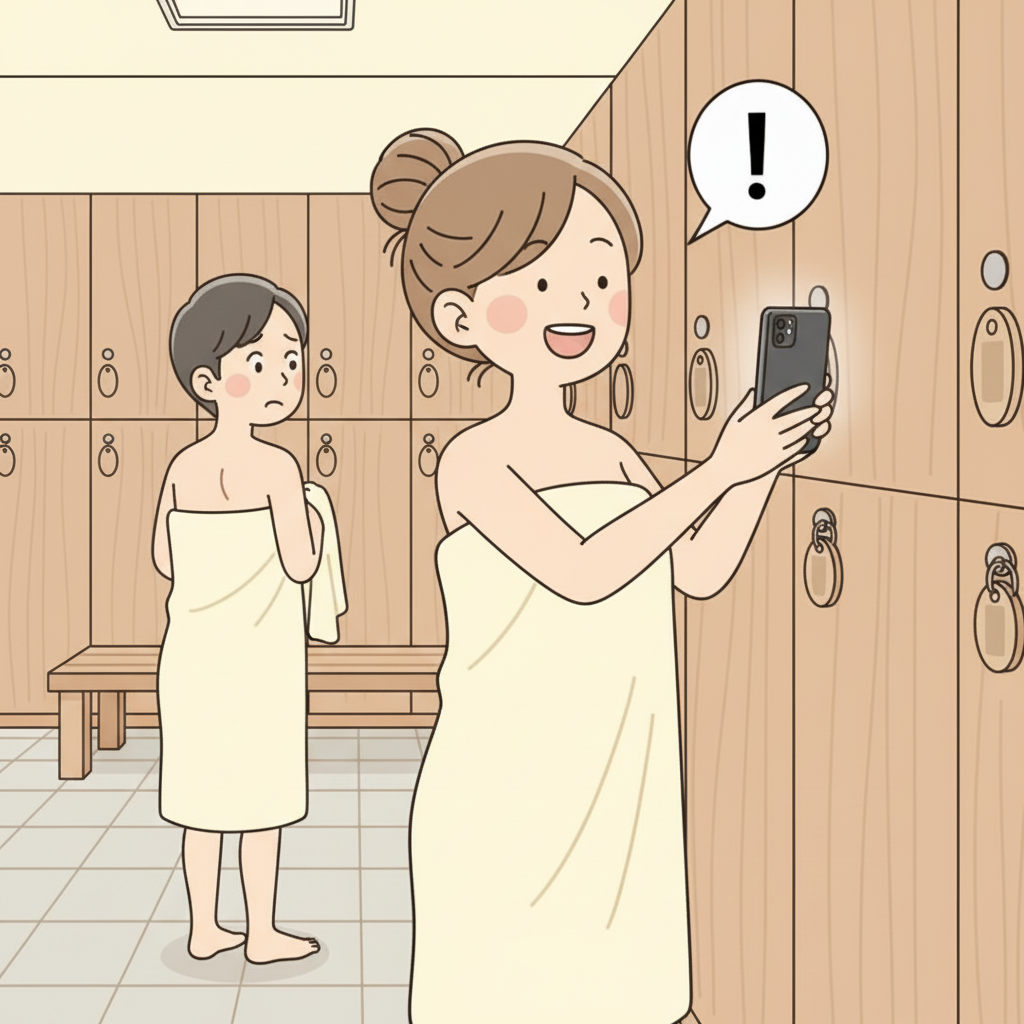
A tourist in an onsen changing room holding up a phone to photograph their own locker label, the back of another partially clothed bather visible nearby looking uncomfortable
NG

Photographing your own locker, your bag, or the room's decor while other people are using the changing room

The changing room (脱衣所, datsuijo) is explicitly included in onsen photography prohibitions. It is a space where people are undressing and storing their belongings. Taking a photo of your own luggage or the locker label while other people are changing — even if you carefully angle the camera away from them — is still a violation. The presence of your camera in that space while other people are undressing is the problem. There is no 'I wasn't pointing at anyone' exception.

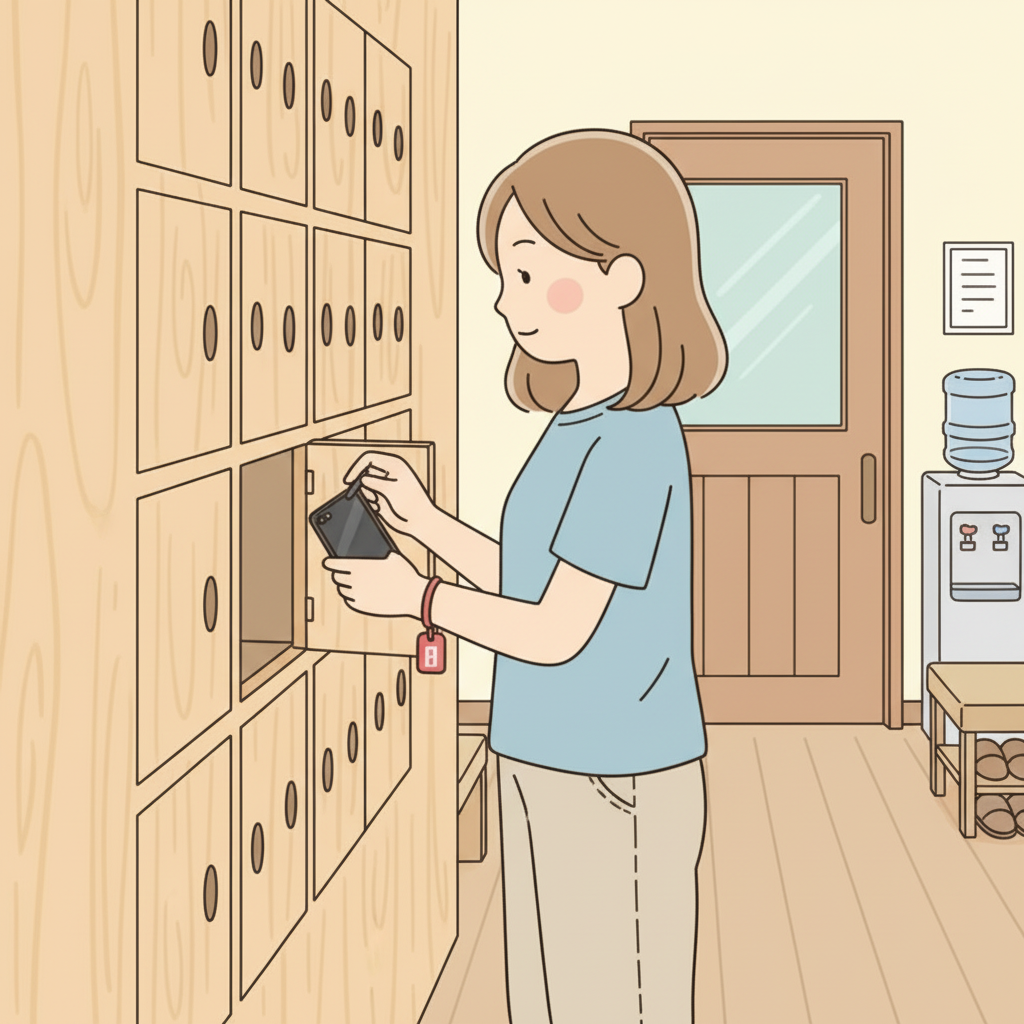
A tourist at the entry locker area just outside the onsen changing room, placing a smartphone into a small valuables locker, key tag on wrist
OK

Keep your phone in your locker before you enter the changing room, not after

The cleanest approach: lock your phone and camera in your locker at the front desk or in the entry area before you even enter the changing room. Some onsen facilities have valuables lockers before the changing room. Put your electronics there. If that's not available, put your phone in your bag, put your bag in the changing room locker, lock the locker, and do not take your phone out until you're fully clothed and leaving the facility.

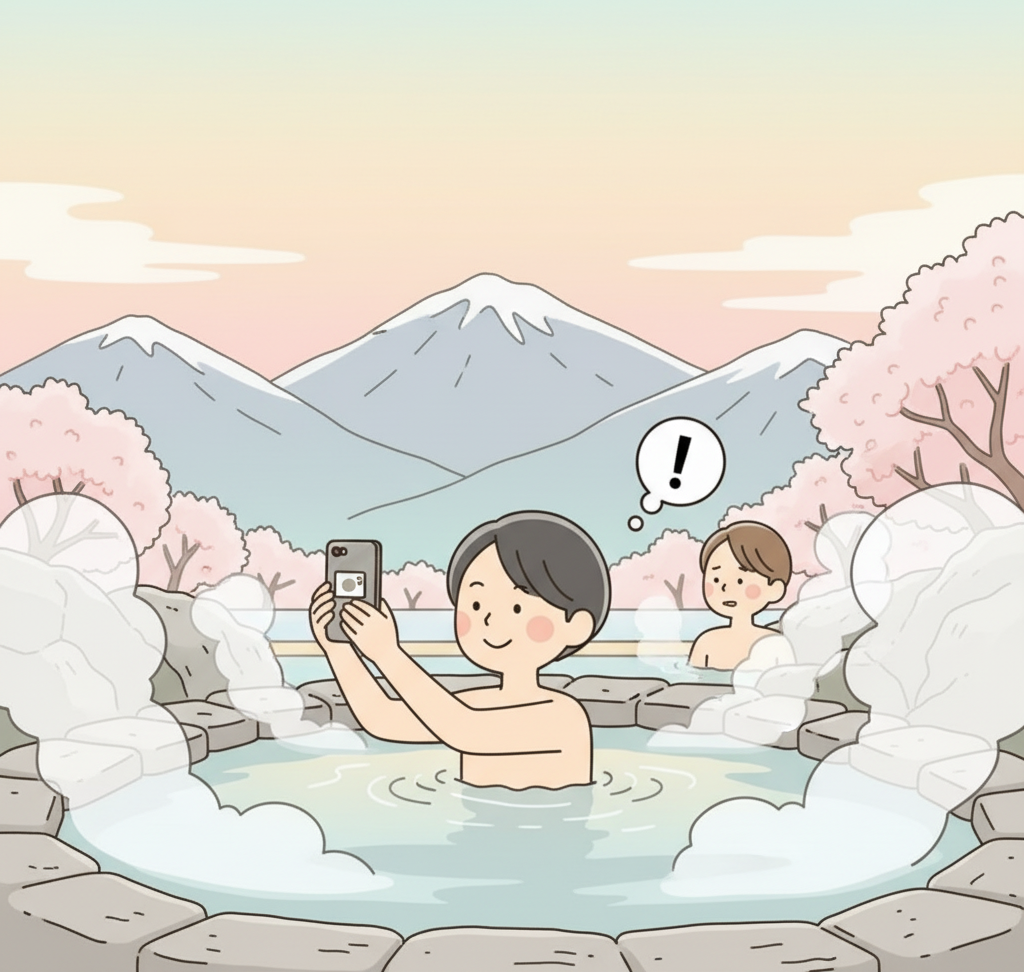
Photographing the outdoor scenery from a rotenburo

A tourist in an outdoor rotenburo onsen bath raising a smartphone above the water to photograph mountain scenery at dawn, steam rising around them, another bather in the distance looking concerned
NG

Taking a photo of the mountain view or river scenery from an outdoor rotenburo bath because 'there were no people in the shot'

Open-air rotenburo (露天風呂) are among the most photogenic spaces in Japan, and the temptation to document a mountain onsen at dawn with steam rising from the water is completely understandable. The rule still applies. Other bathers may be just outside the frame, may walk into the frame, or may see you with a camera and be distressed regardless of where the camera is pointing. The outdoor setting doesn't create a photography exception — it's still a bathing area.

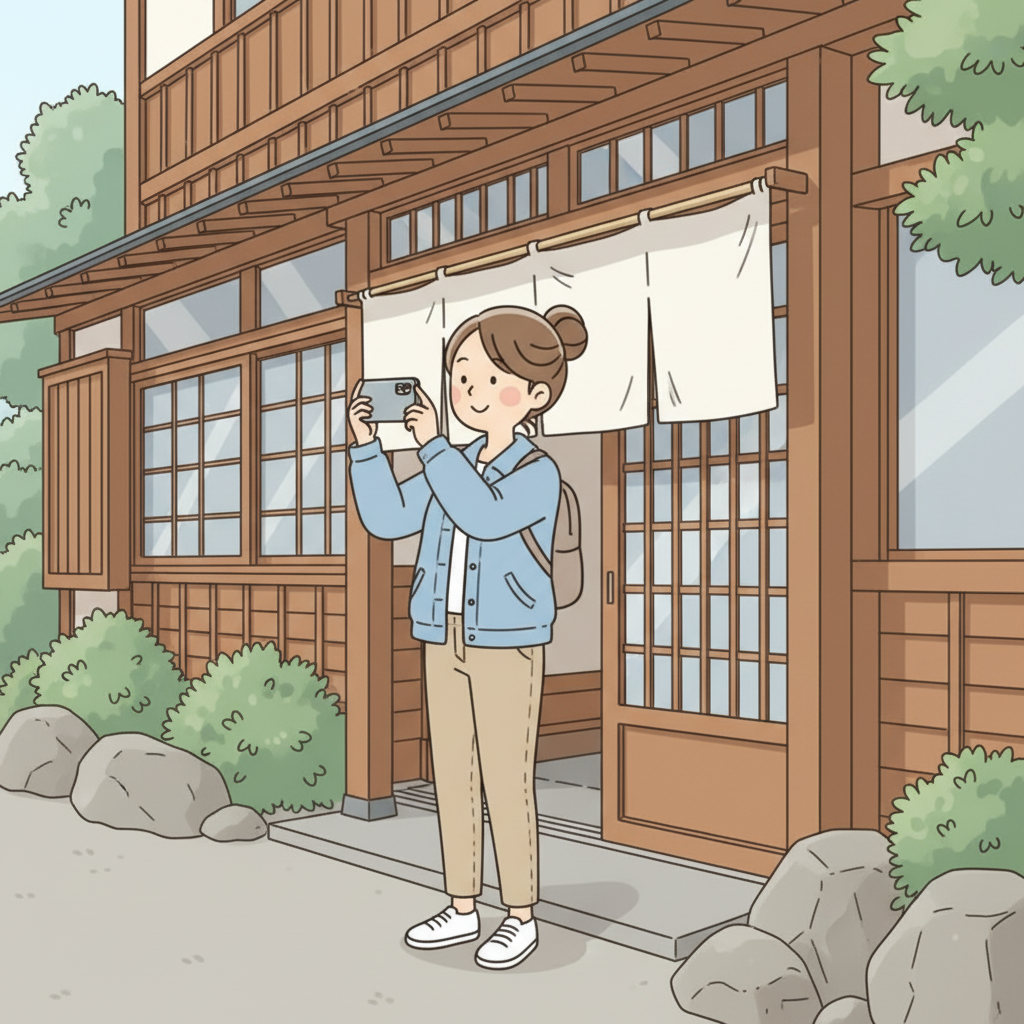
A tourist standing outside the entrance of a traditional Japanese onsen ryokan building photographing the exterior wooden facade in daylight, phone in hand, no people inside visible
OK

Photograph the exterior view before you enter — the rule is clear once you're inside

Photograph the exterior building, the surrounding landscape, and the approach to the onsen facility — these are usually fine to photograph. Once you cross into the bathing area, put the camera away permanently for that visit. Many rotenburo onsen are located in extremely scenic settings; the accommodation website, Google Maps, and tourism boards will have the exterior shots you're looking for if you need them for planning or sharing.

Why this one is more than bad manners

Most etiquette rules in Japan live in the realm of social norms — do the wrong thing and you’ll get a gentle correction. Onsen photography is categorically different. Secretly photographing undressed people in bathing areas and changing rooms is a crime: Japan’s 2023 photography law (撮影罪) covers secretly photographing people’s bodies, with up to 3 years in prison or a ¥3 million fine, and prefectural nuisance ordinances cover similar acts. Facilities ban cameras outright so that nobody gets anywhere near that line.

This isn’t hypothetical. Voyeurism (盗撮) was a serious enough problem that Japan replaced a patchwork of prefectural rules with a nationwide law. Facilities can and do call the police.

From the moment you cross into the changing room, your phone is in the locker. Not in your hand “but face down.” Not in your pocket “just in case.” In the locker.

What the rule covers

  • The bathing area — Indoor baths, outdoor rotenburo, sauna rooms. The facility rule covers every subject: other bathers, the empty room, the scenic mountain view. “No one was in the shot” won’t get you off with the staff.
  • The changing room — People are undressing. A camera out while others are present looks exactly like voyeurism, whatever you say you’re photographing, and staff will treat it that way.
  • The rotenburo temptation — Yes, a mountain onsen at dawn with steam rising is incredibly photogenic. The rule still applies. Other bathers may be just out of frame or may walk in. The outdoor setting creates zero exceptions.

A few “nice to know” extras

  • Private onsen baths — Some ryokan offer kashikiri buro (private reserved baths). Some ryokan ban photography even there, so check the rules before you take a picture.
  • Shoot the exterior first — The approach path, the entry gate, the building in its landscape setting — usually fine. Get your shots before you check in.
  • Video calls count — Being on a video call in the bathing area — even “just audio” with the camera supposedly covered — breaks the same no-phone rule. The phone itself is the problem.
  • If you see someone else photographing — Alert facility staff. They take this seriously. You don’t need to confront the person yourself.

Quick check

Three questions to lock in the onsen rule.

Quick check

Can you spot the right move?

  1. Q1 Is it okay to photograph an empty onsen bath if no other bathers are visible?

  2. Q2 Can you photograph your own bag or locker inside the onsen changing room?

  3. Q3 Is it okay to photograph the exterior of an onsen building and the surrounding landscape?