Why Your Phone Camera Is Loud in Japan (The Carrier Rule)

Phones sold in Japan all click — not by law but by a carrier-industry agreement to deter voyeuristic photos. Foreign phone silence is a gray zone people notice.

Muting the shutter sound on a Japanese phone

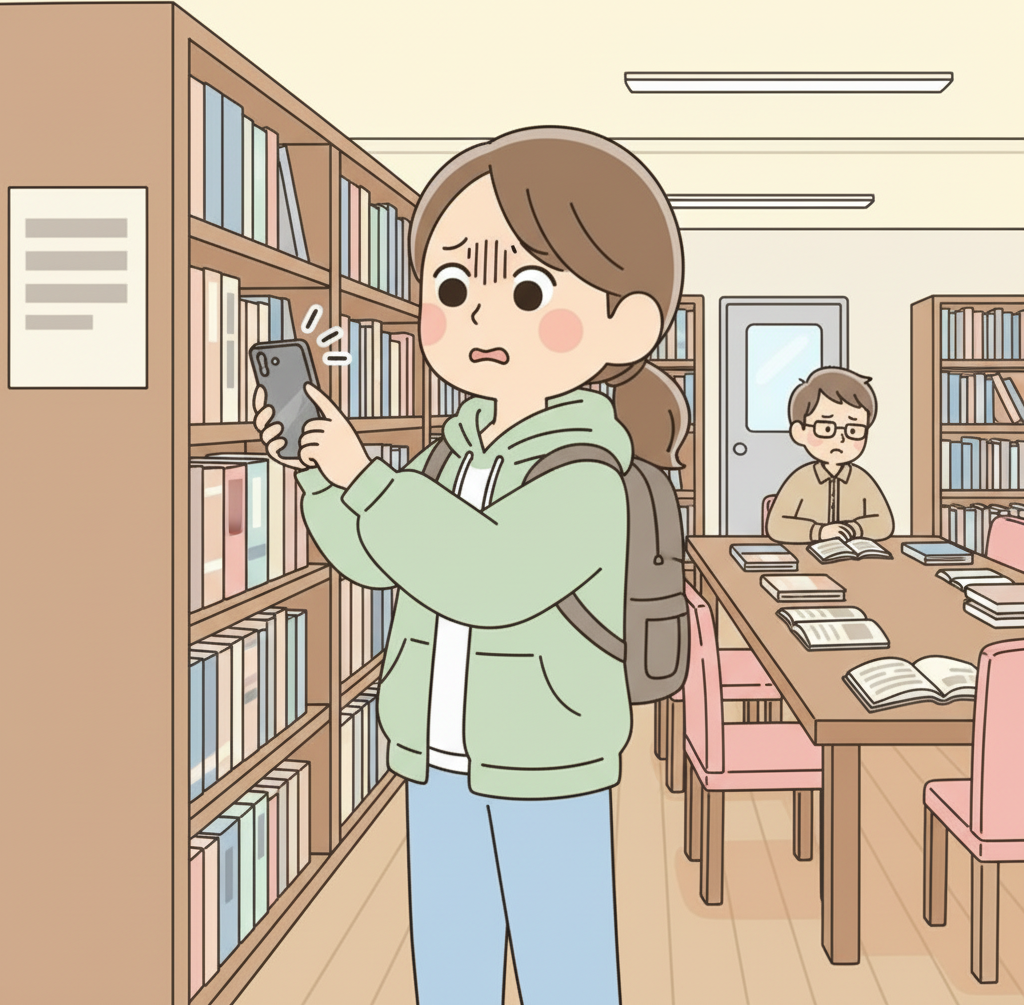
A young tourist in a quiet Japanese library jabbing at the silent-mode switch on a Japanese iPhone while raising it to photograph a bookshelf, embarrassed expression, a cartoon shutter-sound icon bursting from the phone, another patron glancing over annoyed
NG

Trying to silence your camera by putting your phone in マナーモード (Silent/Manner mode)

On every smartphone purchased in Japan — iPhone, Android, any brand — the camera shutter sound is hardcoded to play regardless of whether the phone is in Silent mode. This is an industry-wide carrier requirement, not a manufacturer quirk. Flipping the ringer switch, setting the volume to zero, and activating Manner mode all leave the shutter sound completely unaffected. There is no setting inside the standard camera app that will mute it. Trying to do so in public will likely result in confused failure, not silence.

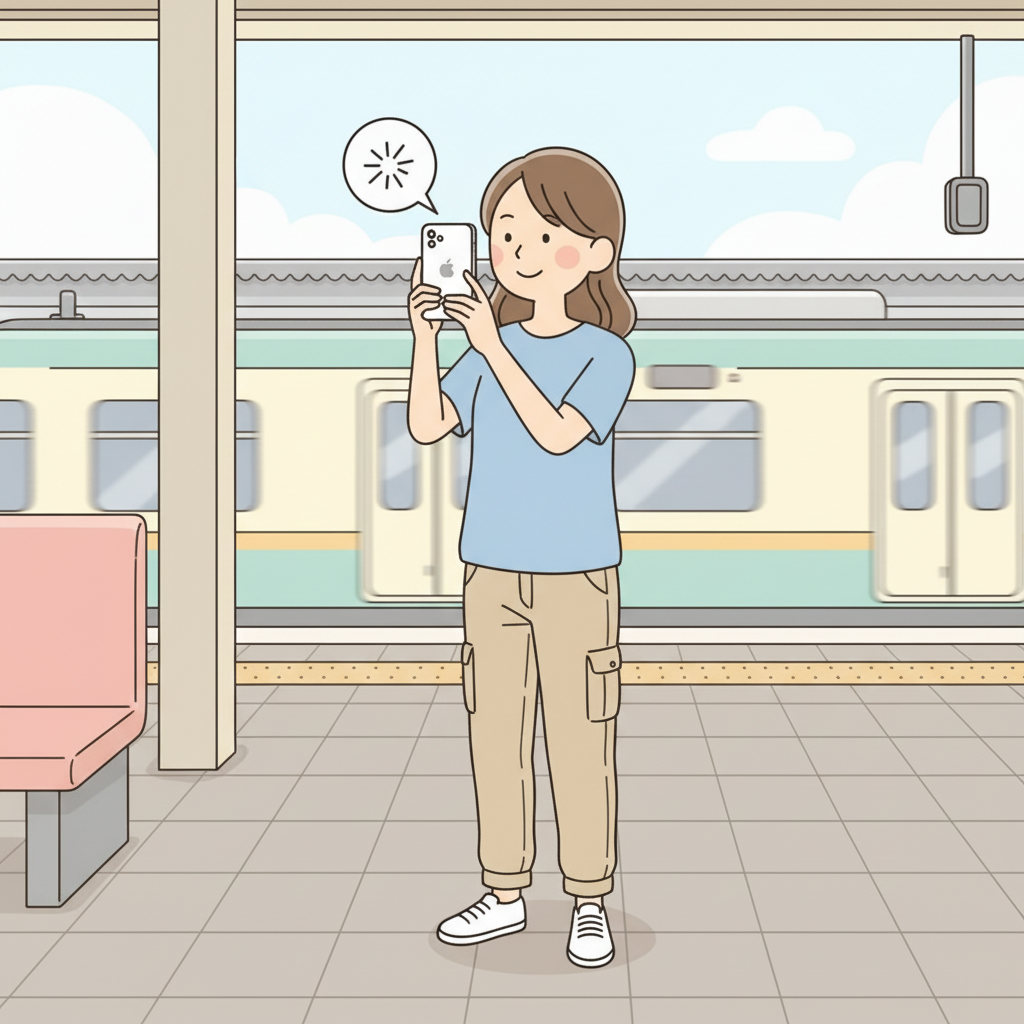
The same young tourist now outside on a bright station platform calmly photographing a train with a Japanese iPhone, a small shutter-sound icon visible above the phone, relaxed friendly expression, no other people nearby reacting
OK

Accept the shutter sound — it's there to protect people on trains and in public spaces

The carrier requirement (tied to anti-voyeur photography regulations, 盗撮防止) exists because 盗撮 (tōsatsu) — covert voyeuristic photography on trains, in stores, and elsewhere — was a serious enough problem to require a coordinated industry fix. The audible shutter is the deterrent. If you're in a context where a loud shutter is embarrassing (library, quiet museum hall, a formal ceremony), either use a dedicated camera instead or accept that you won't be taking photos there.

Using a foreign phone with a silenced camera

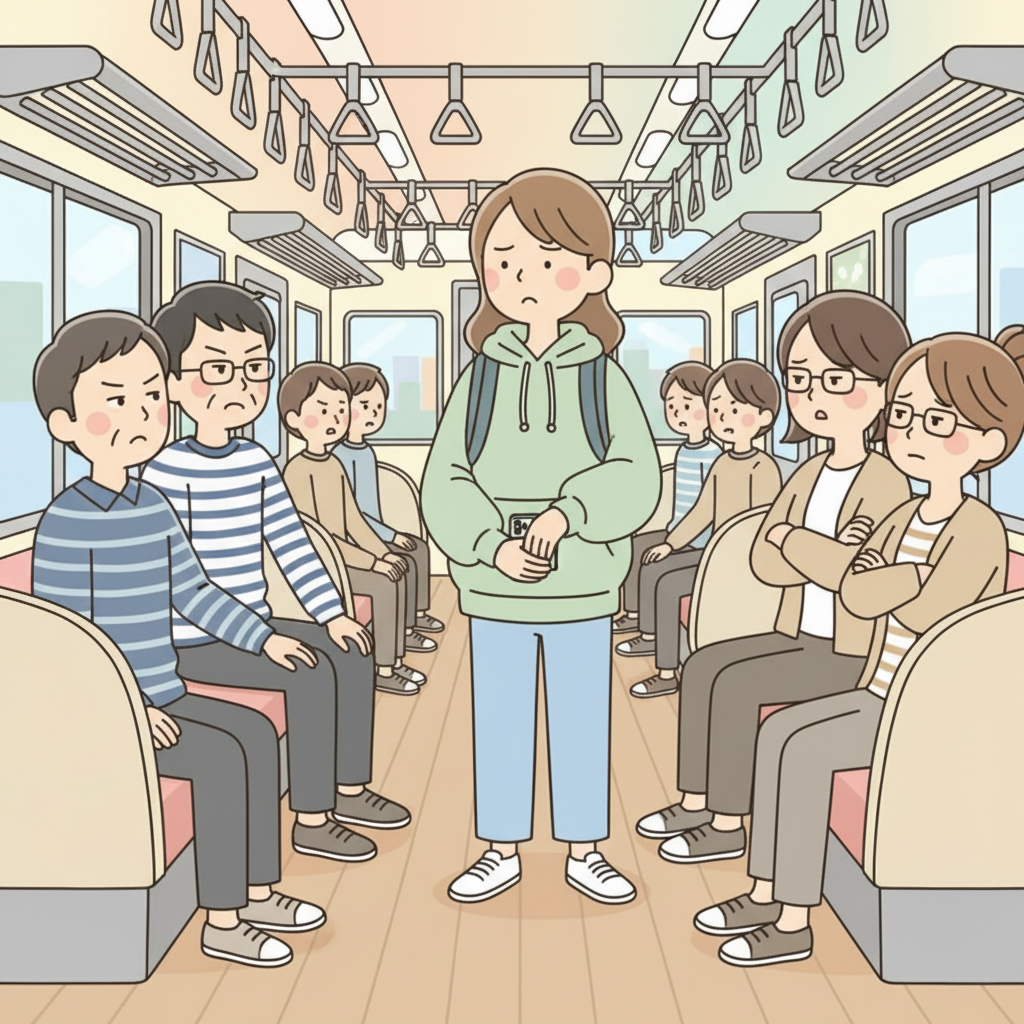
A tourist inside a packed Tokyo commuter train holding a foreign iPhone low at waist height angled toward seated passengers, no shutter-sound icon visible, two nearby commuters looking suspicious and uncomfortable
NG

Silently shooting photos in crowded trains or public spaces with a foreign-purchased phone that has no shutter sound

Phones purchased outside Japan — particularly international-model iPhones or Android devices — often don't have the shutter sound locked on. Technically, using a foreign phone with a silent camera isn't illegal for tourists. In practice, silently photographing people in enclosed or crowded spaces will be noticed and will make people around you deeply uncomfortable. The shutter sound functions as a social signal — its absence in a crowded train immediately reads as suspicious.

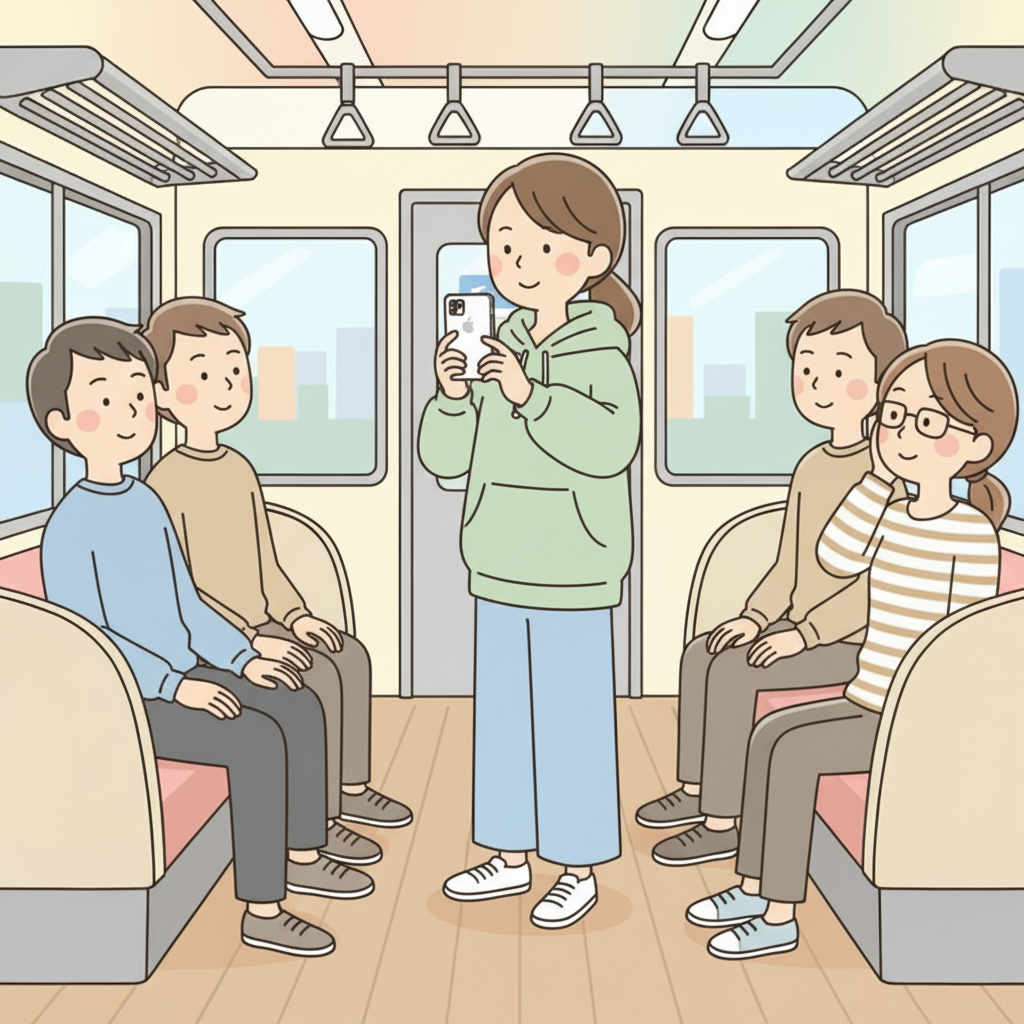
The same tourist on the train now holding a foreign iPhone clearly at chest height pointed obviously at a station name sign through the window, focused friendly expression, surrounding commuters relaxed and unbothered
OK

Be aware of the social context, not just the legal one

If you're taking photos of scenery, architecture, or your food, a silent camera on a foreign phone is unlikely to bother anyone. If you're on a crowded train or in a space with other people nearby, the absence of a shutter sound will attract attention and distrust. Operate your camera in a way that's visible and obviously non-voyeuristic — hold the phone at chest height pointing at what you're shooting, not at waist level pointing at people.

Using third-party camera apps to bypass the shutter sound on a foreign phone

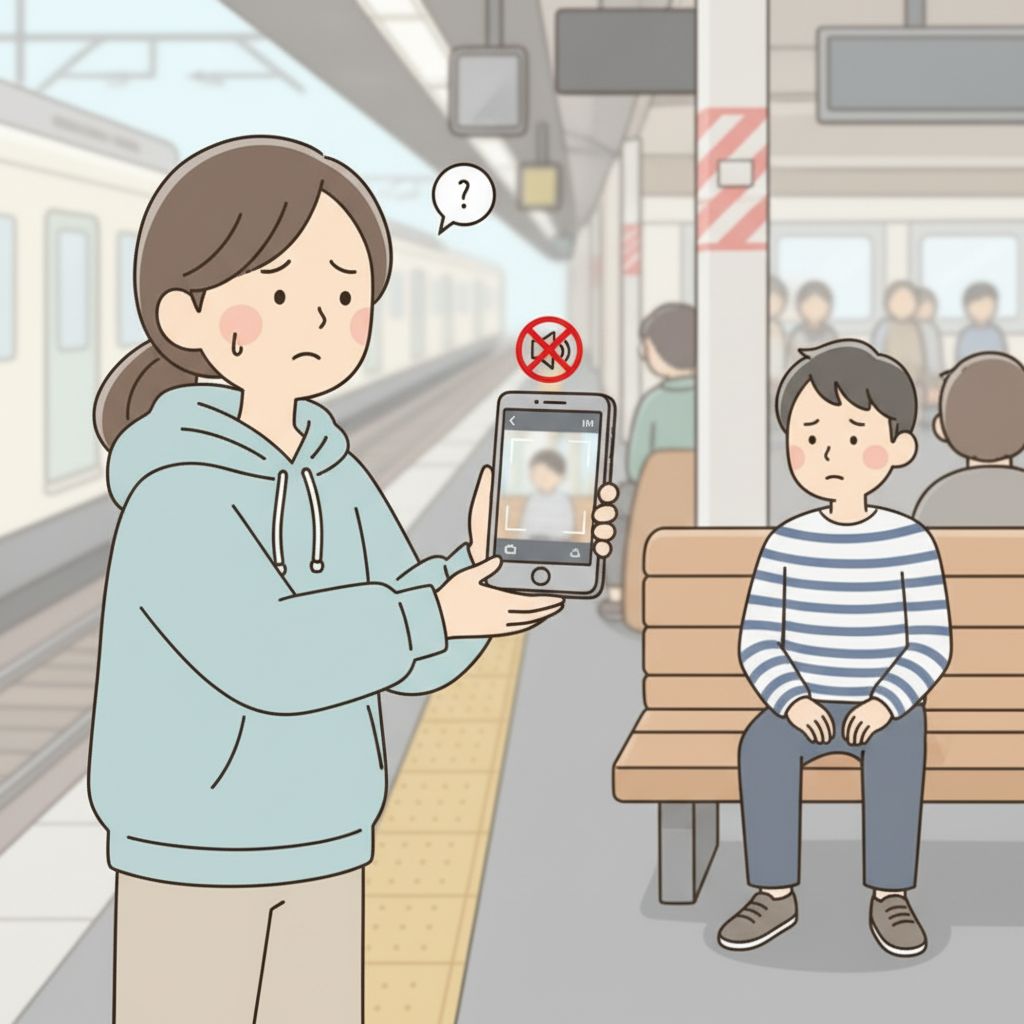
A tourist on a crowded train platform holding a foreign smartphone with a third-party silent camera app open on screen, secretly aimed at an unsuspecting commuter sitting nearby, a crossed-out shutter-sound icon above the phone, worried guilty expression
NG

Installing a silent camera app specifically to photograph people in Japan without the click sound

Numerous third-party apps exist that bypass the shutter sound entirely. On a foreign phone, these apps are functional and not illegal for tourists. But using a silent camera app in circumstances where it reads as voyeuristic — pointed at people on trains, in changing areas, near restrooms — is both a serious social violation and potentially criminal under Japan's 盗撮防止 (anti-voyeur photography) laws, regardless of what phone you have. The technology being available doesn't make the behavior acceptable.

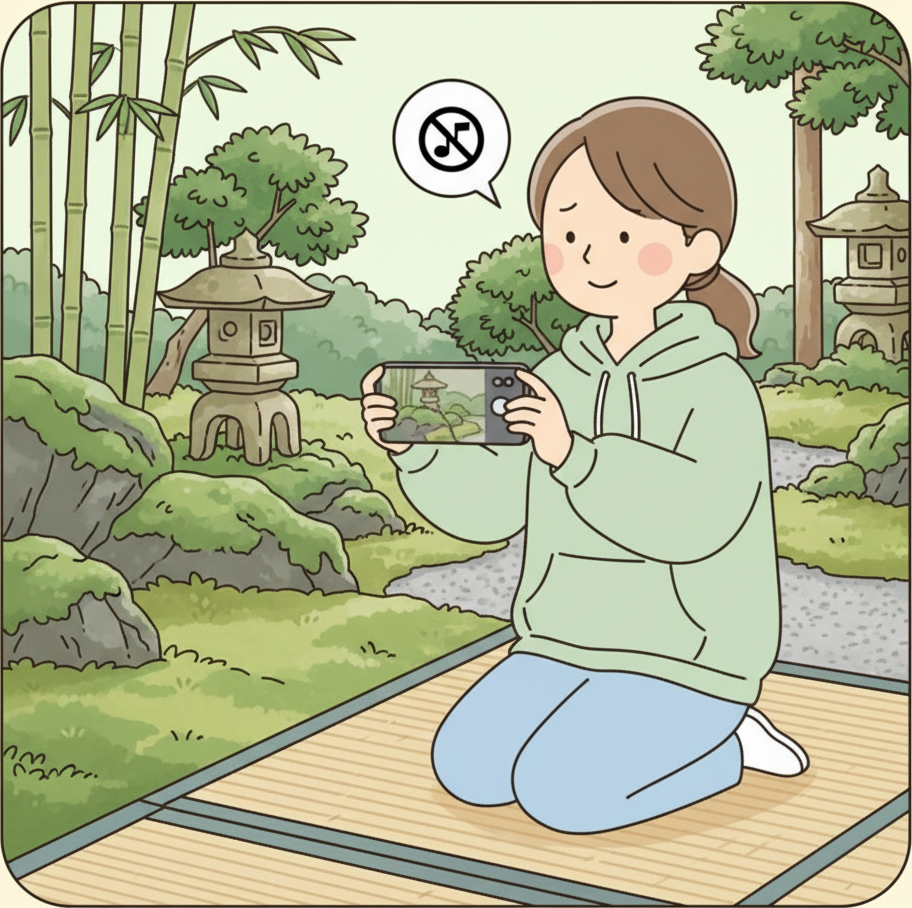
The same tourist now kneeling in a quiet Japanese garden using a foreign smartphone with a silent camera app to photograph a stone lantern and moss, a crossed-out shutter-sound icon above the phone, calm focused expression, no people in the scene
OK

Third-party silent apps are fine for scenery and food — not for photographing people without clear consent

If you're in a scenario where a loud shutter is awkward (a quiet garden, a serene ceremony you've been permitted to document), using a third-party silent camera app on a foreign phone is a practical solution. The line is intent and context. Scenery, food, architecture, travel documentation — fine. People without their knowledge and consent, especially in enclosed spaces — not fine under any circumstances, and potentially criminal.

Why your phone clicks and you can’t stop it

Voyeuristic photography — 盗撮 (tōsatsu) — got bad enough on Japanese trains and escalators in the early 2000s that carriers forced every phone manufacturer to hardwire an audible shutter sound. iPhone, Samsung, Sony, Sharp — doesn’t matter. If it was sold through a Japanese carrier, the click plays when you shoot, even with the ringer off, volume at zero, and Manner mode on. There is no setting, no toggle, no trick.

Your foreign phone is a different story. An iPhone bought in the US or Europe can shoot silently — and on a packed commuter train, that silence is a social signal. People notice when everyone else’s phone clicks and yours doesn’t. It reads less as “tourist” and more as “suspicious.”

The shutter sound isn’t a feature. It’s a deterrent — and its absence in a crowded space makes you the person everyone’s watching.

What this means in practice

  • Japanese locals just accept the click — in libraries, quiet museums, ceremonies, they either live with the sound or don’t take the photo. That’s the trade-off.
  • Foreign phone, crowded space — hold your phone visibly at chest height, point it obviously at your subject. Make your intent unmistakable.
  • Silent camera apps on foreign phones — totally fine for scenery and food. Using one pointed at people in enclosed spaces is potentially criminal under Japan’s anti-voyeur laws, regardless of your phone’s origin.

A few “nice to know” extras

  • Japanese vs. international iPhones — Model numbers ending in J/A (bought through Japanese Apple stores or carriers) have the sound locked at firmware level. Your foreign model won’t. Swapping SIMs doesn’t change this.
  • The click isn’t always max volume — On Japanese phones, shutter volume roughly tracks ringer volume. It’ll never go fully silent, but it’s quieter at low settings.
  • Dedicated cameras are the workaround — At a tea ceremony or formal event where you have permission to shoot, a mirrorless camera with electronic shutter is the socially accepted tool — not a phone with a workaround app.
  • Two separate things — The shutter-sound rule is a carrier industry agreement dating to the early 2000s, not a law. Separately, in July 2023, Japan passed the 撮影罪 (Act on Punishment of Sexual Image Recording), which criminalizes covert sexual photography nationwide with up to 3 years’ prison. The carrier rule predates the law by ~20 years and exists independently of it.

Quick check

Three questions to lock in the shutter-sound rule.

Quick check

Can you spot the right move?

  1. Q1 Can you mute the shutter sound on a Japanese iPhone by switching to Silent mode?

  2. Q2 Is it illegal for a tourist with a foreign phone to use a silent camera in Japan?

  3. Q3 Does Japan's shutter sound rule apply to every single smartphone sold in Japan, regardless of brand?