

Why the oshibori is hands-only
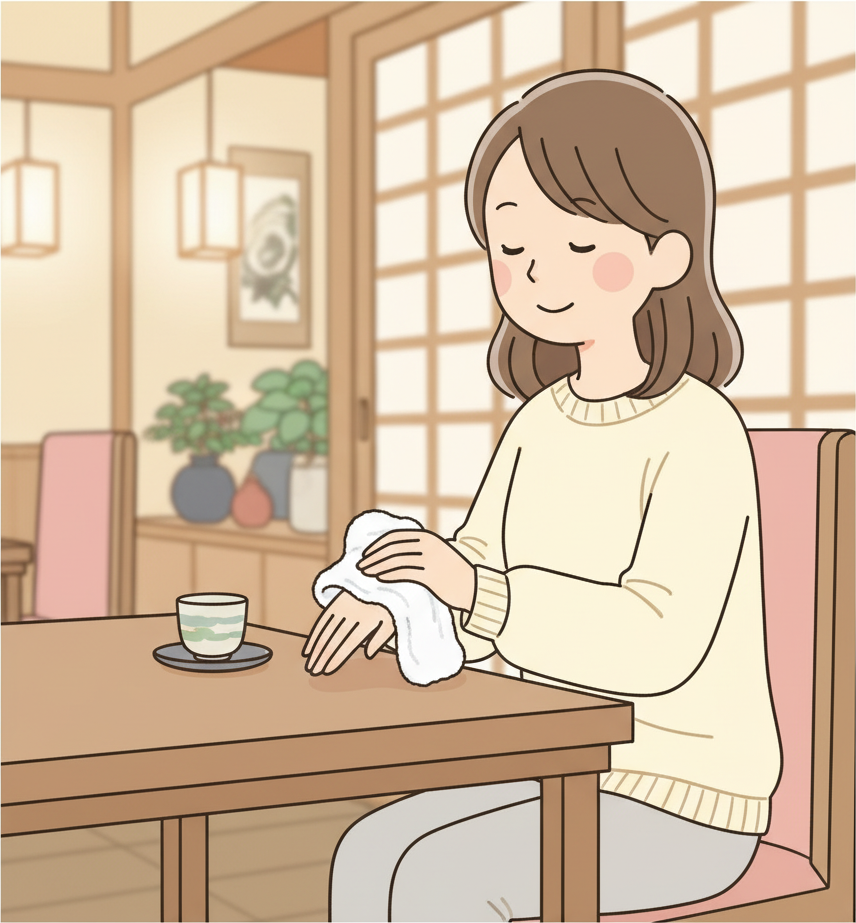
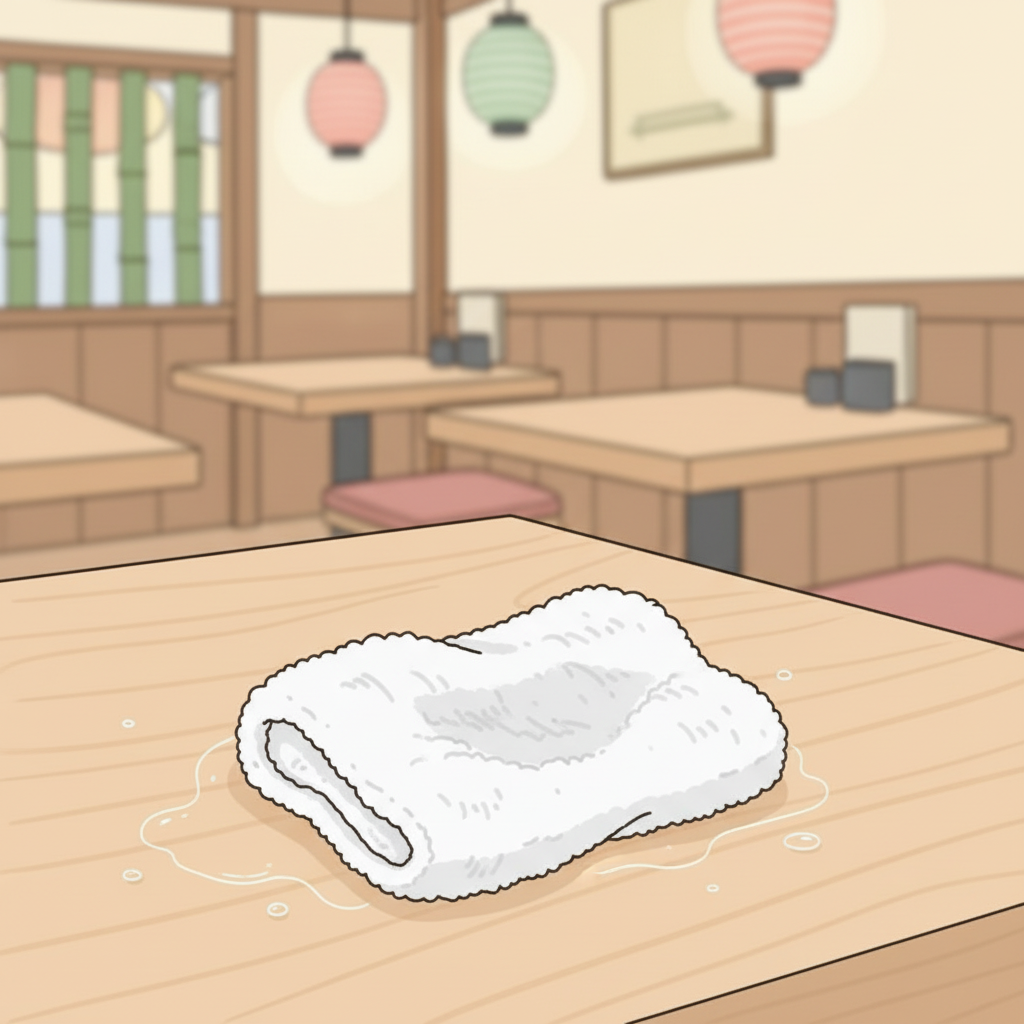
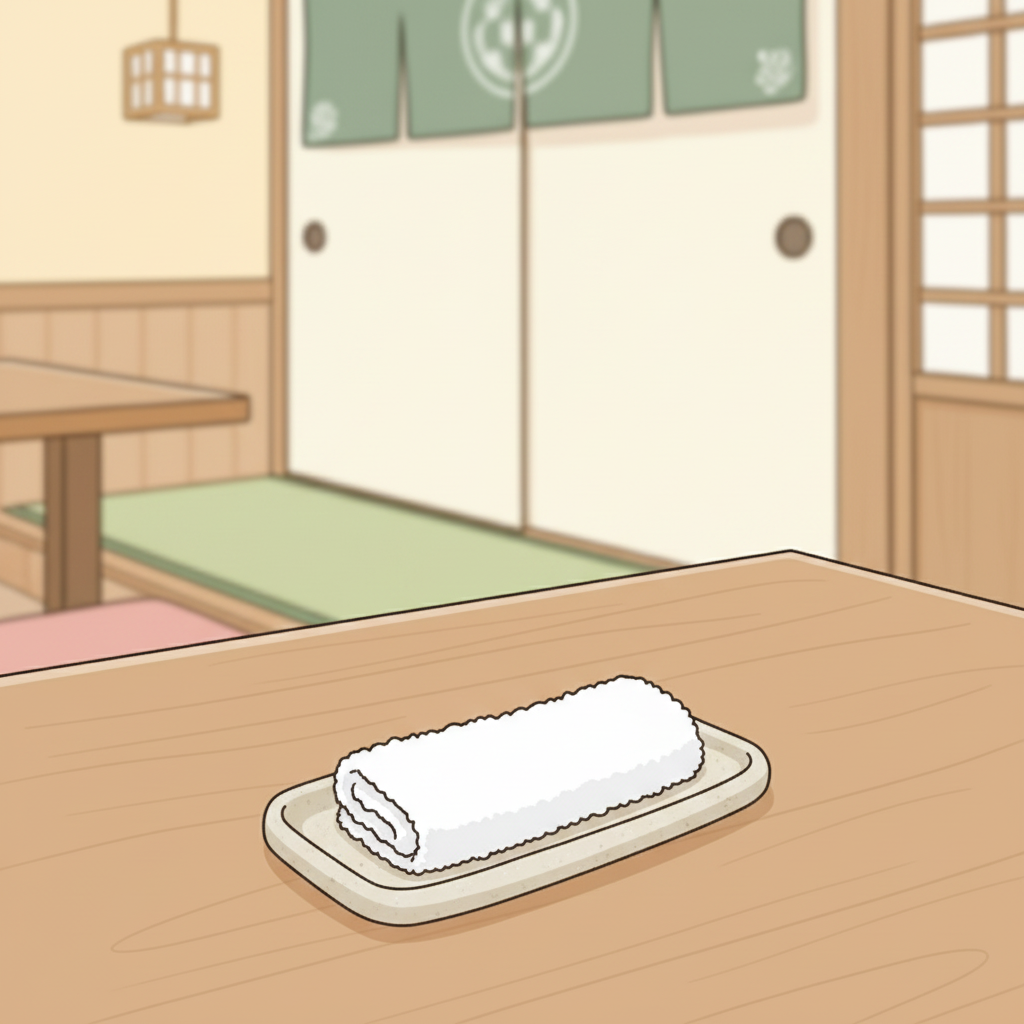
The tradition goes way back. Before you sat down to eat, your hands had been touching street dust, public surfaces, and whatever else was out there. The hot wet towel became the ritualized hand-washing gesture—offered at the start of a meal as a small welcome. Warm in winter, cool in summer, and meant for cleaning the hands you’re about to eat with.
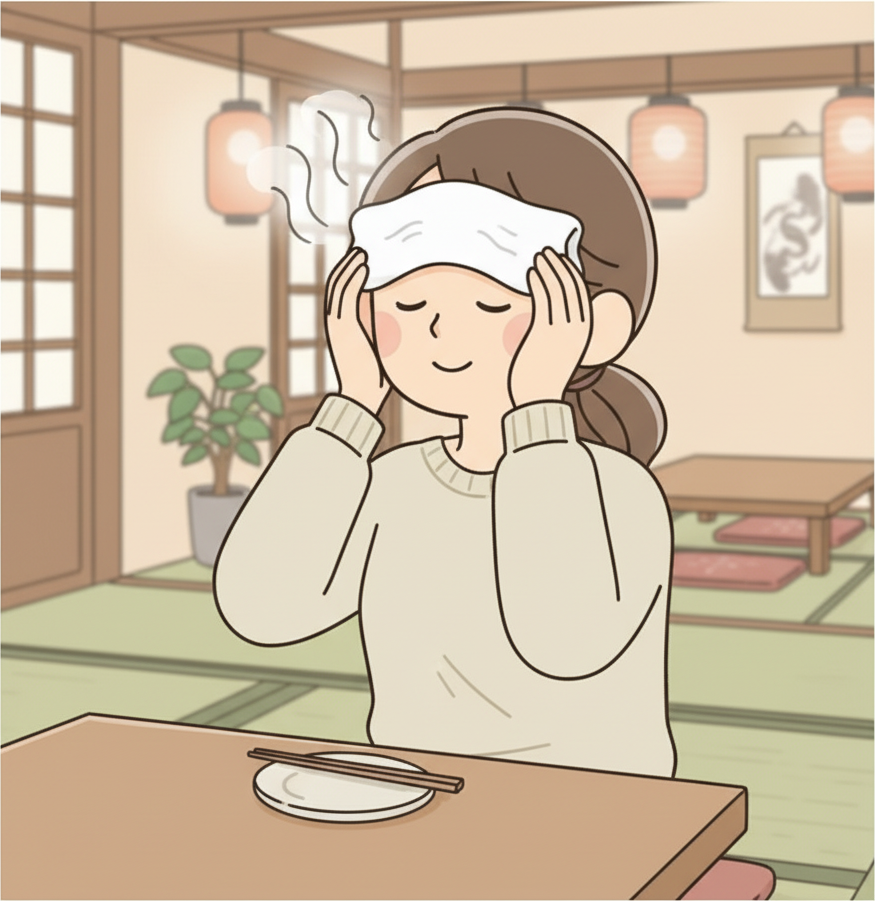
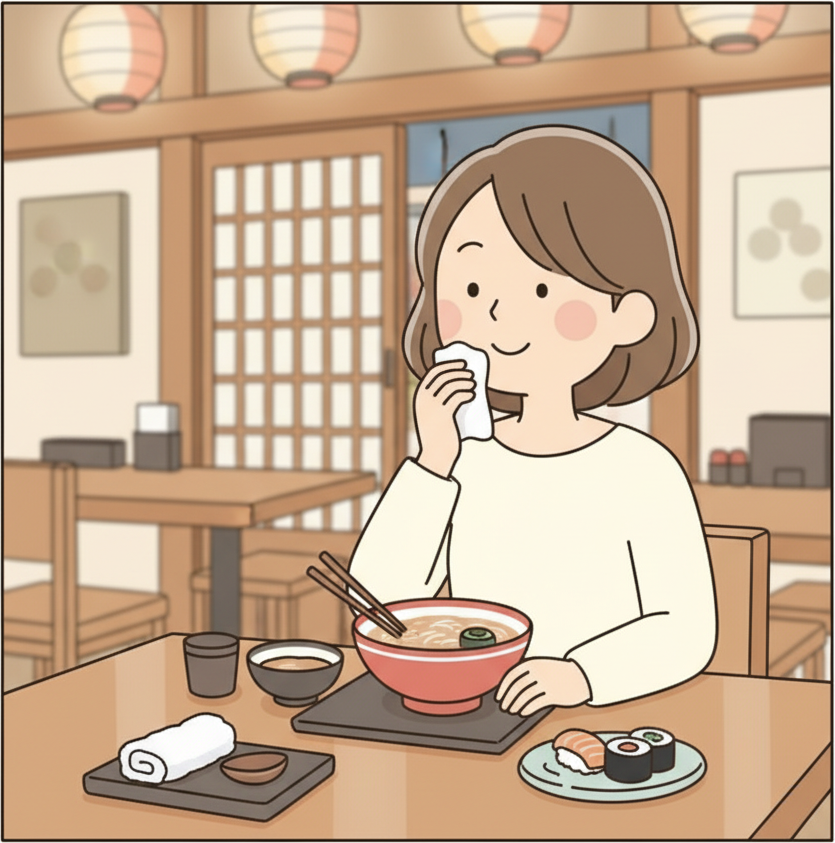
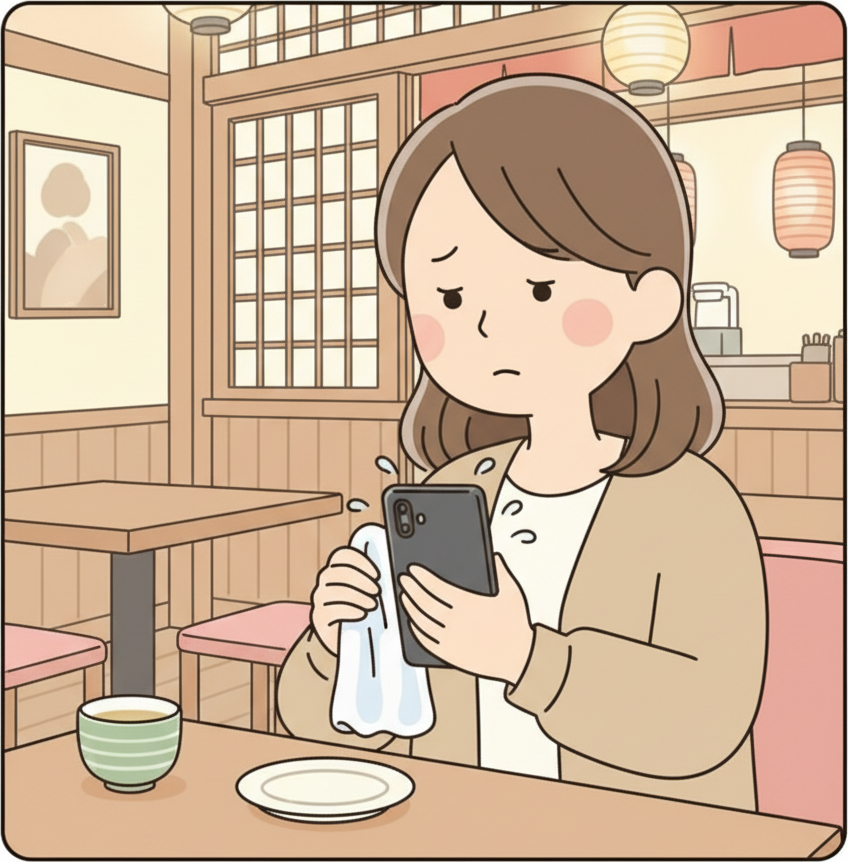
Because the oshibori’s meaning is “hand cleaning before food,” using it on your face, neck, phone, or the table is reading the object wrong. The face-wipe is a common mistake—it’s such an obvious match for the towel, but it’s specifically not the point.
Four words: hands only, then fold.
A few “nice to know” extras
- Hot in winter, cold in summer — Many restaurants switch the oshibori temperature with the season. Both versions exist for the same reason: a tiny moment of comfort as you arrive.
- Disposable paper oshibori — Many casual restaurants hand you a small sealed packet with a paper or thin cloth towel inside. Same purpose, same rules, same face-wipe mistake to avoid.
- A fresh one later — If staff bring you a new oshibori partway through, that’s generosity, not an invitation to wipe other body parts. Hands only, each time.
- Some places skip it entirely — Some quick, casual shops don’t provide one. That’s normal; use a tissue or your own wet wipe instead.
Quick check
Three questions to lock in the hands-only rule.