Ramen Shop Rules: Order Fast, Eat Faster, Don't Linger

A real ramen shop is a high-velocity machine. Ticket vending, counter seat, bowl in 3 minutes, out in 10. No selfies, no laptop, no lingering.

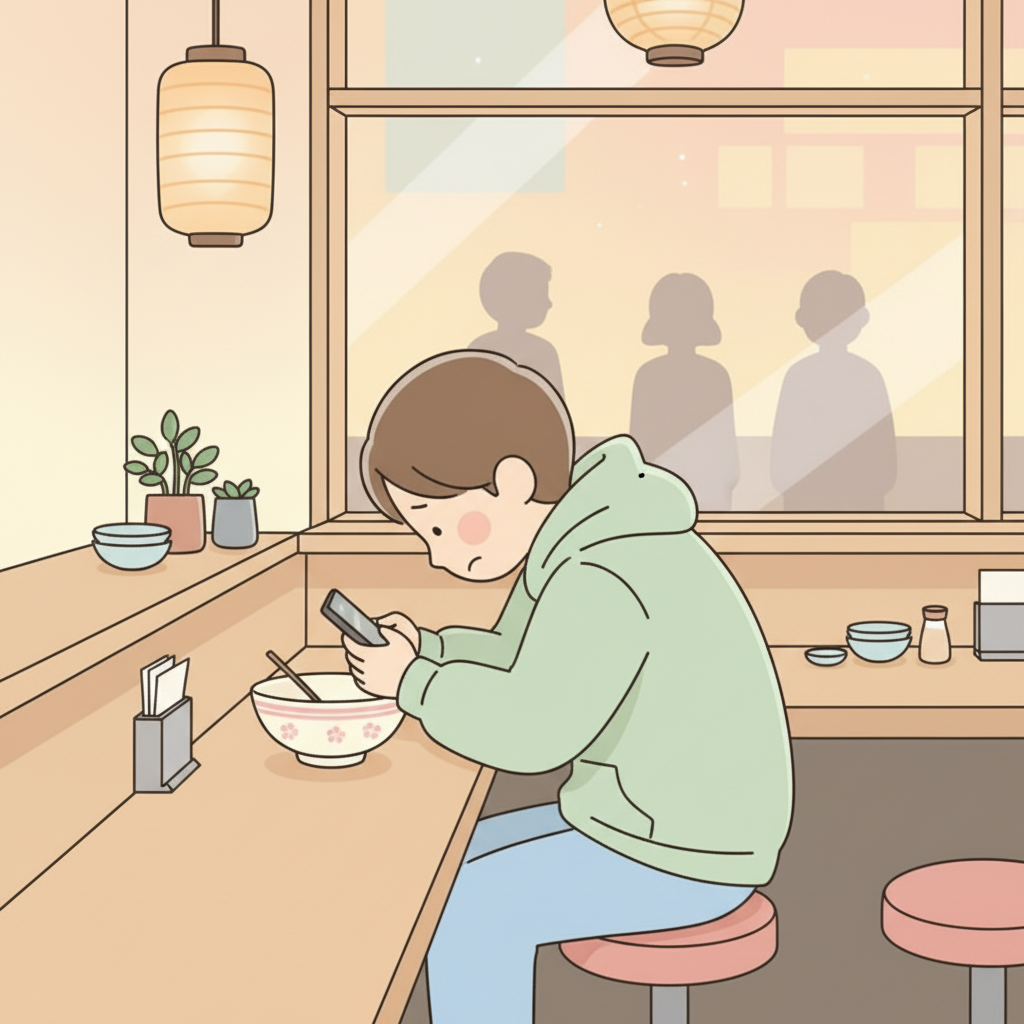
Lingering at the counter after you've finished

A person slouched at a ramen counter scrolling their phone with an empty bowl in front, silhouettes of people waiting outside the window
NG

Sitting at the bar scrolling your phone after the bowl is empty

Ramen shops—especially the small, famous, always-packed ones—are built around fast turnover. Ten seats, thirty-minute lunch rush, a line outside in the cold. Sitting there on your phone after the bowl is empty means the next person in line is waiting. It's the ramen shop equivalent of parking in the drive-thru lane.

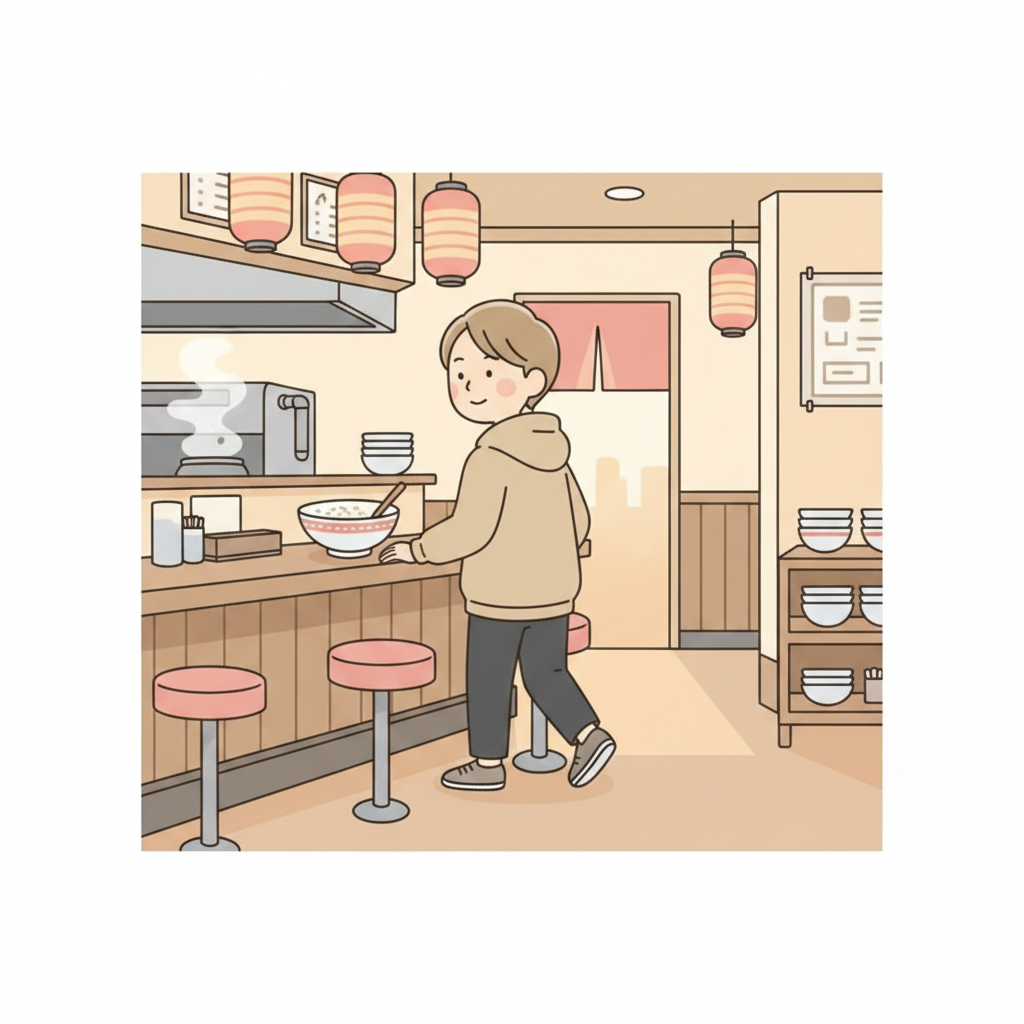
A person standing up from a ramen counter stool after finishing their bowl, walking toward the exit
OK

Finish the bowl, pay, stand up, leave. Talk outside

Total time in seat: about fifteen minutes for the eating, plus two or three on either end. If you want to decompress or check your messages, do it on the street after you leave. The counter seat is for eating.

Not knowing how the ticket machine works

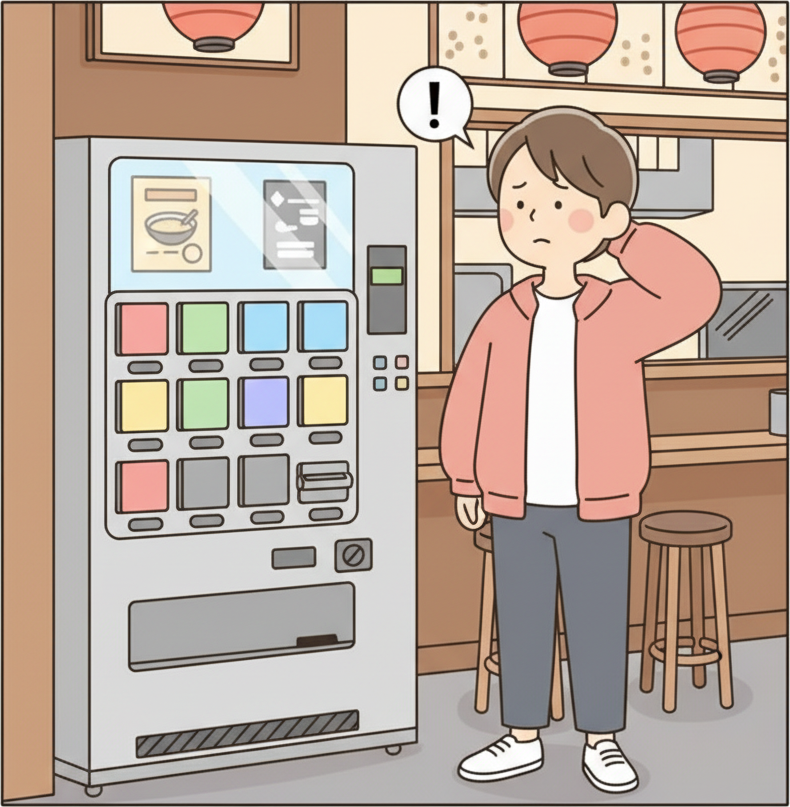
A confused person scratching their head in front of a tall Japanese food ticket vending machine at a ramen shop entrance
NG

Standing in front of the machine confused, blocking the entrance

Most ramen shops have a food ticket vending machine right at the door. You pay first, you press the button for the ramen you want, it spits out a ticket, you hand the ticket to the staff when you sit down. Tourists who don't know the system often walk in, sit down, and try to order verbally—meanwhile the machine is right behind them and the regulars know exactly what's happening.

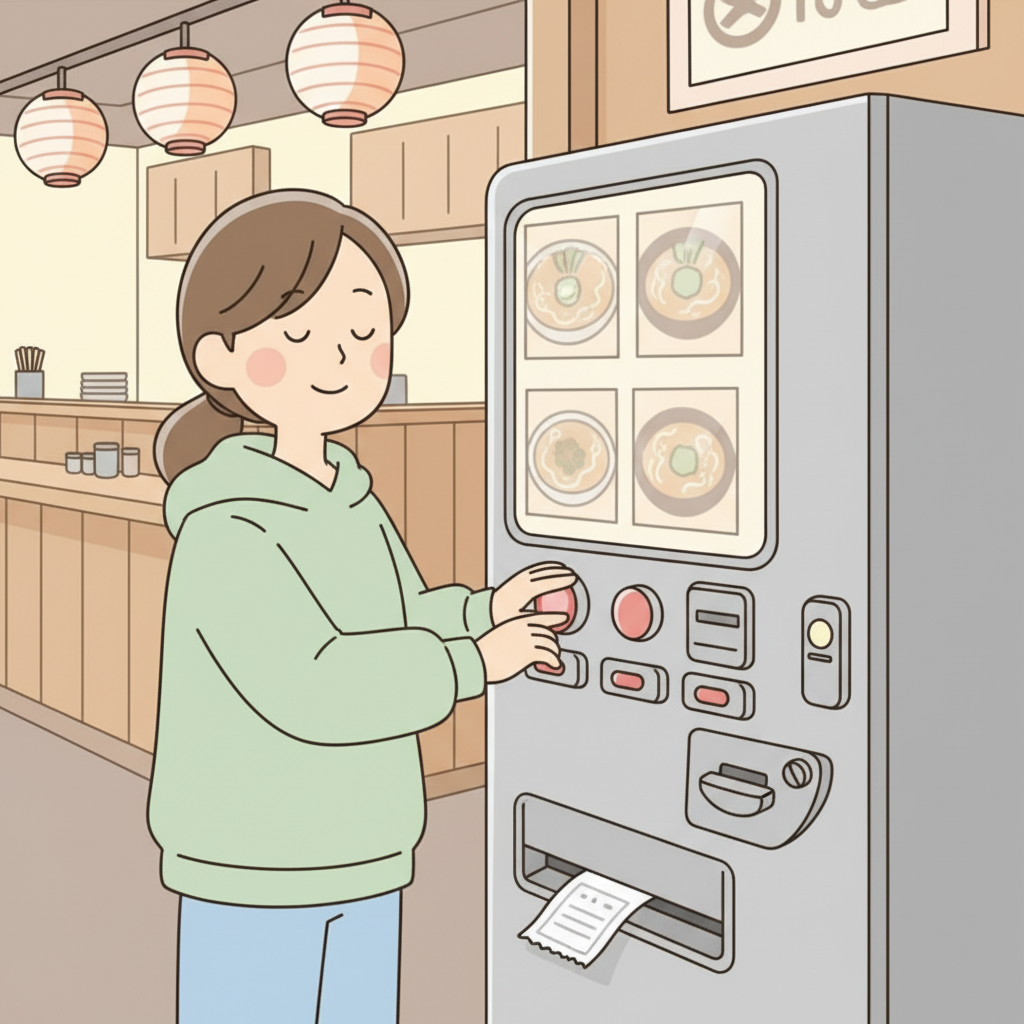
A person confidently pressing a large button on a ramen ticket vending machine with a paper ticket emerging from the slot
OK

Look for the machine first, press the biggest button if unsure, get the ticket

The biggest, most prominent button is usually the shop's signature bowl—the one you came for. Press it, insert cash or tap IC card, grab the ticket that prints out, sit down, place the ticket on the counter in front of you. Staff will pick it up and start cooking. If the machine only has Japanese, the big picture or the biggest button is almost always the right answer.

Adding things to the bowl before you taste it

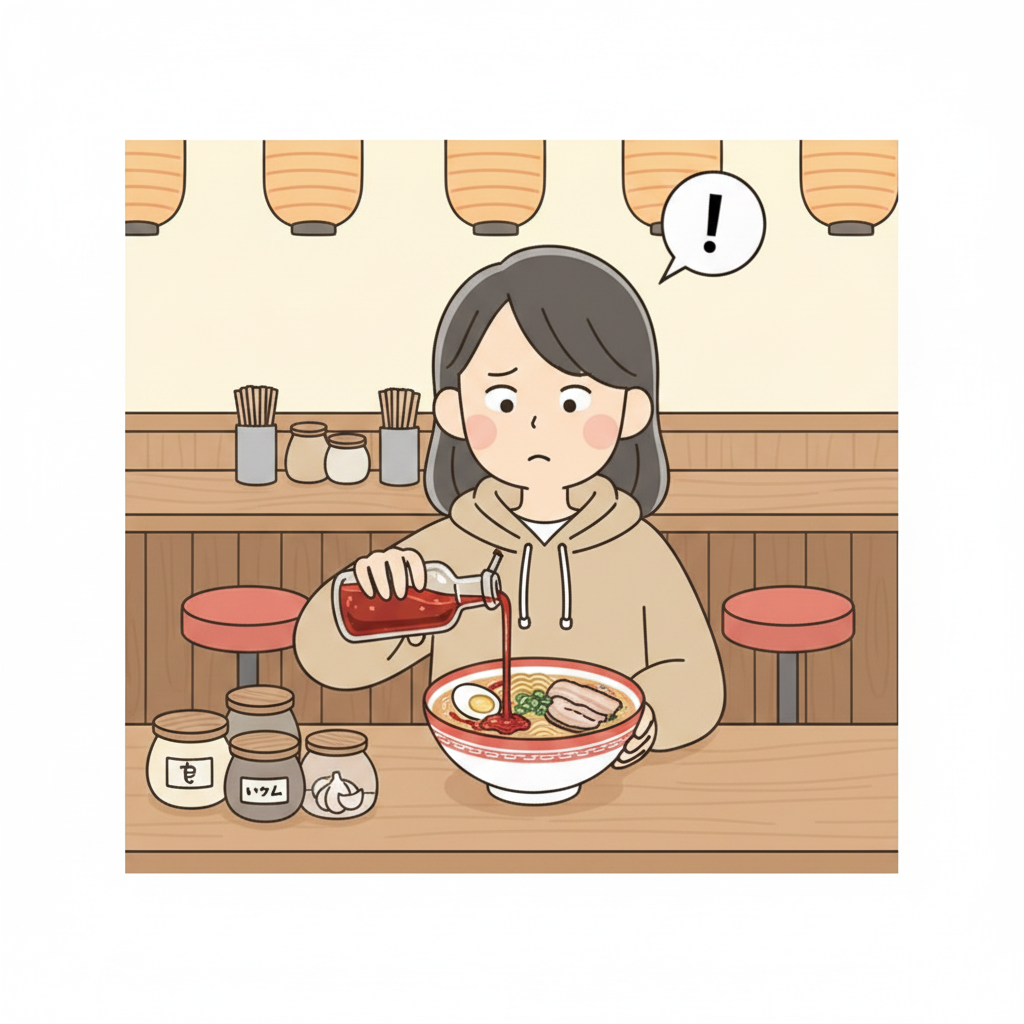
A person pouring a large stream of red chili oil into an untouched bowl of ramen at a counter with condiment jars
NG

Dumping in chili oil, garlic, sesame, pepper before trying the broth

Ramen shops usually have a row of condiments on the counter—la-yu (chili oil), grated garlic, black pepper, crushed sesame, pickled ginger. Dumping a handful of each into the bowl before you've even tasted the broth is disrespectful to the cook, who spent hours getting the balance exactly right. The condiments are for after you've tried it as served.

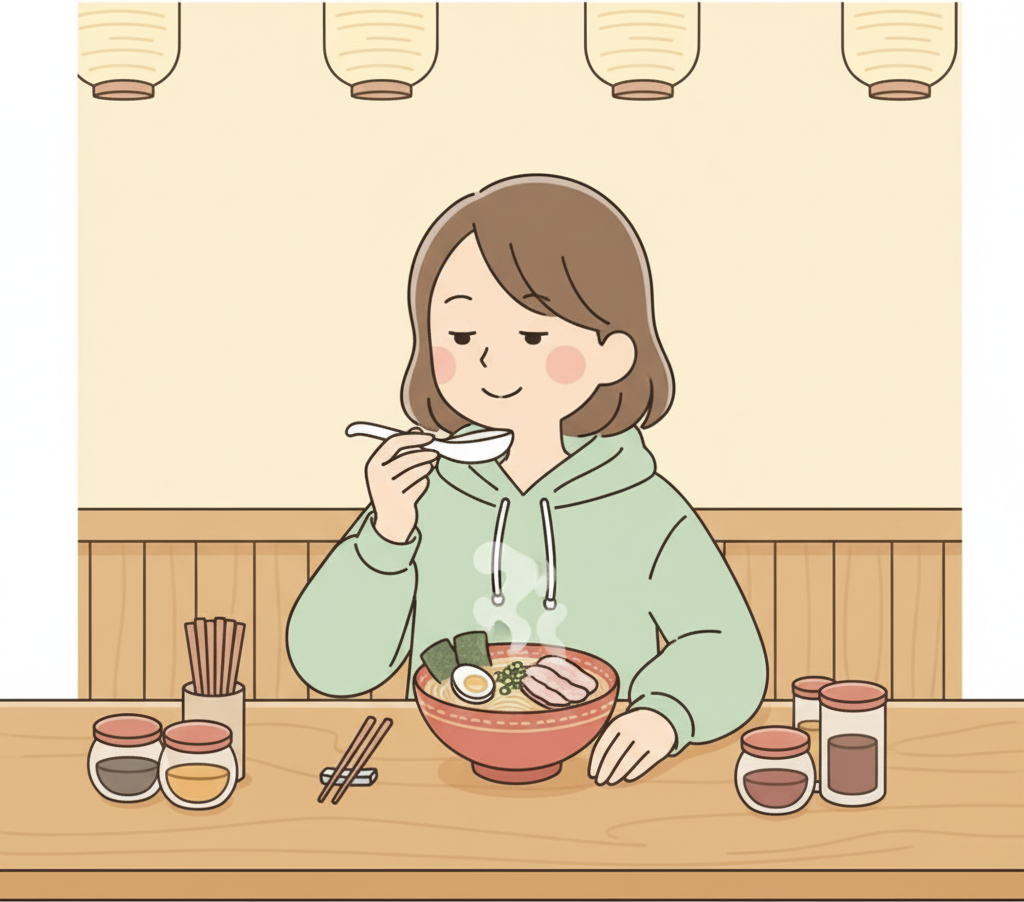
A person tasting a spoonful of ramen broth with eyes closed in appreciation, condiment jars visible but untouched
OK

Taste the broth first. Add condiments only after you've had 2-3 spoonfuls

Try the bowl exactly as the chef intended. Drink a spoon of broth, eat a few noodles with a topping, get a baseline taste. Then, if you want more heat or garlic or sesame, add it progressively. This is also how regulars signal they're tasting the work, not covering it.

Big groups and long conversations

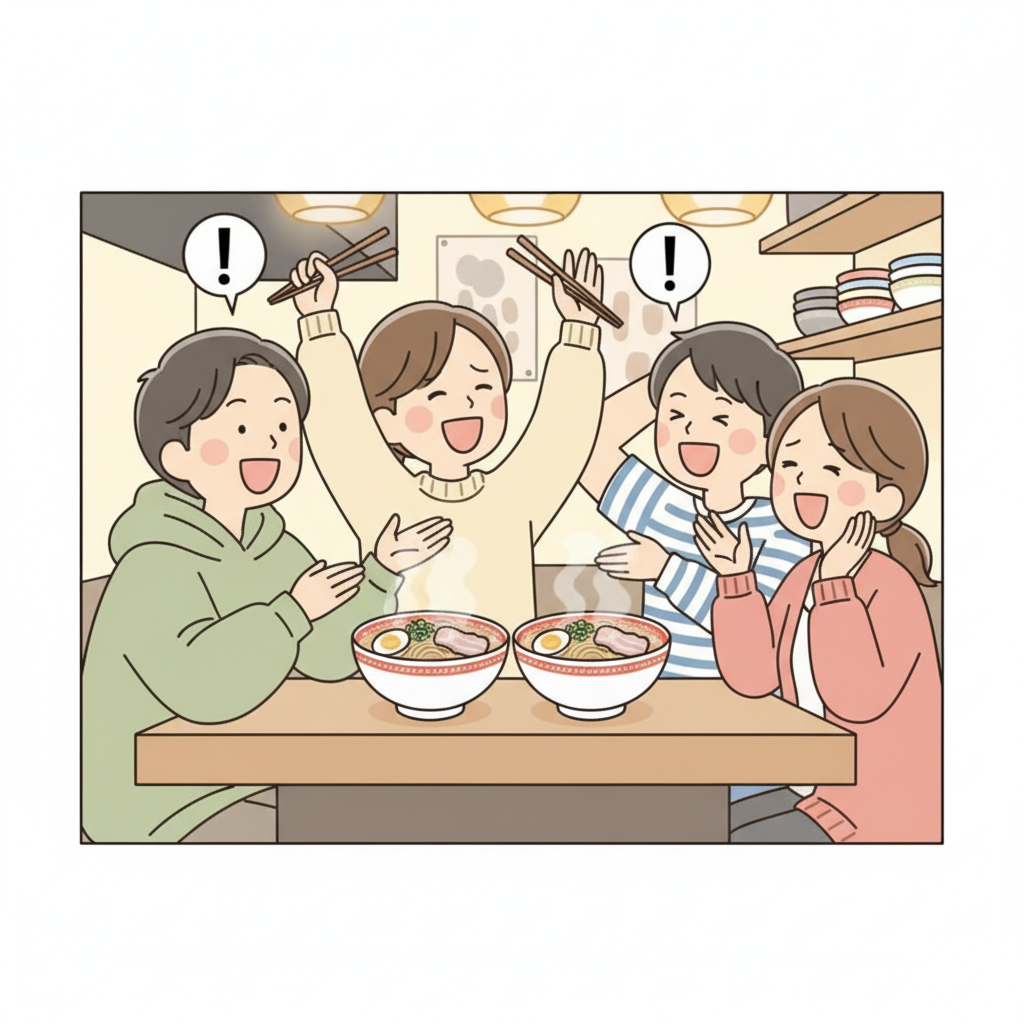
A large group of four people crammed together at a tiny ramen counter talking loudly
NG

Coming with six friends and trying to sit together, chatting for an hour

Small ramen shops often have just 8 to 12 counter seats. Coming in as a group of five or six forces the staff to split the party across the counter (or turn you away entirely). And even if you fit, the vibe is not 'leisurely dinner with friends'—the vibe is 'focused intake of hot noodles.' Long conversations don't fit the room.

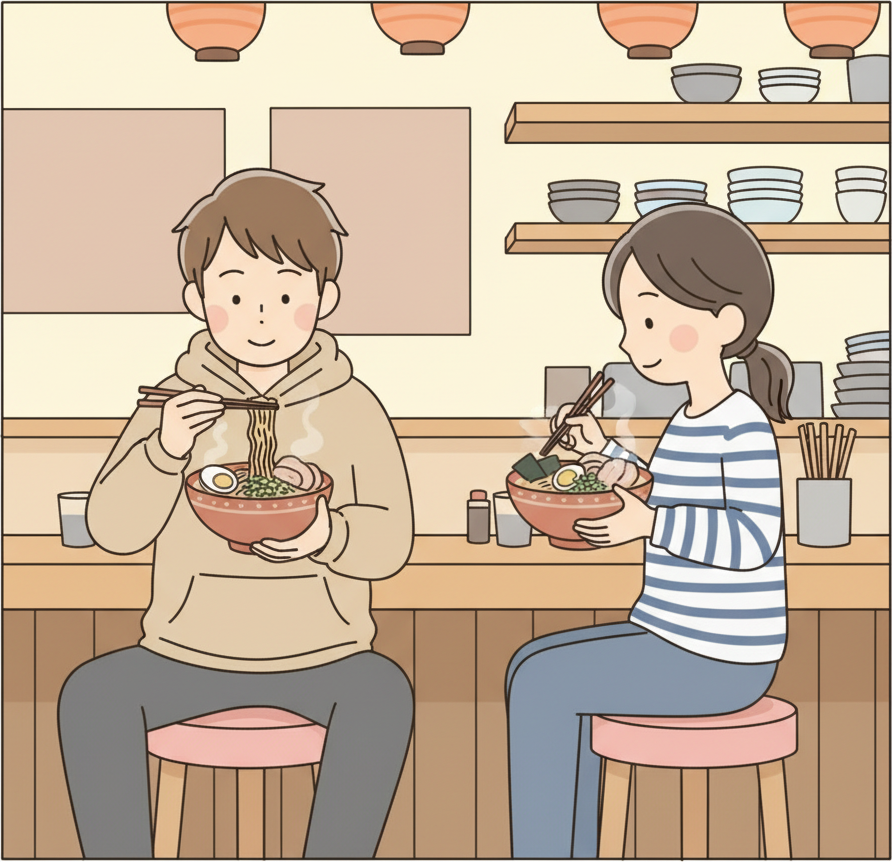
Two people sitting quietly side by side at a ramen counter, each focused on their own bowl
OK

Come in pairs or solo. Save group dinners for izakaya

Ramen is a solo or pair food. If you want a group meal with extended conversation, izakaya (Japanese pubs) and family restaurants are built for that. Ramen shops aren't. Two people max is the comfortable group size for most ramen counters.

Why the whole shop is optimized for speed

A good ramen shop is a thin-margin, high-velocity machine. Eight seats, a tiny kitchen, a cook who spent twelve hours on that broth, and a line outside in the cold. Every element—the ticket vending machine, the counter seating, the lack of table service—exists so the shop can serve as many perfect bowls as possible during rush hour.

The implicit deal is simple: the cook makes the best bowl they can, you eat it while it’s screaming hot, you leave, and the next person gets the same experience. Noodles go mushy in hot broth fast. The clock starts the second your bowl hits the counter.

Ticket machine, counter, eat, leave. Total seat time: fifteen minutes. If the bowl’s empty and you’re still there, you’re holding the line.

A few “nice to know” extras

  • Solo dining is the default — Ramen is one of Japan’s great solo-eating experiences. Many shops don’t even have table seats. Don’t feel weird about eating alone—you’re the target customer.
  • Ichiran’s privacy booths — Some chains have solo booth seating with dividers. You order via a paper slip passed through a bamboo blind, your bowl arrives through the same opening. Sounds antisocial, feels weirdly relaxing.
  • Kaedama (extra noodles) — At tonkotsu shops, you can order a second helping of noodles when the first batch is gone but broth remains. Say “kaedama onegaishimasu,” ¥100–200 extra. They drop fresh noodles straight into your remaining broth.
  • Drinking the broth from the bowl — Pick it up with both hands, tilt, drink. Totally acceptable. Finishing every drop is the highest compliment, but most regulars leave broth behind—it’s extremely rich.
  • Noodle firmness matters — Many shops ask your preference: katame (firm), futsuu (normal), yawarakame (soft). Firm is the local favorite at tonkotsu places. If you’re not sure, futsuu is always safe.

Quick check

Three questions to lock in the ramen shop rhythm.

Quick check

Can you spot the right move?

  1. Q1 Should you add chili oil and garlic to your ramen before tasting the broth?

  2. Q2 Is it okay to sit at the counter on your phone after you finish the bowl?

  3. Q3 Do most ramen shops take orders verbally at the counter?