Silent Trains in Japan: Why Your Ringtone Is Noise

Japanese trains run on quiet voices, phones on 'manner mode,' no calls, no audio leak. Break it and you won't get yelled at — just felt. Worse.

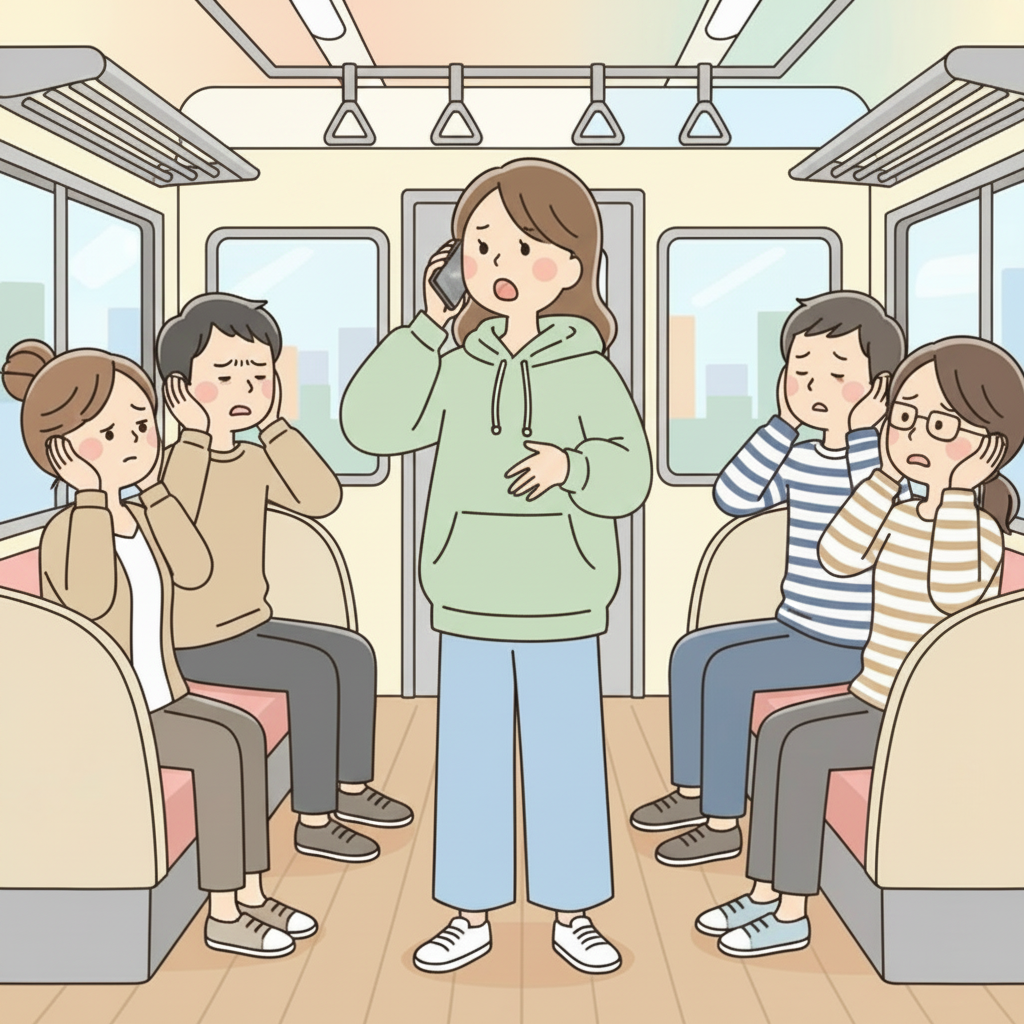
Taking a phone call on the train

A person standing in a train car talking on their phone while four seated passengers cover their ears in discomfort
NG

Answering your phone and having a conversation at any volume

Even a "hey I'll call you back in 10 minutes" said quietly carries through a silent train car like a foghorn. Phone calls are simply not a thing that happens on Japanese public transit—not at the door, not in the corner, not whispered.

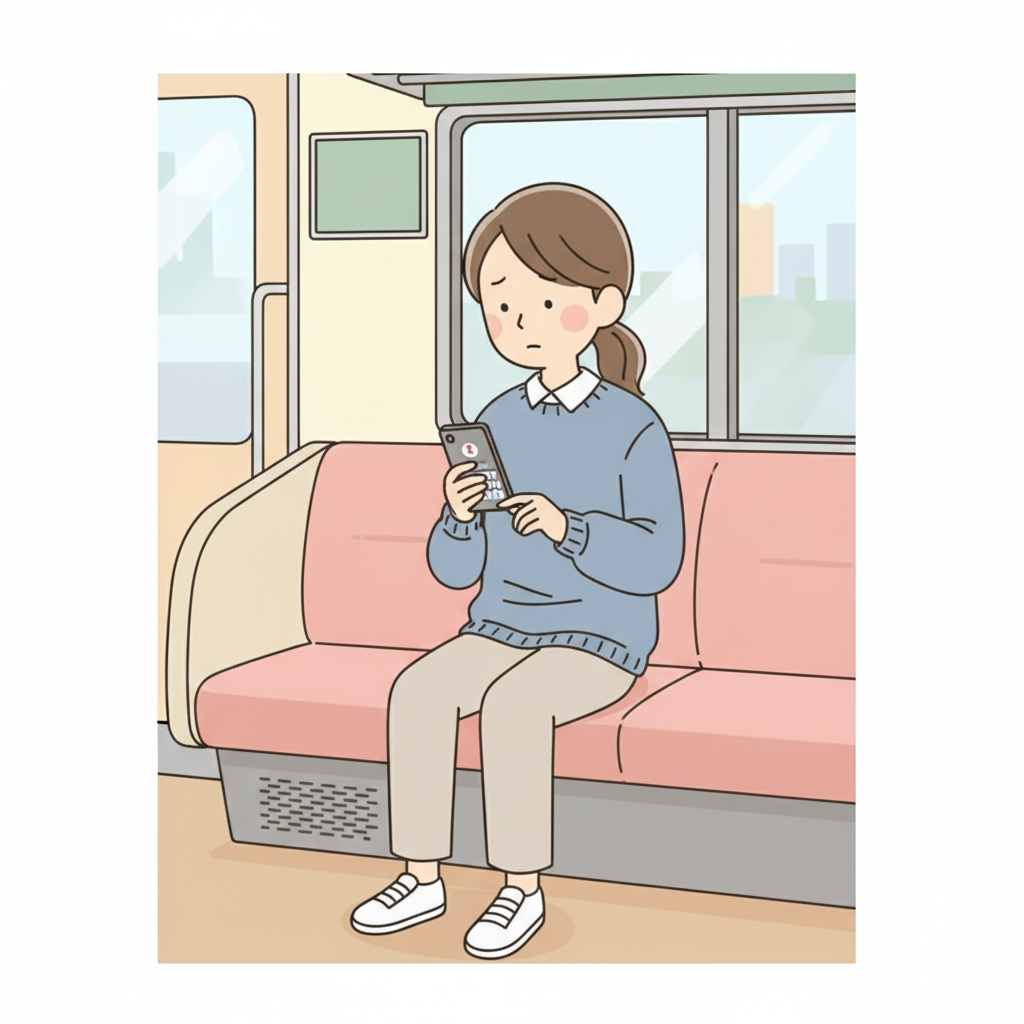
A person sitting quietly on a train, looking at a missed call notification on their phone and typing a text reply
OK

Let it go to voicemail, text back, or step off at the next station

If it's urgent, get off at the next stop, make the call on the platform, take the next train. Shinkansen has a vestibule area at the end of each car specifically for calls. Regular trains do not—there is no quiet corner.

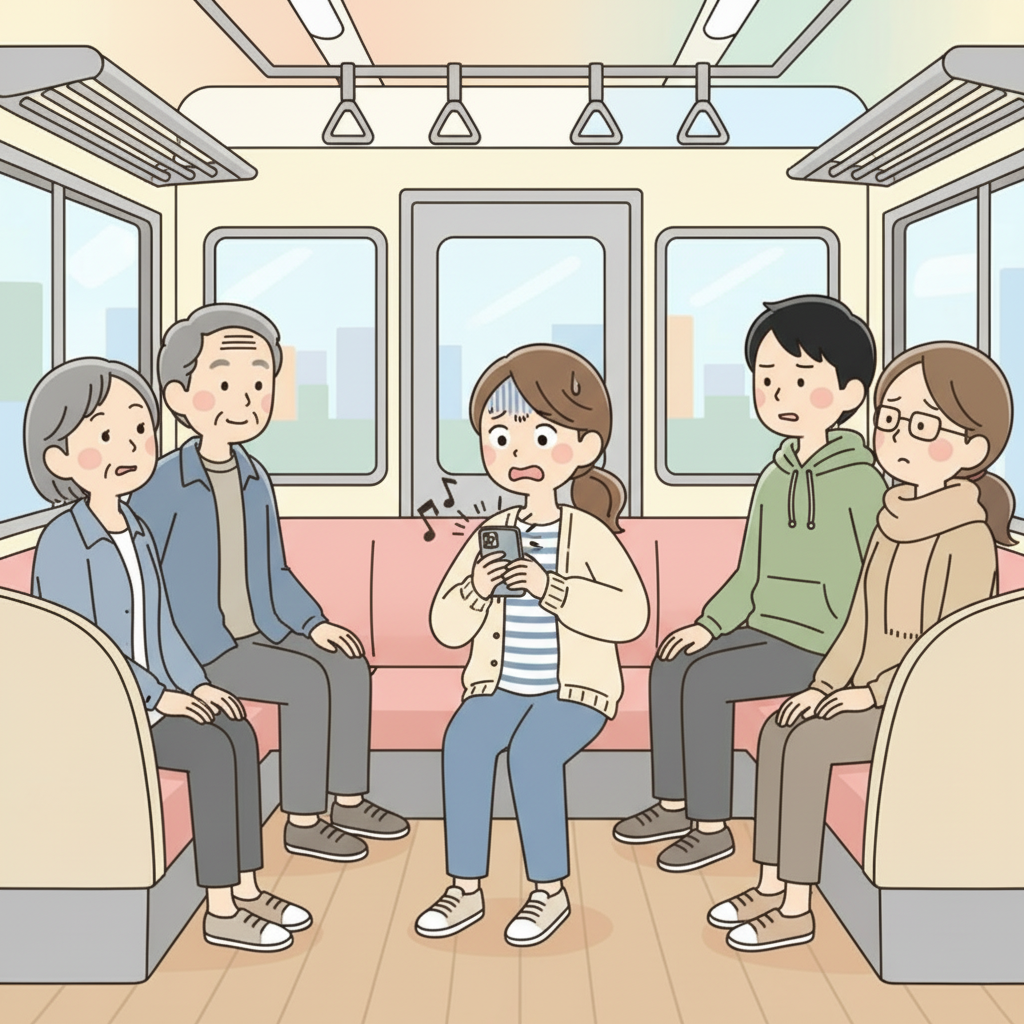
Ringtone instead of silent

A person on a train looking panicked as their phone rings with musical notes floating out, while other passengers stare
NG

Phone on full ring, song ringtone, notification dings every few minutes

Japanese phones have a dedicated "manner mode" button. That exists because everyone is expected to use it on every train. A ringtone going off is the most common "oh god that's a tourist" moment in a Tokyo commute.

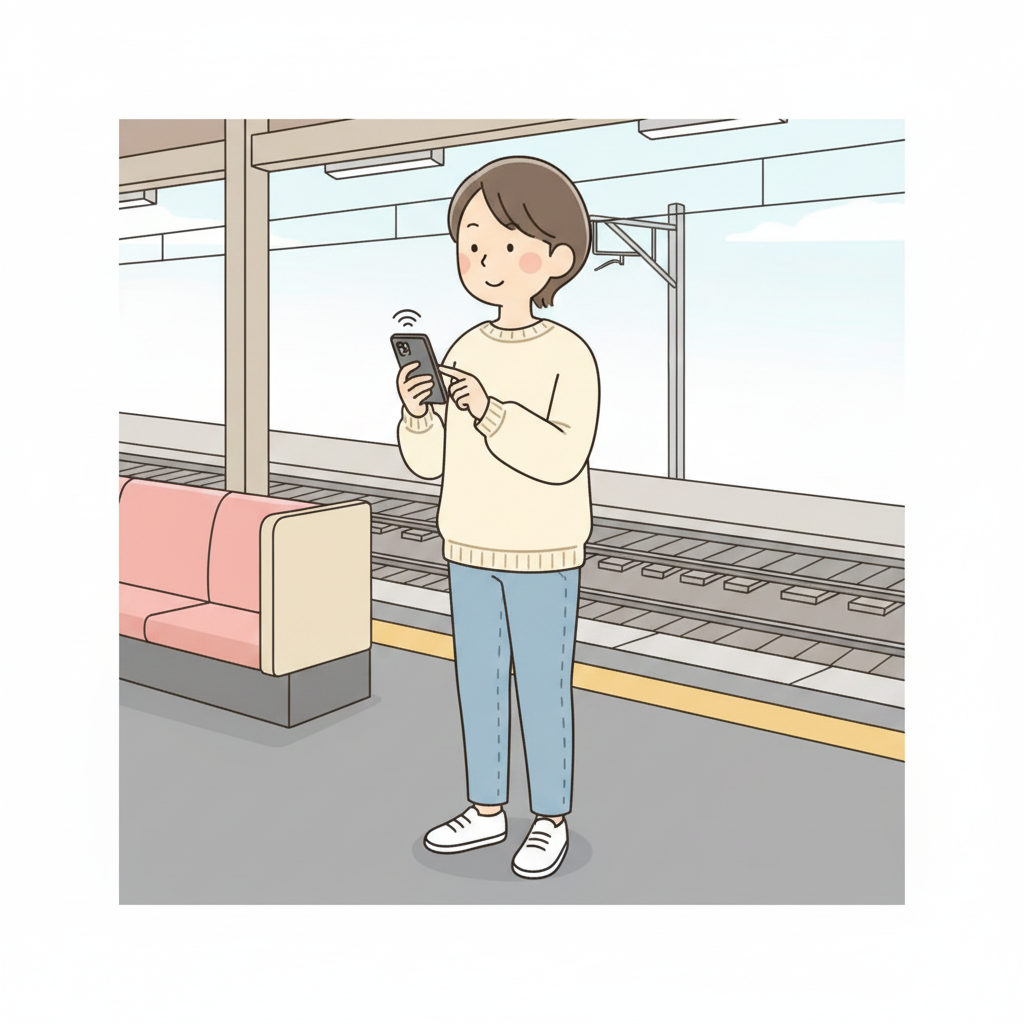
A person on a station platform pressing the side button on their phone to set it to vibrate mode before boarding
OK

Manner mode (vibrate-only) before you board

Toggle it once at the ticket gate and leave it on. You'll hear announcements reminding you to do this every time you enter a new line. Locals don't need the reminder—they did it getting dressed in the morning.

Headphone leak

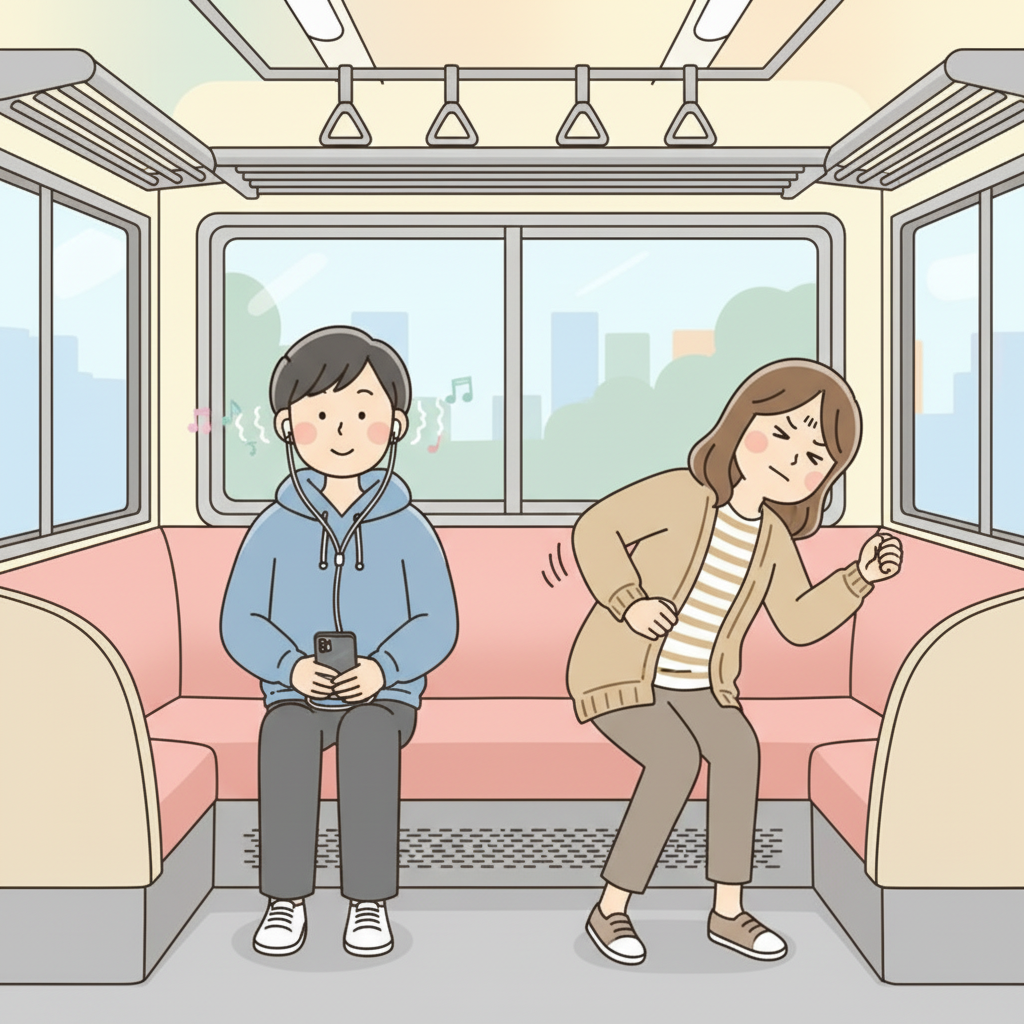
A person on a train with earbuds leaking music visibly shown as notes, while the passenger beside them leans away
NG

Music so loud the person next to you can hear the lyrics

Over-ear headphones and cheap earbuds both leak. If strangers around you can make out the song, the volume is well past "comfortable for you" and into "annoying for everyone within three seats."

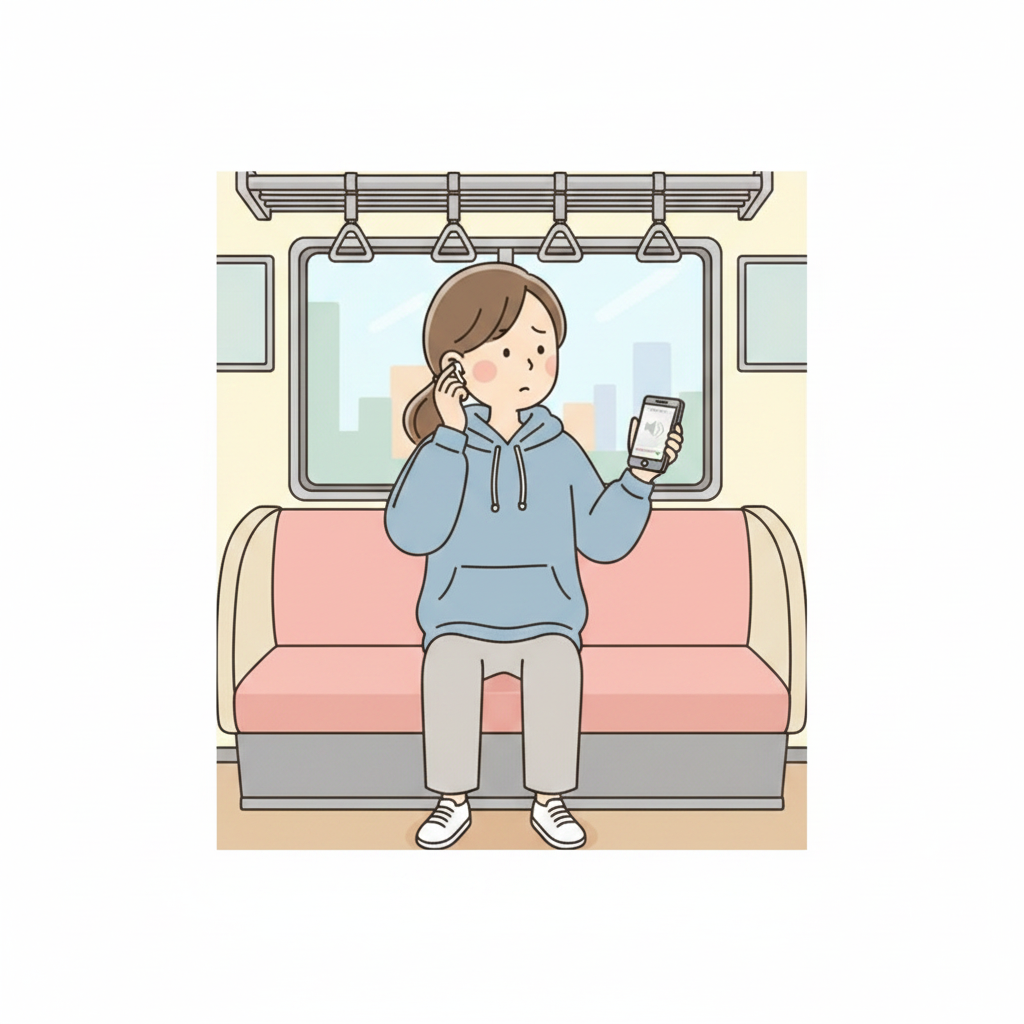
A person on a train holding one earbud away from their ear to check the volume level on their phone
OK

Turn it down until nobody else can hear a thing

Quick test—hold an earbud at arm's length from your ear. If you can still hear lyrics clearly, it's too loud. Quiet enough that you have to focus to hear it yourself is the target.

Loud conversation or video with audio

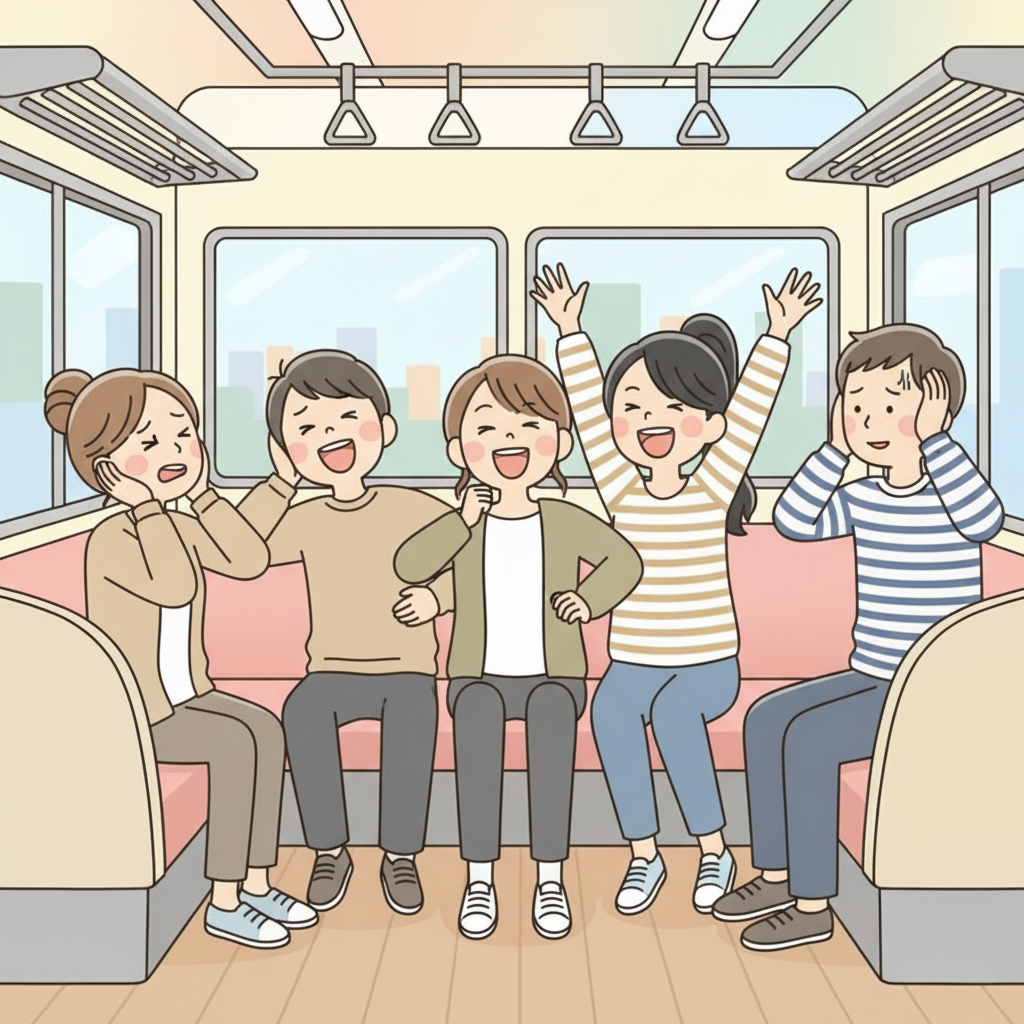
A noisy group of three people laughing loudly on a train while two other passengers cover their ears in discomfort
NG

Big group laughing loudly, phone video on speaker, FaceTime on speakerphone

Groups of friends often default to bar-level chatter without noticing. Playing a TikTok on speaker to show a friend is also a no. Silent cars exist because everyone commuting is trying to preserve a small pocket of mental quiet—loud groups pop that bubble instantly.

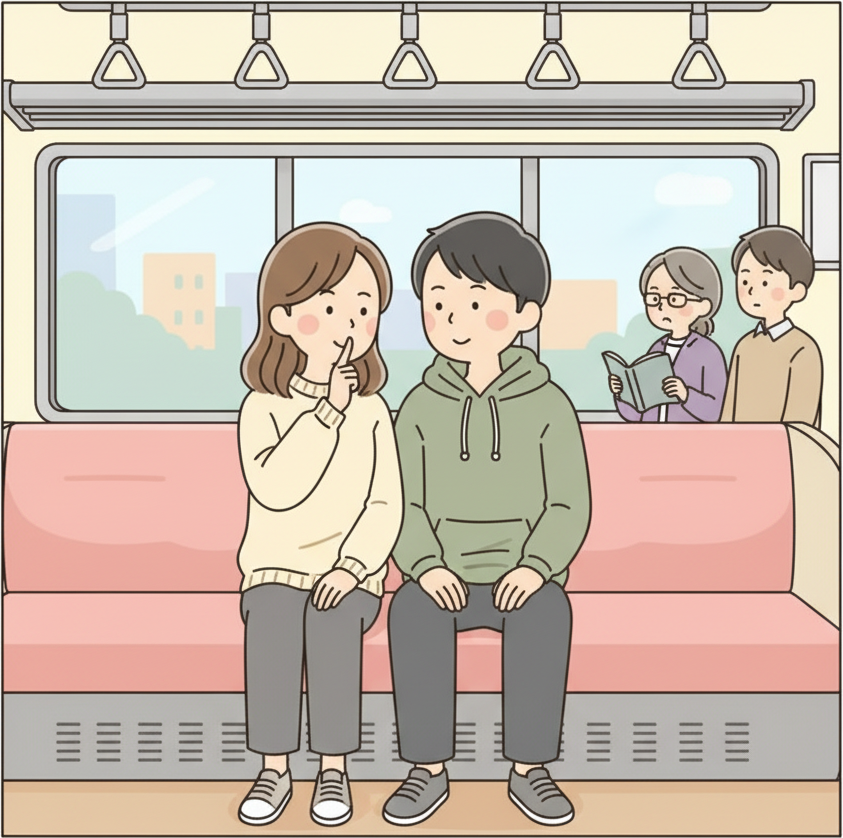
Two people whispering quietly to each other on a train, with a passenger in the background reading peacefully undisturbed
OK

Library-level voices, headphones for anything with audio

Keep conversations to the level you'd use in a quiet cafe. If you want to show someone a video, share an earbud or put the phone on mute with captions. Everyone around you is silently grateful.

Why trains are a shared quiet zone

Japanese urban commuting is intense. Yamanote Line, Chuo Line, Osaka Loop—densely packed, same people every day, long rides, basically zero personal space. The shared quiet is how everyone carves out a small bubble of mental space for themselves in a situation that otherwise has none.

That’s why the rule is enforced socially, not legally. Nobody’s going to confront you. But everyone will silently register the ringtone, the loud conversation, the leaking headphones. It’s the difference between “foreign tourist who doesn’t know” and “rude foreign tourist.” You want the first one if it has to be either.

Your phone’s “manner mode” button exists because this rule is non-negotiable. Press it once and forget about it.

The “manner mode” concept

Japanese phones—and by now most phones sold globally—have a dedicated silent / vibrate button that people flick without thinking, the way you’d lock a car. Here it’s specifically called manner mode (マナーモード, manaa mōdo), and the wording is on purpose: it’s not just “silent,” it’s framed as basic courtesy to the people around you.

Every train line plays audio reminders every few minutes in Japanese and English asking you to switch to manner mode and refrain from phone calls. You’ll hear it within five minutes of boarding. If you do nothing else, just do the manner mode flick before you get on.

A few “nice to know” extras

  • Priority seats—extra caution near them — Near priority seats (marked with yellow and pink pictograms of elderly, pregnant, disabled passengers, and people with kids), many operators ask you to stay on manner mode or power off entirely. The strict “power off” rule has been relaxed by most Tokyo and Kansai operators — the pacemaker interference concern is mostly outdated — but the cultural expectation to be especially phone-quiet near these seats remains strong. When in doubt, pocket it.
  • Shinkansen calls go in the deck area — The bullet train has small vestibule spaces between cars specifically for phone calls. Take the call there, not at your seat.
  • Eating on commuter vs long-distance — On short crowded commuter trains, eating is frowned on. On long-distance shinkansen and express trains with reserved seats, eating a bento box is totally normal and expected.
  • Sniffles and masks — Mask up if you have any cold symptoms. It’s cultural, not pandemic-specific—Japanese commuters have been wearing masks when under the weather for decades.

Quick check

Three questions below to lock in the manner-mode instinct.

Quick check

Can you spot the right move?

  1. Q1 Can you take a quick 30-second phone call if you keep your voice down?

  2. Q2 Is a ringtone okay if your phone's not on full volume?

  3. Q3 You want to show your friend a funny video. Is it okay to play it quietly on speaker?