Why slurping makes sense
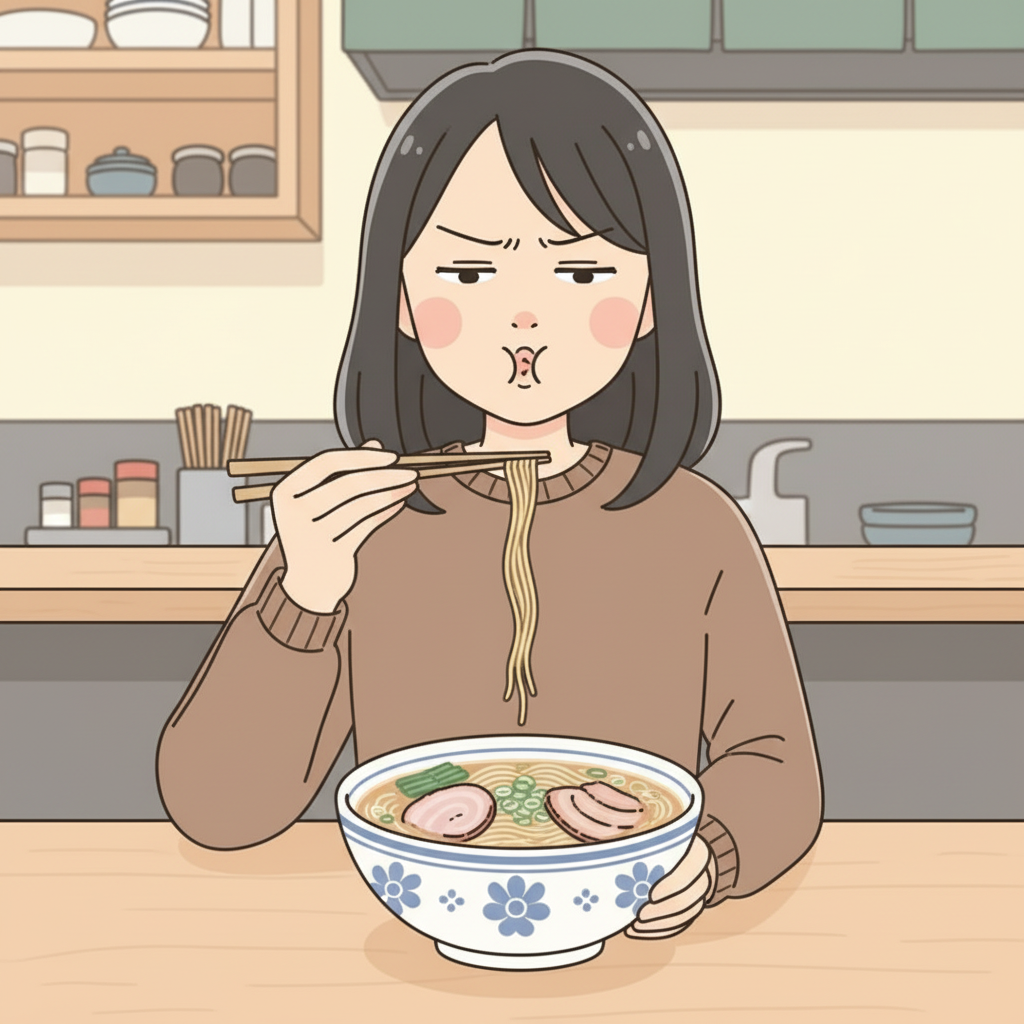
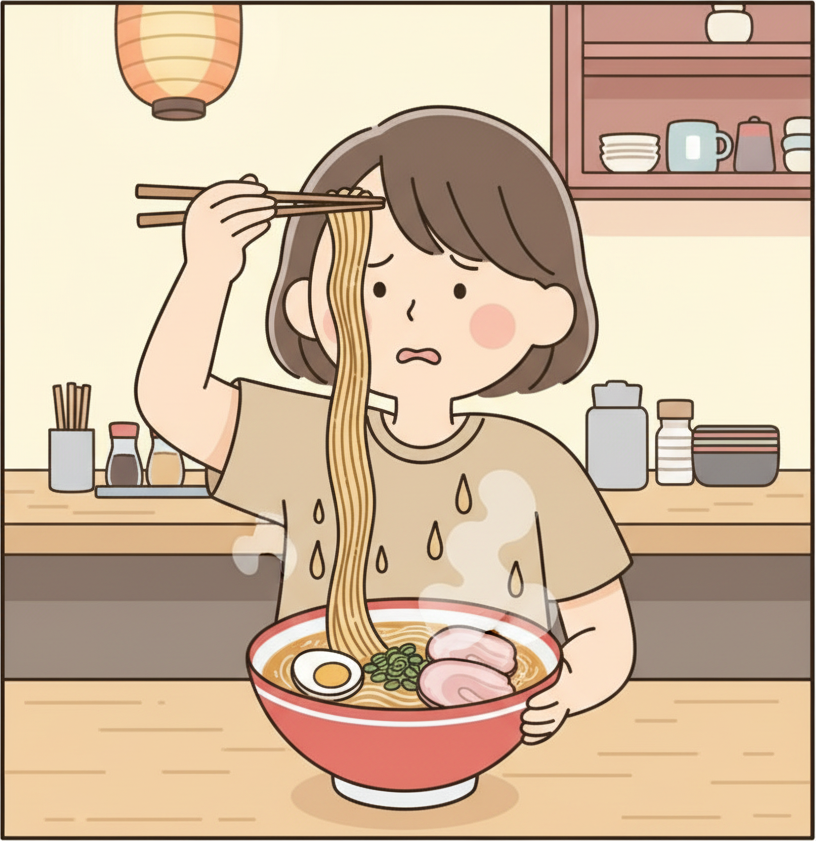
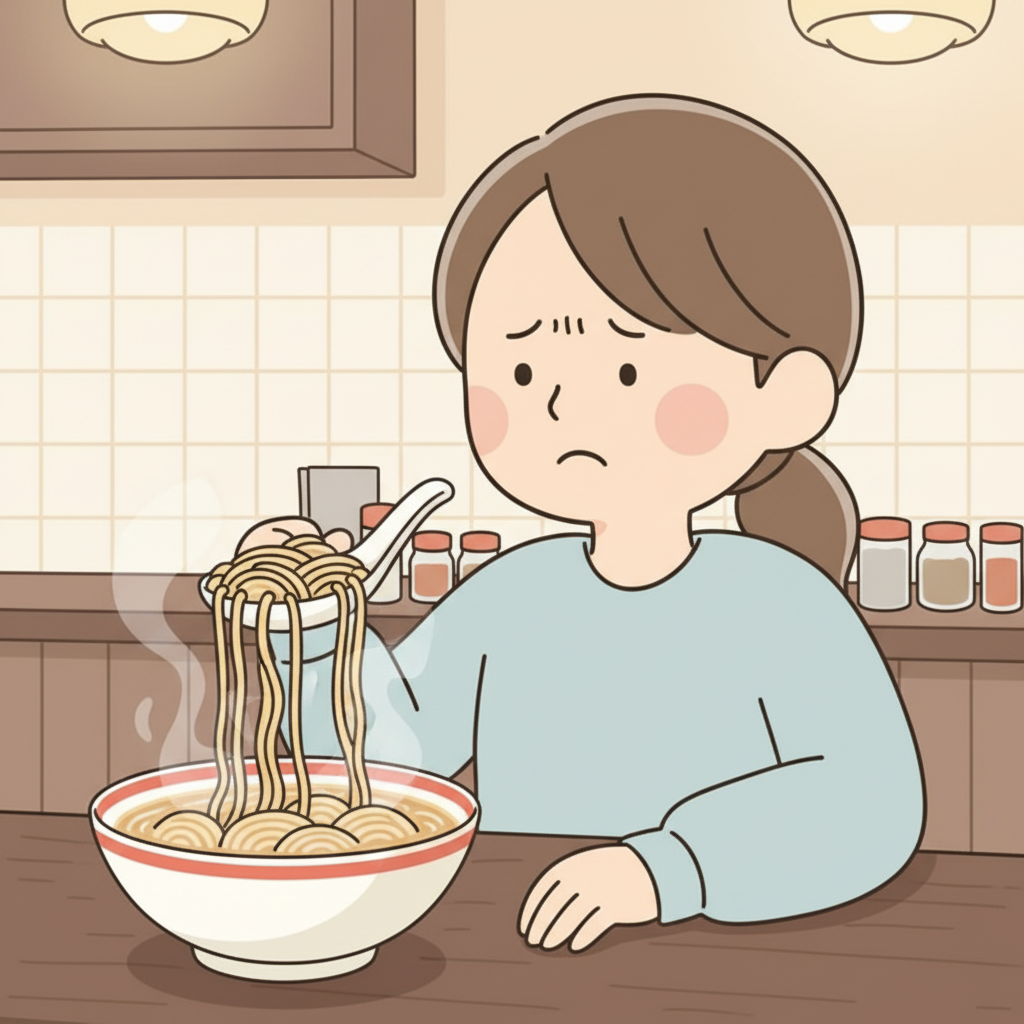
The broth in a ramen bowl is very hot when it hits the counter. The noodles come out of the water scalding. If you eat them the polite-Western way—one strand at a time, careful nibbles, dabbing your mouth—you’ll sit there for twenty minutes while the noodles turn to mush and the chef watches their work deteriorate.
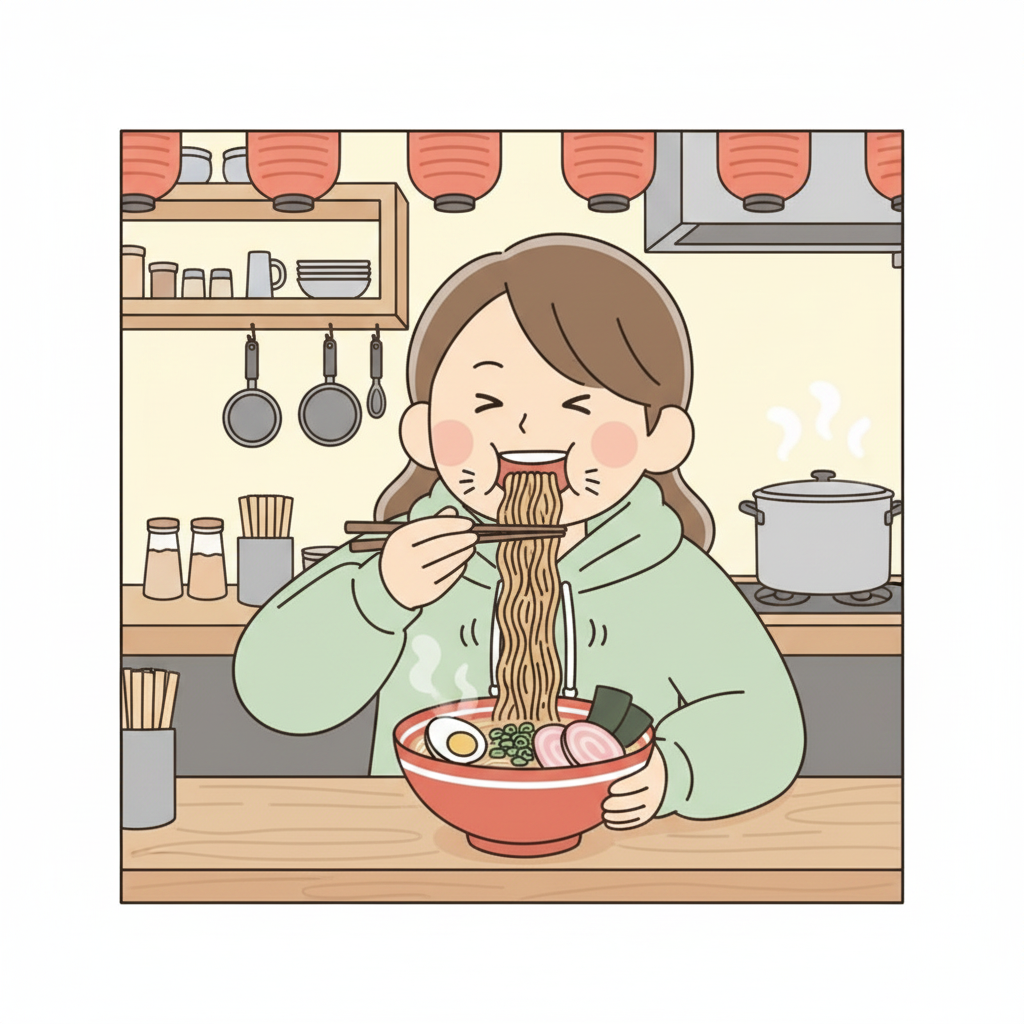
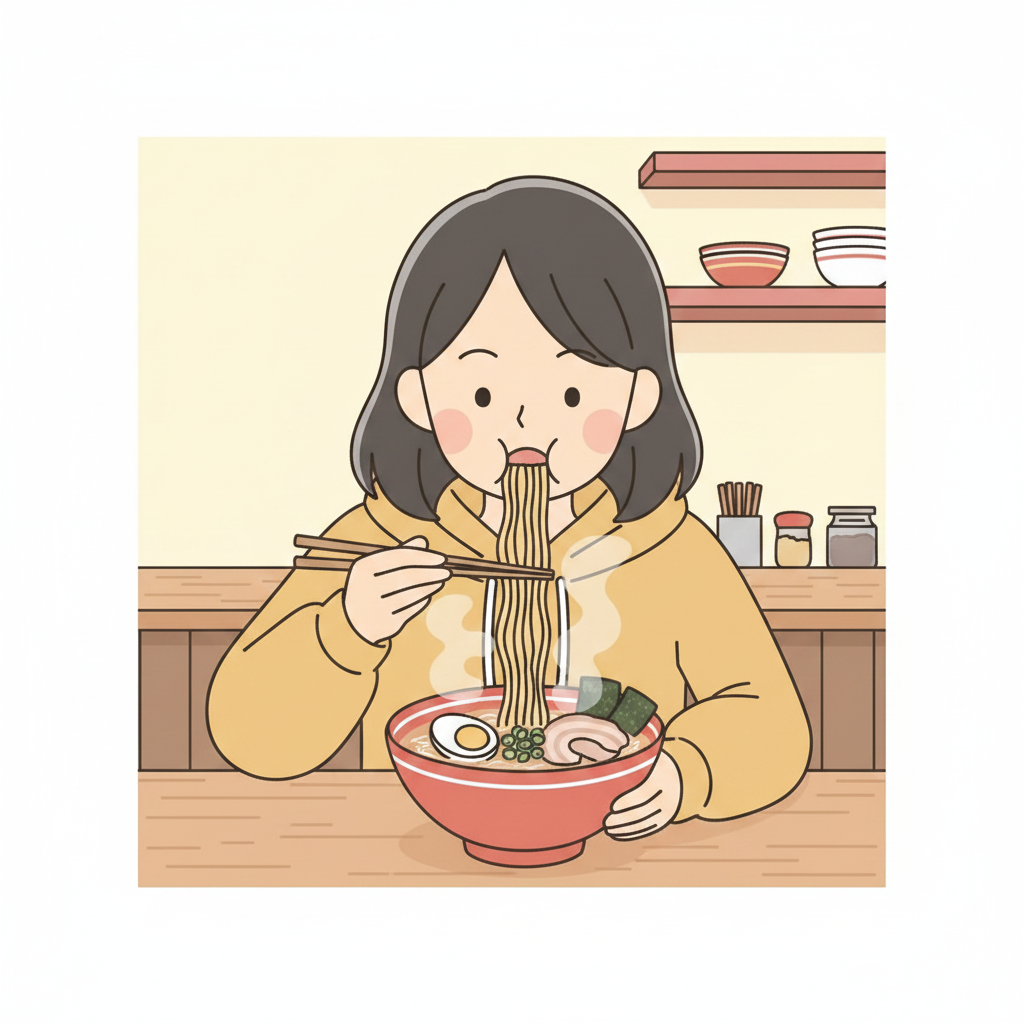
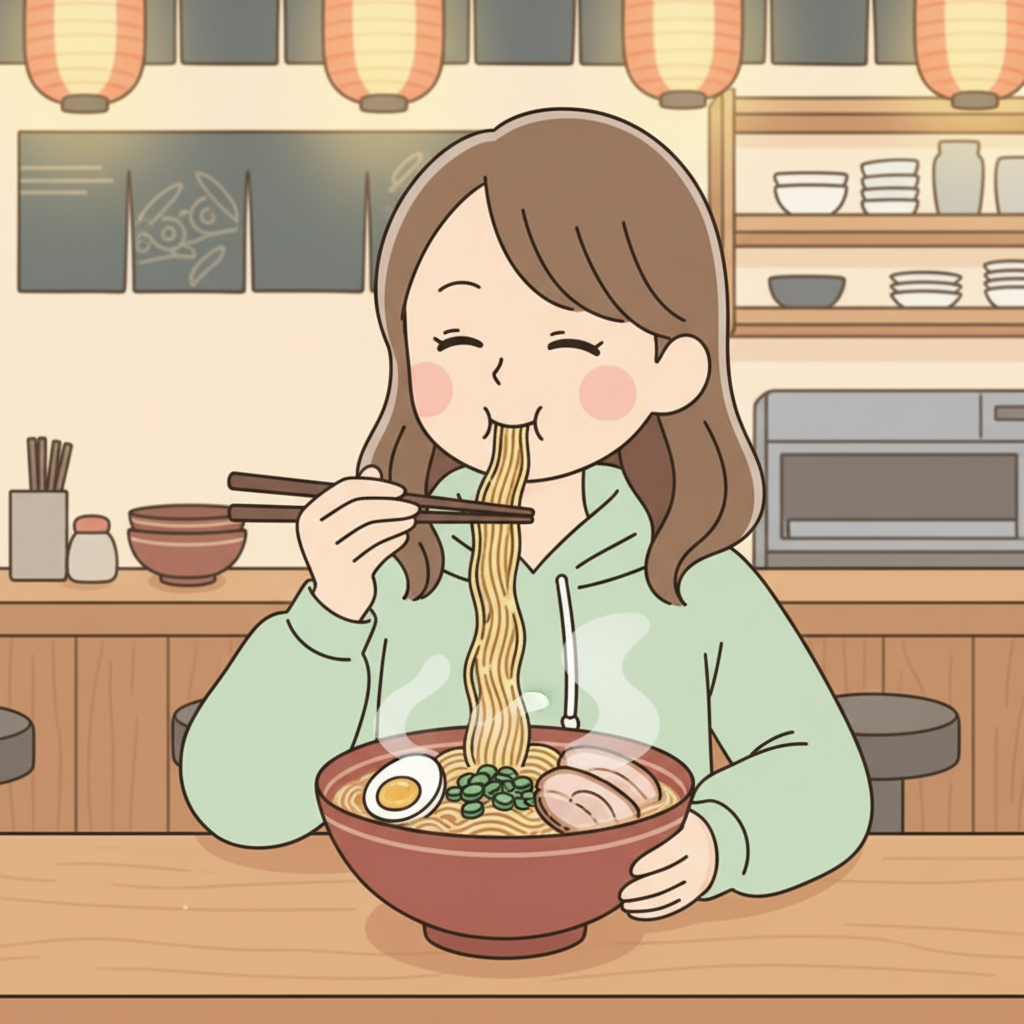
The slurp fixes this. You pull a bundle of noodles in with a fast inhale and eat them while they’re still firm; soba makers also say slurping brings out the aroma. One common explanation traces the habit to Edo-period soba stalls, where people ate quickly while standing. Fast, hot, loud.
The sound isn’t the point. The speed is. Slurping is just what fast eating of hot noodles naturally sounds like.
Where slurping applies (and where it doesn’t)
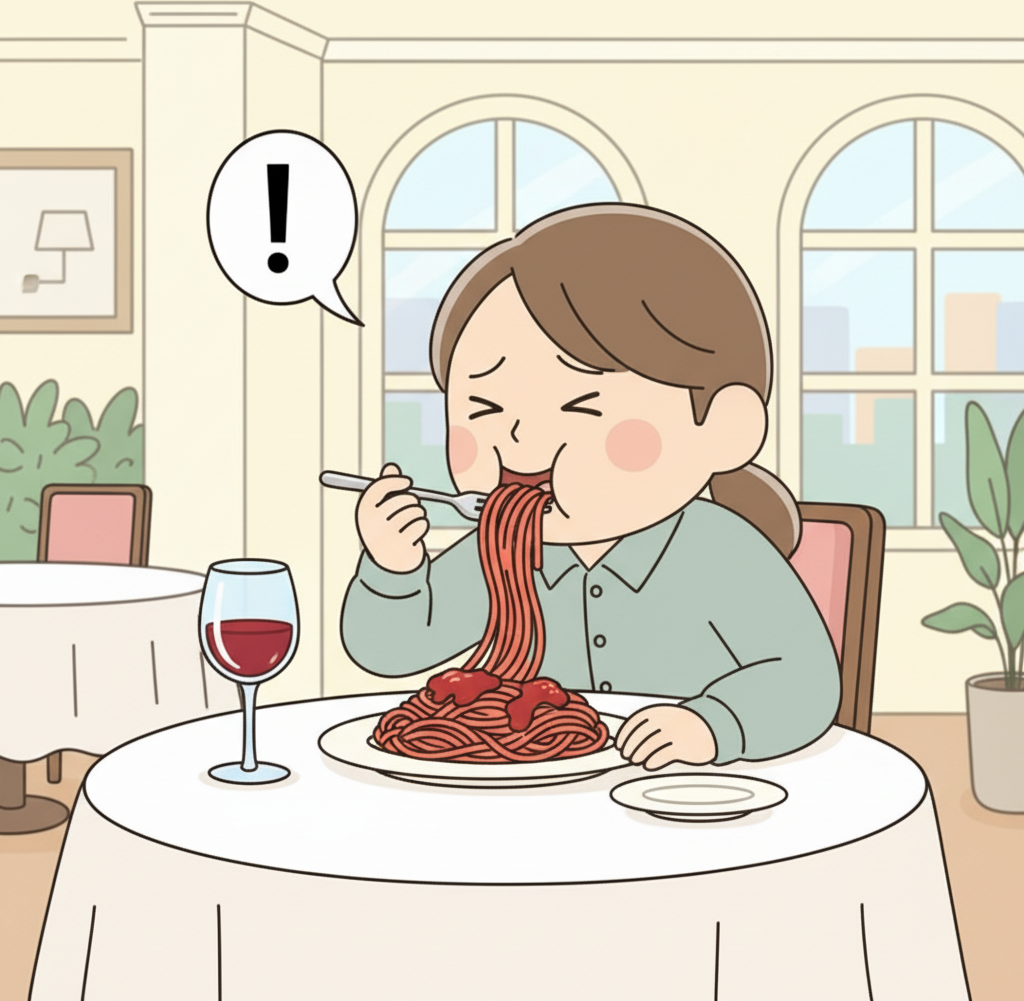
Japanese noodles—ramen, udon, soba—are slurp territory. Cold soba dipped in sauce (zaru soba) is traditionally slurped too, though it’s never required. Pasta at a Japanese-Italian restaurant? Eat it the Western way. When in doubt, look at the locals eating the same dish and match them.
A few “nice to know” extras
- Lean into the bowl — Lean forward and keep the distance between bowl and mouth short. Less splatter, faster intake.
- Tsukemen is a different animal — Dipping ramen: noodles in one bowl, thick broth in another. You dip before each bite. Slurping still applies, but there’s less rush since the noodles aren’t sitting in hot broth.
- Leftover broth is fine — You don’t need to finish the broth to show you liked it. The noodles and toppings are the dish; the broth is a bonus. Finishing every drop is a compliment, but plenty of people leave some behind.
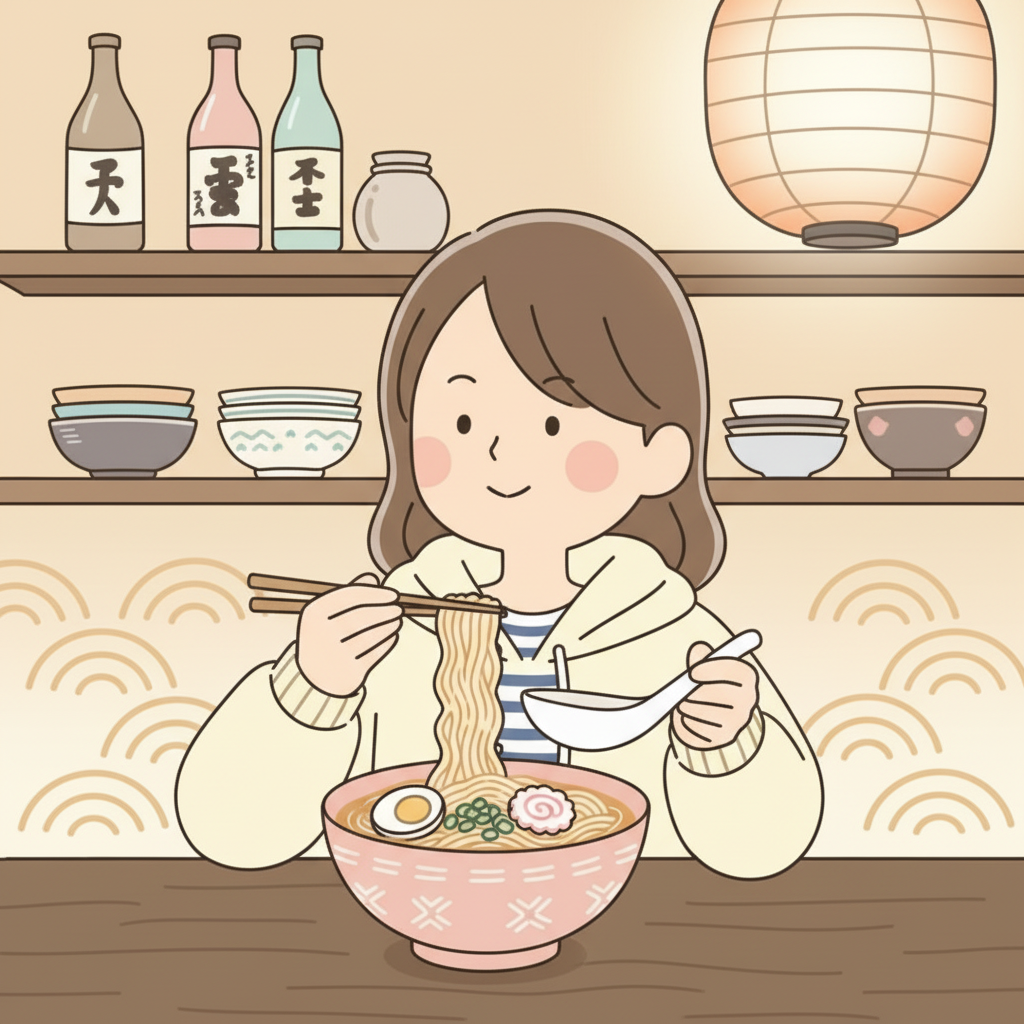
- The two-handed move — Chopsticks in one hand for noodles, renge (flat soup spoon) in the other held underneath to catch drips. One handy trick.
Quick check
Three questions to lock in the slurping instinct.