Why the rules are backwards from what you’d expect
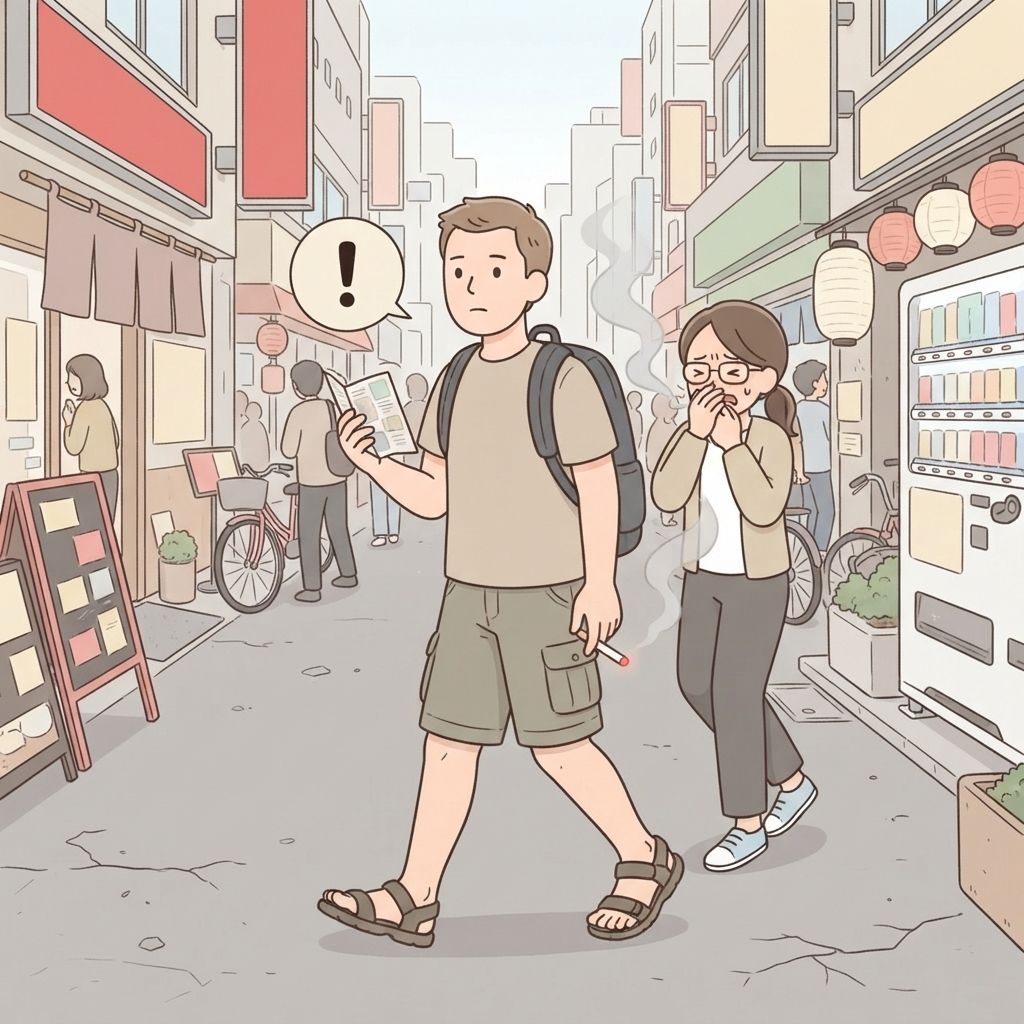
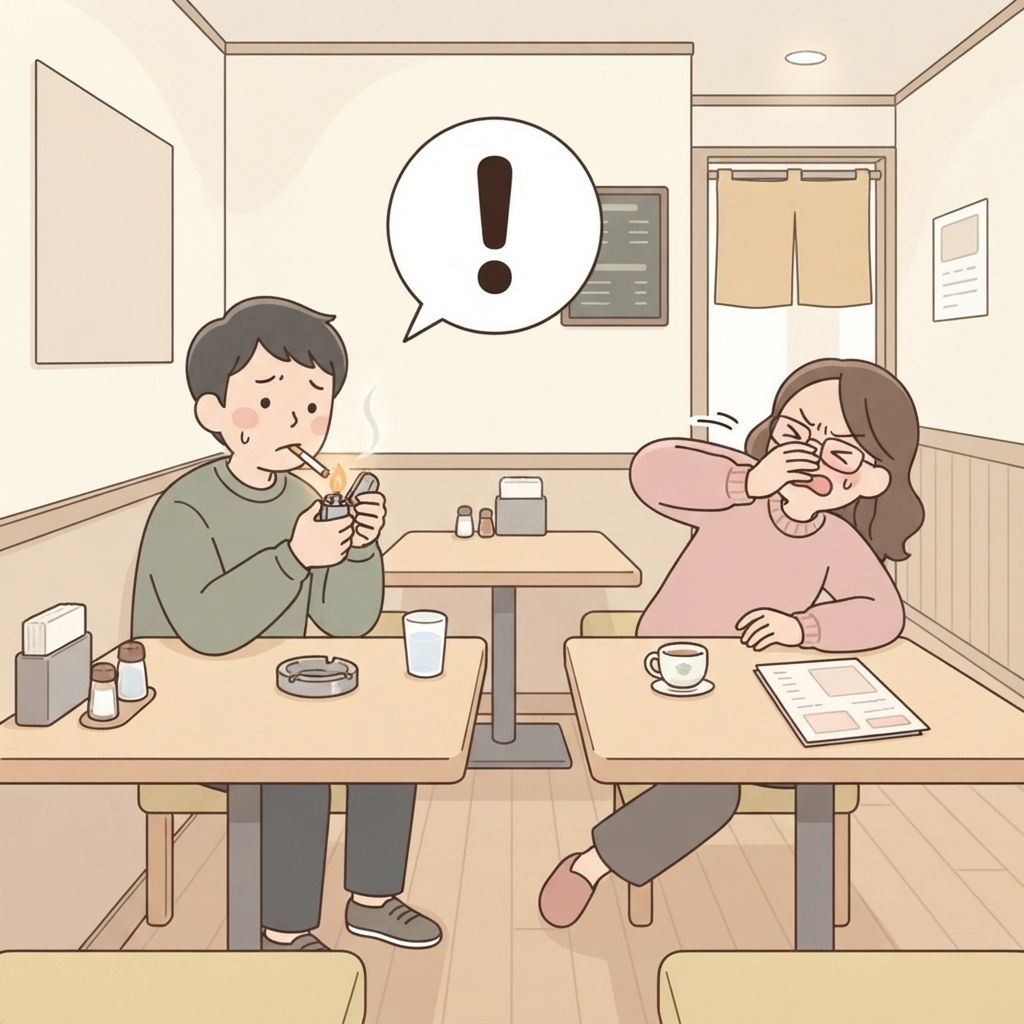
If you’re from the US or Europe, your mental model may be “smoke outside, not inside.” Japan partly flips that. You can’t smoke walking down the street in many cities, but you can sometimes smoke inside certain bars and in enclosed smoking rooms. Street-smoking bans focus on the crowds of strangers passing you on a sidewalk.
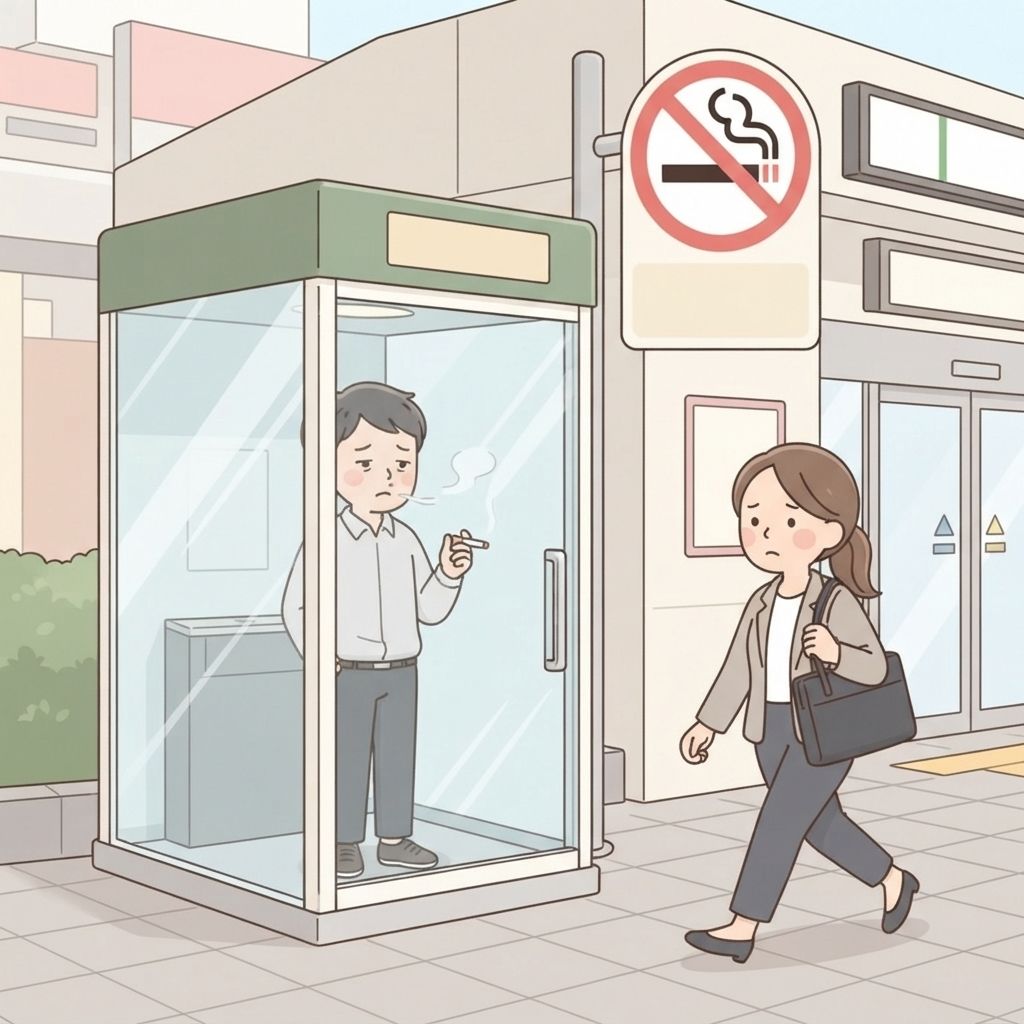
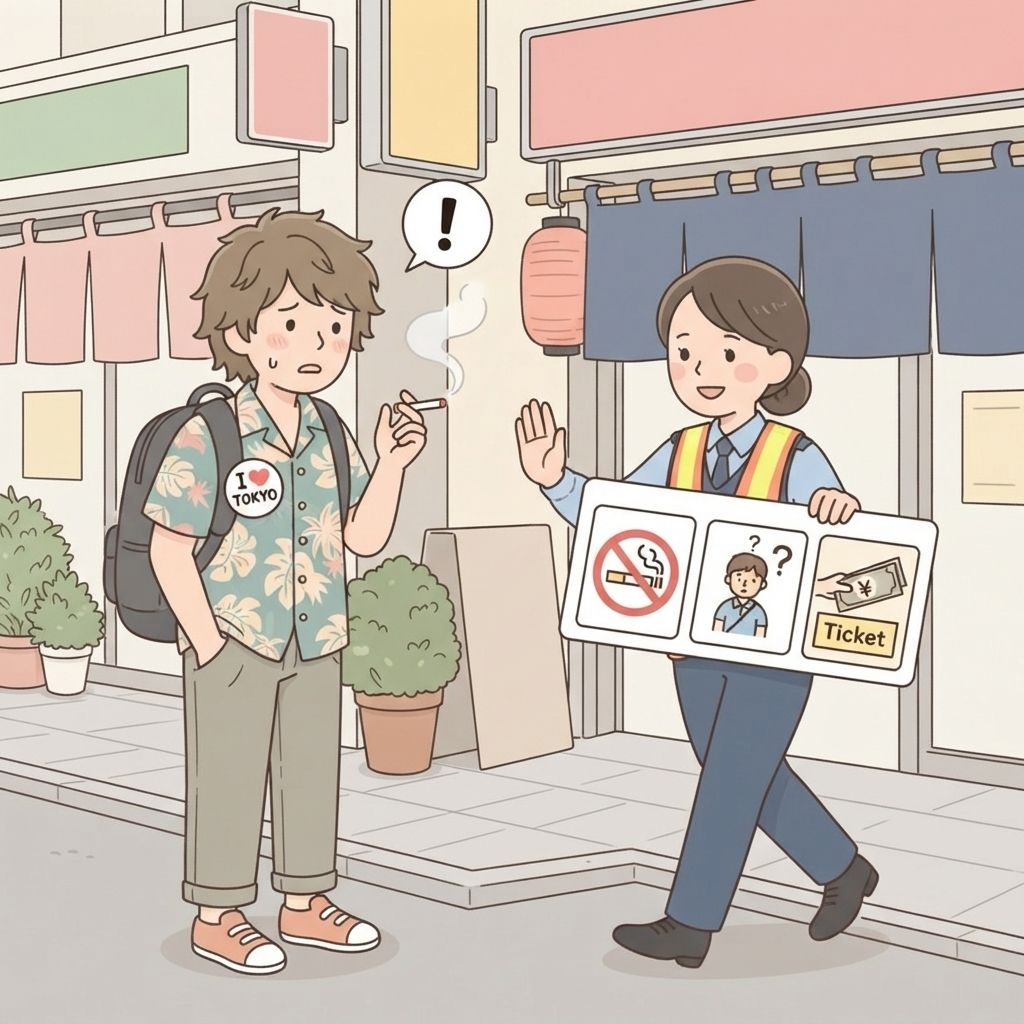
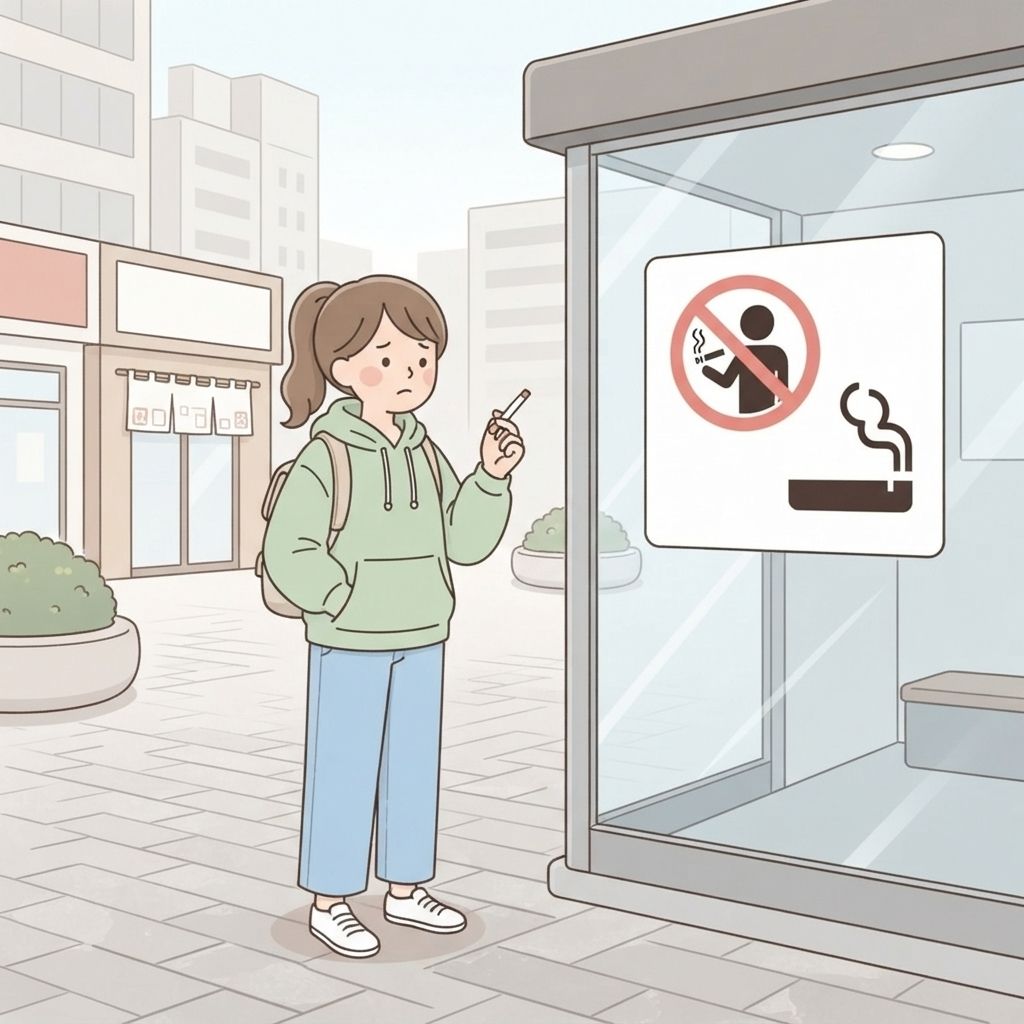
The practical result is that smokers cluster at designated smoking areas (kitsuenjo) near stations and building plazas, rather than being diffused through public space. It’s a tidier system once you learn the pattern — but in many areas the fines for street smoking are real (typically 1,000–2,000 yen), and patrol officers enforce them.
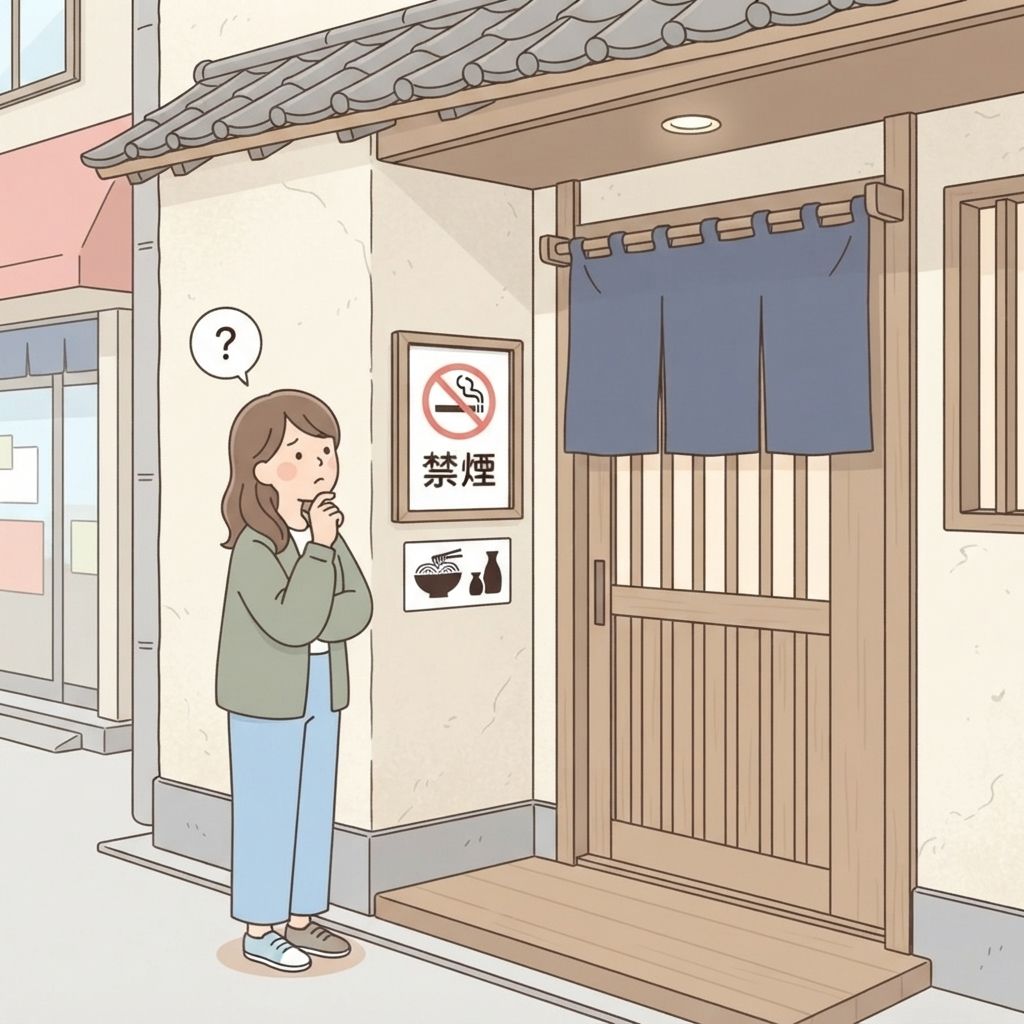
City center rule: kitsuenjo only outdoors, check signs for indoors. That’s it.
A few “nice to know” extras
- IQOS, Ploom, Glo are widely used here — Heat-not-burn devices are popular in Japan. In many places they fall under the same outdoor rules as cigarettes (Chiyoda Ward fines them too), though some restaurants have heated-tobacco-only rooms where you can eat.
- Konbini smoking loop — Convenience stores sell cigarettes, and some still have a small smoking area outside (many have removed theirs). Buy, step outside to the designated spot, smoke, dispose of the butt. Easiest tourist-friendly system.
- Nicotine vapes are legally weird — Nicotine e-liquids are treated as unapproved medicines, so they can’t be sold in Japan. Non-nicotine vapes are sold. If you vape with nicotine, you won’t find refills in shops here; if you plan to bring your own, check the current personal-import rules first.
- Hotels are going non-smoking — Many hotels now offer mainly non-smoking rooms, and smoking rooms can be limited. Check before booking.
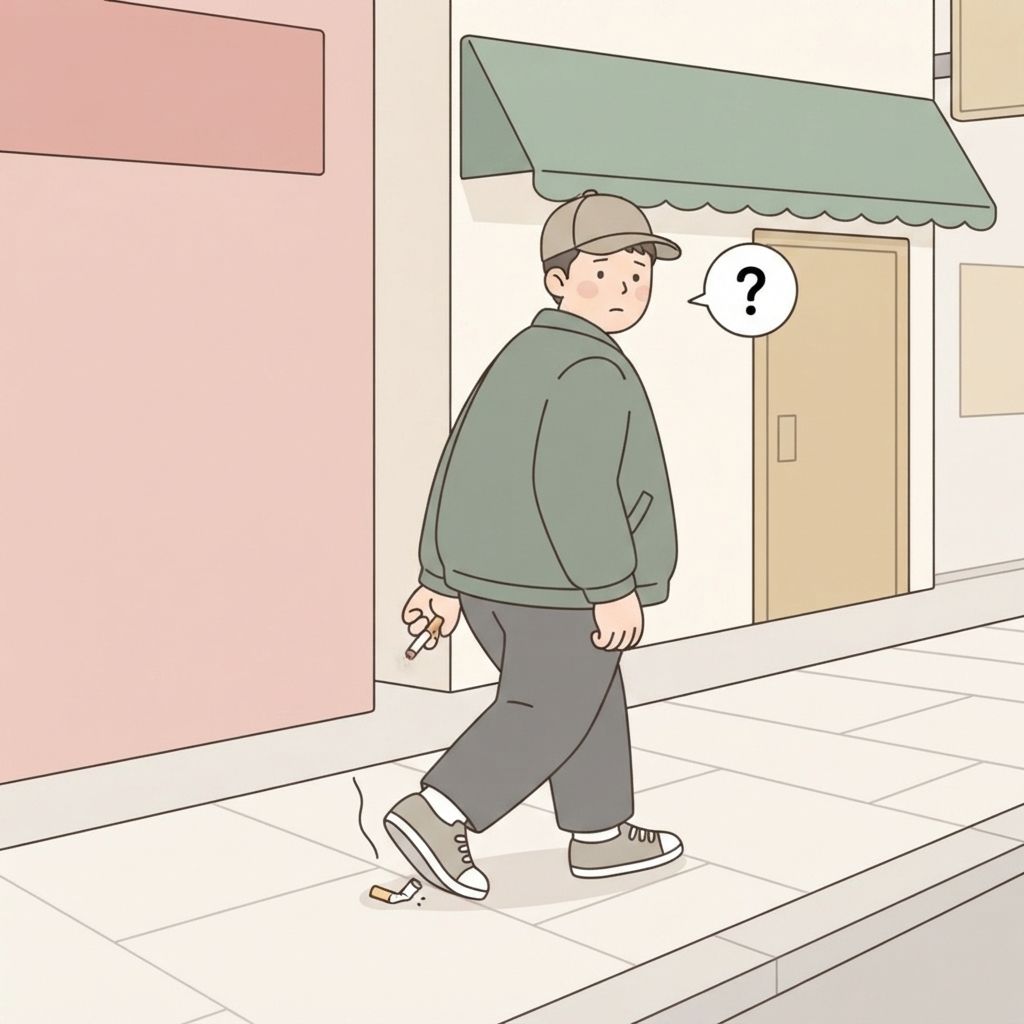
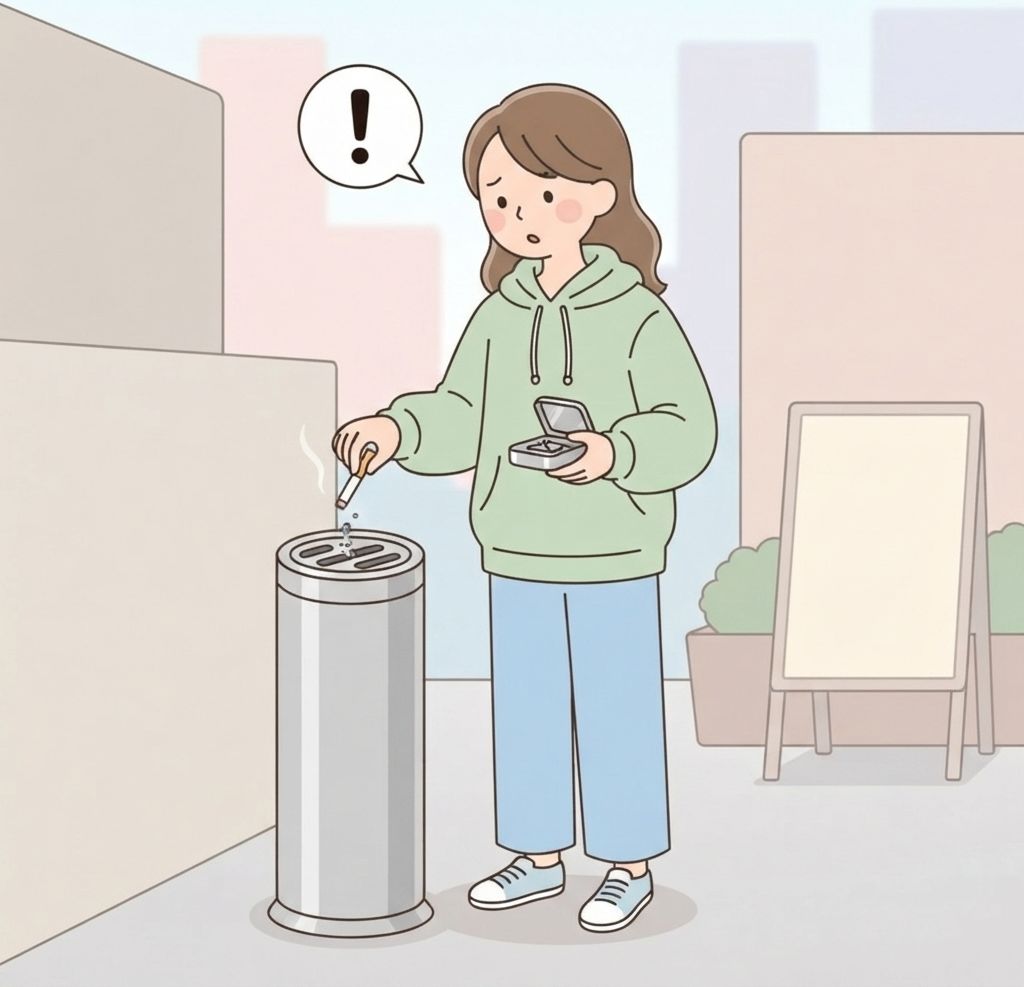
- Pocket ashtrays exist — Many Japanese smokers carry small portable ashtrays (keitai-zara), sold for a few hundred yen. If you smoke, grab one — dropping a butt on the street can bring littering fines in some areas.
Quick check
Three questions to lock in the smoking rules.