Sushi Etiquette in Japan: Hand or Chopstick?

A few rules separate good-faith tourists from coached ones — soy dip direction, how much sauce, and whether fingers are fine. Yes, fingers are fine.

Drowning the rice in soy sauce

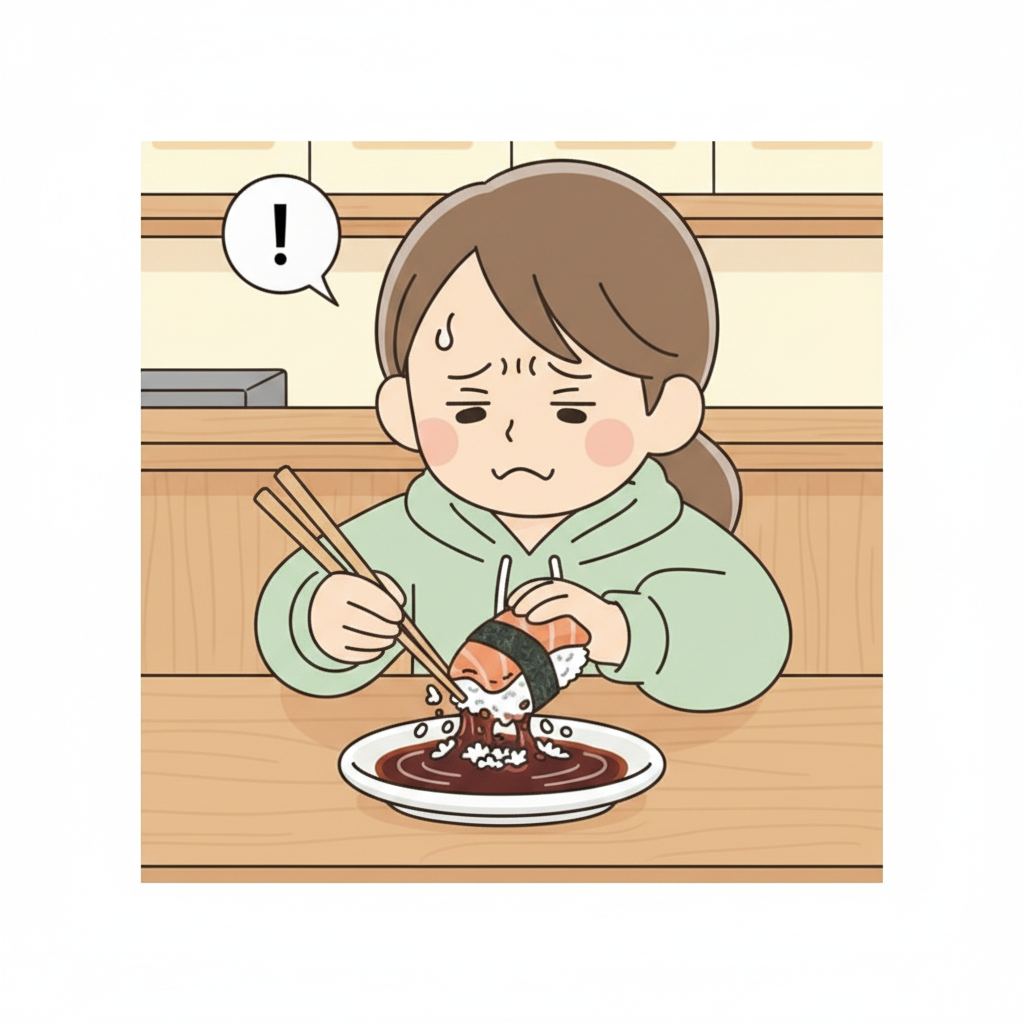
A person at a sushi counter has flipped a nigiri upside down and pressed it rice-side into a dish of soy sauce, with the rice visibly falling apart
NG

Flipping the sushi rice-side down and letting it soak up soy sauce

The rice is already seasoned. The chef already decided how much soy sauce belongs on the fish. When you press the rice-side into a pool of soy sauce, two things happen: the rice absorbs way too much (it disintegrates in your mouth), and the soy sauce overpowers every other flavor the chef built into the piece. It's the single most common rookie move at a sushi counter.

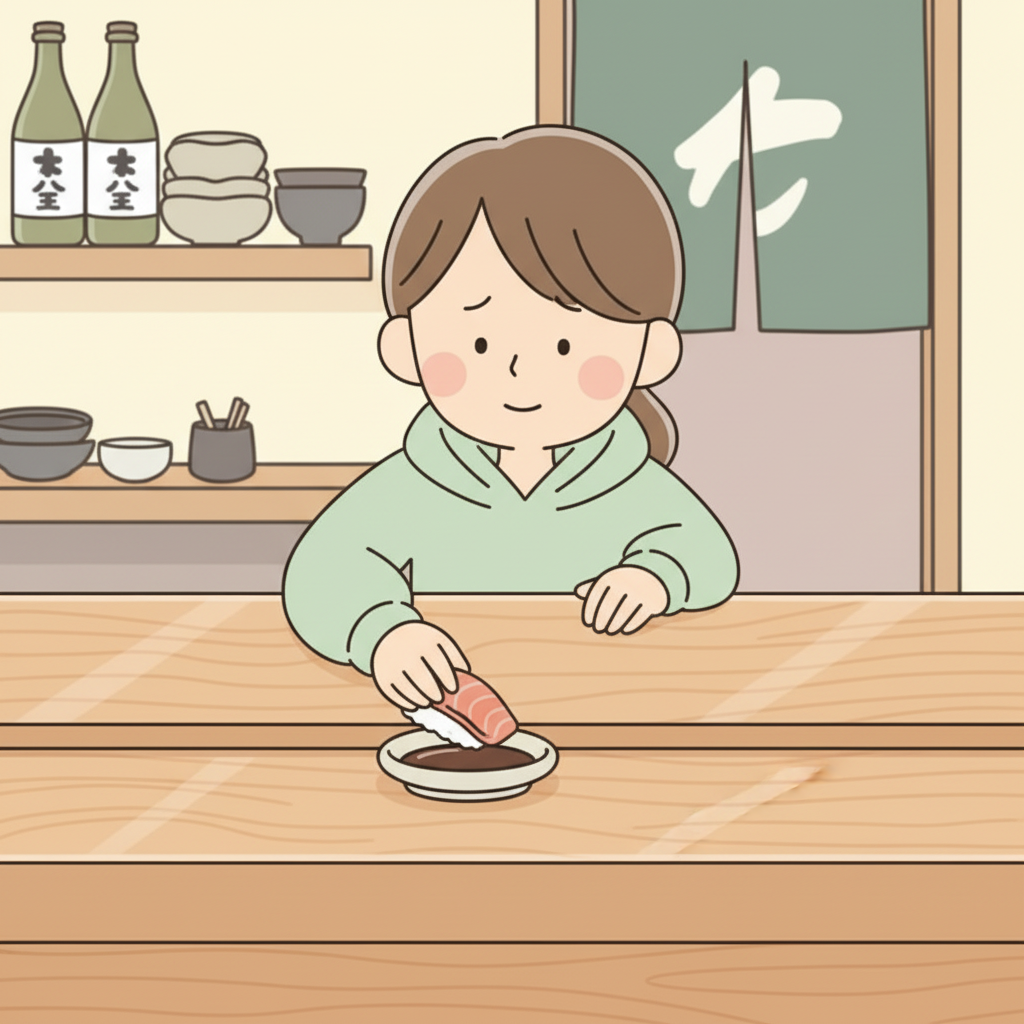
A person at a sushi counter lightly touching only the fish side of a nigiri to a small dish of soy sauce
OK

Dip only the fish side, lightly, and barely at that

Flip the piece so the fish touches the soy sauce, not the rice. Briefly. You're looking for a trace of soy on the fish, not a bath. If the piece is nigiri and you're worried about structural collapse (it happens), pick it up with your fingers and flip it sideways for the dip. See next card.

Forcing chopsticks when fingers are fine

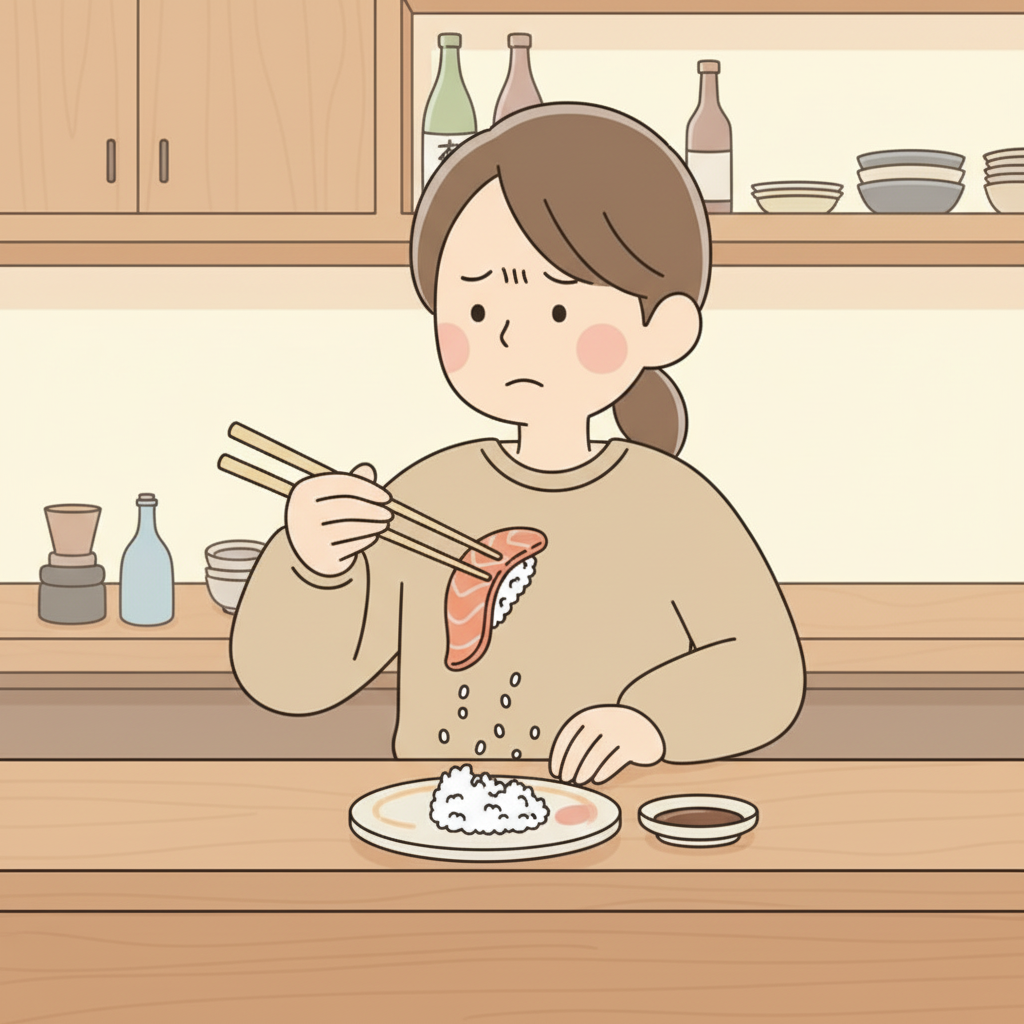
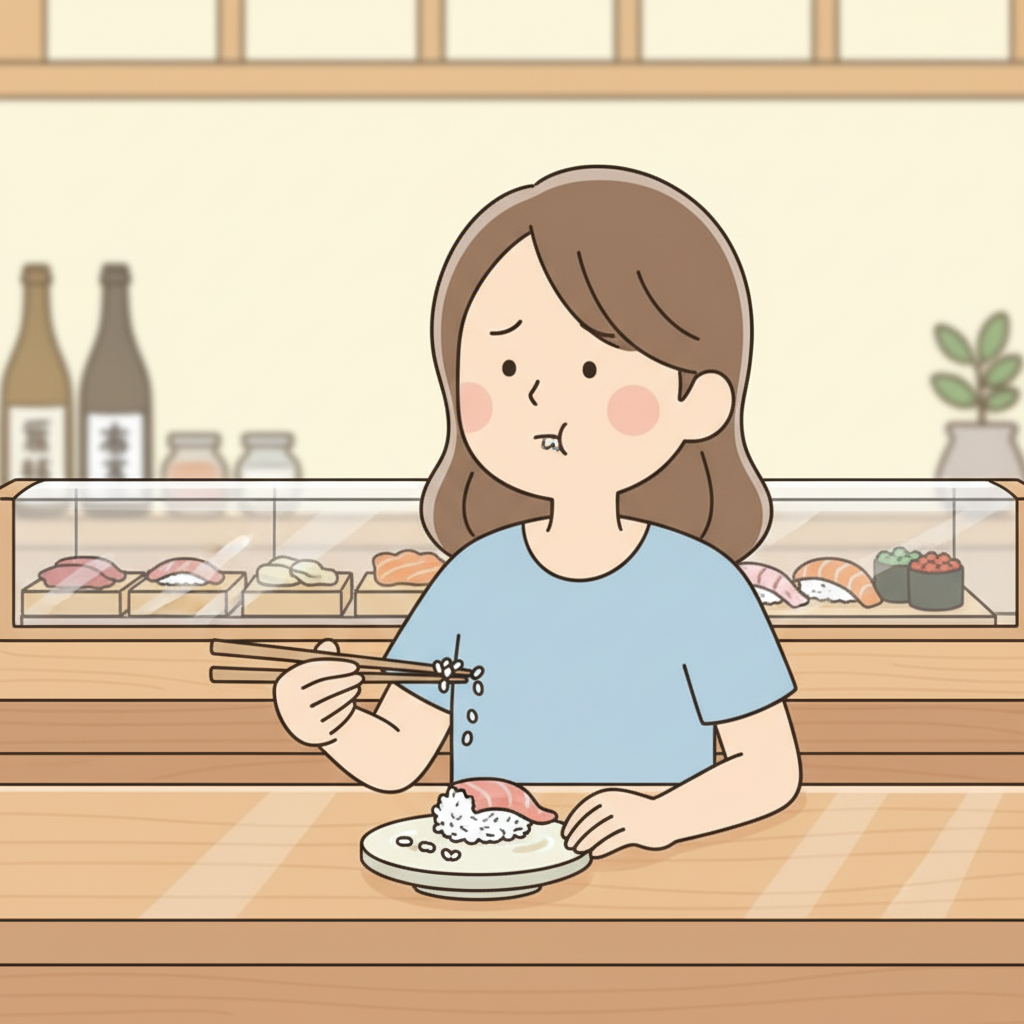
A person at a sushi counter struggling to lift a nigiri with chopsticks as the rice falls apart mid-air
NG

Struggling with chopsticks to keep a nigiri piece together and dropping it

Nigiri (the classic hand-pressed fish-on-rice pieces) is structurally designed to be eaten with fingers. Chopsticks work too, but if you're new to them and the piece is falling apart, you're fighting the food. The chef isn't going to judge you for switching to fingers—they'd rather you eat the piece intact.

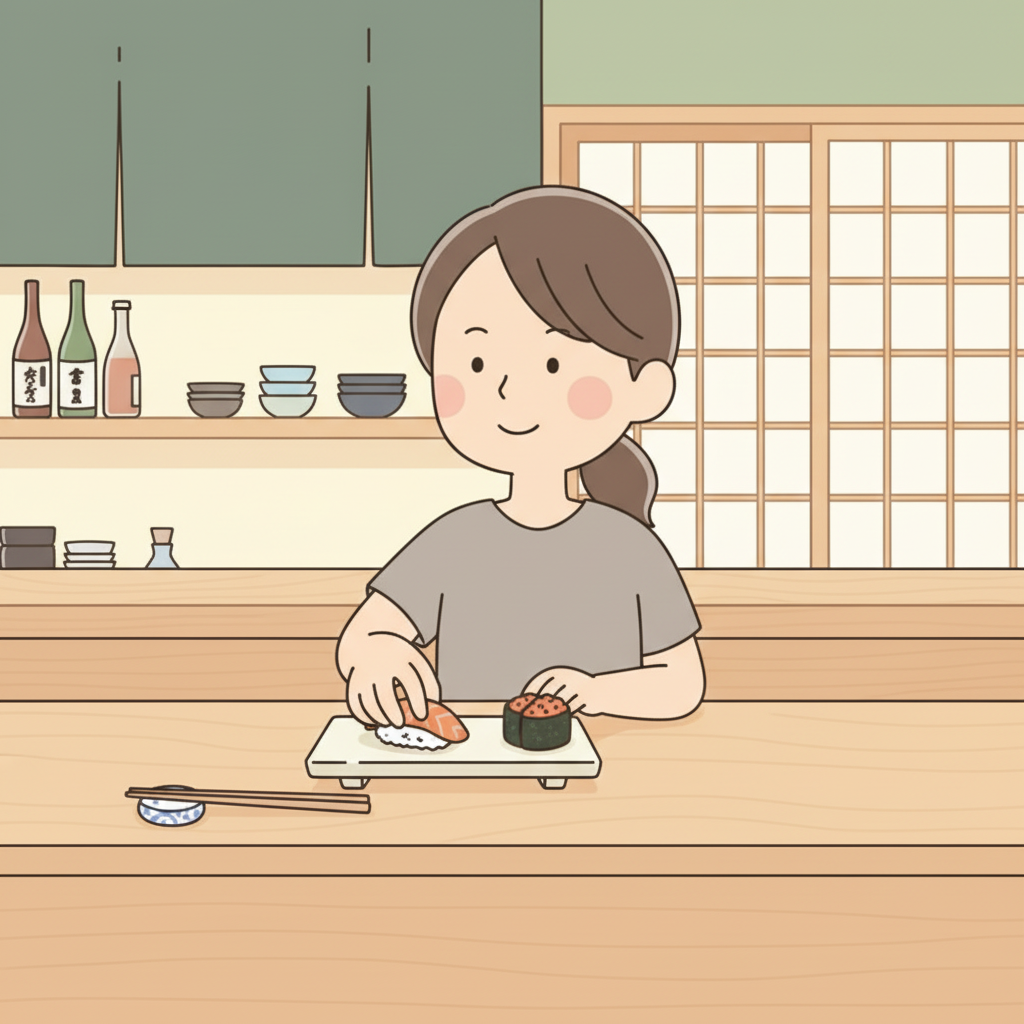
A person at a sushi counter picking up a nigiri piece with their bare fingers, thumb underneath and two fingers on top
OK

Pick up nigiri with your thumb and two fingers, dip fish-side, one bite

Thumb under, index and middle finger on top, light grip. Tilt the piece to the side and touch just the fish to the soy sauce. Entire piece goes in your mouth in one bite—nigiri is sized for that intentionally. Chopsticks are the right call for maki rolls (the cut roll pieces) where the finger-grab gets sticky.

Mixing wasabi into your soy sauce

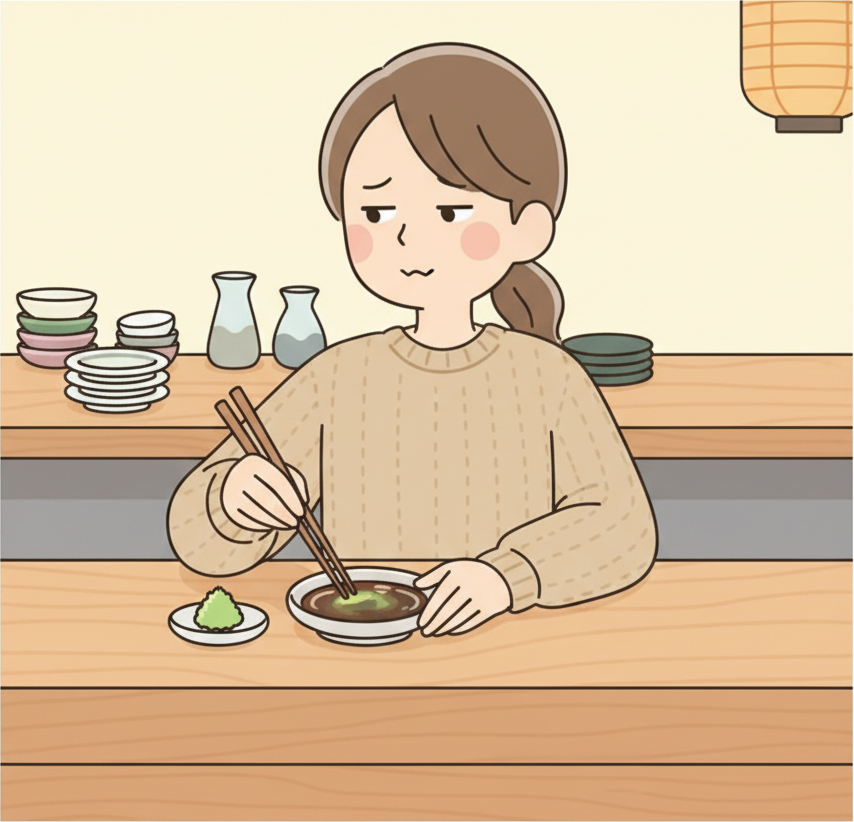
A person at a sushi counter stirring a blob of green wasabi into their soy sauce dish with chopsticks
NG

Scooping wasabi off the plate and stirring it into the soy sauce to make a slurry

Dumping wasabi into your soy sauce dish is the classic American-sushi-bar move. At a real sushi shop it looks specifically wrong: the chef has already put the exact amount of wasabi they wanted between the rice and the fish on each piece. Adding more, and mixing it into your dip, overrides the chef's decision and muddies the flavor.

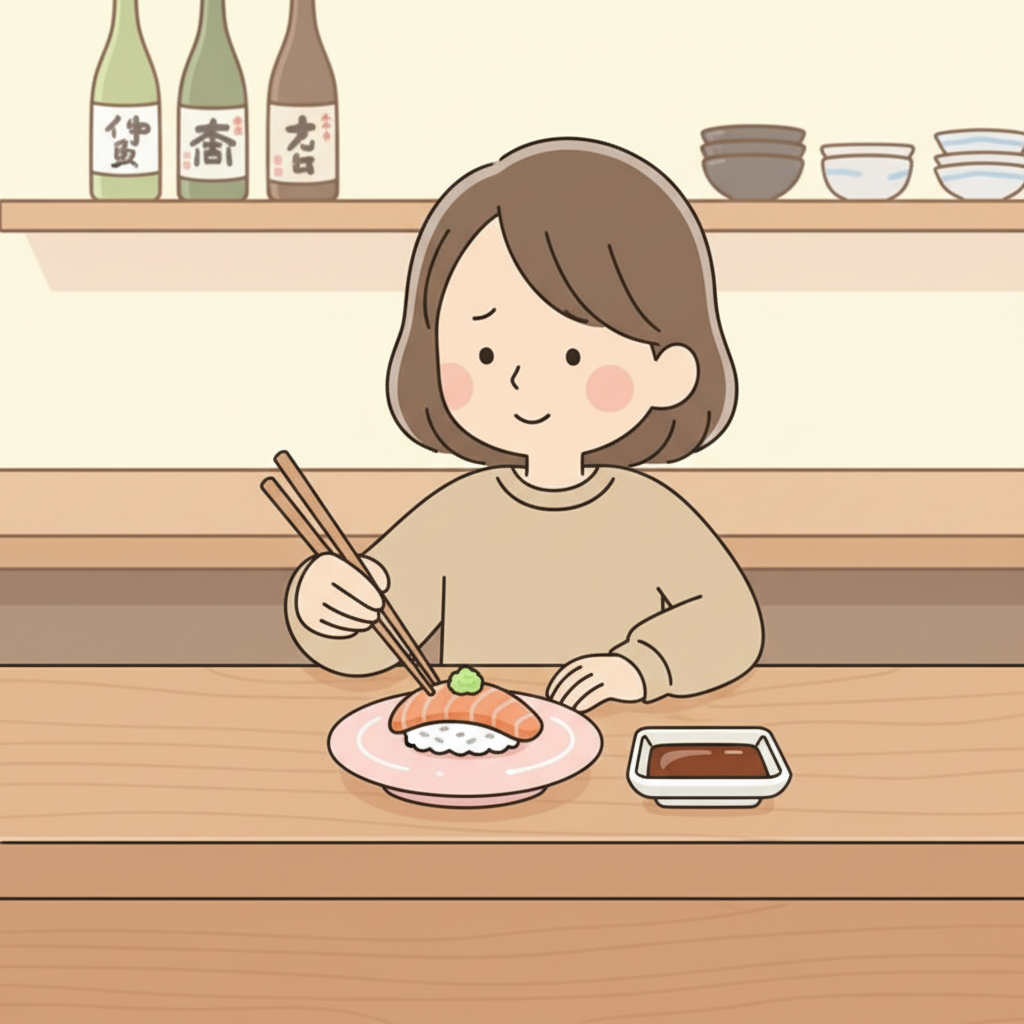
A person at a sushi counter placing a small dab of wasabi directly on top of a nigiri, with a separate clean dish of soy sauce beside them
OK

Trust the chef's wasabi, or add a tiny dab directly to the fish

First, try the piece as it comes—the chef knows what they're doing. If you want more heat, pick up the piece, put a small dab of wasabi directly on top of the fish with your finger or chopstick, and eat it. Don't introduce it to the soy sauce. The separation is intentional.

Eating each piece in two bites

A person at a sushi counter with a half-bitten nigiri falling apart on their plate
NG

Biting a nigiri in half, setting the other half back on the plate

Each piece is portioned to be exactly one mouthful. When you bite it in half, the second half falls apart—the rice loosens, the fish slides off, the vinegar balance collapses. It's not a manners disaster, but it's a small sign you haven't done this much.

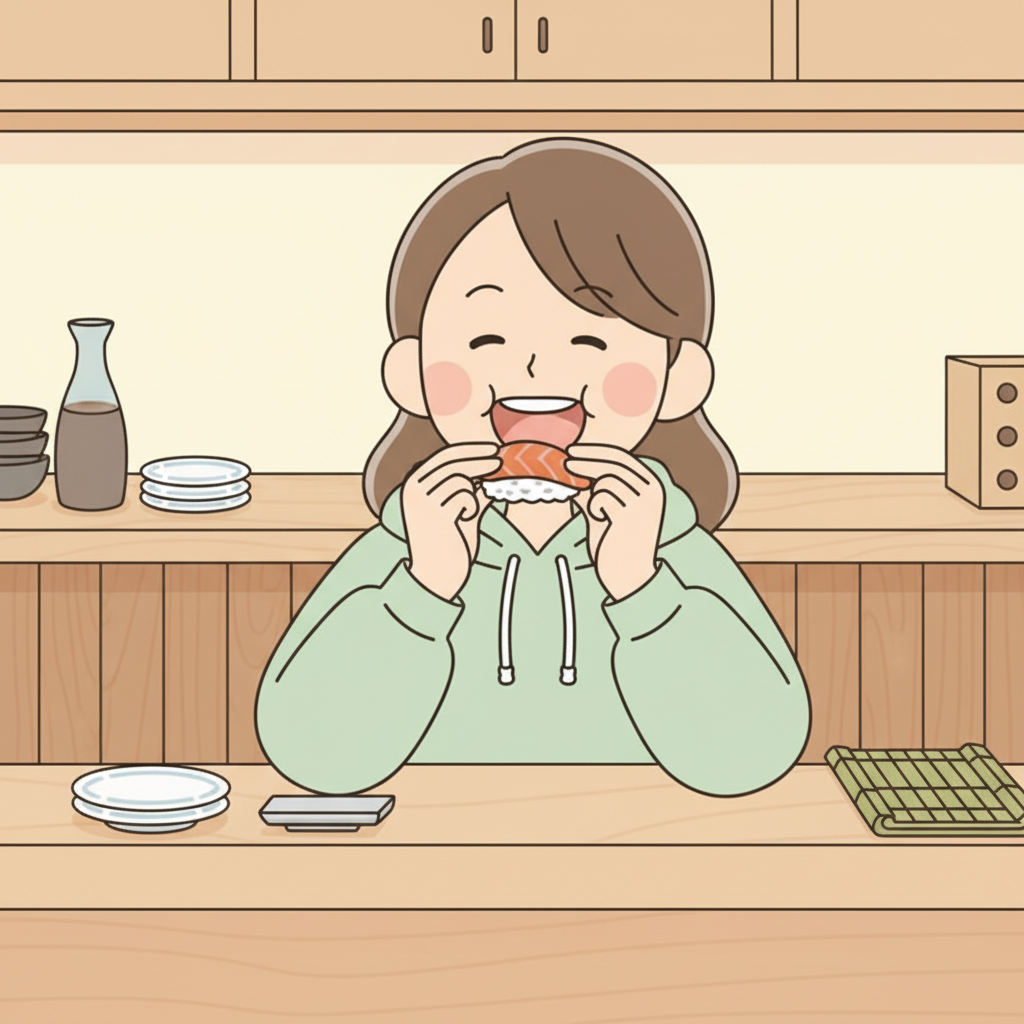
A person at a sushi counter opening wide and eating a whole nigiri piece in one bite, holding it with their fingers
OK

Whole piece, one bite, chew and savor

Yes, even the thick ones. Open wide, go for it. The balance between fish, rice, wasabi, and soy sauce only works when all four hit your mouth at once. If a piece is genuinely too big for one bite—this is rare at a good shop—ask the chef for a smaller portion next time and power through this one.

Why sushi has so many tiny rules

Every sushi “rule” boils down to one thing: don’t override the chef’s decisions. At a real counter, the chef chose the fish, calibrated the wasabi, seasoned the rice, and pressed the piece to a specific density. The soy sauce rule, the wasabi rule, the one-bite rule—all of them exist to preserve a balance that was built before the piece reached your plate.

At a conveyor belt place or a grocery store tray, none of this matters much. The pieces are mass-produced and the chef isn’t watching. These rules are tuned for the real-counter experience.

Two rules get you 80% of the way: fish side touches the soy sauce, not the rice. Don’t remix the wasabi.

A few “nice to know” extras

  • Gari is a palate cleanser — The pink pickled ginger on your plate goes between pieces to reset your mouth before the next fish. It’s not a topping. Don’t pile it on the sushi.
  • Omakase means “I leave it to you” — Say it at the counter and the chef picks everything, served in the order they think is best. Don’t fight the sequence, don’t ask for substitutions, and definitely don’t say “no raw fish.”
  • Sashimi rules are different — Sashimi (sliced raw fish, no rice) gets dipped fully in soy sauce. No rice to worry about. The fish-side-only rule is specifically a nigiri thing.
  • The green paste in grocery trays is fake — That fluorescent green blob is usually horseradish dyed green. Real wasabi is paler, subtler, and grated fresh at good shops. You won’t need to ask for more.
  • Eat quickly at the counter — Each piece is served at the temperature the chef intended. Letting nigiri sit on the plate while you take photos or chat means the rice warms, the fish changes texture, and the whole calibration drifts.

Quick check

Three questions to lock in the sushi counter instinct.

Quick check

Can you spot the right move?

  1. Q1 Should you dip the rice side of nigiri in soy sauce?

  2. Q2 Is it okay to eat nigiri with your fingers?

  3. Q3 Should you mix wasabi into your soy sauce dish?