Why the teishoku is worth understanding
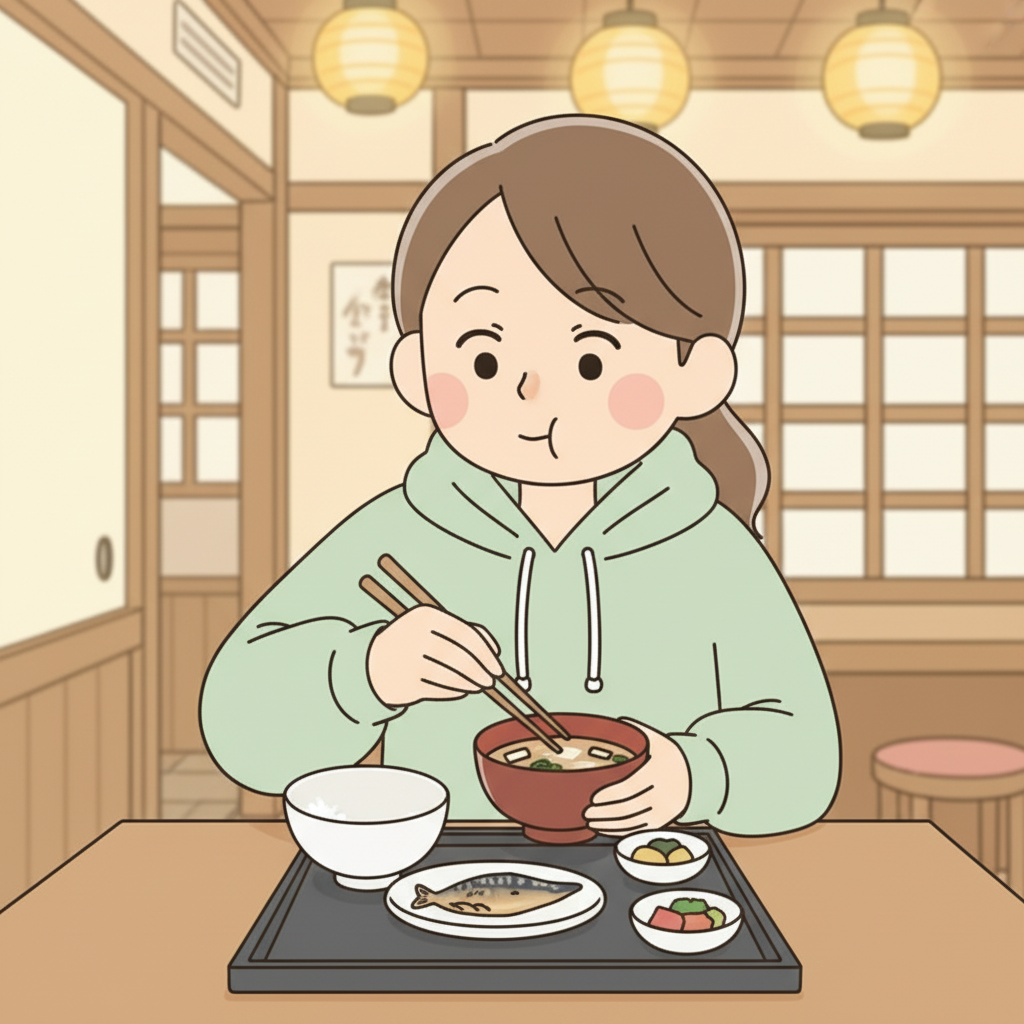
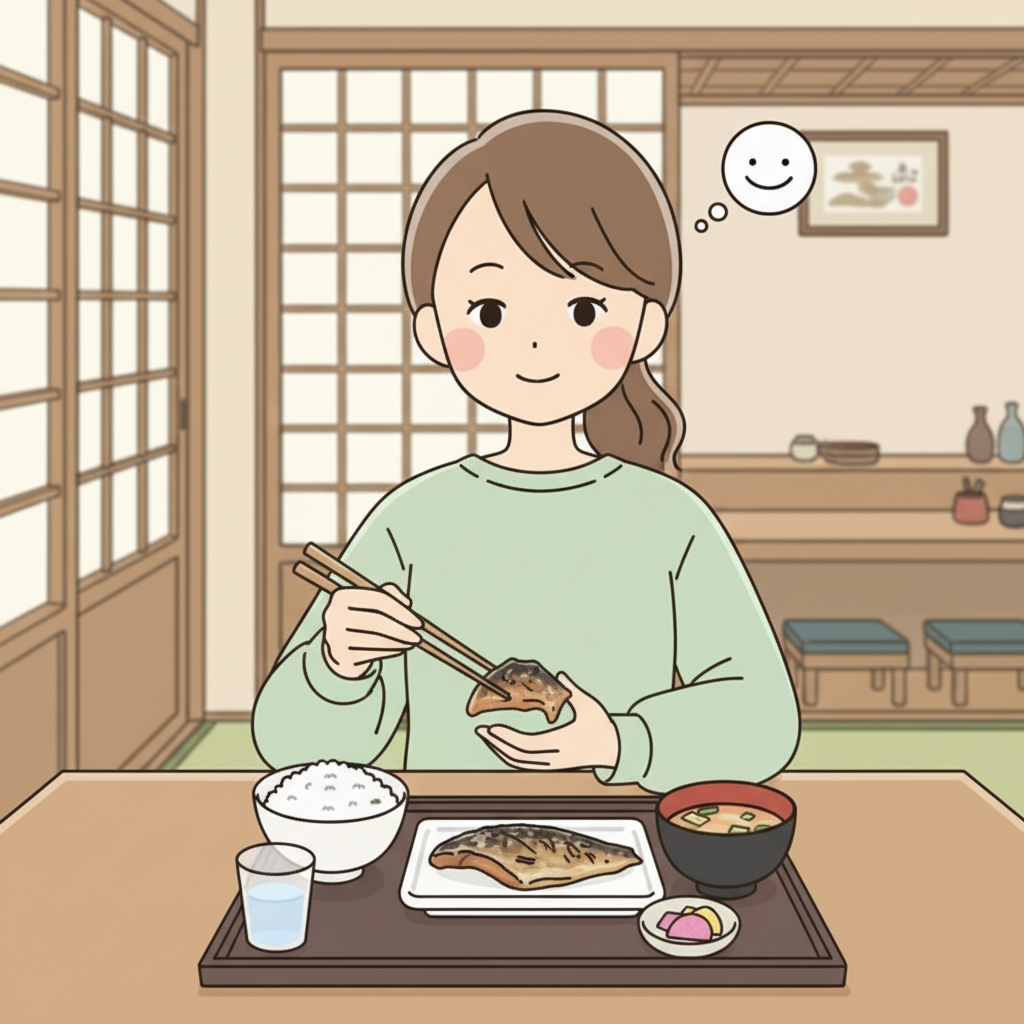
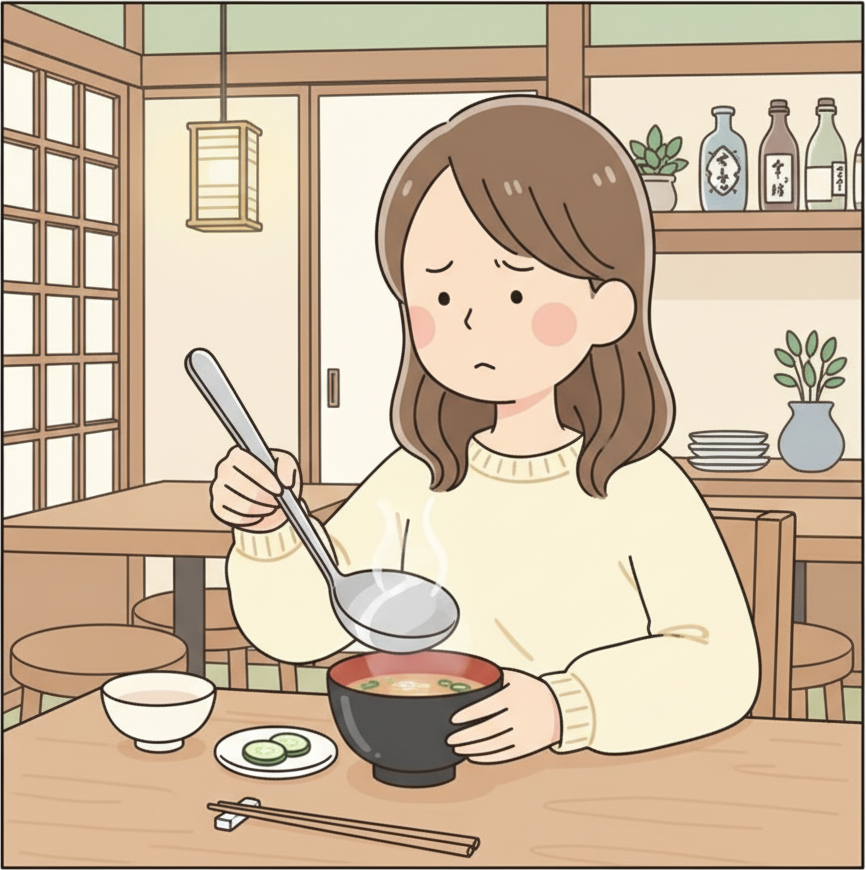
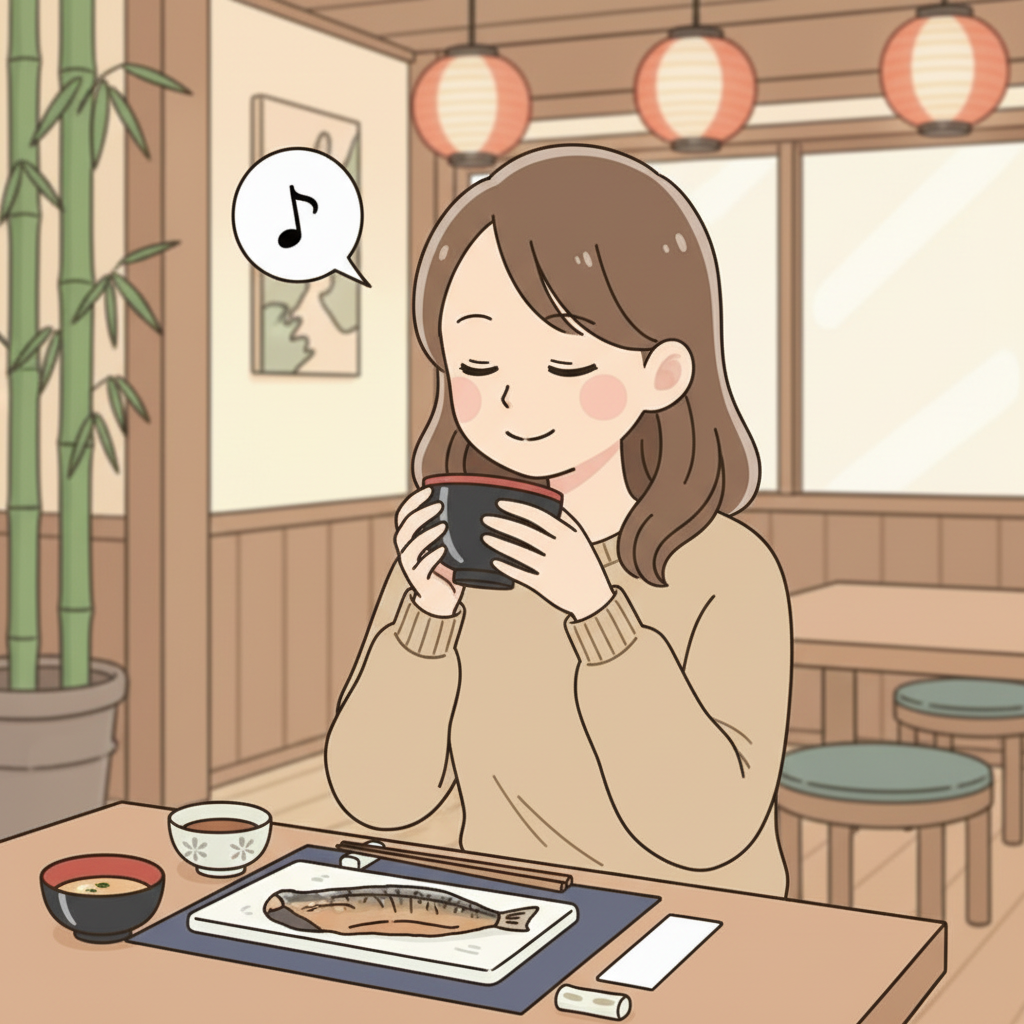
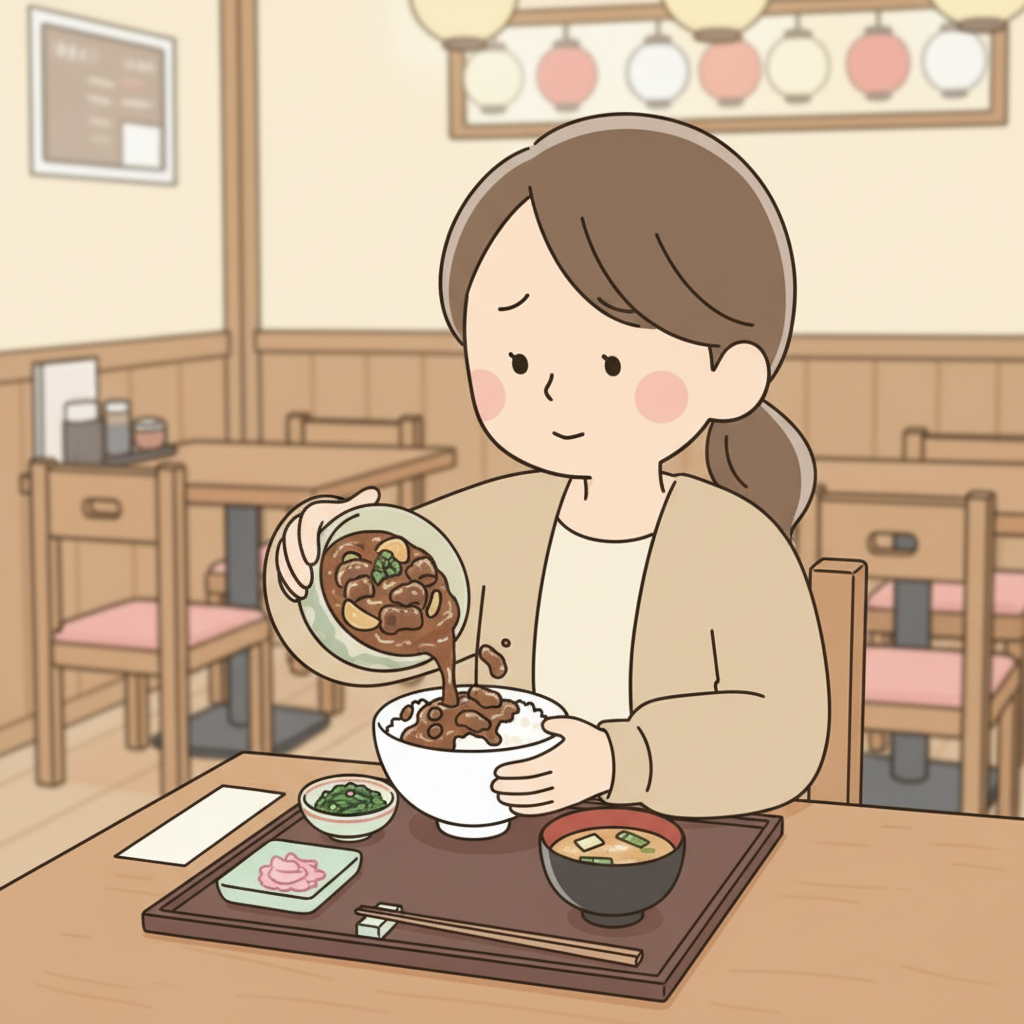
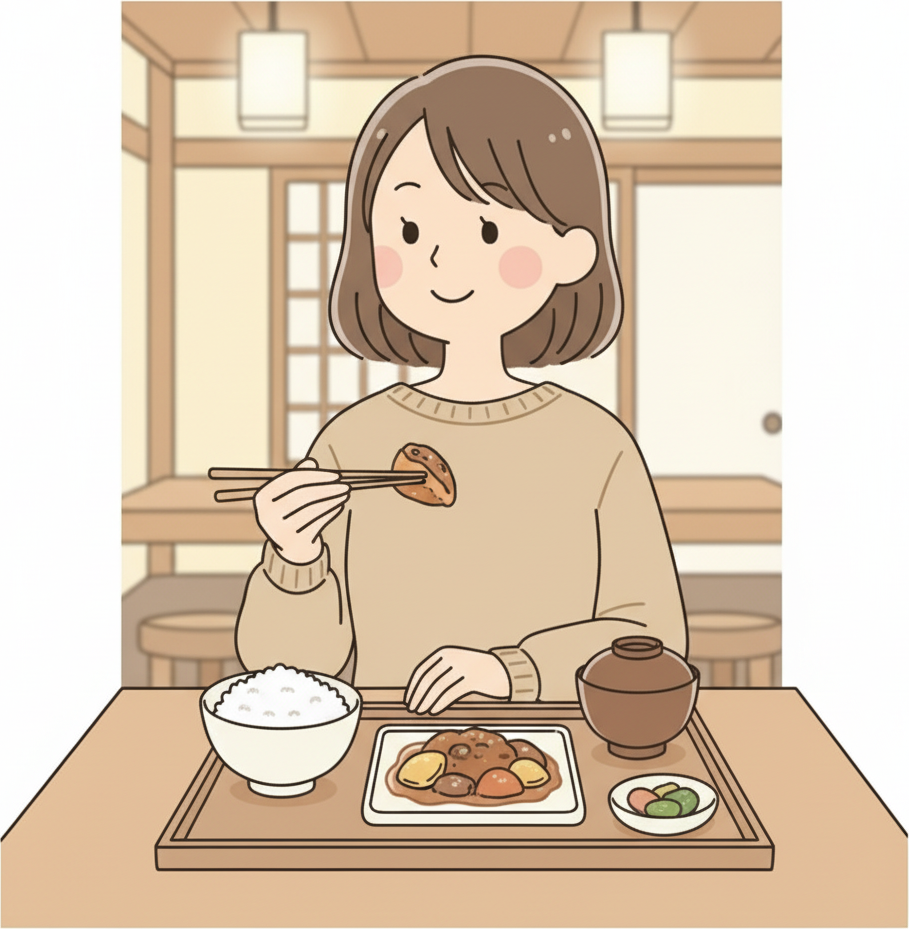
The teishoku (定食, “set meal”) is the backbone of everyday Japanese eating. Lunch counters, highway rest stops, museum cafeterias, office canteens—it shows up everywhere, usually at a reasonable price. The main dish changes; the format usually doesn’t: main + rice + miso soup + pickles + small side, all at once on a tray.
The key insight is that it’s not courses. Every component is meant to be eaten in relation to the others. Rice is the neutral staple you return to between every bite. Miso is the liquid thread. Pickles reset your palate. The main is the star. You jump between them continuously rather than finishing one before starting the next.
Main, rice, soup, pickle, rice, main, soup. Never linear. Always jumping.
A few “nice to know” extras
- Gohan means “rice” and “meal” — The word for cooked rice (gohan / 御飯) doubles as the general word for “meal.” When someone asks “gohan tabeta?” they mean “have you eaten?”—one word covers both. That’s how central rice is.
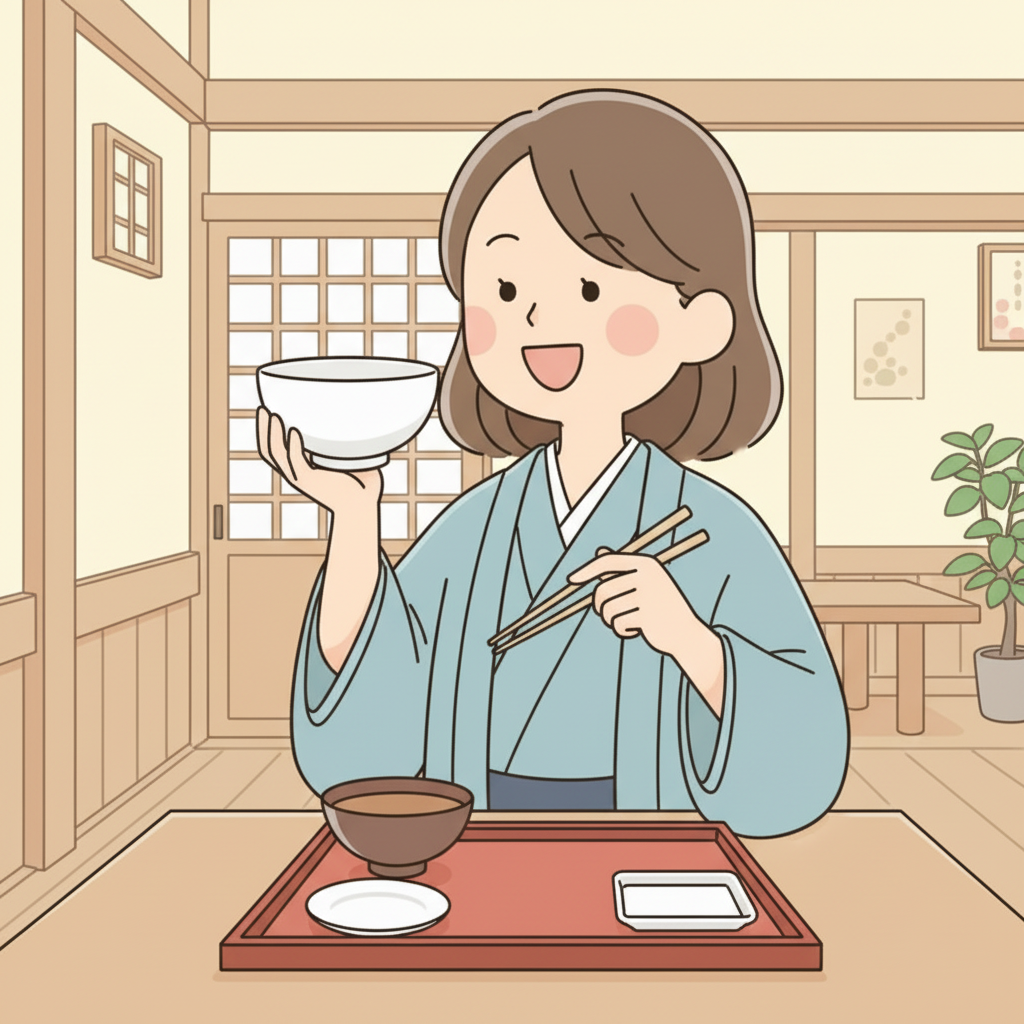
- Free refills at some places — Some teishoku restaurants offer free rice refills. Listen for “okawari jiyuu” or look for a sign. Hold up your empty bowl and say “okawari kudasai.”
- The pickles are not decoration — That small side of tsukemono is a palate cleanser. Eat a bite between richer bites of the main to reset your mouth.
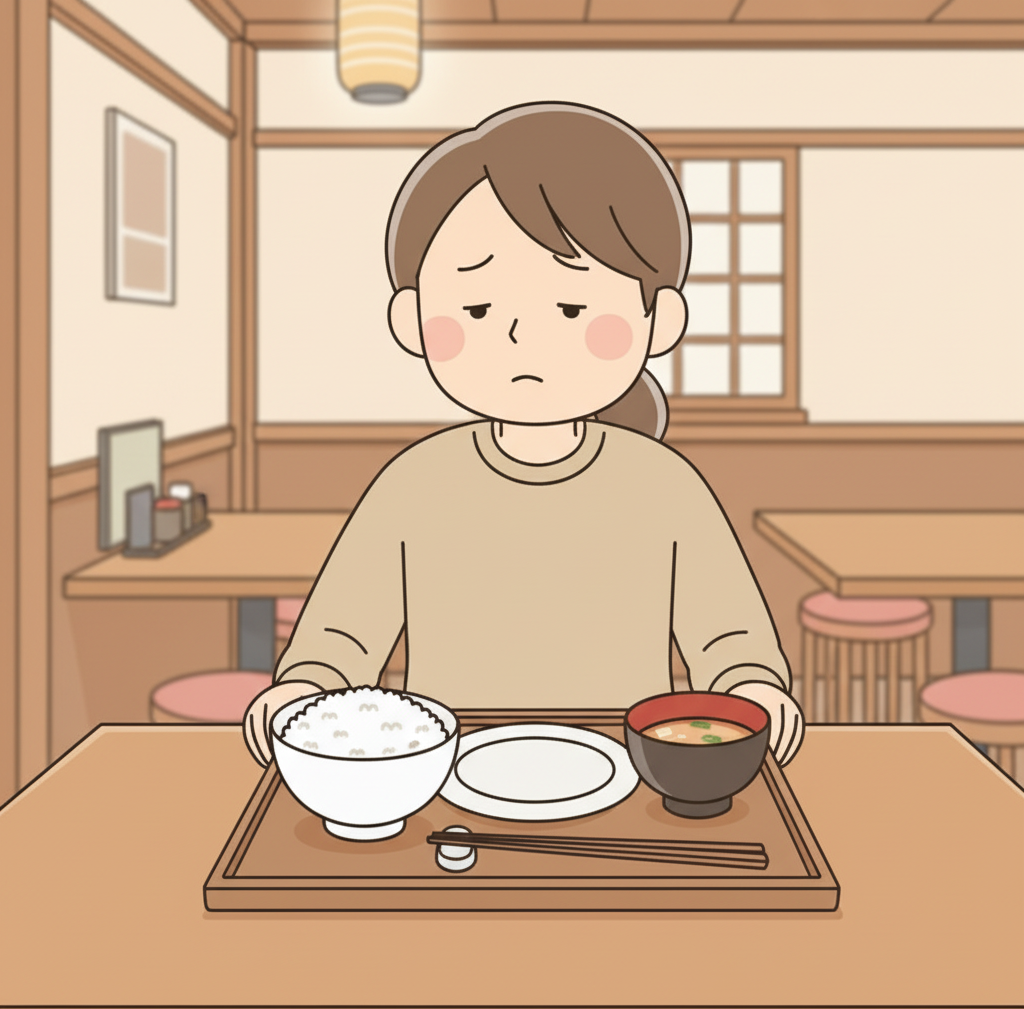
- Ask for less rice up front — If a full bowl is too much, say “gohan sukuname de onegaishimasu” when ordering. Finishing every grain is generally expected, so it’s better to start small than to leave rice behind.
Quick check
Three questions to lock in the teishoku rhythm.