Why bowing carries more information than words
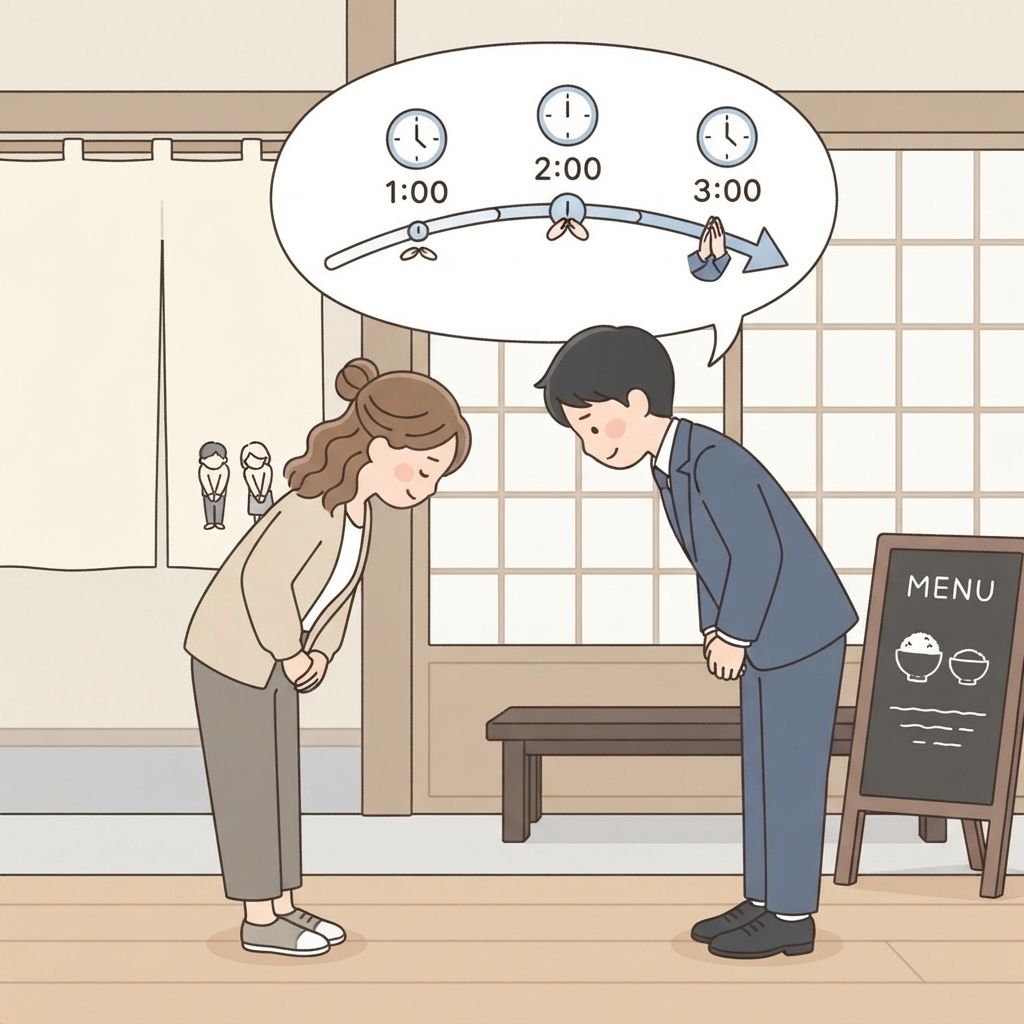
A bow in Japan isn’t just “hello” — it’s an active signal encoding the relationship, the situation, and your attitude toward the other person. The same person bows differently to their boss, their colleague, a customer, and a stranger, all in one afternoon. Each one is calibrated.
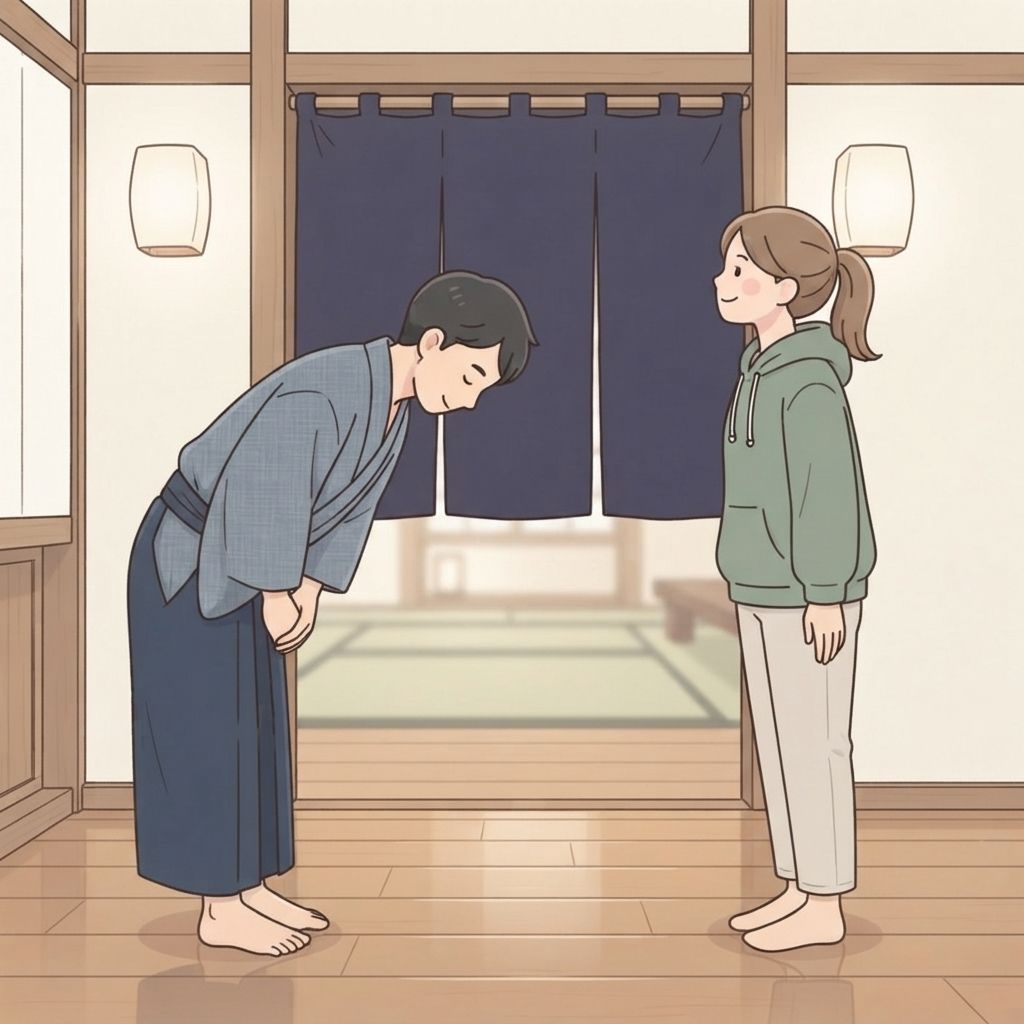
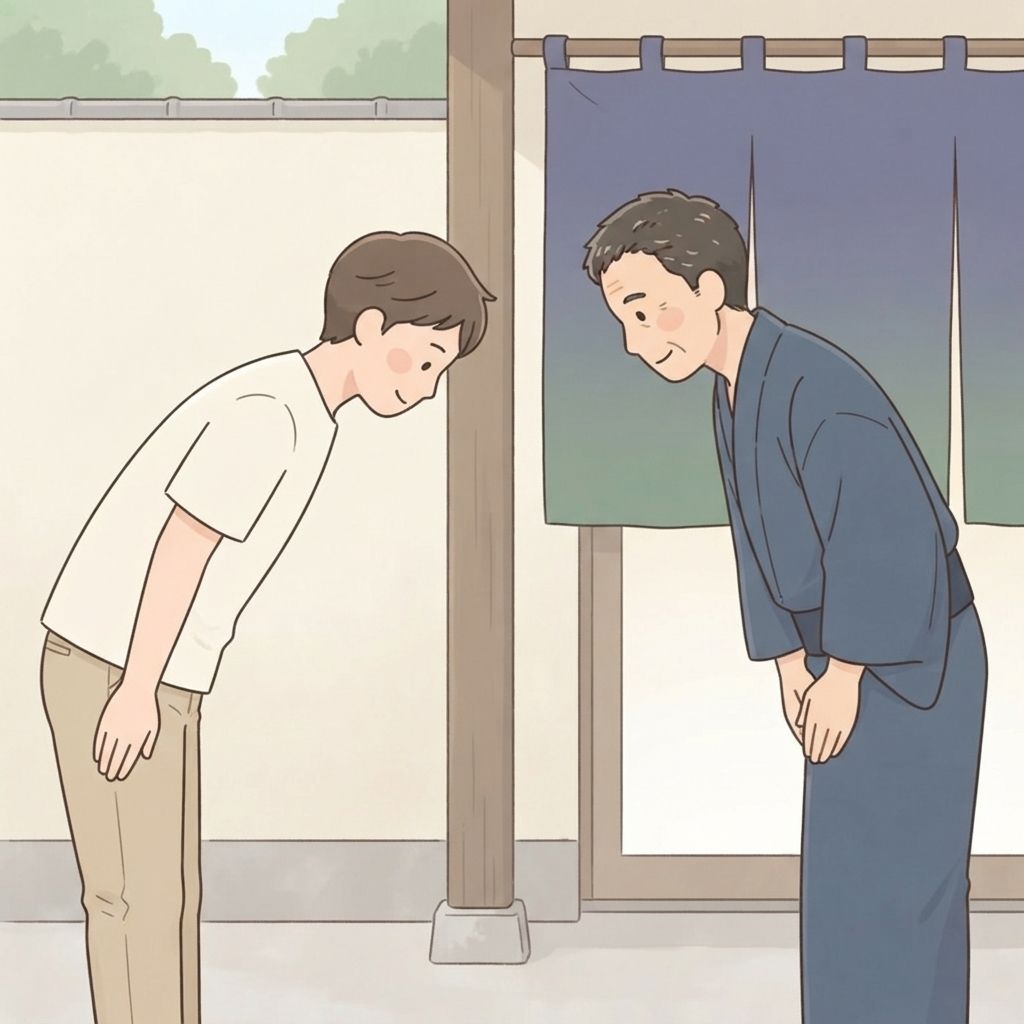
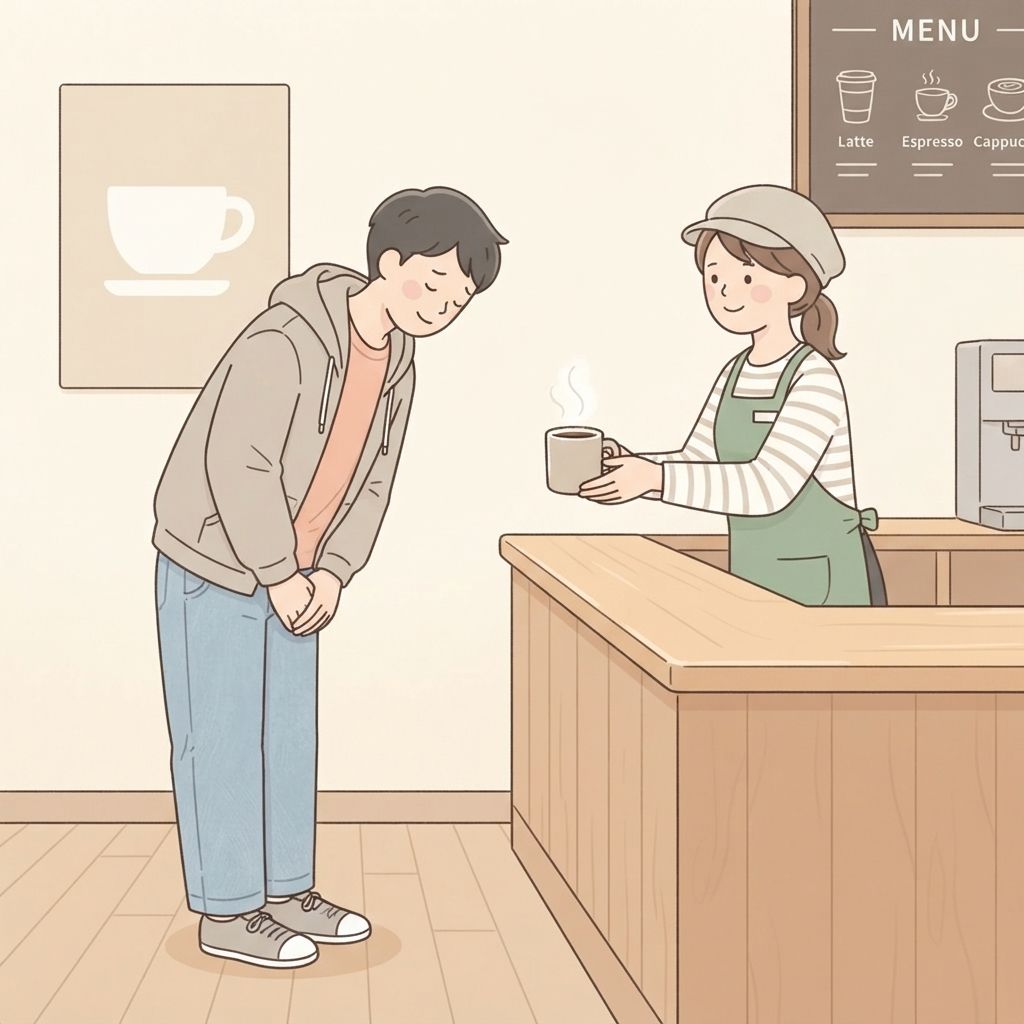
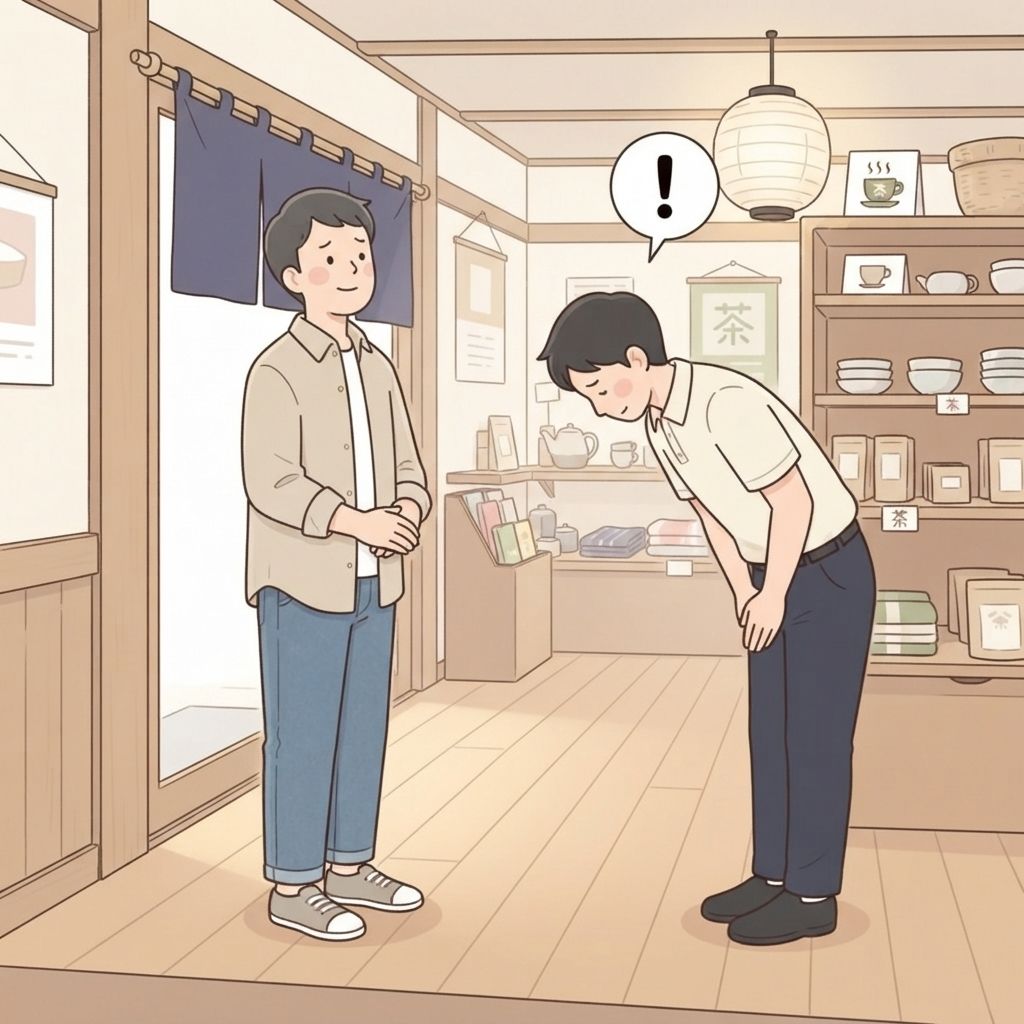
You don’t need to master the full system. Three depths — casual, polite, formal — cover most tourist situations. The single most important thing: the bow is a downward motion from the waist, not an upward chin nod. Head goes down, eyes drop to the floor. Get that right and you’re off to a good start.
15 degrees for casual. 30 for polite. 45 for formal. Head down, not chin up — that’s the whole difference from a Western nod.
A few “nice to know” extras
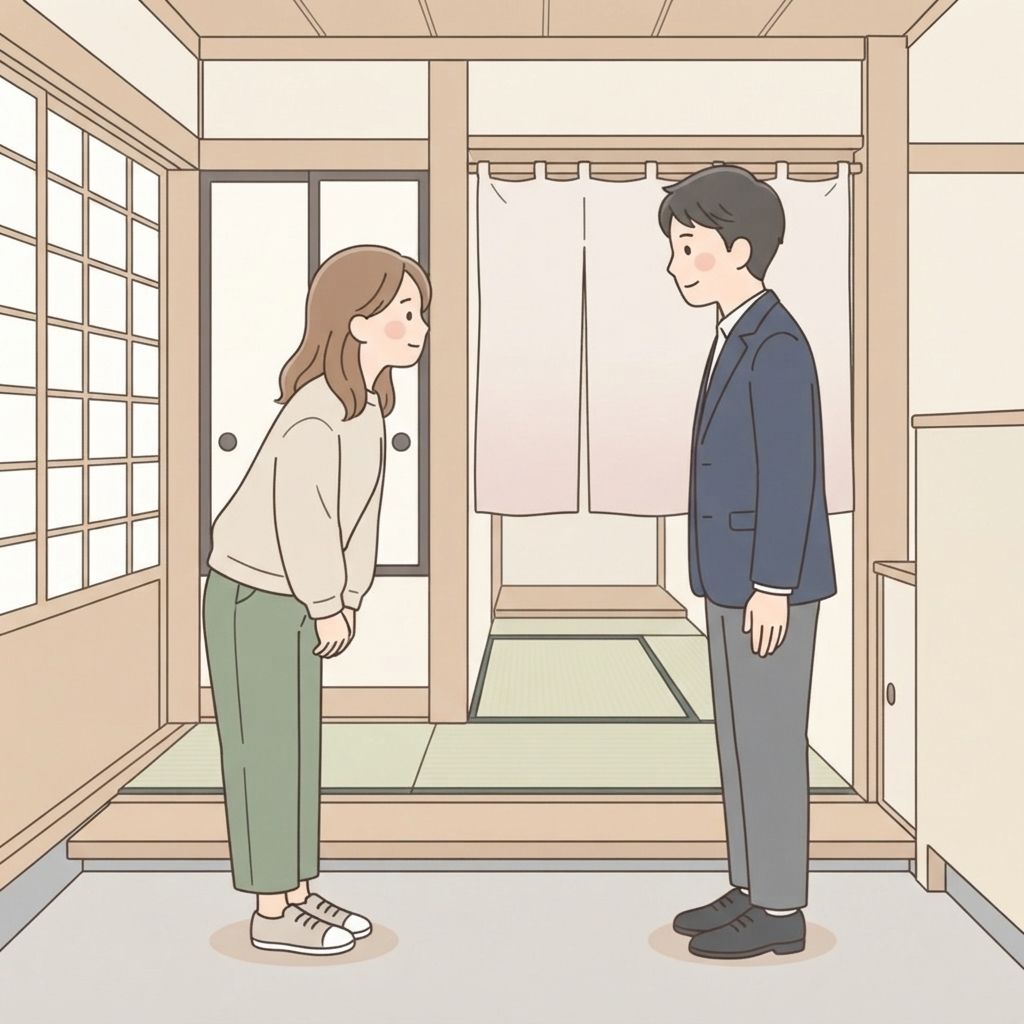
- Seated bow on tatami — At a ryokan, tea ceremony, or formal meal on tatami, bows are often done from a seated position with both hands placed on the tatami in front of you. Your forehead doesn’t need to touch the floor — the hands and a forward bend are enough.
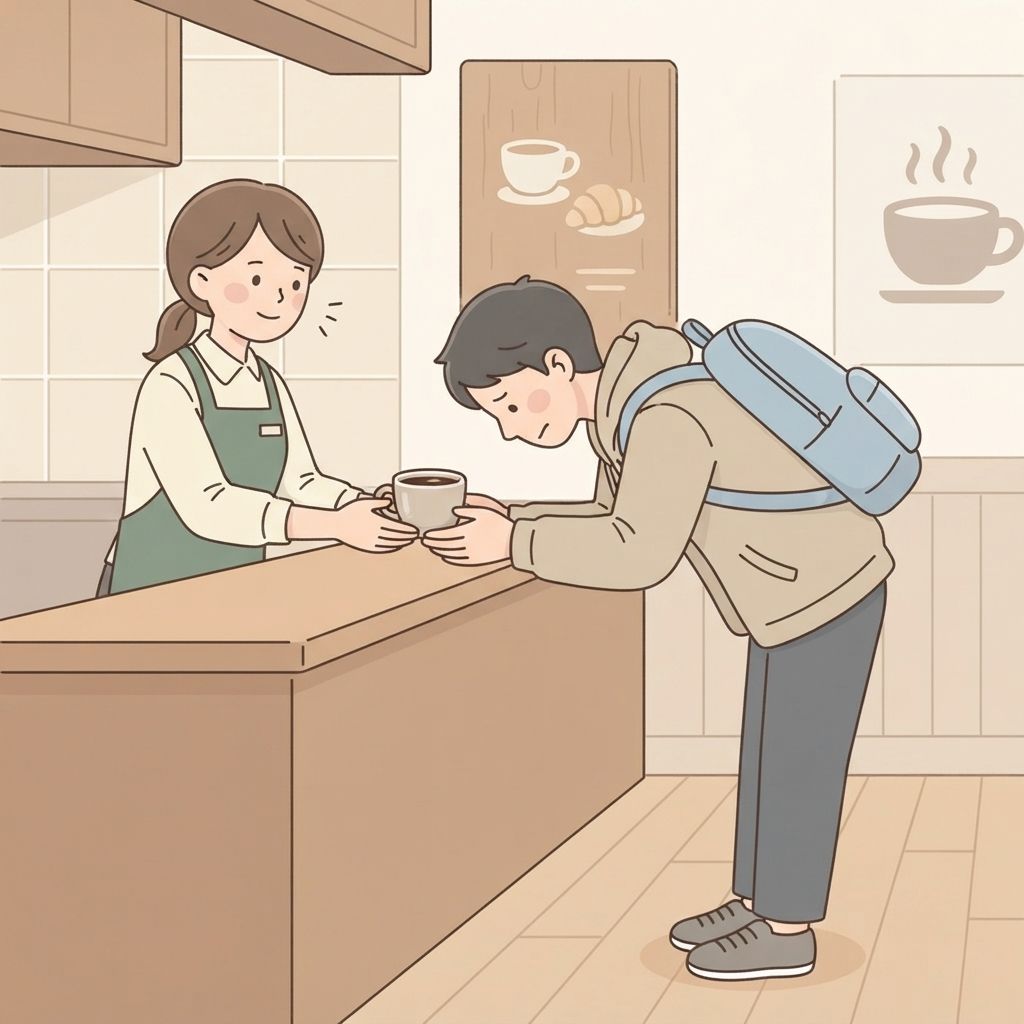
- Thank-you vs apology — A deep bow is used both for apologies and for heartfelt thanks, so depth alone doesn’t tell them apart. The words that go with it — “sumimasen” or “arigatou gozaimasu” — and your expression carry the difference.
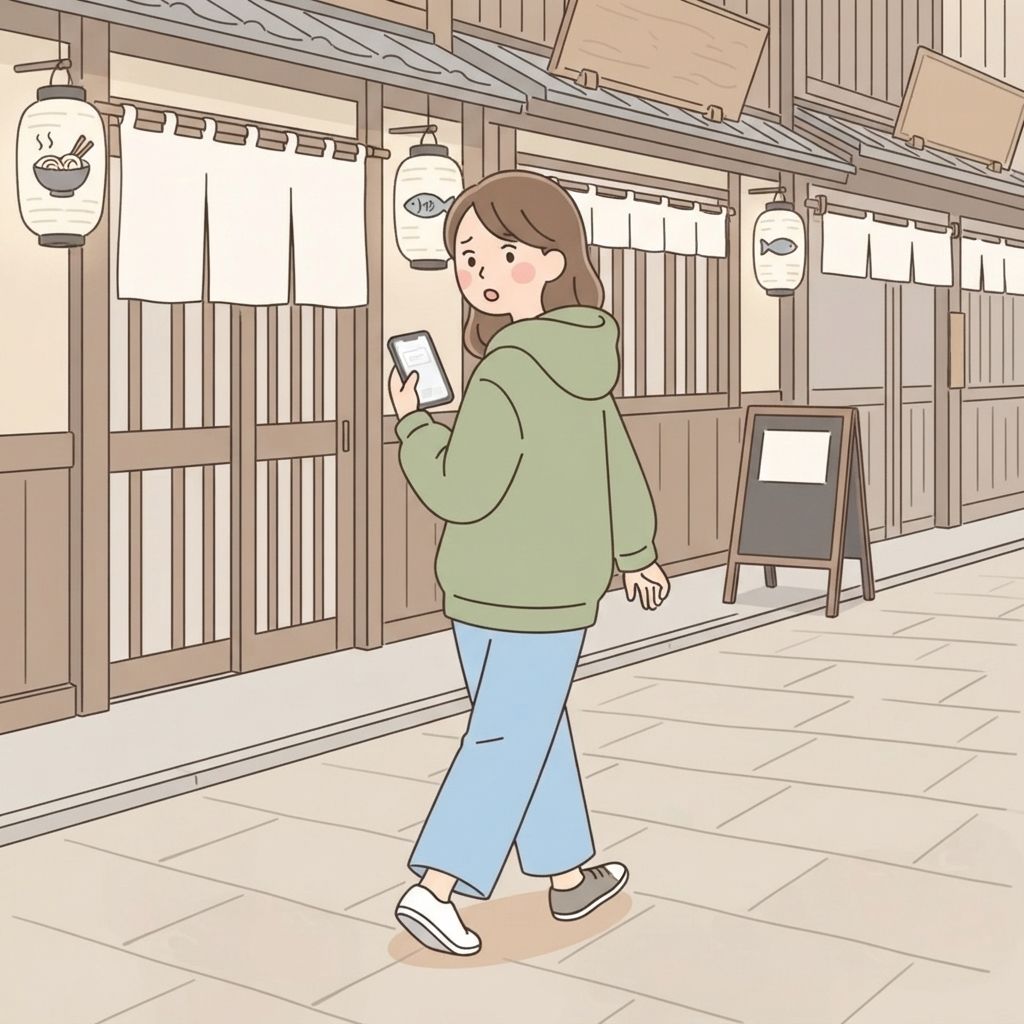
- Bowing on the phone — Many Japanese people bow during phone calls even though the other person can’t see them. It’s so embedded in the conversational rhythm that it often happens without thinking. You don’t need to do this — but don’t be surprised when you see it.
- Business card exchange — The meishi (business card) exchange has its own sequence: both people stand, and the card is presented with both hands, turned so the other person can read it. This has its own dedicated article if you need the full protocol.
Quick check
Three questions to lock in the bowing basics.