Japanese Gift Giving: 3 Rules Most Tourists Miss

Both hands when you give, wrapped until the giver leaves, never in sets of four. These aren't optional details — they decide if the gift lands.

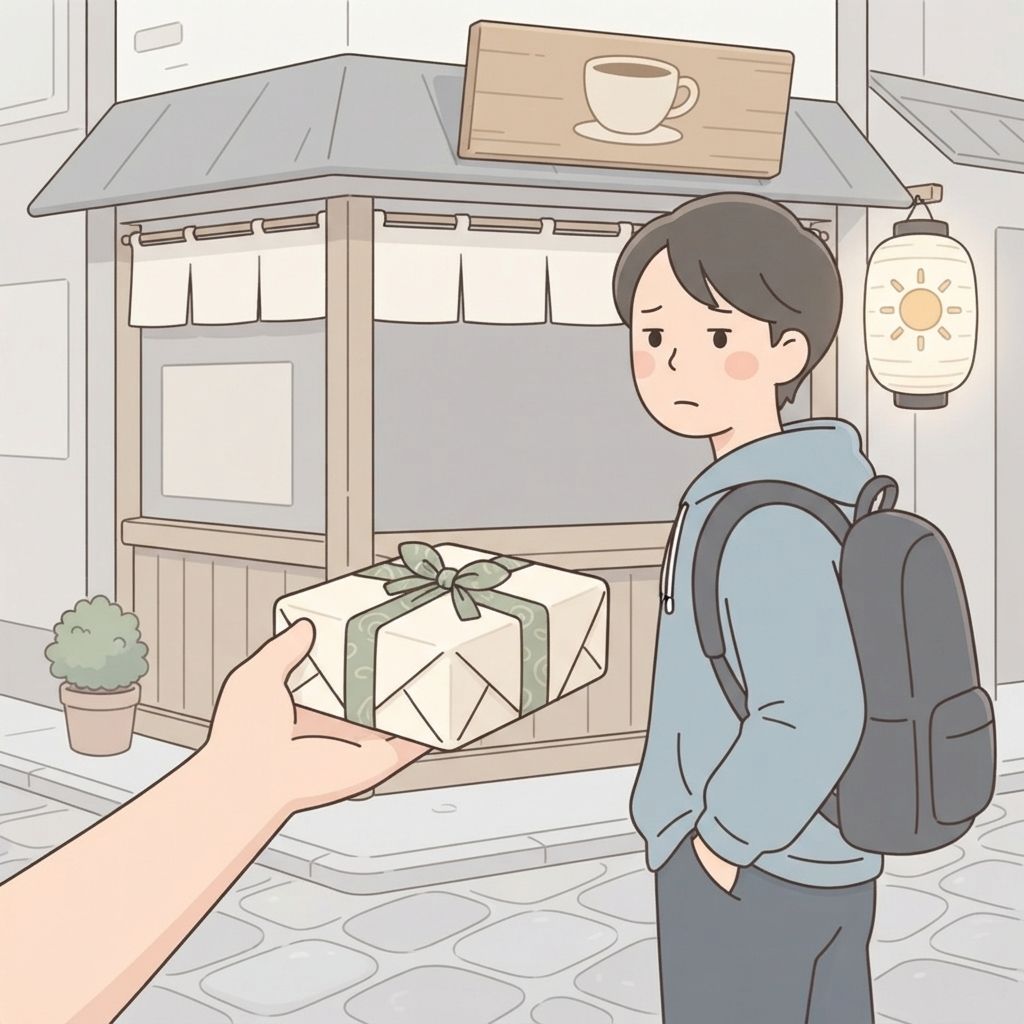
Handing a gift with one hand

NG

Passing a wrapped gift to someone with one hand, casually

Handing over a gift with one hand in Japan reads as careless and dismissive of the moment. The two-hand presentation is a physical gesture that signals 'this gift matters, and so does the act of giving it to you.' Using one hand—even for a small gift—undercuts the whole exchange and can make the receiver feel the gift was an afterthought.

OK

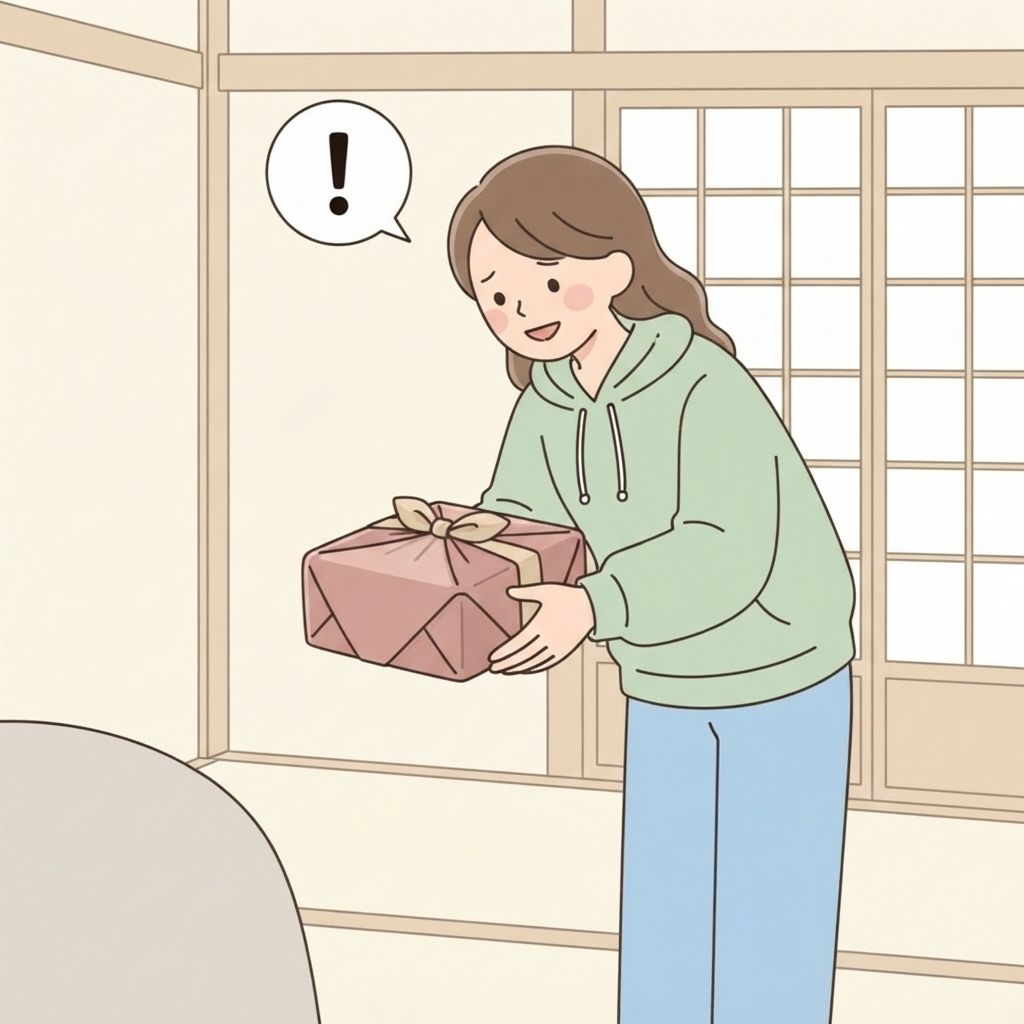
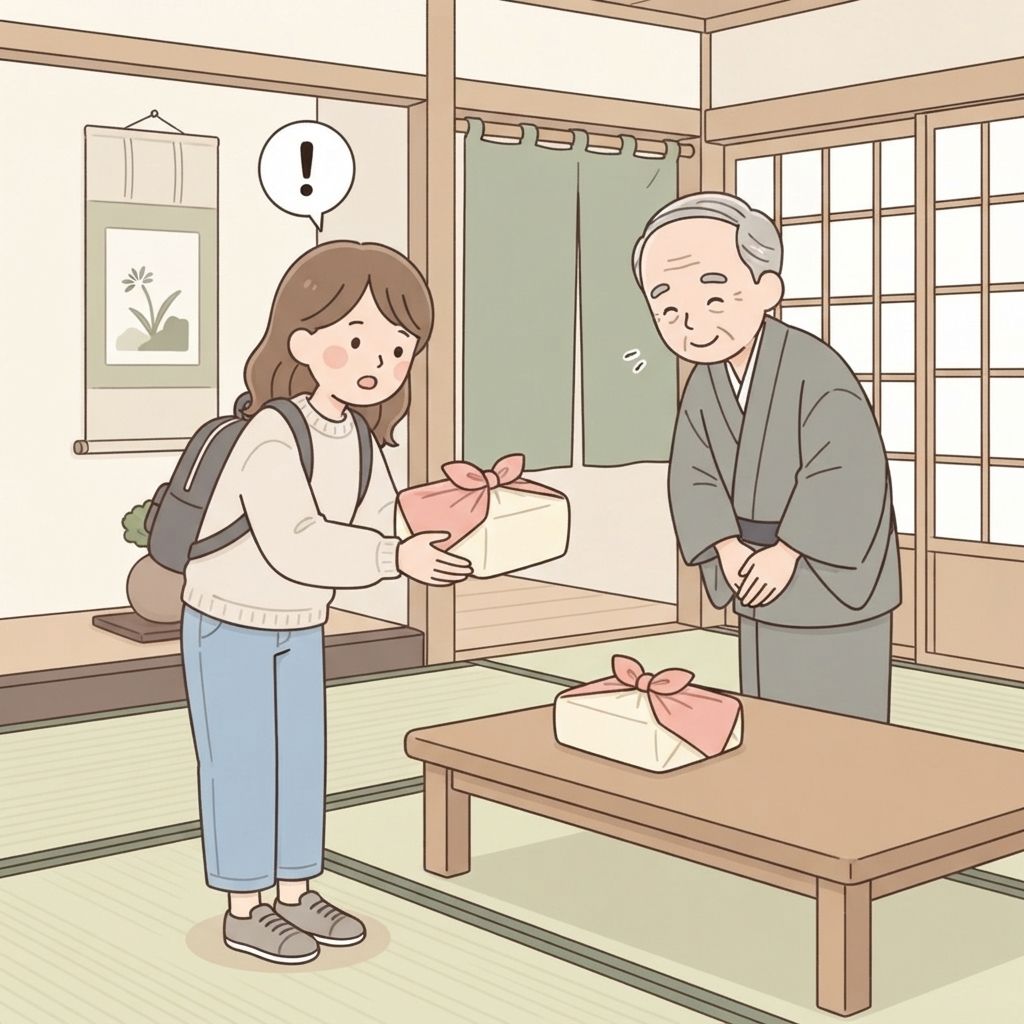
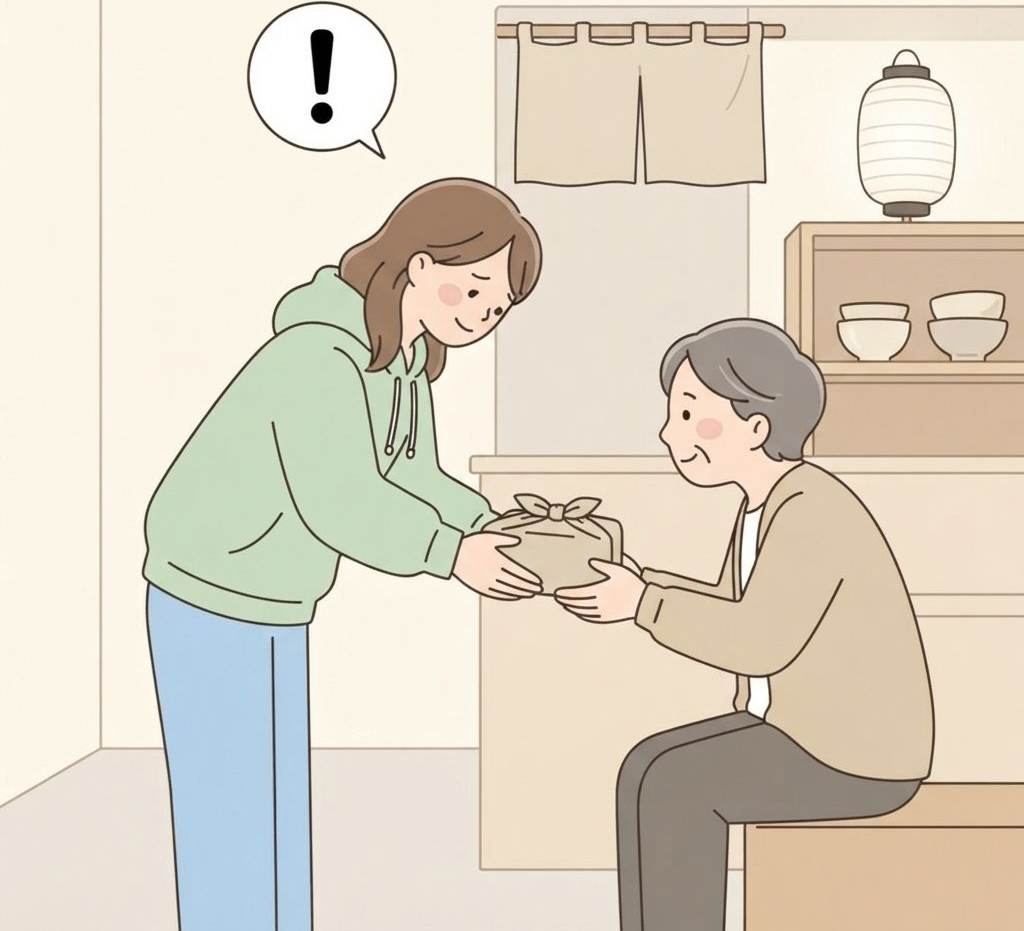
Present the gift with both hands, slight bow, brief words of acknowledgment

Hold the gift with both hands, one on each side or one underneath supporting it. Extend it forward toward the receiver, with a small bow (15-30 degrees) and a brief phrase like 'tsumaranai mono desu ga...' ('this is a small thing, but...') or simply 'dozo' ('please'). The receiver takes it with both hands, bows in return, and says 'arigatou gozaimasu.' The whole exchange is slow and deliberate.

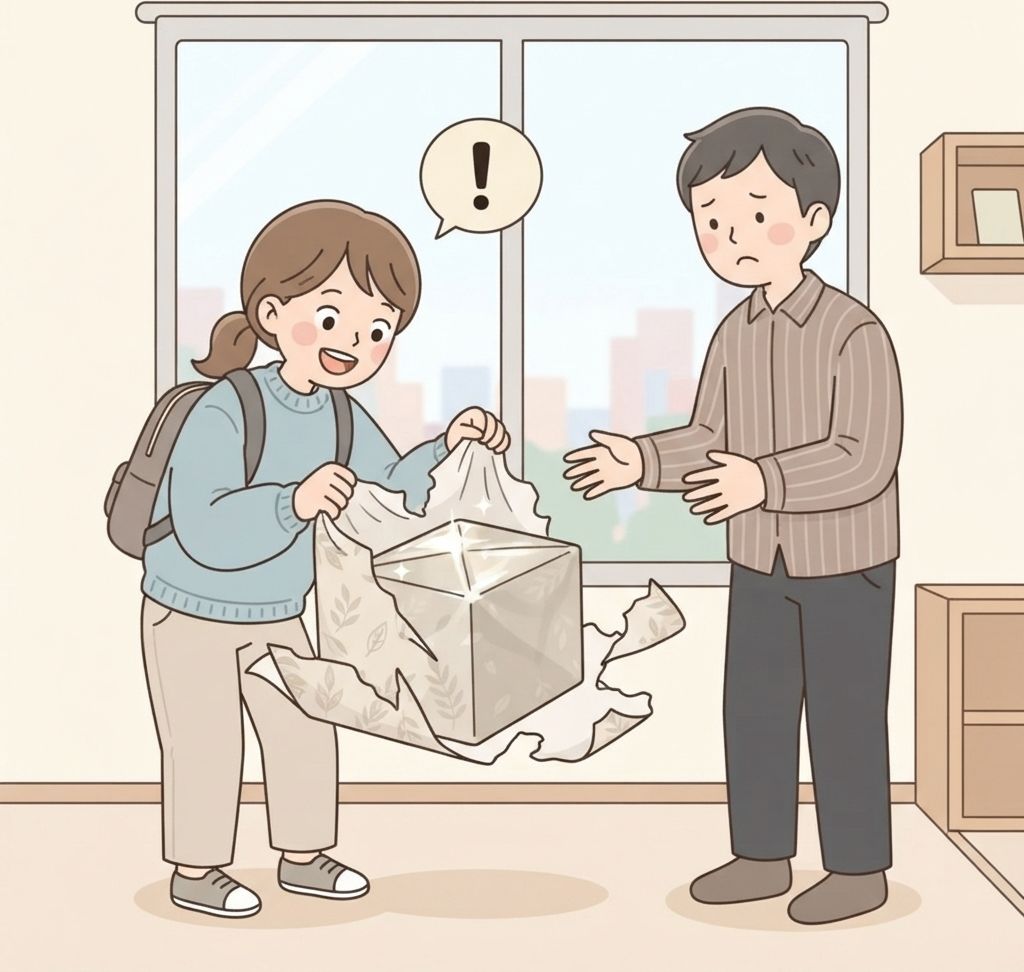
Opening a gift immediately in front of the giver

NG

Unwrapping a gift the moment you receive it to show appreciation

In many Western cultures, opening a gift immediately and reacting enthusiastically is considered polite—it shows you appreciate the gift and the giver's effort. In Japan, this is reversed: opening a gift in front of the giver is considered poor manners because it forces both parties into a potentially awkward reaction moment, and it emphasizes the material gift over the social gesture.

OK

Accept the gift, thank the giver, set it aside, open it after they've left

Take the gift with both hands, bow, and say 'arigatou gozaimasu.' Set the gift aside (on a table, desk, or tray). Continue the conversation or the visit as normal. Open the gift later, after the giver has left or when you're alone. If you're genuinely curious and want to show appreciation in real time, you can ask 'akete mo ii desu ka?' ('may I open it?')—the giver will usually say yes but the asking is the important gesture.

Giving gifts in sets of four or with unlucky associations

NG

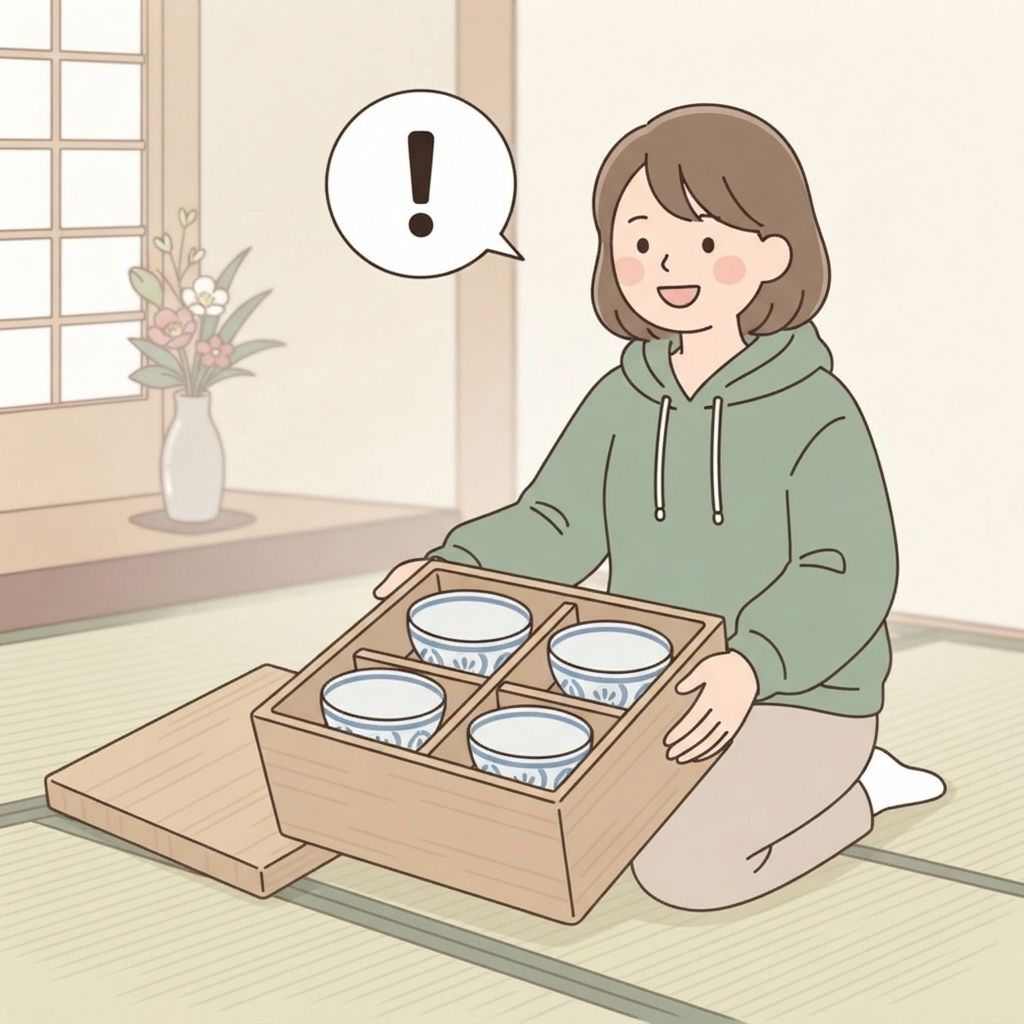
Giving a set of four chopsticks, four rice bowls, or any gift with the number four

The number four (四, shi) is a homophone for death (死, shi) in Japanese, and gifts in sets of four carry unlucky associations. Similarly, nine (九, ku) sounds like suffering (苦, ku). Common sets are three, five, or seven. Giving a set of four plates or cups to a couple or a family is a well-meaning gesture that lands as slightly off.

OK

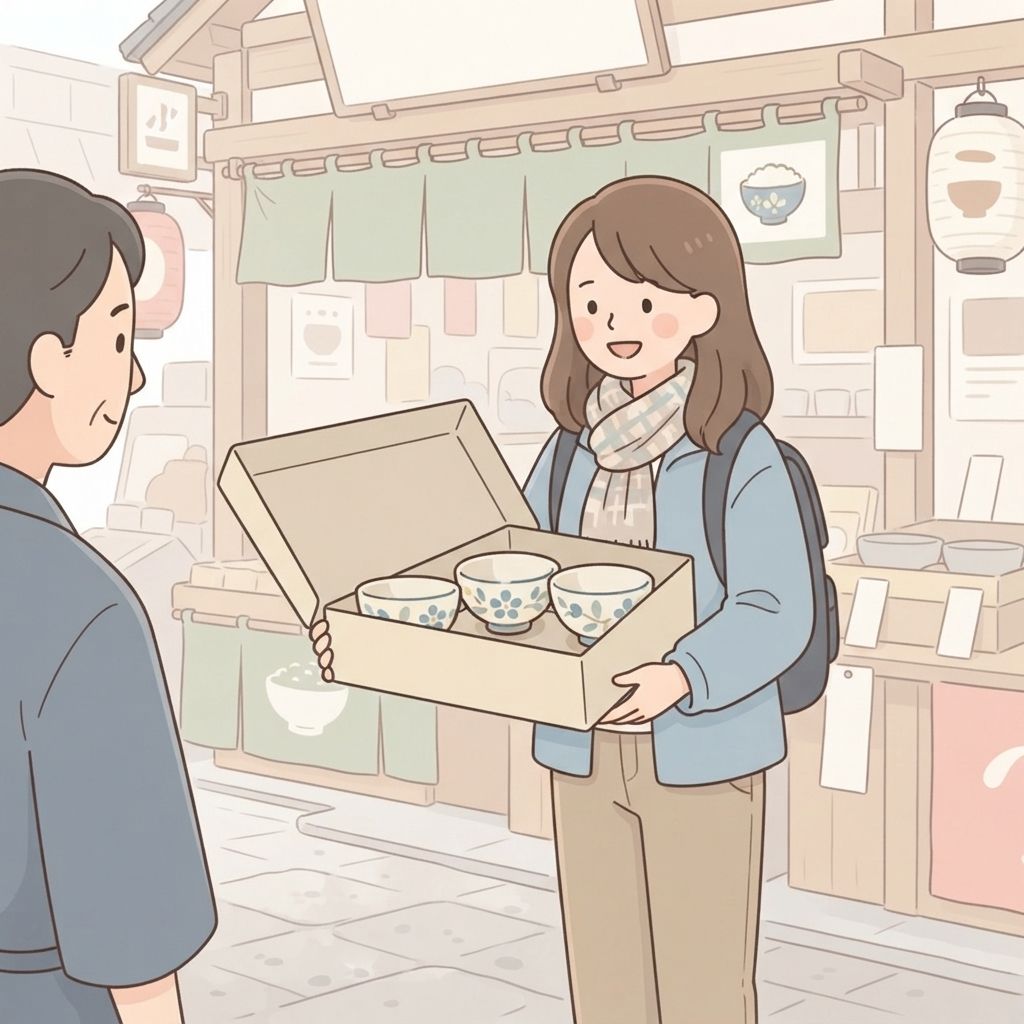
Use sets of three, five, or seven. Avoid four and nine

When giving a set of anything—chopsticks, cups, plates, towels, flowers—count the items and make sure the count isn't four or nine. Three is common for small gifts, five for mid-range, seven for slightly elaborate. If you're buying a pre-made gift set at a Japanese store, it's almost always already in one of the acceptable numbers because manufacturers know.

Being too quick to say 'it's nothing' or to minimize the gift

NG

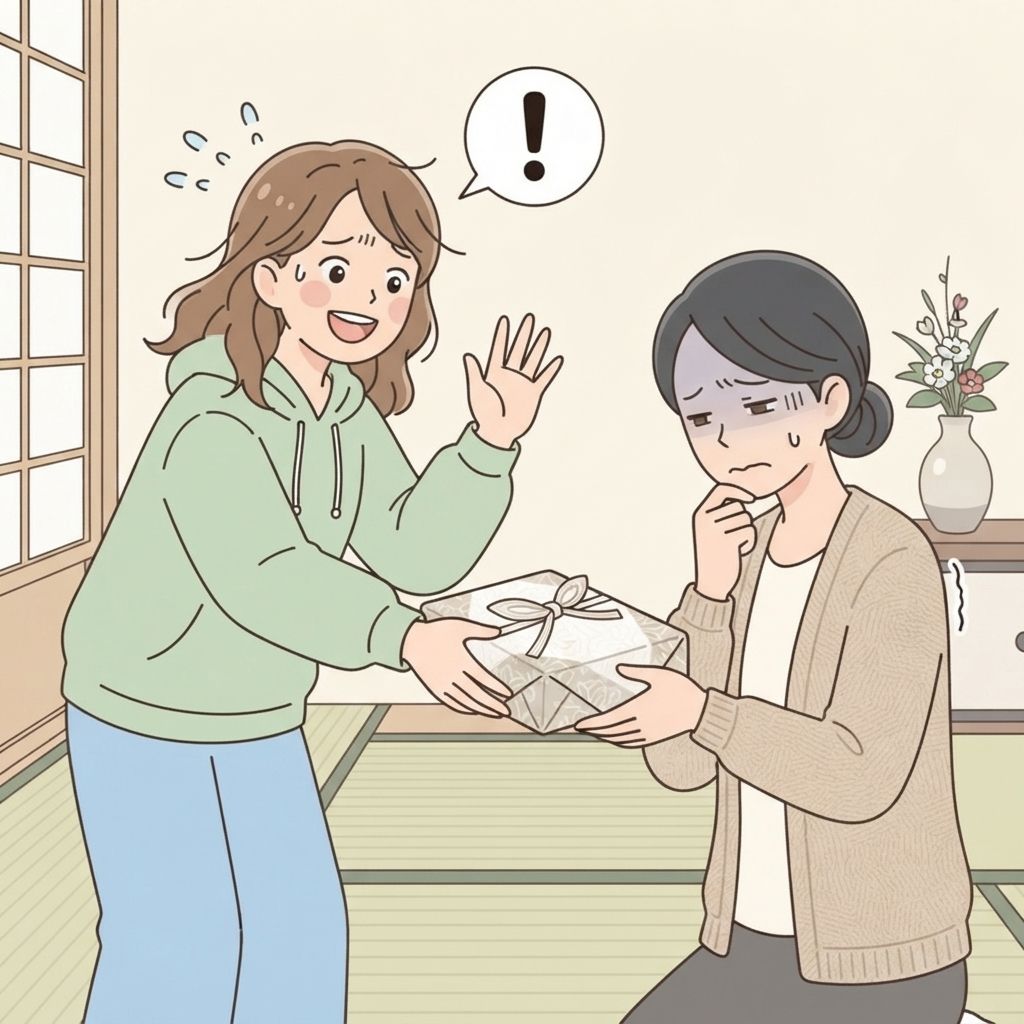
Handing over a gift and dismissively saying 'it's just a small thing, really nothing'

Japanese gift culture has a specific phrase for minimizing a gift at the moment of presentation—'tsumaranai mono desu ga' ('this is a trifling thing, but...'). However, tourists sometimes overdo the minimization, repeating it multiple times or adding 'really, it's nothing at all,' which tips from humble understatement into almost dismissive apology. The Japanese phrase is a one-time understated aside, not a repeated self-deprecation.

OK

Say the phrase once, quietly, as you present. Don't repeat or elaborate

'Tsumaranai mono desu ga, dozo' is the complete phrase: 'This is a humble thing, but please [accept it].' Say it once, calmly, as part of the presentation. Don't keep apologizing or trying to downplay the gift further. The phrase is a cultural marker of humility—overdoing it reverses the effect and makes you seem either anxious or patronizing.

Why the ritual matters more than the gift

In Japan, gifts get exchanged constantly—visiting someone’s home, returning from a trip, seasonal occasions, weddings, funerals, starting a new job. The sheer volume of gift-giving in daily life has produced a detailed etiquette where the presentation carries as much weight as the object inside. Both hands, wrapping, the humble phrase, the delayed opening—all of it centers the relationship over the material thing.

A gift handed over in a plastic bag with one hand and ripped open on the spot is a gift where the object has been foregrounded and the social gesture has been erased. That’s the exact opposite of what the whole system is designed to do.

The formula: both hands, keep it wrapped, say the phrase once, open it later.

A few “nice to know” extras

  • O-miyage (trip souvenirs) — Returning from a trip? Bring a box of regional snacks for coworkers or friends. Every train station in Japan has an entire section of pre-packaged o-miyage boxes designed for exactly this purpose—individually wrapped sweets, enough pieces to share around an office.
  • Wrapping is part of the gift — Japanese department stores wrap gifts beautifully, often for free. Formal gifts are always wrapped before giving. If you’re bringing something from abroad, consider having it re-wrapped at a Japanese store.
  • Cash at weddings and funerals — Perfectly normal in Japan. Wedding cash goes in a decorative shugi-bukuro envelope (happy occasions), funeral cash in a bushugi-bukuro (somber occasions). The envelopes have their own rules about knot colors and calligraphy—research those separately if you’re attending a formal event.
  • Reciprocity (o-kaeshi) — Receiving a gift creates a soft obligation to return one of roughly equal value. Not mandatory for tourists in one-off situations, but in ongoing relationships it’s expected. Slightly lower value reads as humble; slightly higher can feel competitive.

Quick check

Three questions to lock in the gift-giving instinct. About 20 seconds.

Quick check

Can you spot the right move?

  1. Q1 Should you hand over a gift with one hand in Japan?

  2. Q2 Is it okay to open a gift immediately in front of the person who gave it to you?

  3. Q3 Should you avoid gift sets of four items?