Tattoos in Japanese Onsens: The Real Rules in 2026

The 'no tattoos' rule is real but softening. Many onsens allow covered small tattoos; some are fully tattoo-friendly. Here's how to navigate 2026.

Showing up at a random onsen with visible tattoos

NG

Assuming a rural onsen or famous traditional bath will let you in with tattoos

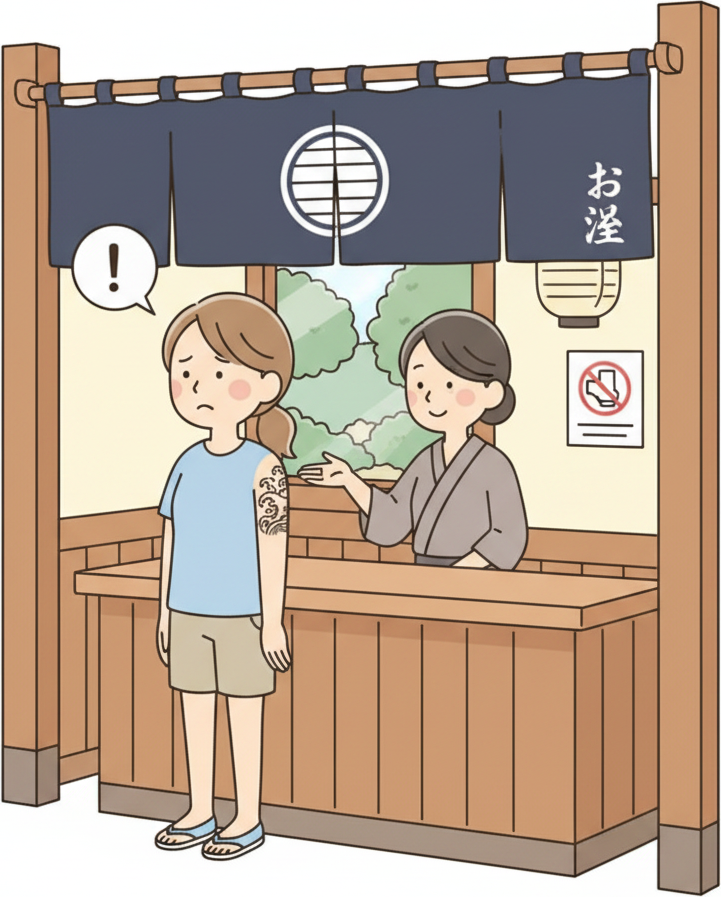
Many traditional onsens, especially older ones in hot spring towns and rural areas, still have strict 'no tattoos' policies posted at the entrance. These rules are enforced—the receptionist will quietly but firmly decline to let you enter, or ask you to leave if staff notice after you're already in. The policy dates back to tattoos' historical association with the yakuza (Japanese organized crime), even though modern Japanese attitudes toward tattoos are shifting fast.

OK

Research the onsen's tattoo policy before you go

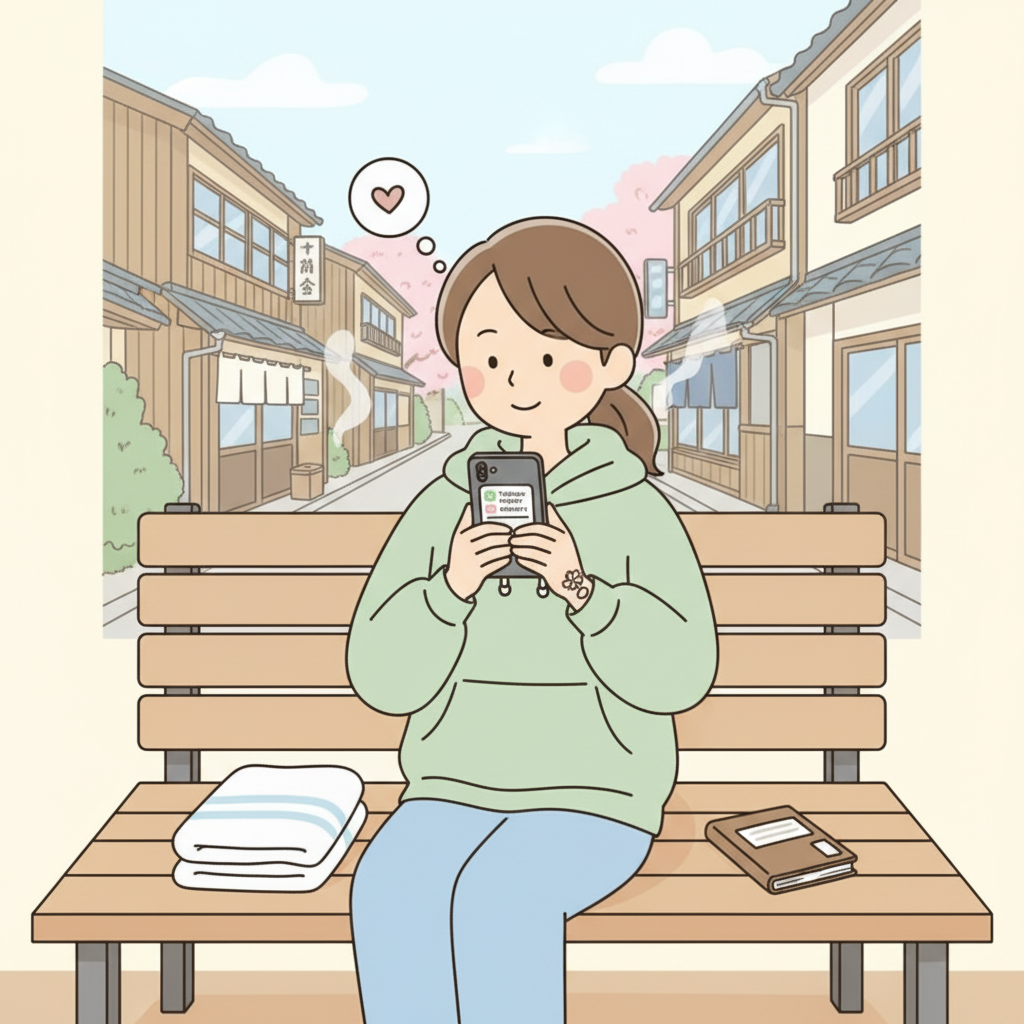
Check the onsen's website or Google listing for 'tattoo OK' (タトゥーOK) or call ahead. There are also tattoo-friendly onsen directories (tattoo-friendly.jp is one), curated lists of bathhouses that explicitly welcome tattooed bathers. For any onsen you're unsure about, a one-sentence question at the front desk—'tattoo wa daijoubu desu ka?'—gets you a clear yes or no before you undress.

Not covering small tattoos when covering is allowed

NG

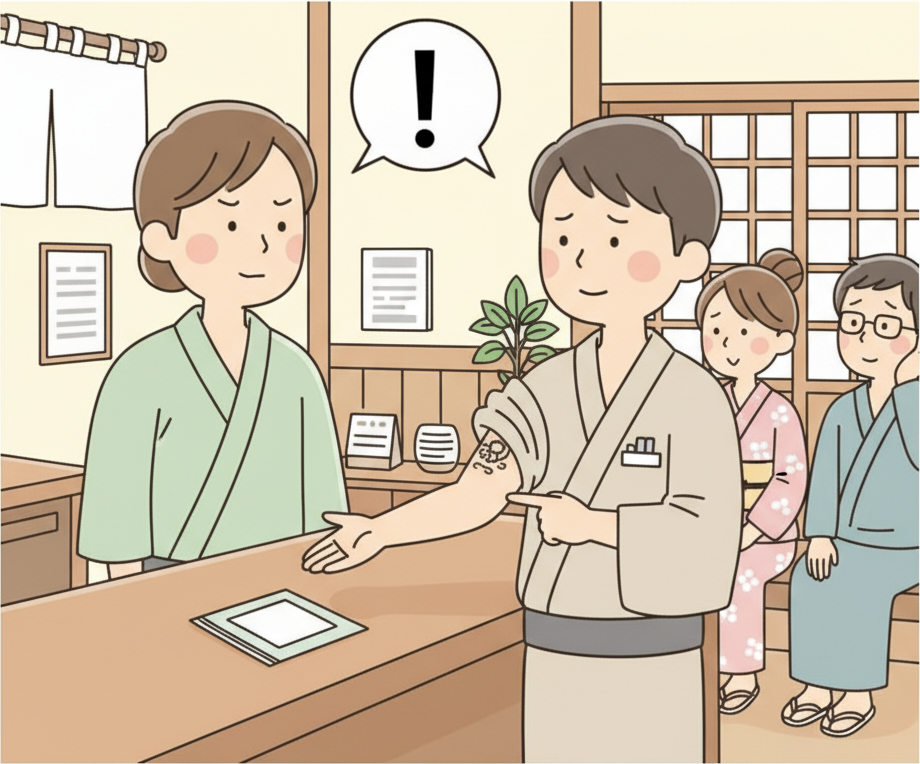
Going into a 'small tattoo OK with cover' onsen and leaving the tattoo uncovered

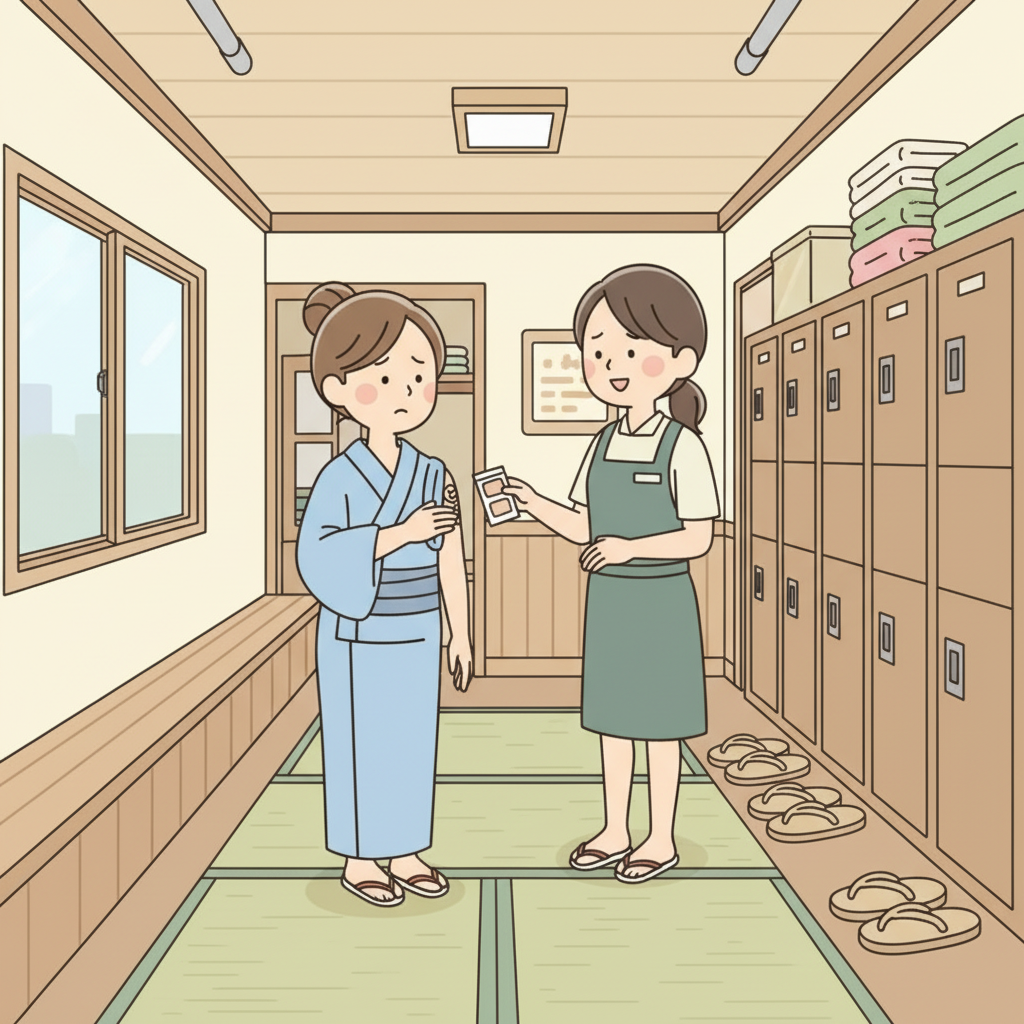
Some onsens allow small tattoos (usually defined as 'fits under a palm-sized patch') if they're covered with a flesh-colored waterproof sticker. If you walk in with a visible small tattoo without the sticker, you'll either be turned away or handed a sticker and asked to put it on before entering. Ignoring the cover requirement once you're inside, especially in the bath area, can get you asked to leave.

OK

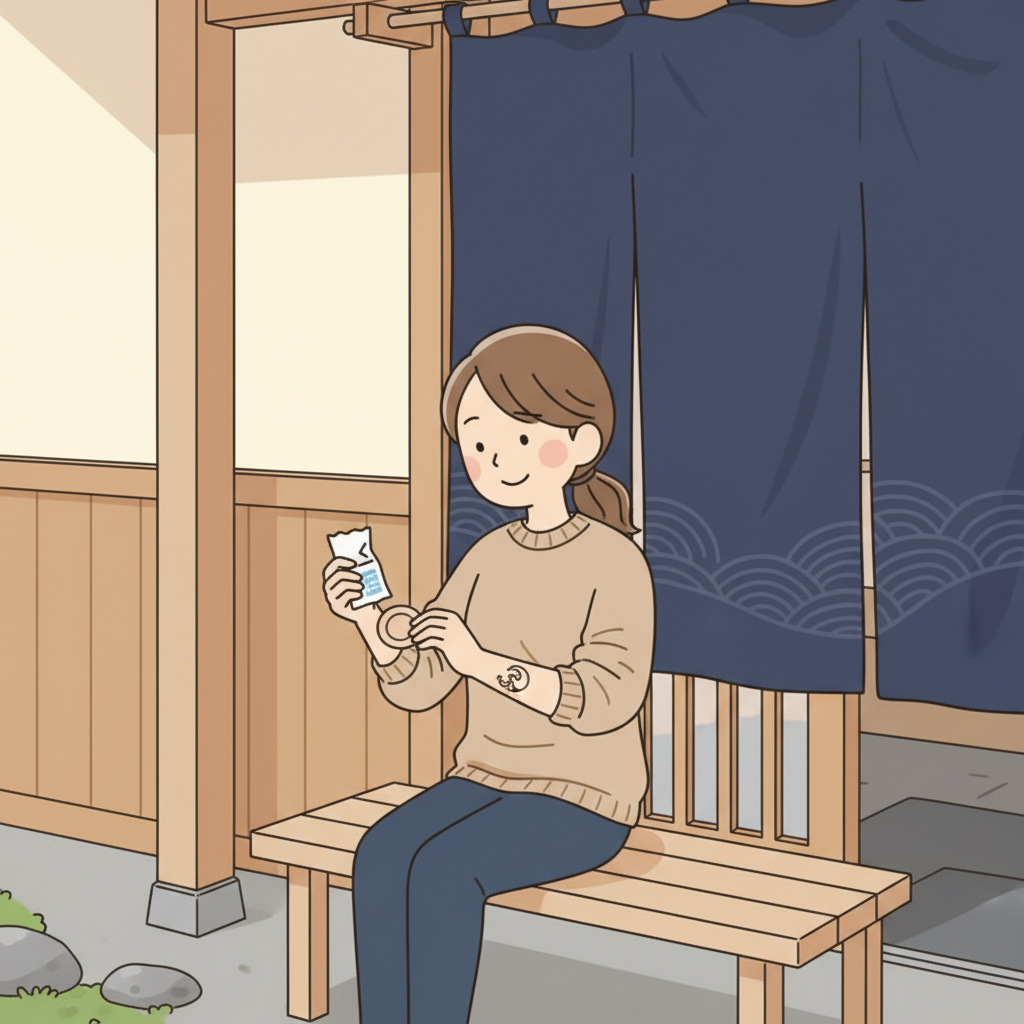
Buy tattoo-cover stickers in advance or at the onsen's front desk

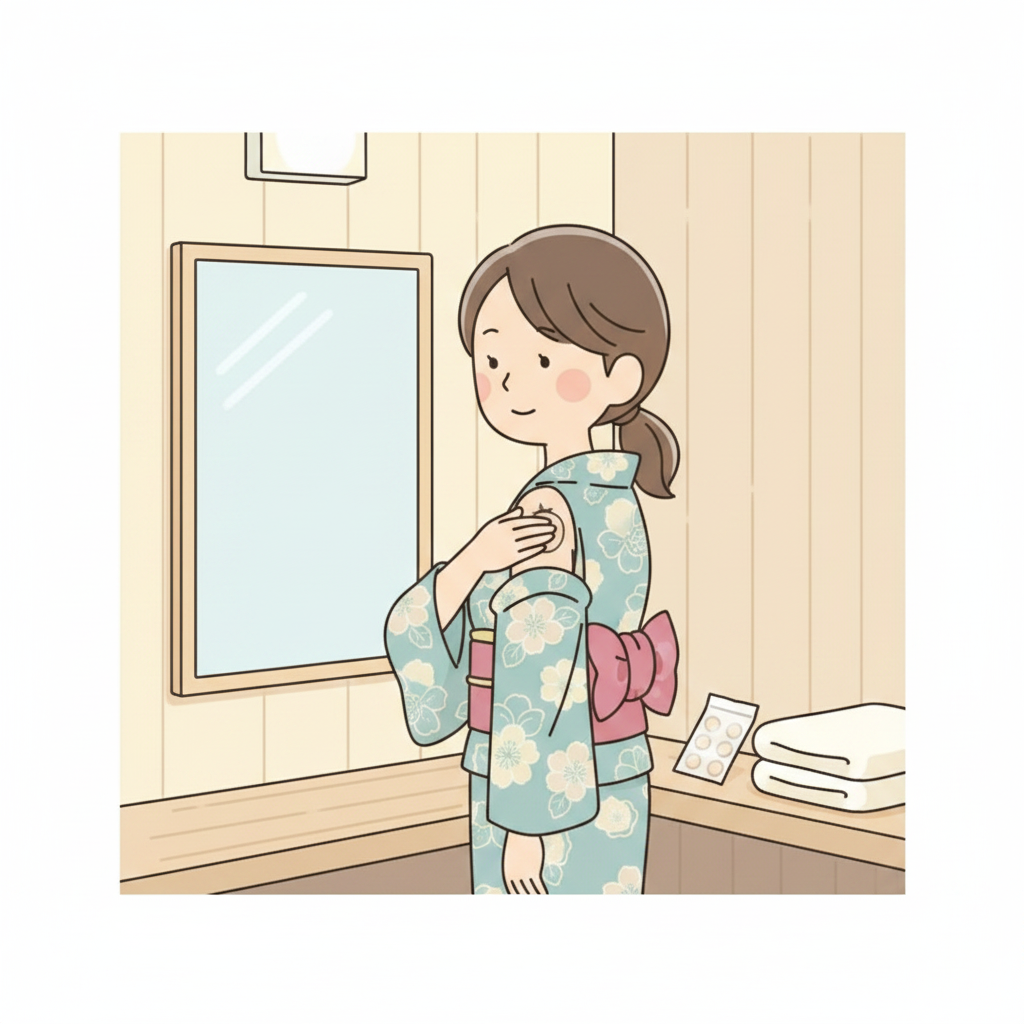
Flesh-colored adhesive patches specifically for onsen use are sold at pharmacies, Don Quijote, Amazon Japan, and sometimes at the onsen front desk itself. They come in various sizes and usually cost a few hundred yen. Stick them on any visible tattoo before entering the bath area, and keep them in place while you're bathing. They're water-resistant enough for a standard onsen soak.

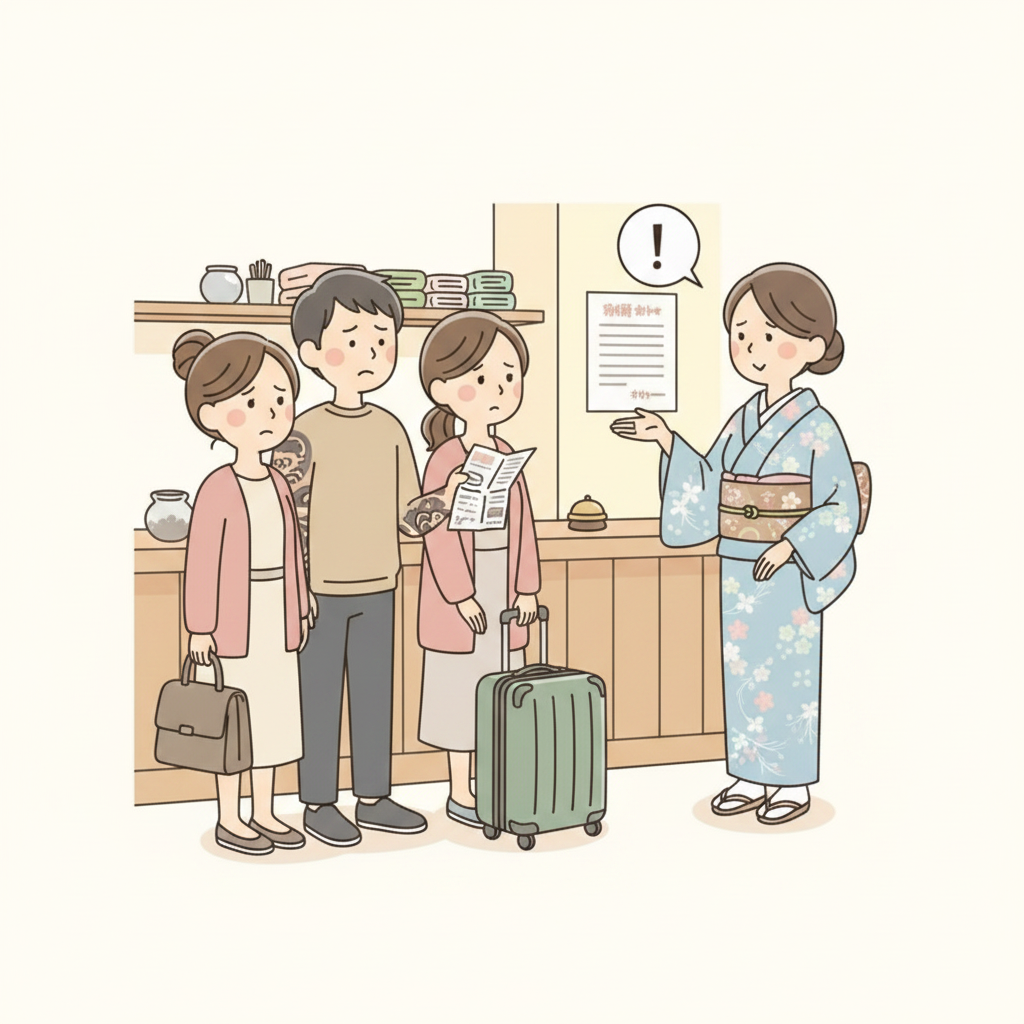
Booking a traditional ryokan with a shared bath and finding out on arrival

NG

Booking a beautiful traditional ryokan and discovering at check-in that the communal bath prohibits tattoos

Traditional ryokans (Japanese inns) almost all have communal baths, and many have the same tattoo policies as standalone onsens. Tourists who book a dream-ryokan experience without checking the tattoo policy can find themselves unable to use the main attraction of their stay. This is a real heartbreak situation.

OK

Book ryokans with private (kashikiri) bath options, or confirm tattoo policy in advance

When booking a ryokan, look for 'private bath' (貸切風呂, kashikiri-buro) options—these are baths reserved for just your party, usually for a 30–60 minute time slot, and they bypass the communal bath's tattoo rules entirely. Alternatively, email or call the ryokan before booking and ask about their tattoo policy. Many tourist-oriented ryokans are flexible with foreign guests, but you need to confirm.

Dismissing the cover sticker rule as 'pointless theater'

NG

Arguing with staff that your tattoo is small and harmless and the sticker rule is outdated

The cover sticker rule exists as a compromise between 'tattoo-friendly' and 'traditional no-tattoos' policies—it's the onsen's way of letting tattooed bathers in without breaking the visual contract with customers who expect a tattoo-free environment. Arguing that the sticker is pointless misses the point: the sticker is the compromise. Without it, the compromise collapses and the policy reverts to a full ban.

OK

Just put the sticker on. It's a thirty-second gesture that unlocks the onsen

The cover sticker is a small piece of face-saving etiquette, and wearing it is the signal that you respect the onsen's policy enough to follow their compromise. Nobody expects it to be a perfect disguise. Everyone in the bath can probably tell there's a tattoo under it. The sticker is the gesture, and the gesture is what's being asked for.

Why tattoos and onsens don’t mix — historically

For most of the 20th century, visible tattoos in Japan meant one thing: yakuza. Public bathhouses banned them to keep organized crime members out of communal spaces. The rule was never about aesthetics or morality — it was a practical security measure that became deeply embedded in onsen culture.

That association is crumbling fast. Younger Japanese are getting tattoos at rates comparable to anywhere else. The 2019 Rugby World Cup and 2020 Olympics forced onsens to reckon with millions of tattooed visitors who had zero criminal connections. Many relaxed their policies and kept the changes. But plenty haven’t — especially traditional bathhouses in rural hot spring towns. The landscape in 2026 is a patchwork, and you can’t assume anything without checking.

Check the policy, carry cover stickers, or book a private bath. Don’t wing it.

Your three options

  • Tattoo-friendly onsens — Sites like tattoo-friendly.jp maintain curated lists. Most tourist-heavy destinations have at least a few options. Start your planning here.
  • Cover stickers — Flesh-colored waterproof patches sold at pharmacies and Don Quijote for a few hundred yen. If the onsen’s policy is “small tattoo OK with cover,” the sticker is your ticket in. Nobody expects it to be invisible — the gesture of wearing it is what matters.
  • Private (kashikiri) baths — Rental baths for just your party, usually 30-60 minutes for 2,000-5,000 yen. No tattoo rules apply. Many ryokans and some standalone onsens offer them.

A few “nice to know” extras

  • Size limits on cover stickers — Most “tattoo OK with cover” policies mean palm-sized (roughly 10cm x 10cm). Sleeves, back pieces, and full chest work won’t qualify. For large tattoos, your options are private baths or explicitly tattoo-friendly venues.
  • Ask before you book a ryokan — Traditional ryokans have communal baths with the same tattoo policies as standalone onsens. Discovering this at check-in is heartbreaking. Email ahead or book one with a private bath option.
  • Super Sento and theme parks are more flexible — Large modern complexes like Spa World and various Super Sento chains cater to mass-market tourists and tend to have relaxed tattoo policies. Less authentic, but accessible.
  • The front desk question — “Tattoo wa daijoubu desu ka?” gets you a clear yes or no in one sentence. Always worth asking if you’re unsure about a specific place.

Quick check

Three questions to navigate the tattoo-and-onsen landscape.

Quick check

Can you spot the right move?

  1. Q1 Are all Japanese onsens now tattoo-friendly?

  2. Q2 Can cover stickers hide a tattoo in an onsen that requires covering?

  3. Q3 Do ryokans with communal baths generally allow visible tattoos?