Konbini Etiquette: Yes, There Are Rules at 7-Eleven

Japanese konbini are a national institution. Hovering at the microwave, fumbling at the register, or eating as you walk marks you as a tourist.

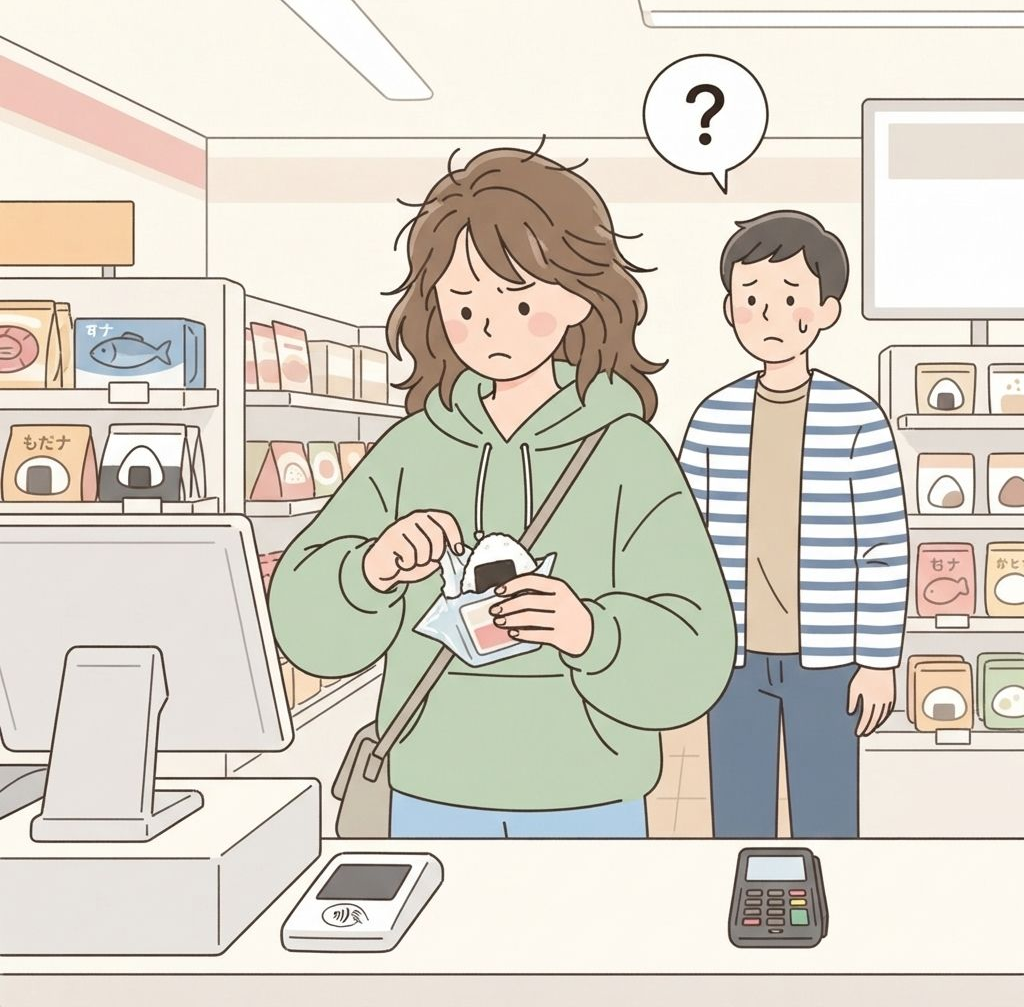
Eating at the register or entrance

NG

Opening your onigiri at the counter or standing in the doorway eating

The register area is a transaction zone, not a dining spot. The entrance is a thoroughfare. Blocking either while you eat is the konbini equivalent of stopping at the top of an escalator—you are in everyone's way.

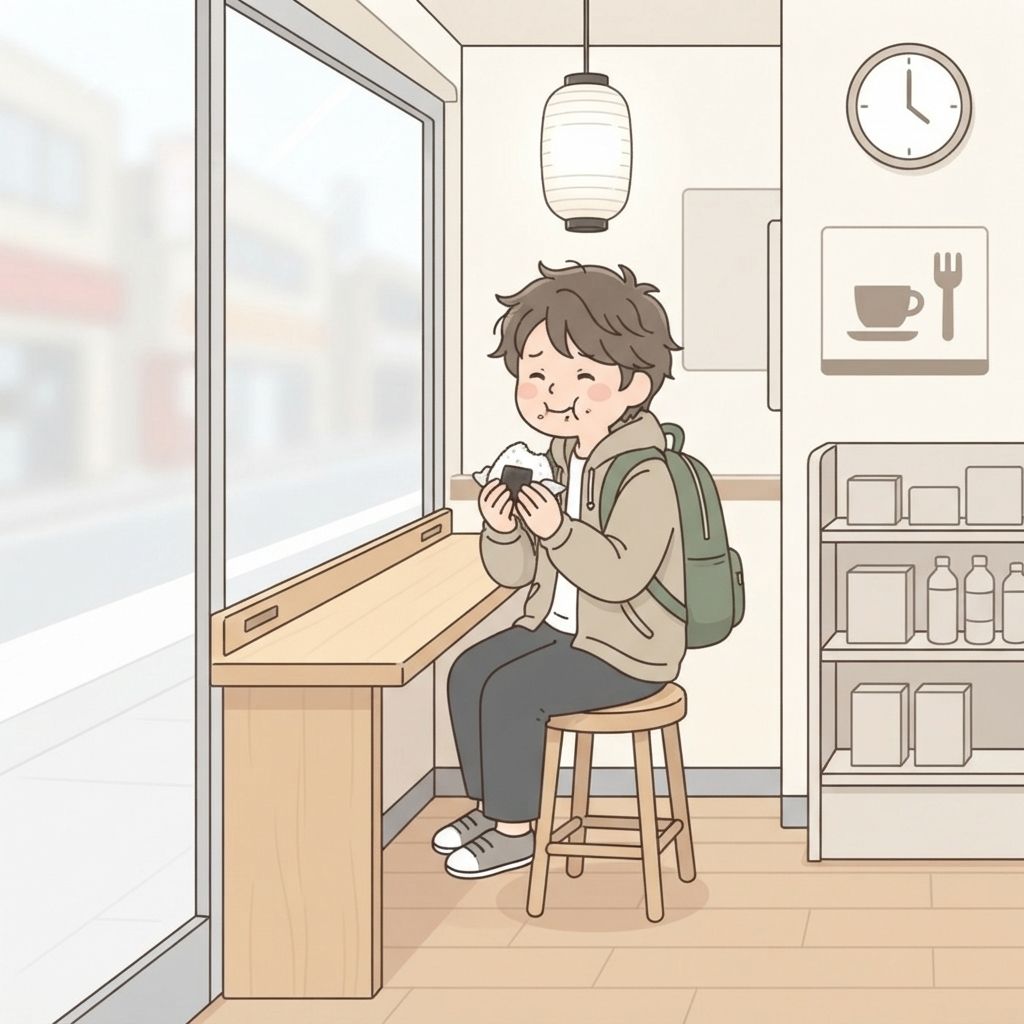
OK

Find the eat-in area, outside benches, or step clear of the entrance

Most konbini have a small eat-in counter inside, or benches outside the front. No seating? Step well to the side of the entrance and eat standing. Japanese people often eat their onigiri quickly outside the door—that's fine, as long as you're not blocking anything.

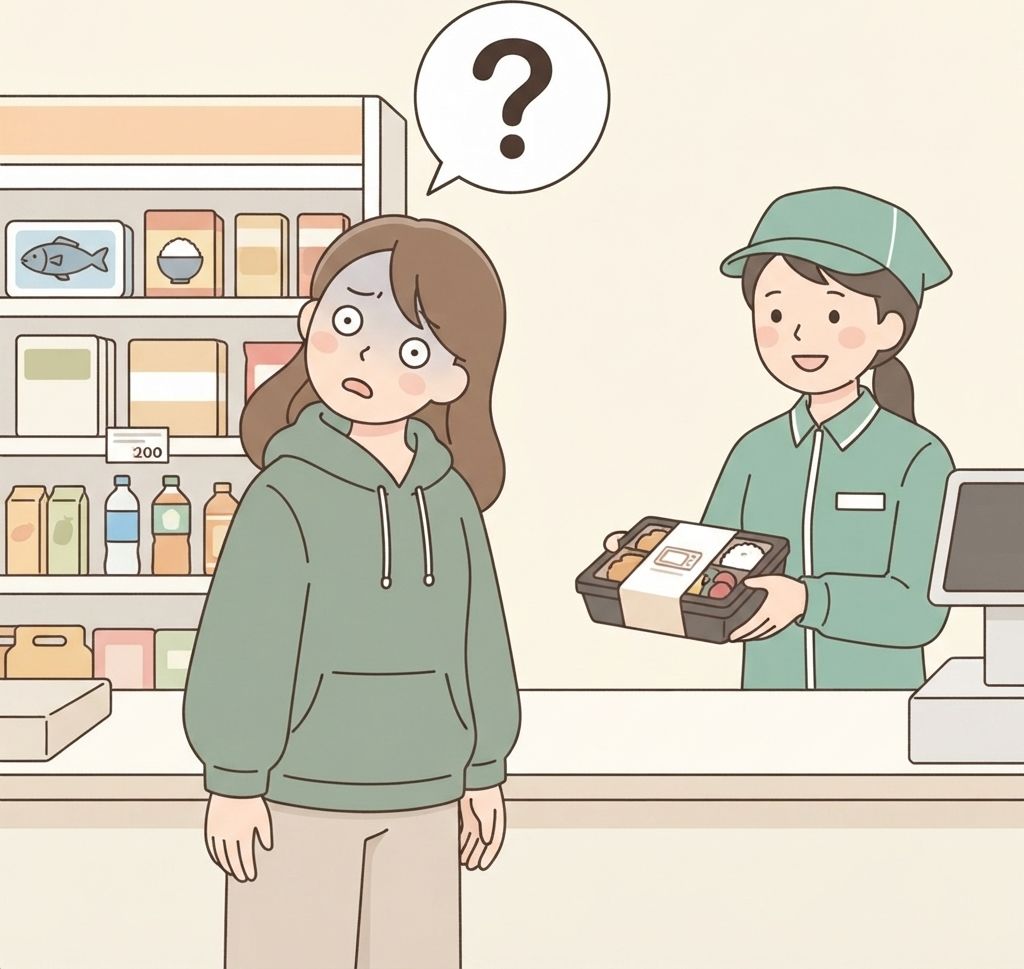
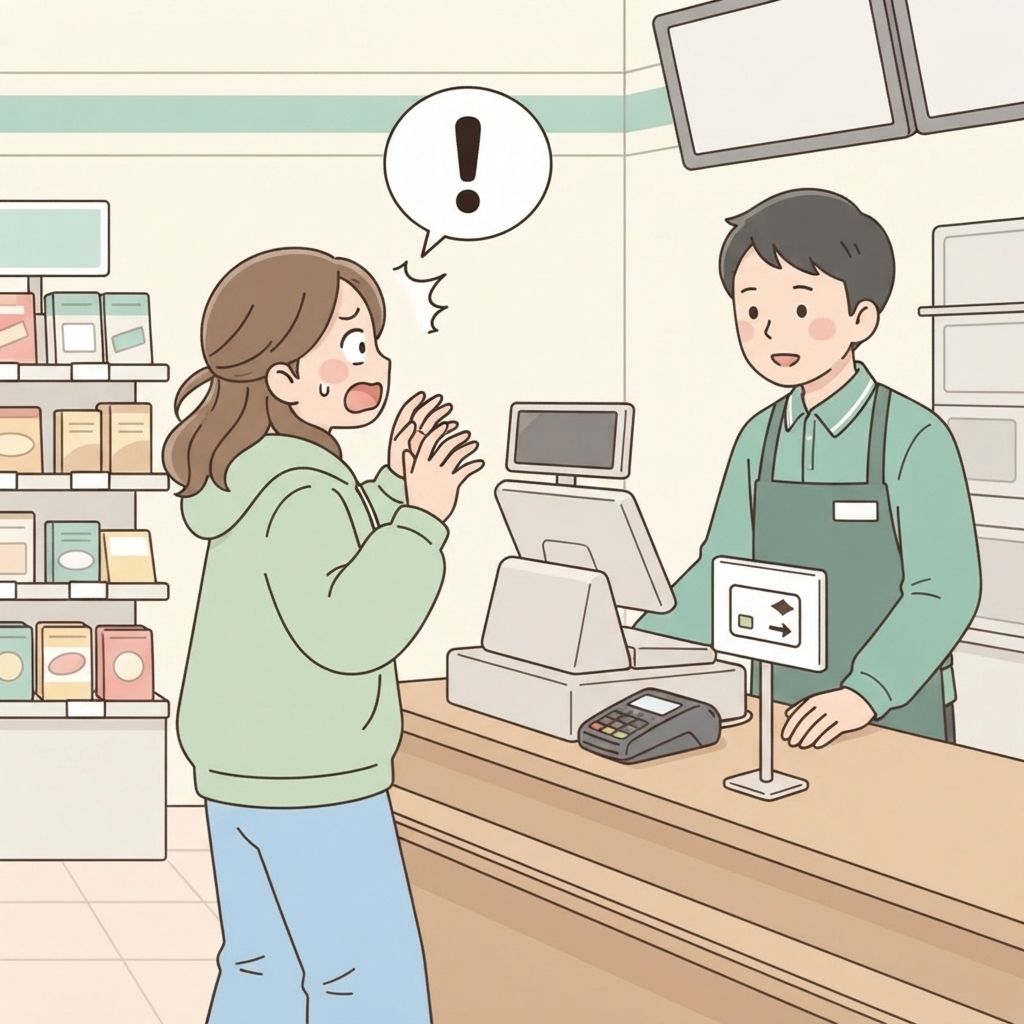
Not answering the microwave questions

NG

Staring blankly when staff asks if you want your food heated

Every konbini staffer will ask 'atatamemasu ka?' (shall I warm it up?) for hot-eligible items. Silence or a confused head tilt creates an awkward standstill. They're not going to guess.

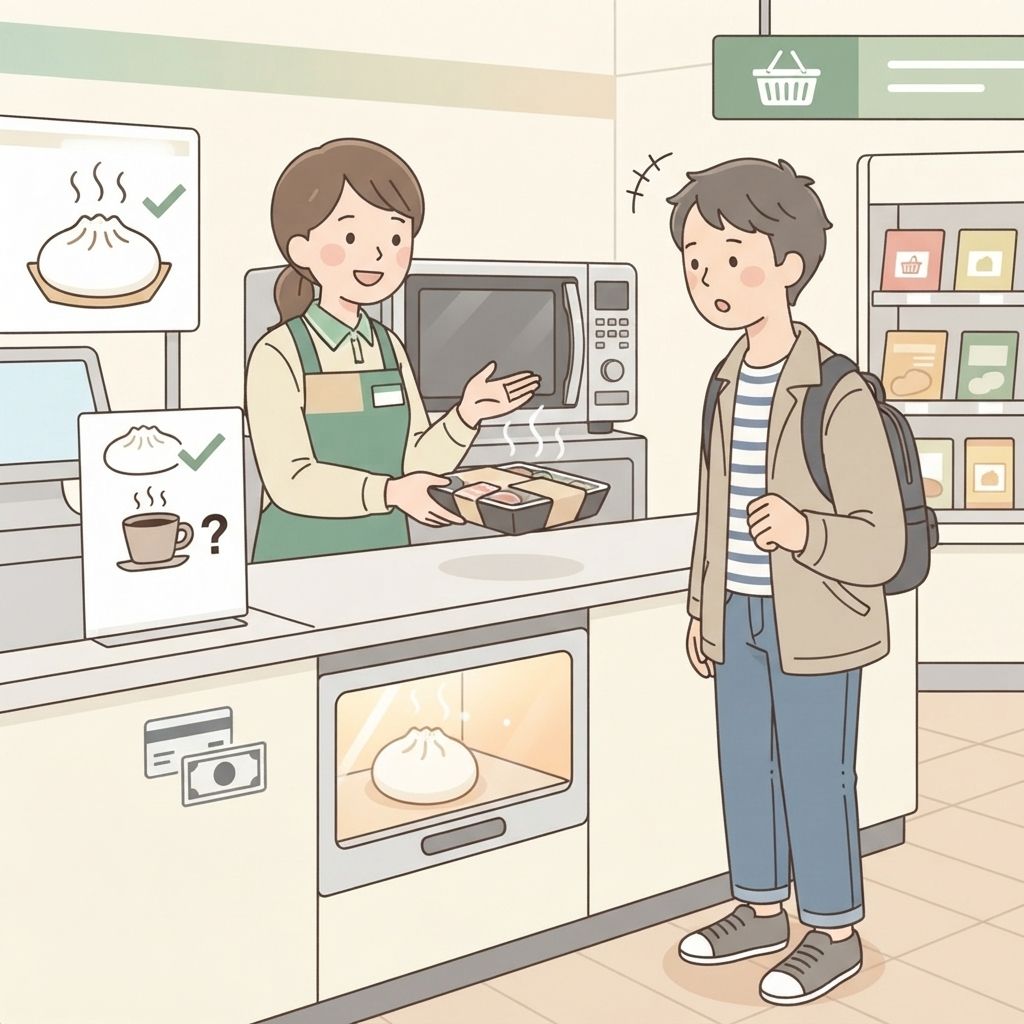
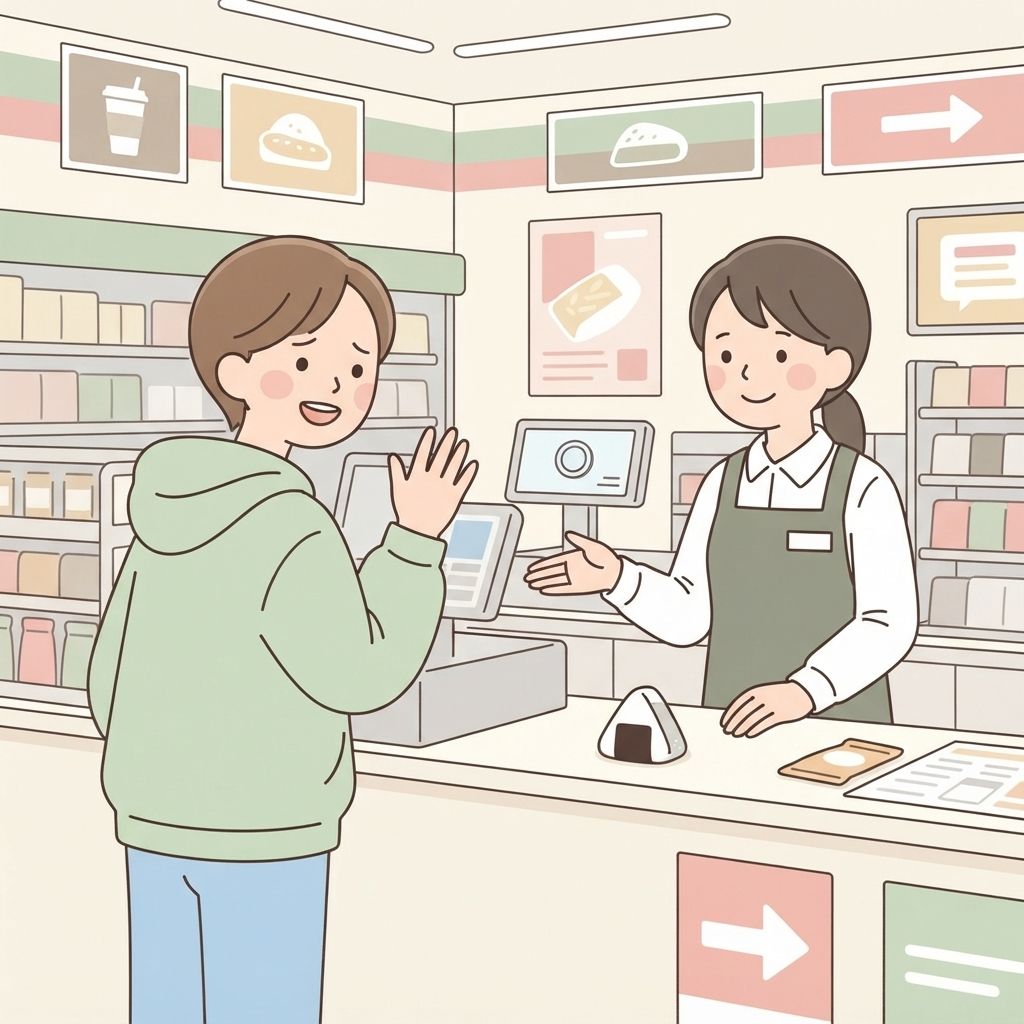
OK

Learn two words: hai (yes) or daijoubu desu (no thanks)

'Hai' gets you a warm meat bun. 'Daijoubu desu' or a small hand wave declines politely. You can also just say yes or no in English—staff at major chains understand both, but the Japanese lands smoother.

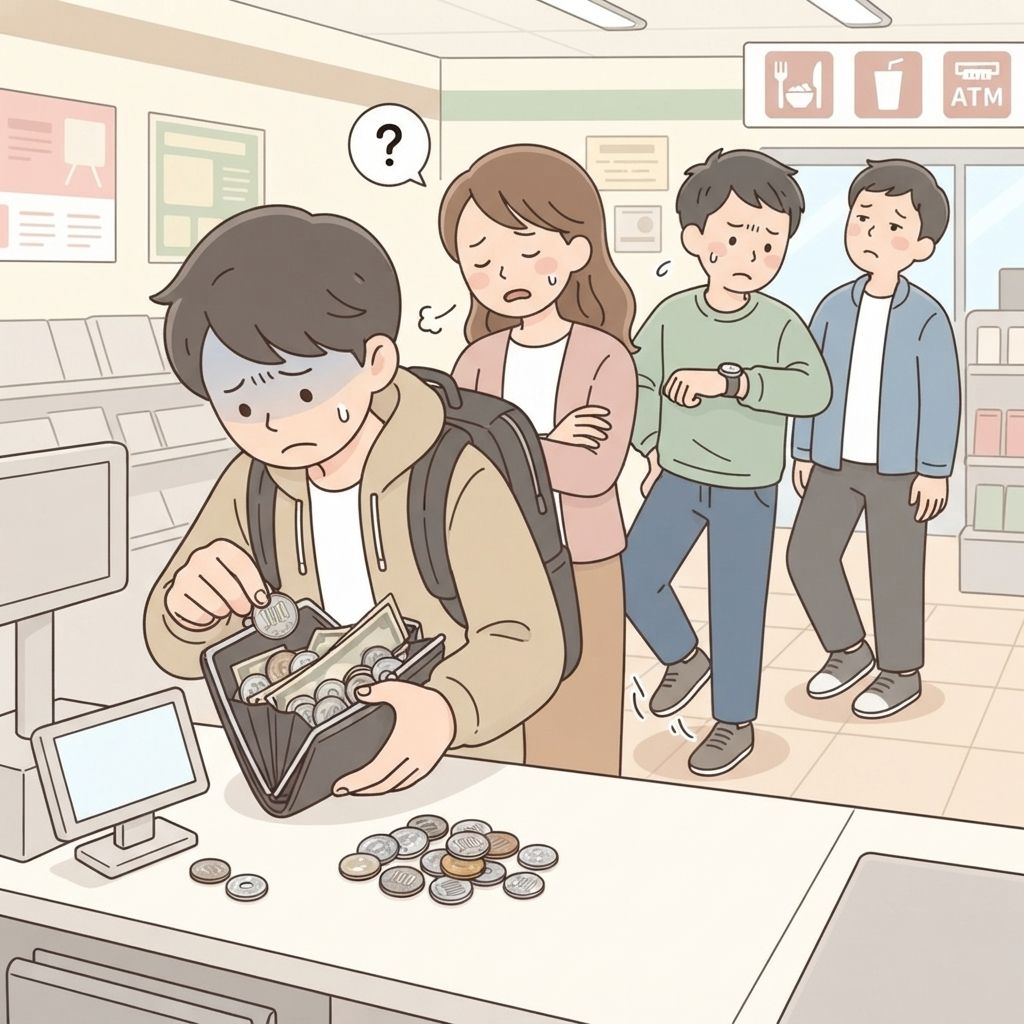
Fumbling at the register

NG

Taking two minutes to find coins, check the total, count out exact change, and reorganize your wallet

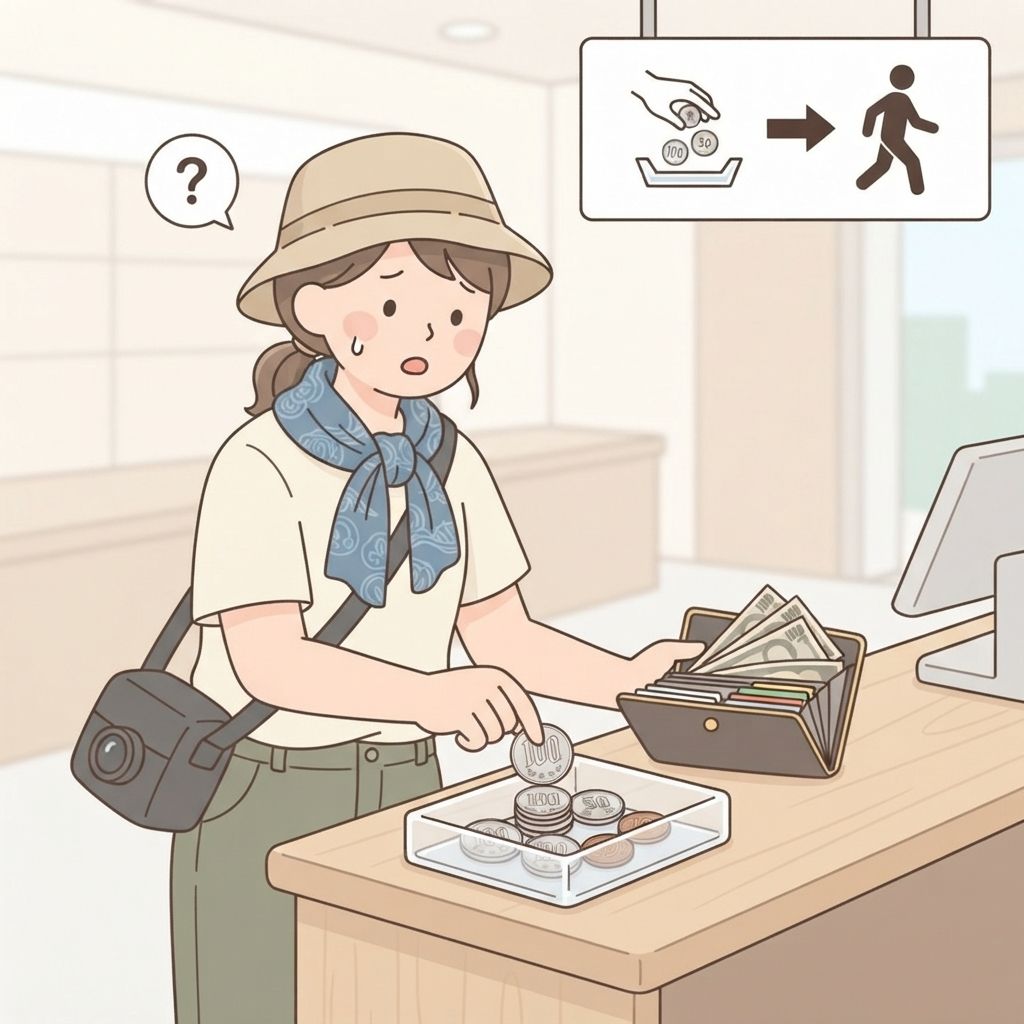
Japanese checkout is brisk. The register area has a dedicated coin tray (okane tray)—you put your cash there, not hand it directly. Digging through your bag while the line builds behind you is the one thing that visibly irritates konbini staff.

OK

Have your payment ready, use the coin tray, and keep it moving

Pre-sort while you're in line. Use IC card (Suica, Pasmo) or tap payment if you have it—fastest option. When paying cash, place coins and notes in the small tray on the counter, not directly in the cashier's hand.

The point card question

NG

Being surprised every single time staff asks about point cards

At every konbini, every transaction, the staff will ask 'pointu kaado omochi desu ka?' (do you have a point card?). Not having a response ready causes the same micro-stall as the microwave question. It will happen 100% of the time.

OK

Say kekko desu (no thank you) once and it's over

'Kekko desu' with a slight bow is the universal polite decline in Japan and works perfectly here. If you're staying more than a week, getting a T-Point or Ponta card is genuinely worth it—points stack up fast on daily coffee runs.

Why konbini have rules at all

Japan’s convenience stores aren’t convenience stores in the Western sense — they’re closer to a neighborhood institution. Staff execute a precise, choreographed service flow for hundreds of customers a day. That flow depends on everyone roughly knowing their part.

Most of the etiquette is about not interrupting the rhythm. The line moves fast because people have payment ready. The microwave question gets a quick “hai” because everyone knows the script. Walk in as a tourist who pauses at every question and the whole sequence hiccups — not dramatically, but visibly.

One-sentence rule: be ready at the register, eat at a spot, and keep two phrases loaded — “hai” and “kekko desu.”

What the regulars do differently

  • Payment is pre-sorted — Locals have their IC card or cash ready before they reach the counter. The transaction takes about eight seconds. Match that energy.
  • Trash goes in the right bin — Those sorted bins outside are a courtesy for store purchases, not a public garbage can. Plastic in the plastic slot, cans in the cans slot. Getting it wrong visibly pains the staff.
  • Eating is stationary — Eat at the in-store counter, on the bench outside, or standing still to the side. Walking coffee cups and street onigiri get the most side-eye.

A few “nice to know” extras

  • IC cards are king — Suica and Pasmo work at every konbini, plus trains, taxis, and vending machines. Single most useful tourist purchase on day one.
  • Skip the morning rush — Between 7-9am, registers are running at maximum speed. If you’re still learning the system, mid-morning is kinder to everyone.
  • Hot and cold get separate bags — Staff will automatically bag steamed buns apart from cold drinks. Don’t try to combine them.
  • “Sumimasen” plus a phone screen — Need help finding something? Say “sumimasen” and show a picture on your phone. Works every time, no shared language required.

Quick check

Three questions to lock in the konbini instinct.

Quick check

Can you spot the right move?

  1. Q1 Is it acceptable to eat your konbini snack while walking away from the store?

  2. Q2 Should you put coins directly into the cashier's hand at a konbini?

  3. Q3 Is it okay to use the microwave without asking staff first?